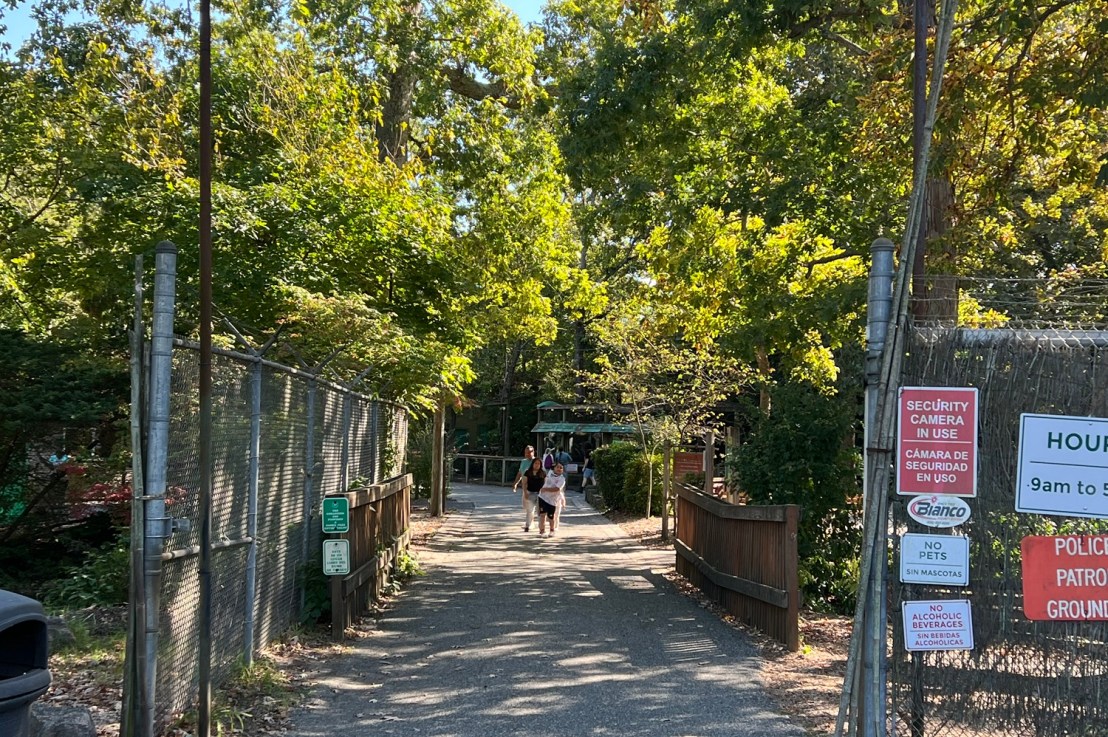
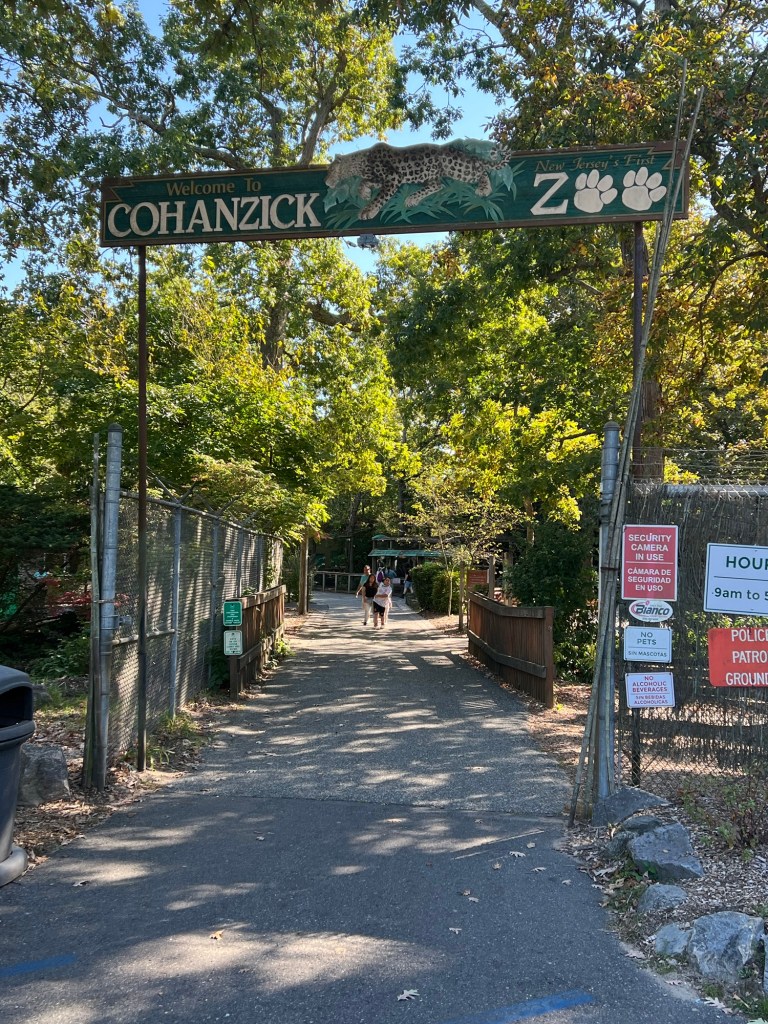
The Cohanzick Zoo is part of the Bridgeton Park system and can be found inside the parks grounds.
The main entrance to the zoo.
The zoo has an old fashioned feel with smaller rescue animals and equally not too large cages. The zoo is mostly comprised of smaller animals who were rescued from either being poached, illegally transported or had been used as pets, many of them being neglected and abused.
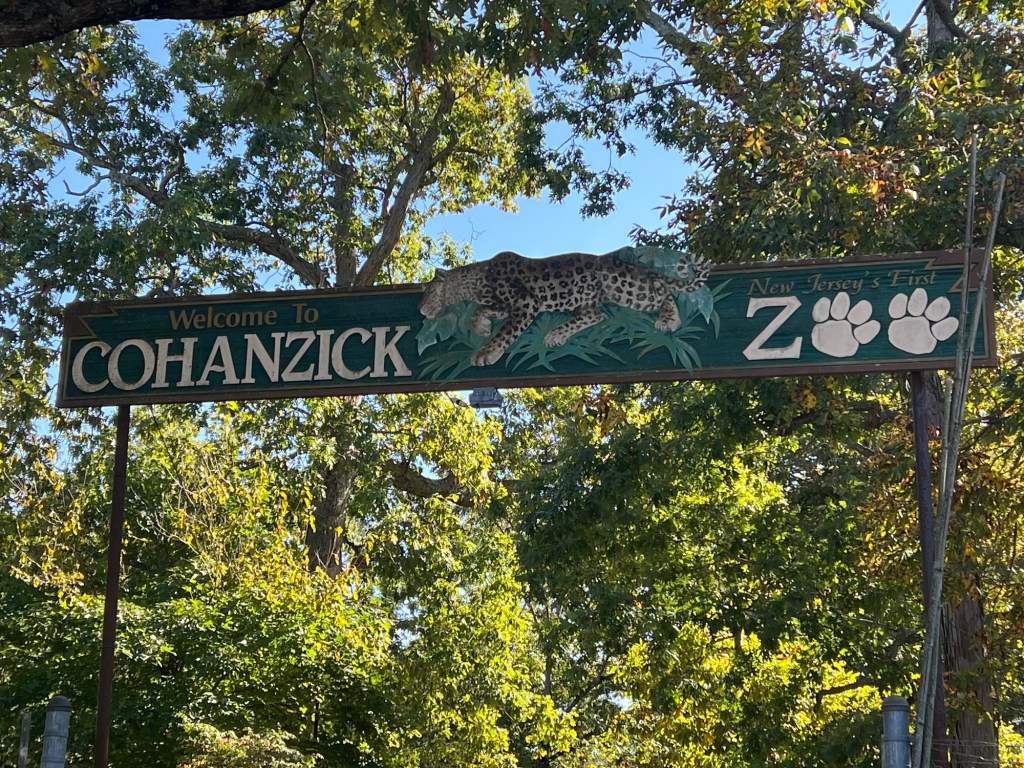
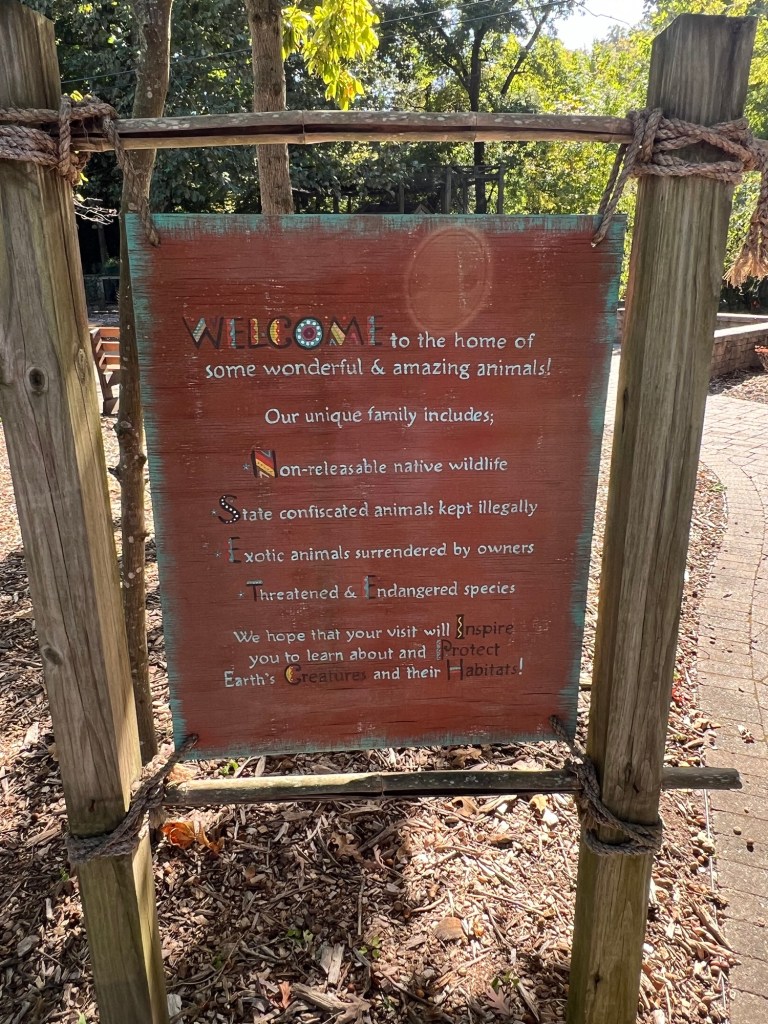
The sign that welcomes you to the park
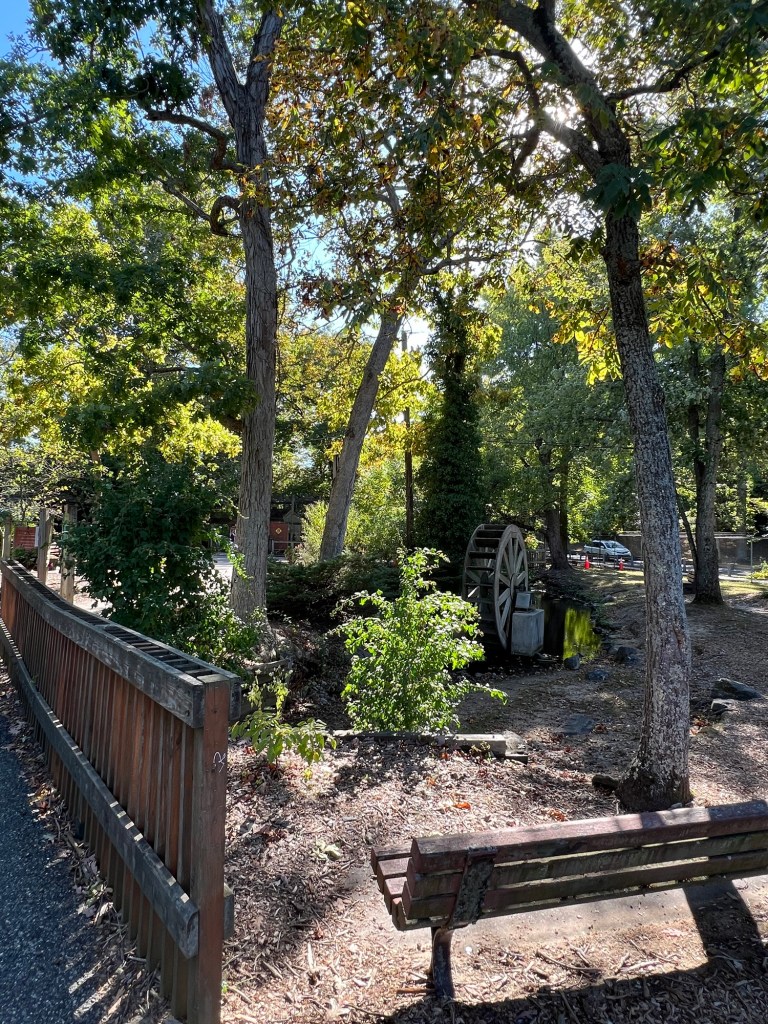
Throughout the park amongst the cages of wildlife are strolling gardens and animal related statuary.
The pathways and gardens were still in bloom the afternoon that I was there and it is a nice way to spend do the afternoon.
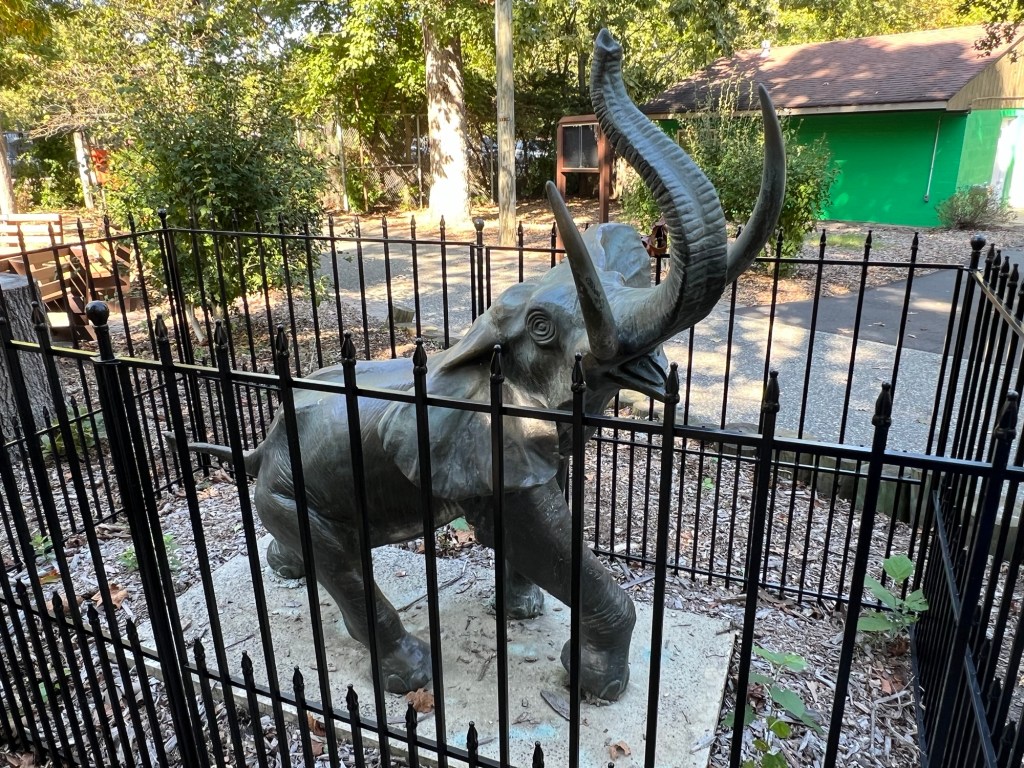
The Elephant statuary at the entrance of the zoo
The status of how some animals found their home here
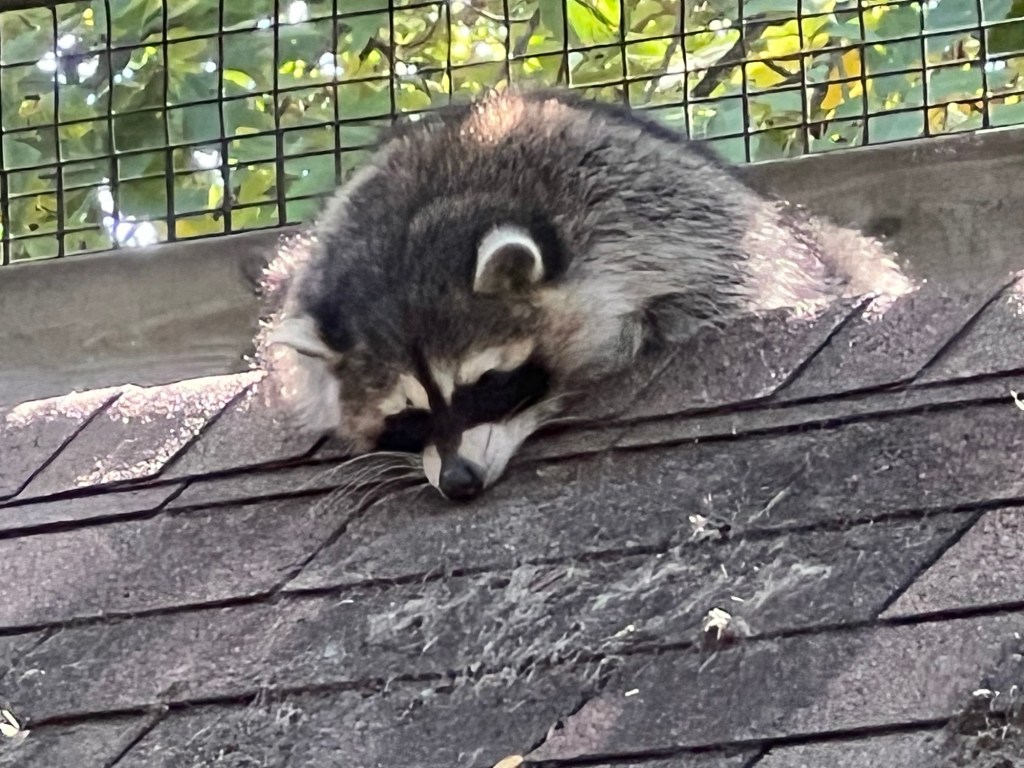
The first resident I finished was the Raccoon House, where it looked like the raccoon was taking a snooze. He really looked out of it when J passed the cage.
The Raccoon House
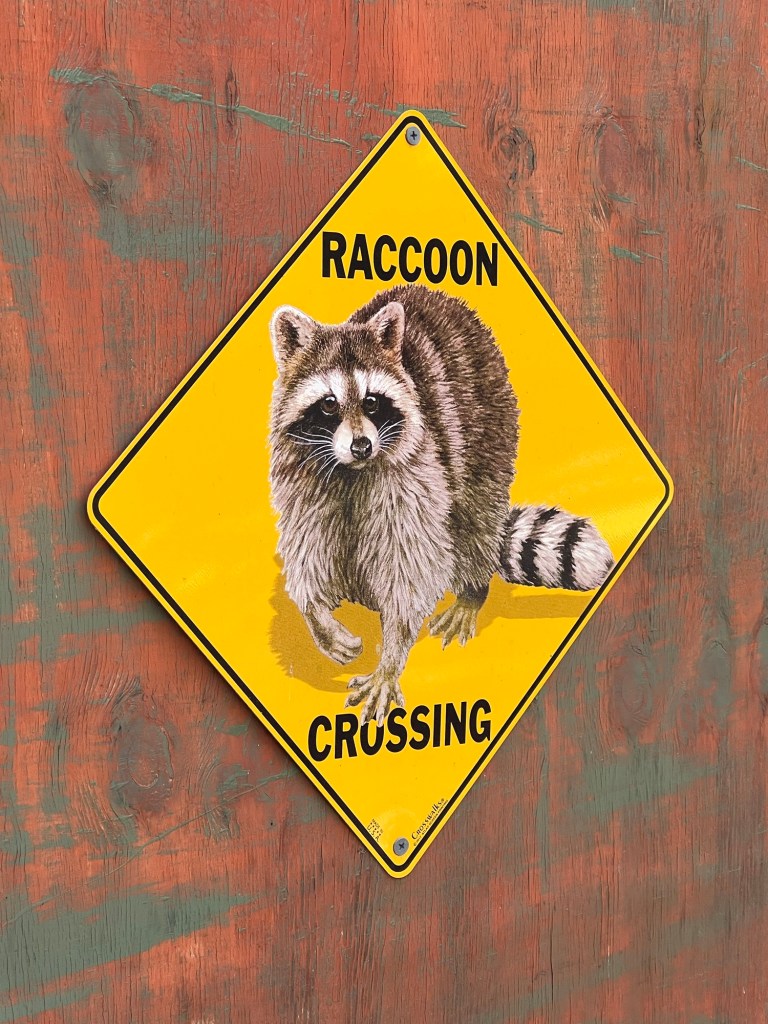
The Raccoon Crossing sign
This poor little guy was out like a light
The zoo is one of the smaller more localized ones that I have visited so you can see the whole zoo in about an hour. Then you can walk leisurely around the paths and revisit the exhibitions again. Some of the animals like the peacock family, just wonder around the park and do their thing.
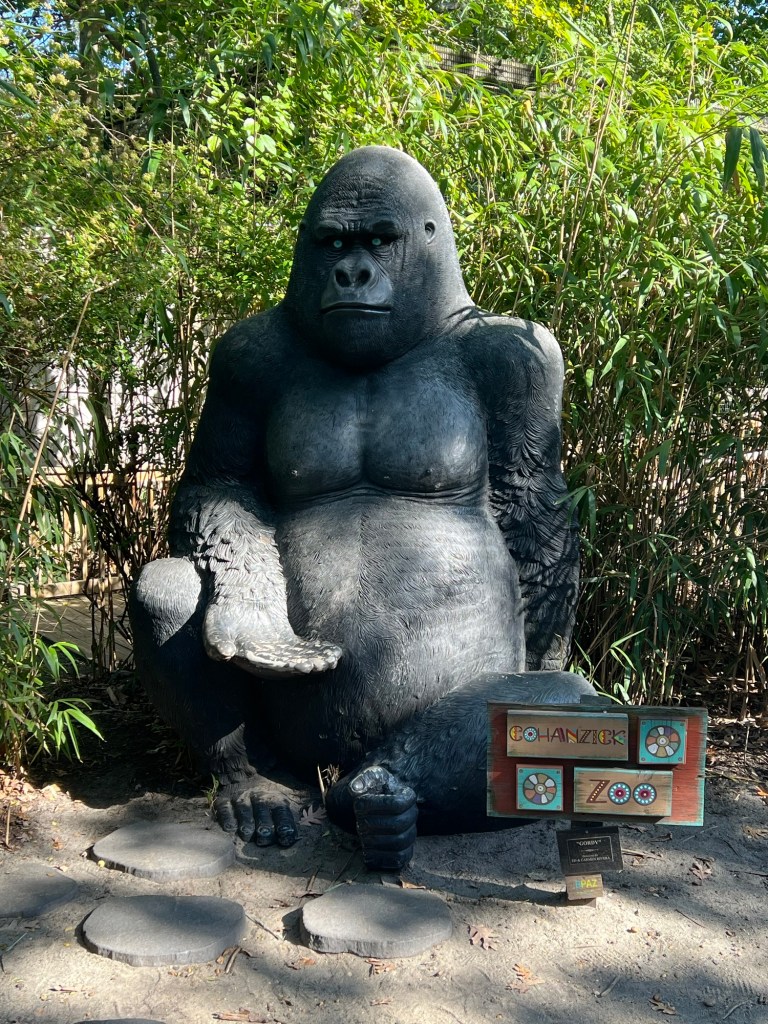
This gorilla sculpture that greets you in the back part of the zoo
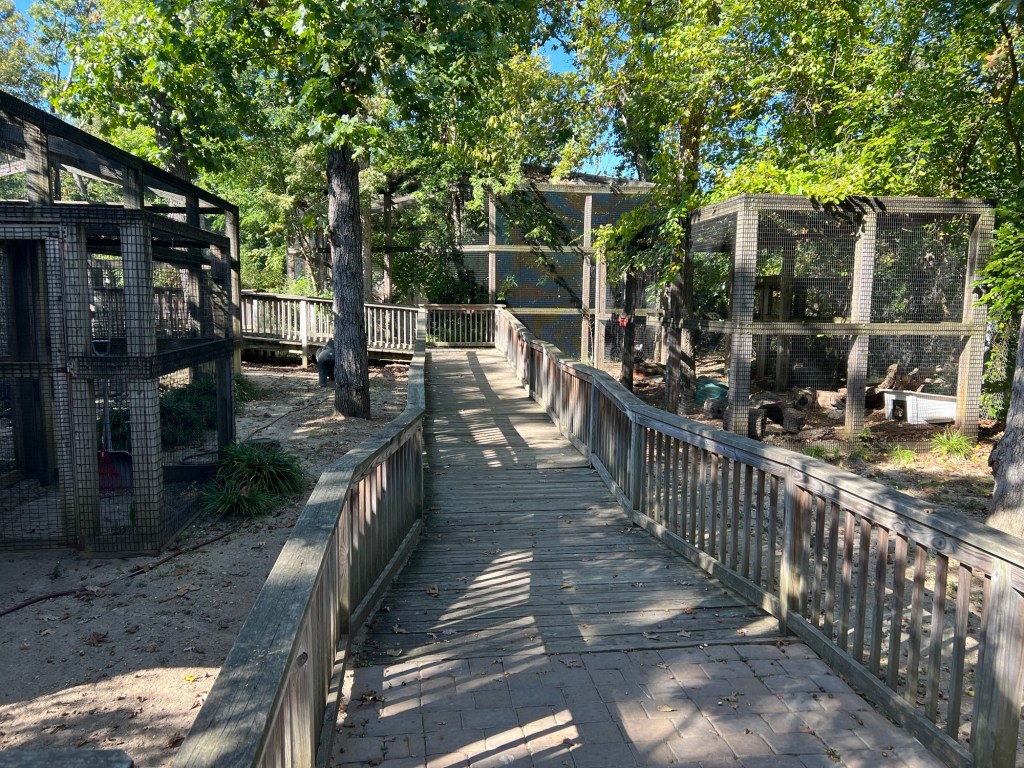
Following the walkway to the back pens where a lot of the small animal and bird displays were located
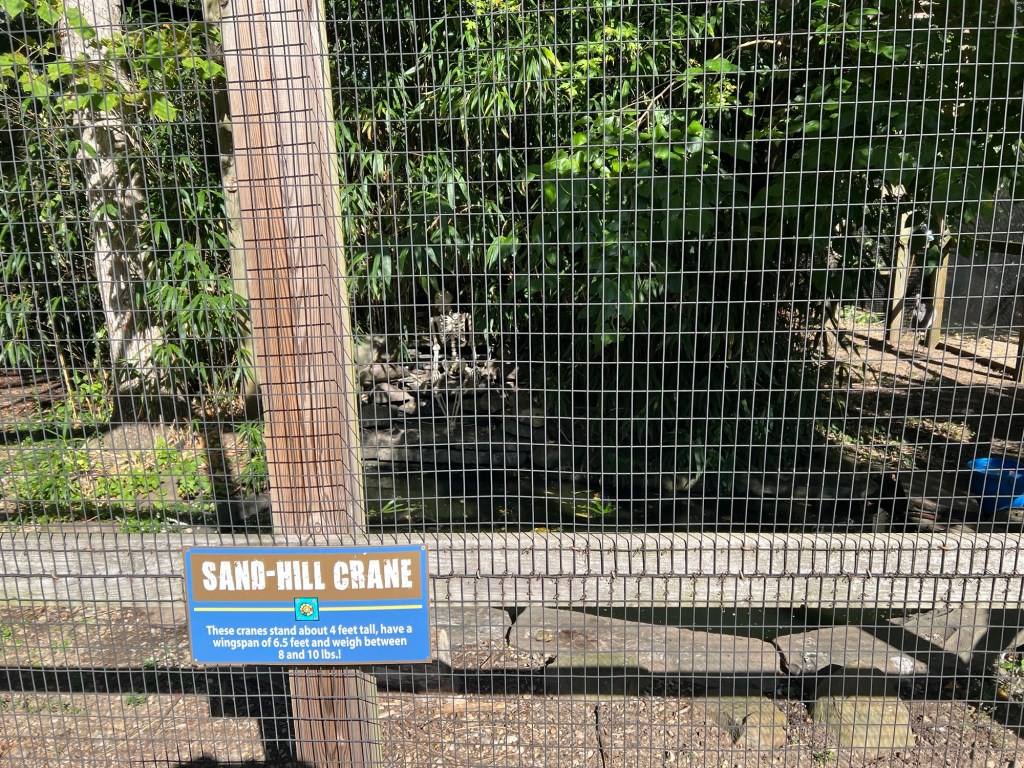
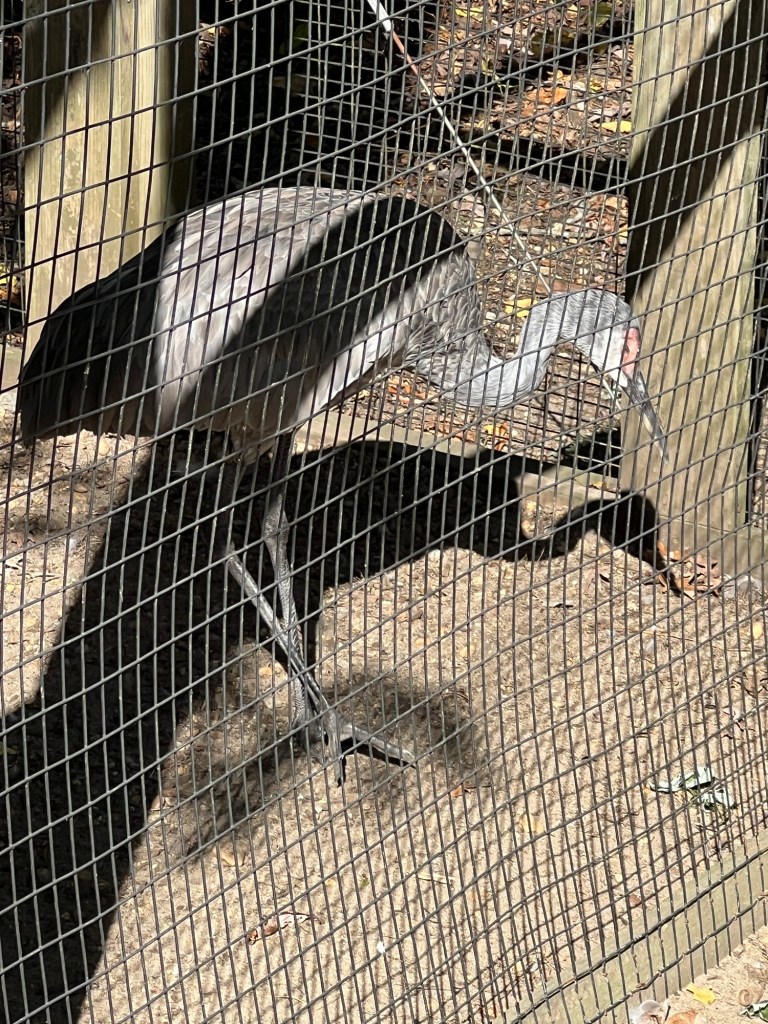
The next exhibition that I visited was the Sand Hill Crane and I read that the poor little guy had been injured. He seemed a bit more optimistic when I passed the cage. I think that the animals just want some attention.
The Sand Hill Crane display
The Crane was watching all of us as we passed his cage
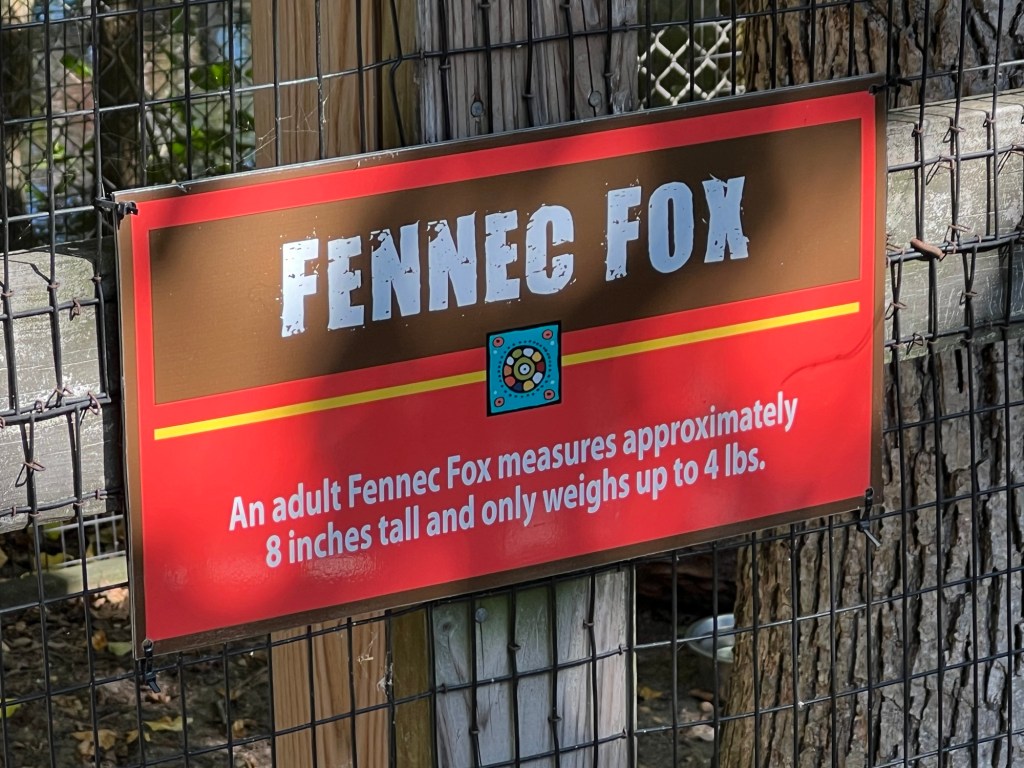
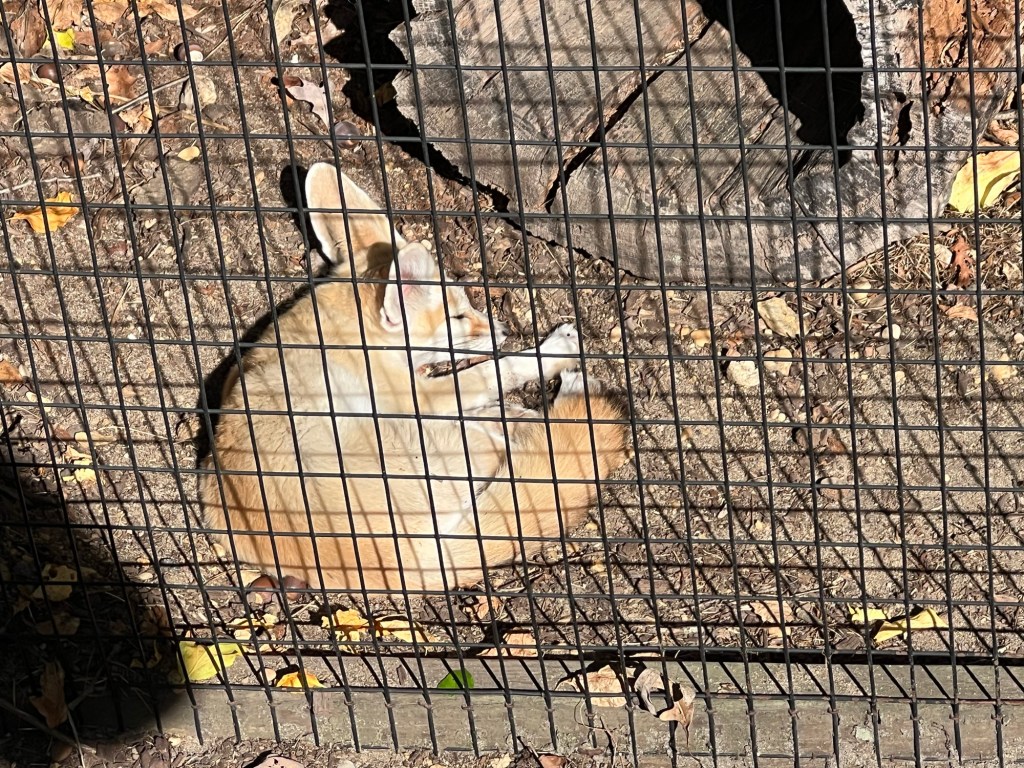
The next small animal that I visited was the Fennec fox and the two that I saw were fast asleep on this warm afternoon. They must have had a busy morning.
The Fennec fox cage
The foxes that I saw that day were fast asleep
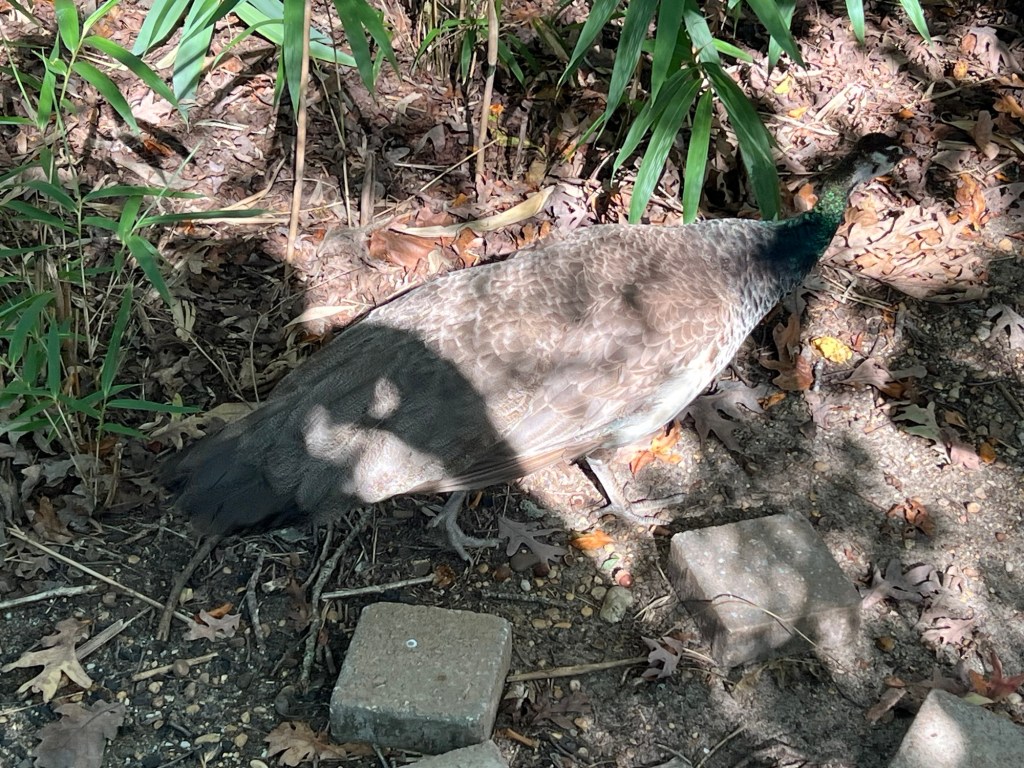
While I was walking around the back part of the zoo, there was a peacock family walking around the cages. The father peacock had two small birds with him and they just meandered amongst the cages.
The male Peacock walking around the zoo with his children. They were allowed to walk around on their own without being locked up. They looked like they were having an adventure as a family.
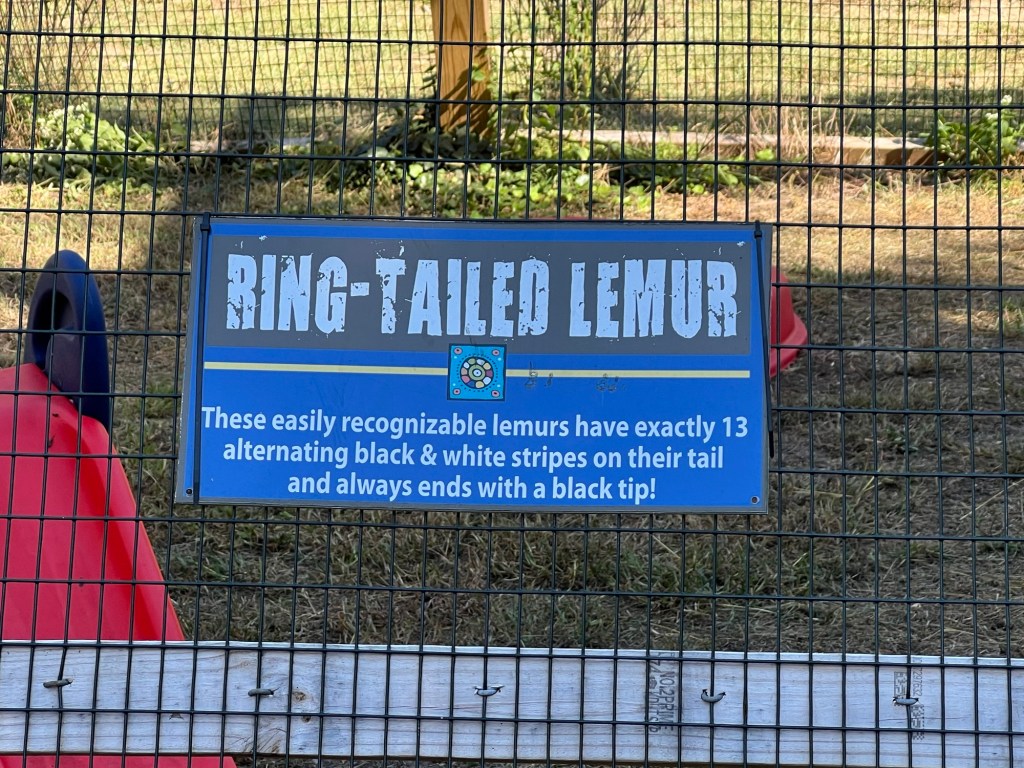
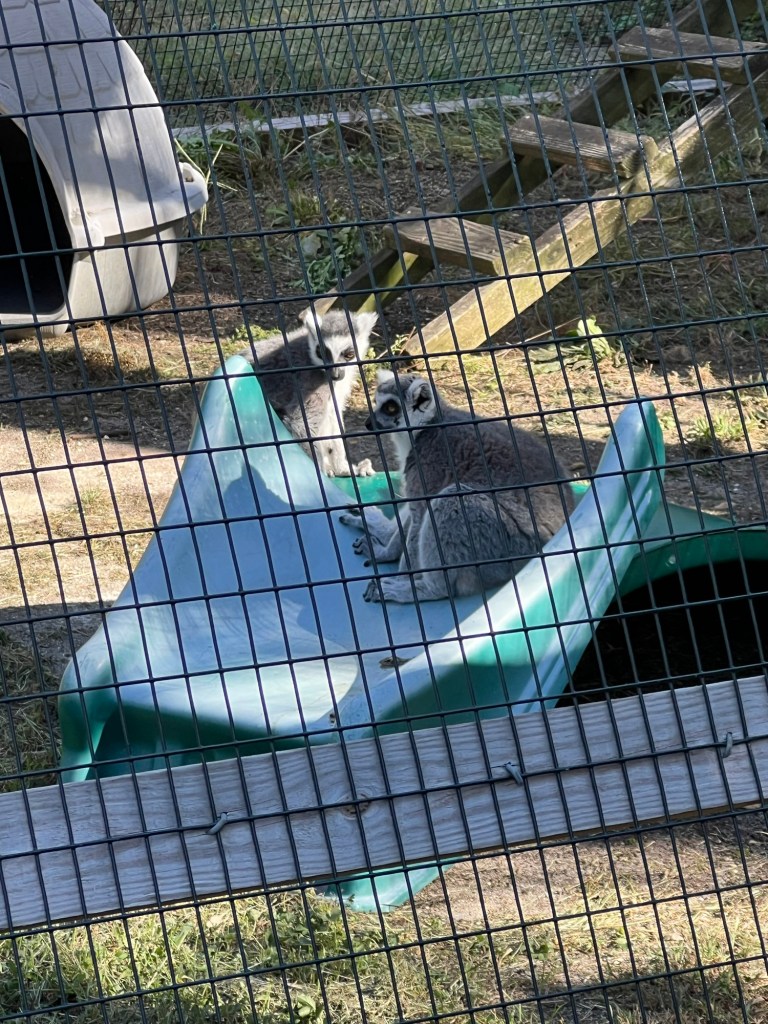
The Ring Tailed Lemur display
I visited the Ring- Tailed Lemur pens and these little monkeys looked like they were plotting an escape. They stayed in a bunch the whole time I watched them and they just stared.
The lemurs just stared back at me as I watched them
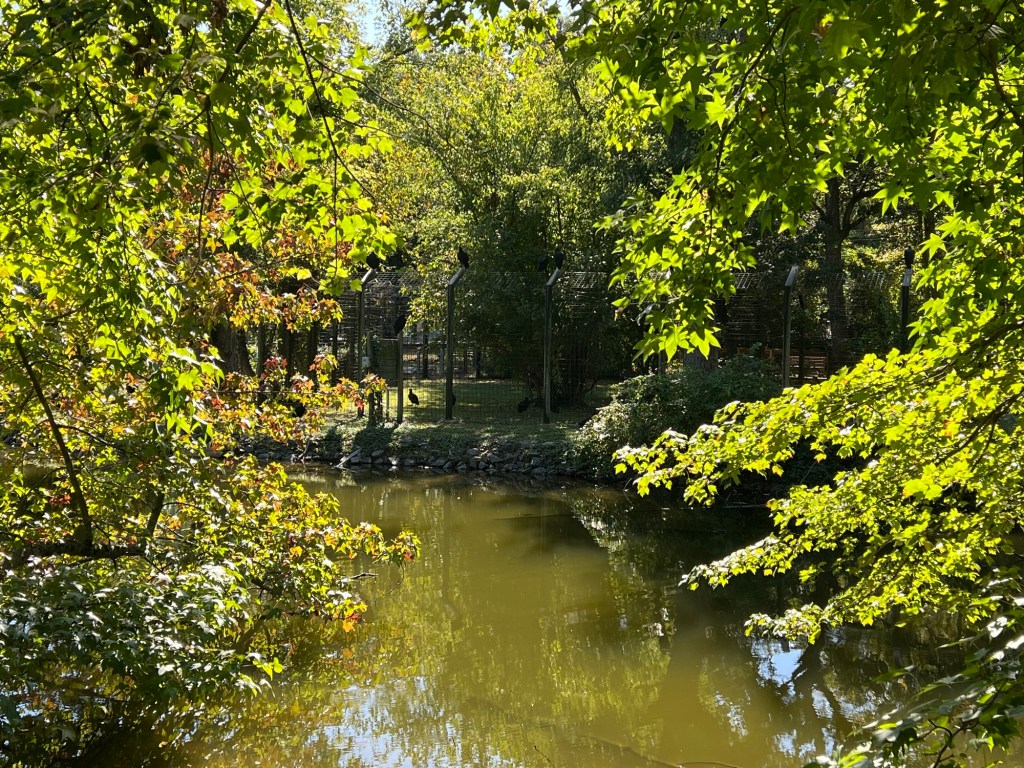
The back part of the museum was beautiful in the early fall
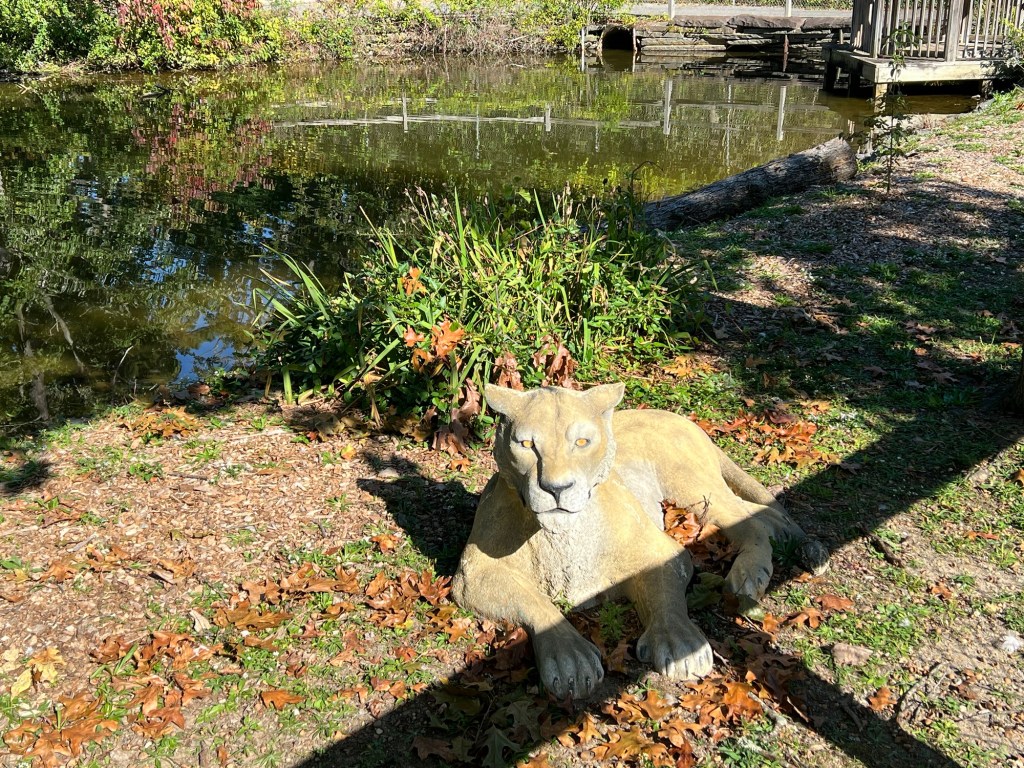
The tiger sculpture along the path at first freaked me out that he had gotten out and just looked at us. He looked real.
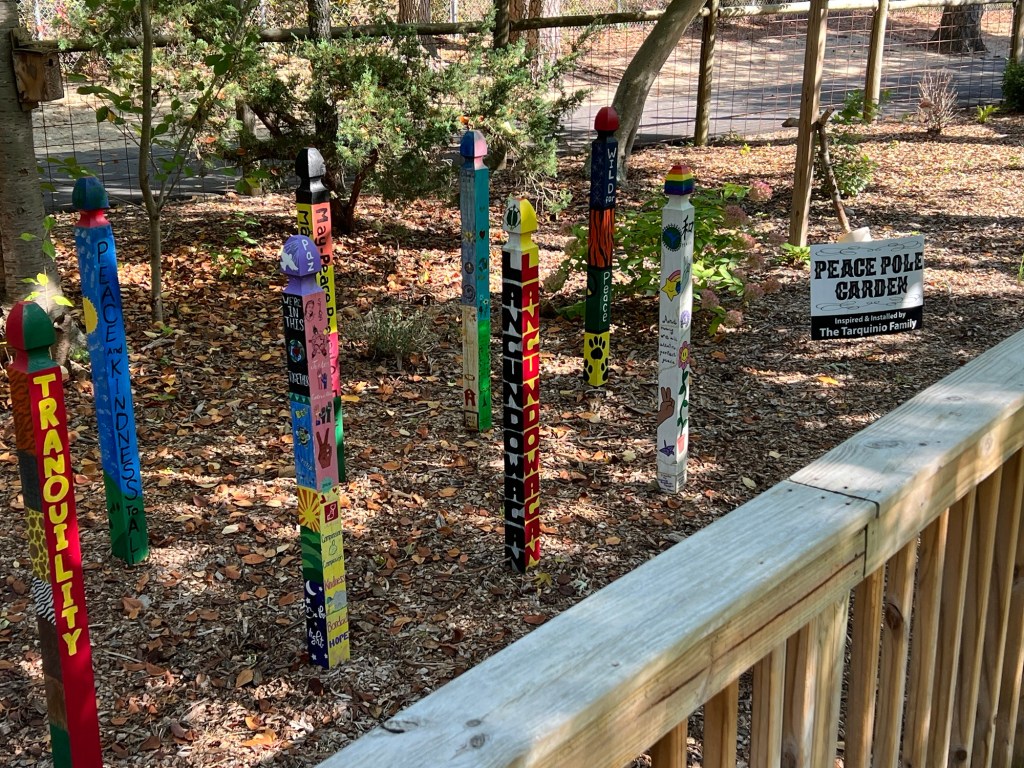
The Totem Pole Garden
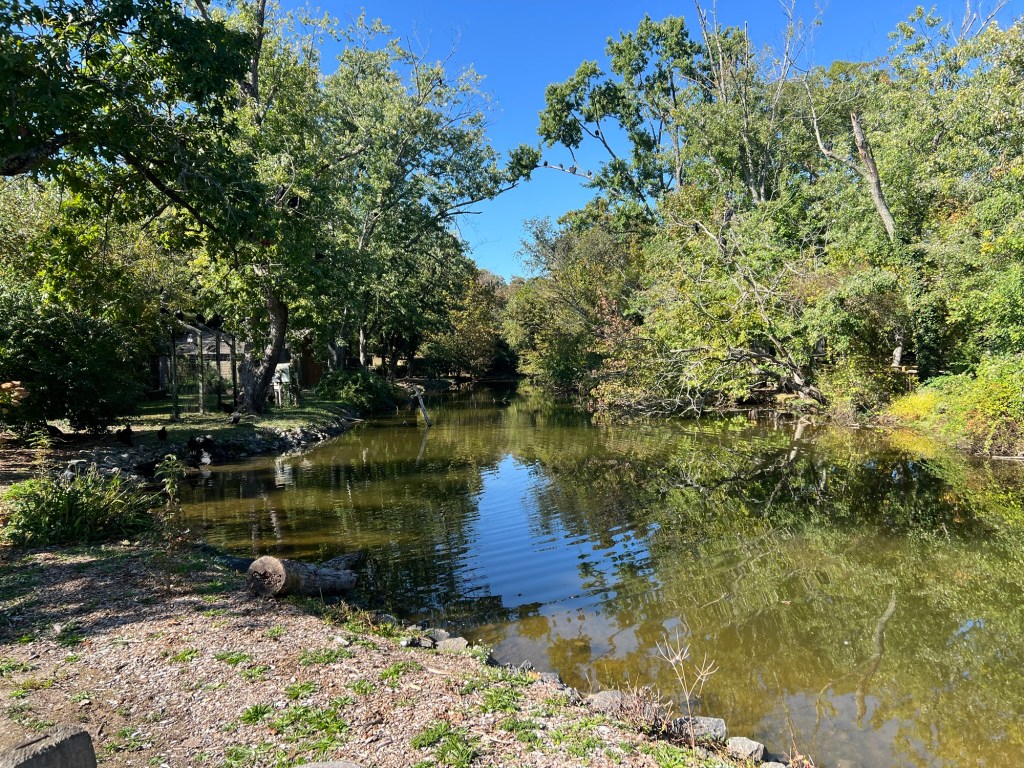
The river running through the gardens in the Fall 2024
The leopard looked bored in his cage. He justly walked aimless around their cages. They are not being given enough space to move around.
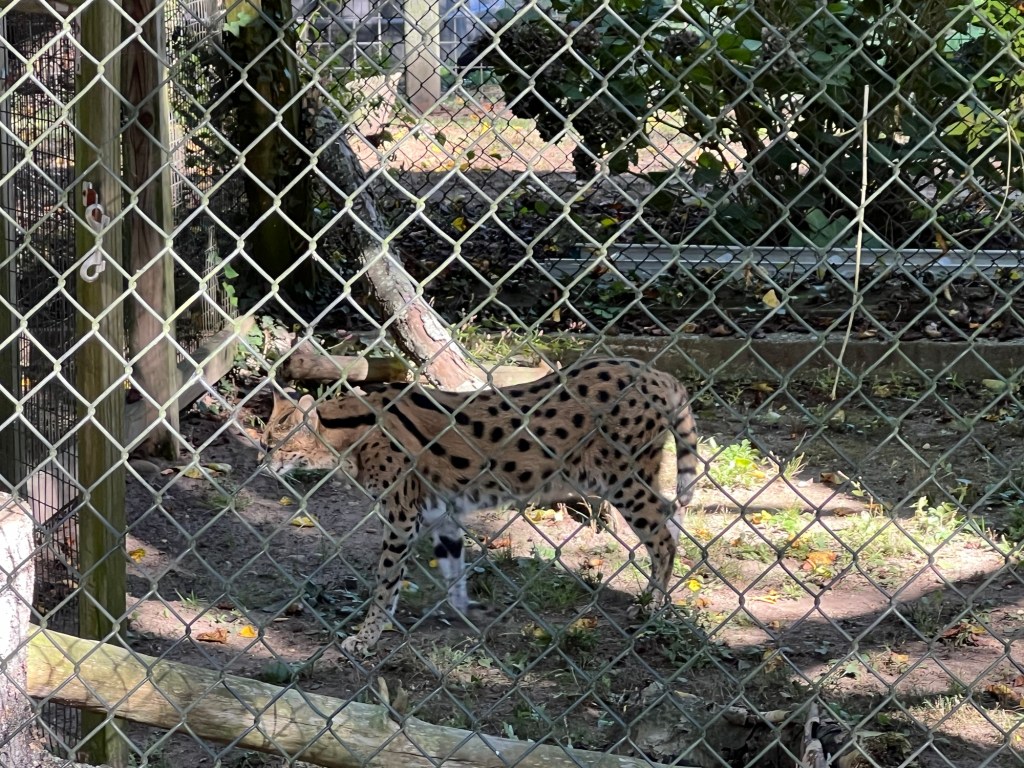
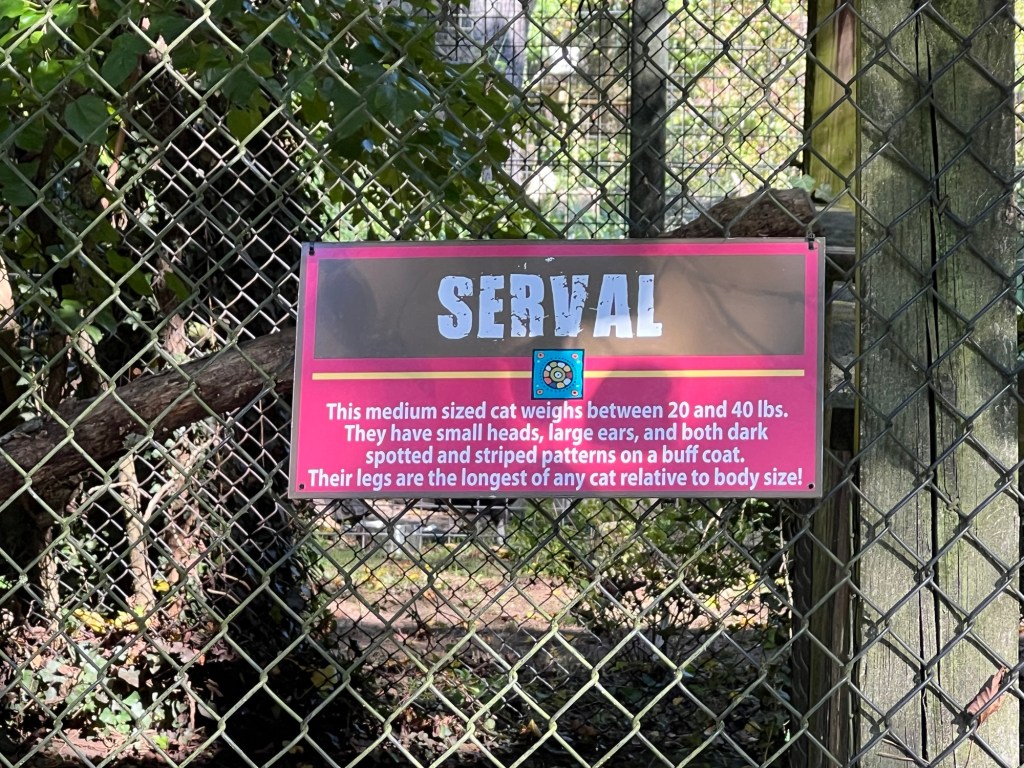
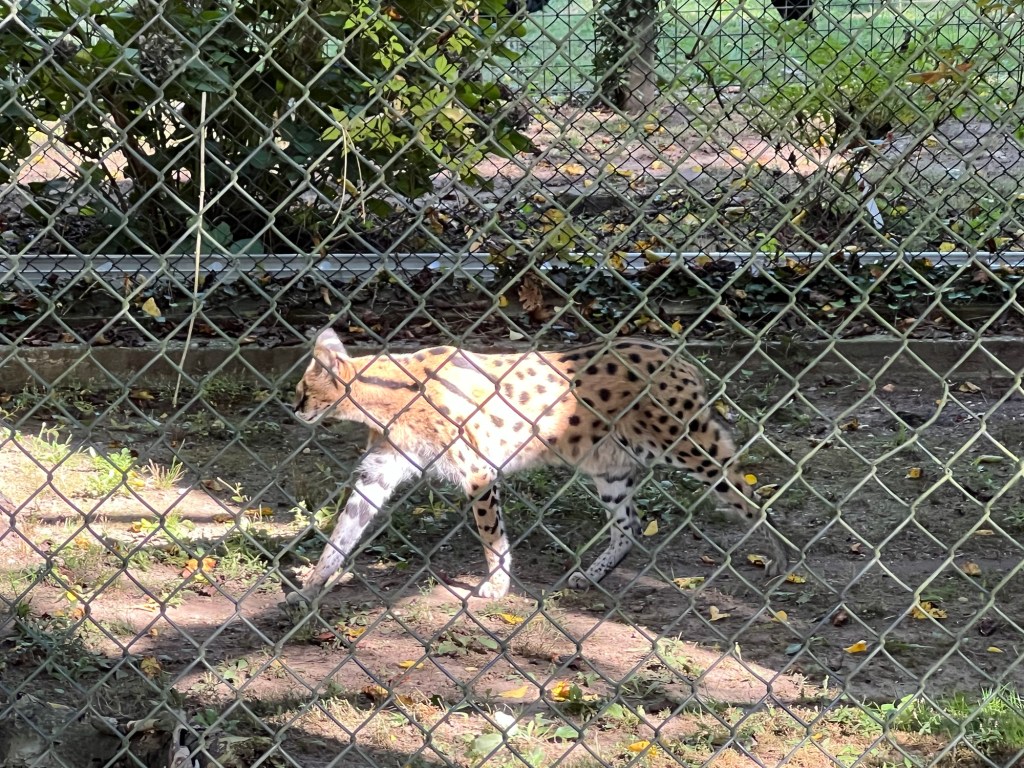
The serval cage
The Serval also looked bored. It just walked in circles around the cage. I was not sure if he was bored or just confused.
The zoo is such a nice way to relax and enjoy a warm afternoon. The animals here are not shy but need to have more space to move around. I think we as humans visiting them amuse them more.
The History of the Cohanzick Zoo:
(from the zoo website)
The Cohanzick Zoo is privileged to hold the title of New Jersey’s first zoo, and to this day remains one of the only municipal-ran zoos in the state. It all began back in 1934 when the City of Bridgeton found itself in possession of a small herd of deer which the citizens thought should be exhibited. And thus… a zoo was created!
The Zoo is part of the Department of Recreation and Public Affairs. Located in Bridgeton’s city park, which spans over 1,100 acres, the zoo is home to over 100 different mammals, birds, and reptiles. Over 45 different species from all around the world are represented here.
The Zoo, originally named the “Bridgeton Zoo”, was later named the Cohanzick Zoo in 1972. “Cohanzick” coming from the band of Lenape Indians who resided in the area alongside the Cohansey River, which resulted in the band of the tribe being named the Cohanzick Indians. This river flows through and around the park, adding a unique water feature.
Up until about 1970 the Zoo was a fairly small operation, running more like a petting zoo than a modern zoological care facility. This change was facilitated by Jerry Alden, who became Director of Parks and Recreation for Bridgeton. Knowing a local with a love and talent for taming wildlife, Henry R. Ricci was offered the position of curator, which he happily accepted. His defining point for change was, “Close it up, or make it a zoological garden and educational center,”.
Between 1970 and 1973 big changes came to the small zoo. Part of this is thanks to a visit to the Governor’s office in Trenton by zoo resident, Maggie, a jaguar. Her visit was rewarded with a $25,000 gift to the Zoo from the state government, per Gov. Cahill. A sanitation program was put in place, proper care and diet programs were developed for the animals, and more natural habitats were built. Dr. Ernest Zirkle, a local veterinarian who up until then had cared for the animals as a public service, was made a formal member of the zoo staff. Another big change, was the formation of the Cohanzick Zoological Society. The Society, which still exists today, comprised of local volunteer citizens, has the mission of supporting the Zoo through driving public awareness and fundraising efforts.
Since then, the Zoo has been on an ever-evolving mission to better its experience for both its animals, and its visitors. Thanks to funding from both local government and public donations, the Zoo is able to provide free admission to visitors, maintain necessary renovations, and keep up appropriate care for the animals.
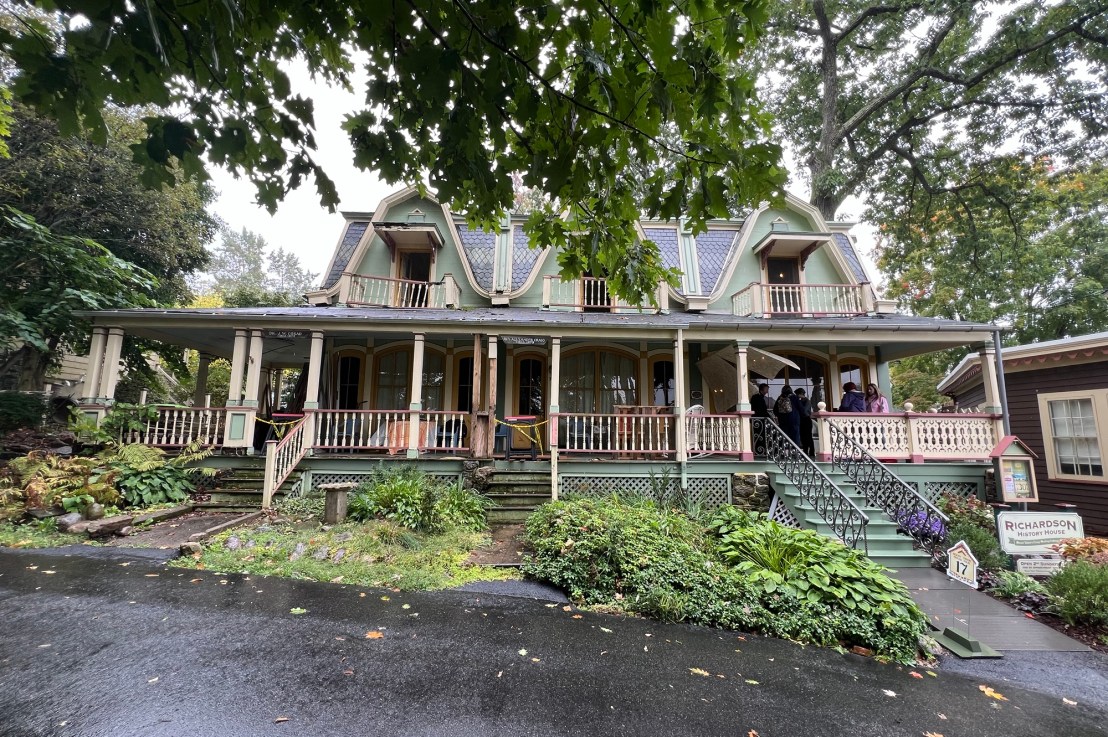
The Mount Tabor Historical Society at 32 Trinity Place
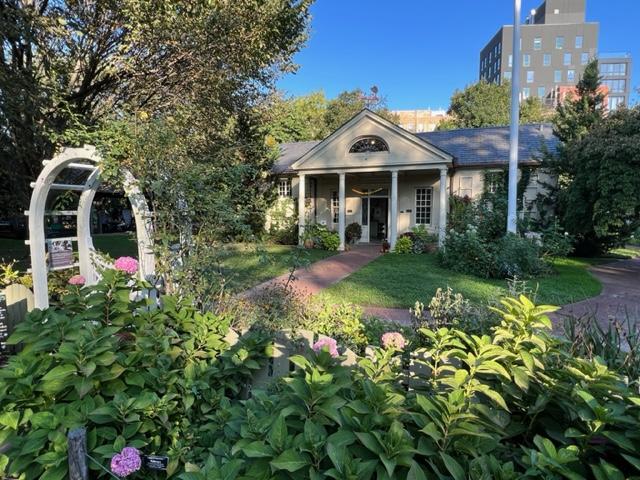
The Historical Society and the gardens
I went on the Mount Tabor House and garden walking tour in late September on a rather gloomy Saturday and I had a wonderful time. It may have been gloomy out but the museum could not have been more interesting and the people who opened their homes could not have been nicer.
The tickets were $35.00 at the door which I thought was very fair for this fundraiser. They had transportation from the elementary school to the site and back that ran on a continuous basis from 11:00am to 4:30pm when the tour was over.
The sign by the bus tour stop
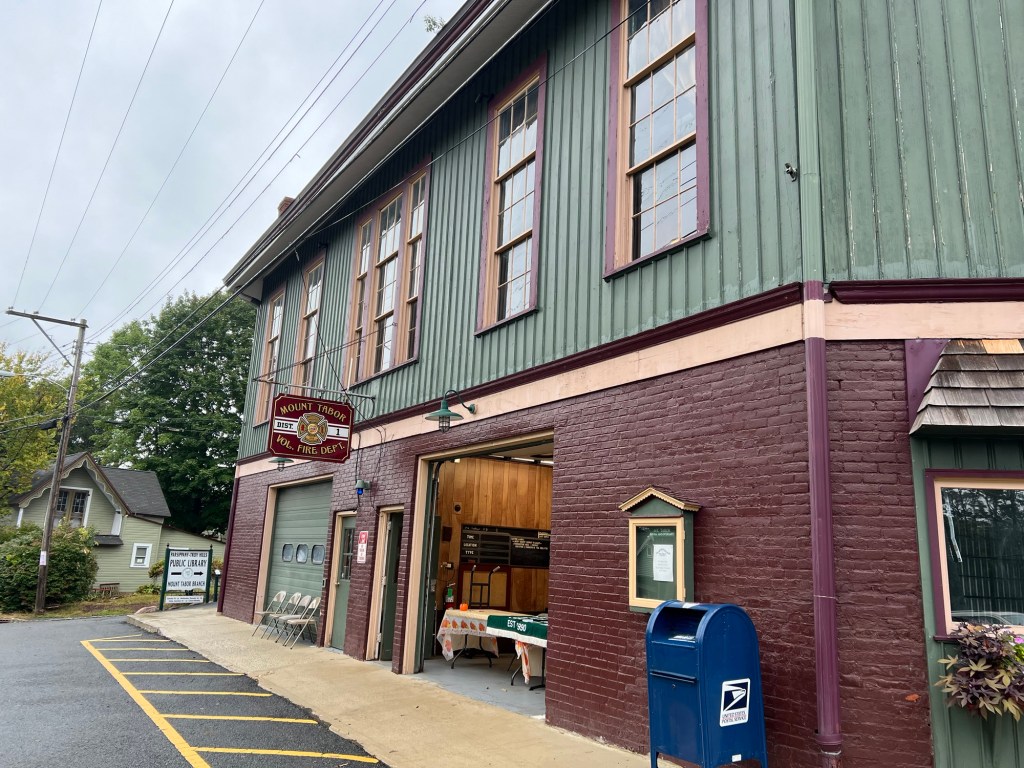
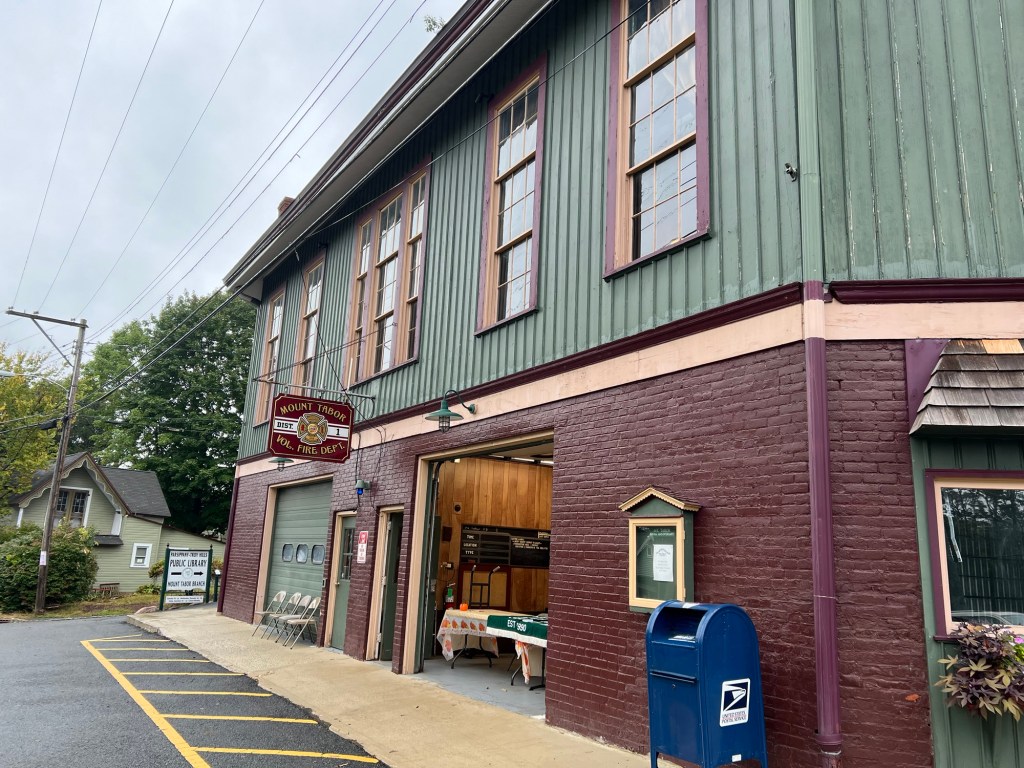
The first stop where we bought the tickets was the old Mount Tabor Fire House
When we arrived in the historic Mount Tabor neighborhood, this had once been a summer Methodist Camp. The planned community still has the original layout of the tent community and plots of land that the houses had been built on since old camp closed.
The center of the community was Trinity Park, a beautifully landscaped park
My first stop on the tour was the old Tabernacle, the original gathering place and hall where the religious services took place.
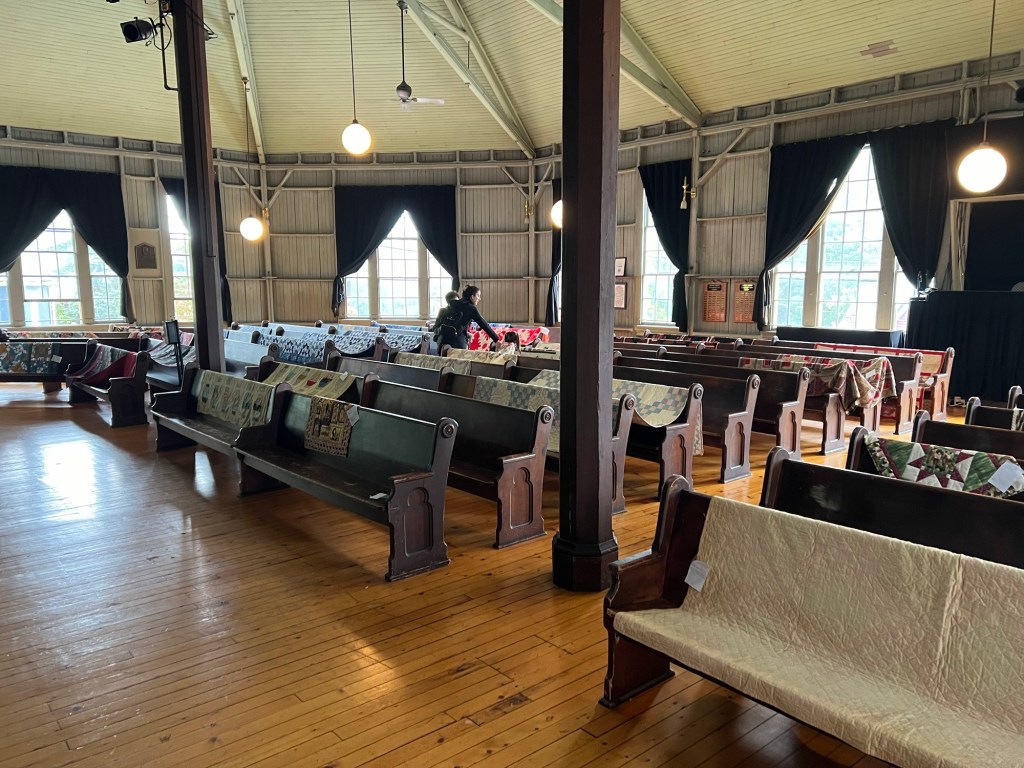
The inside of the Tabernacle, now being used for the quilt show for the tour
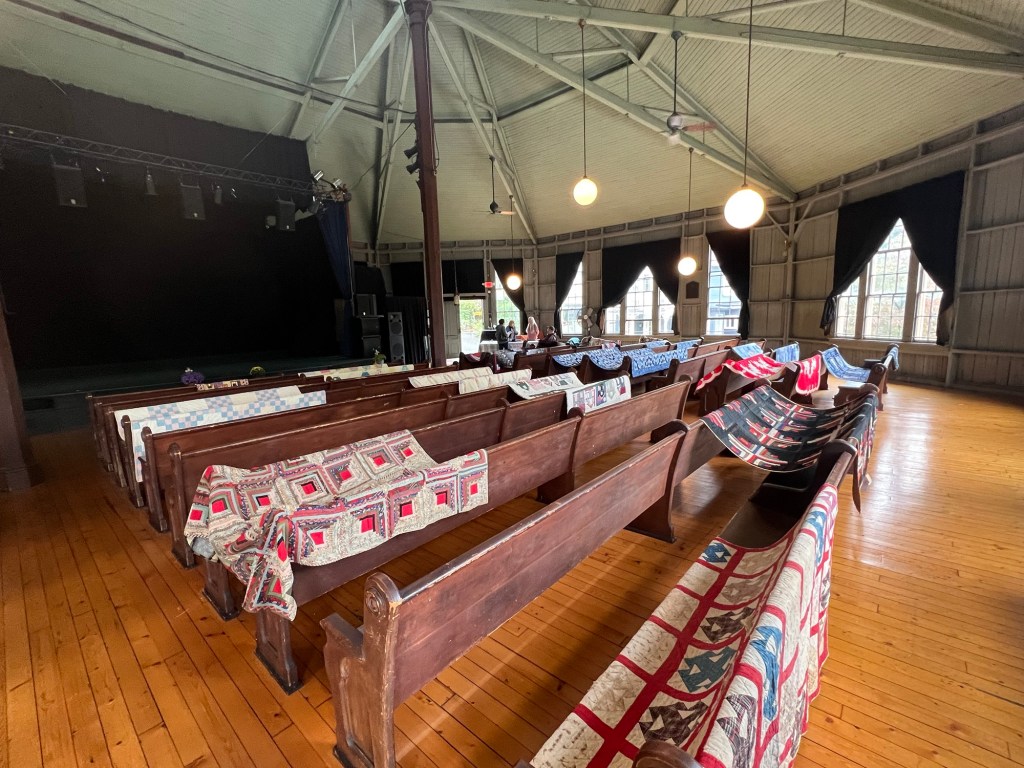
The Quilts were displayed on all the pews
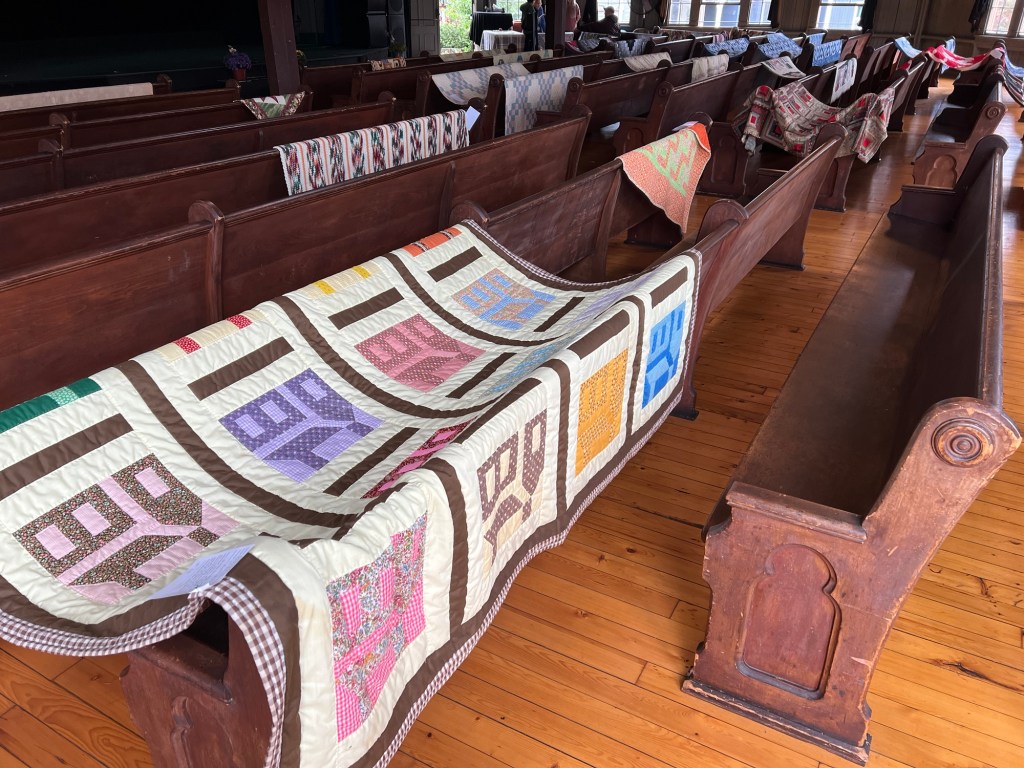
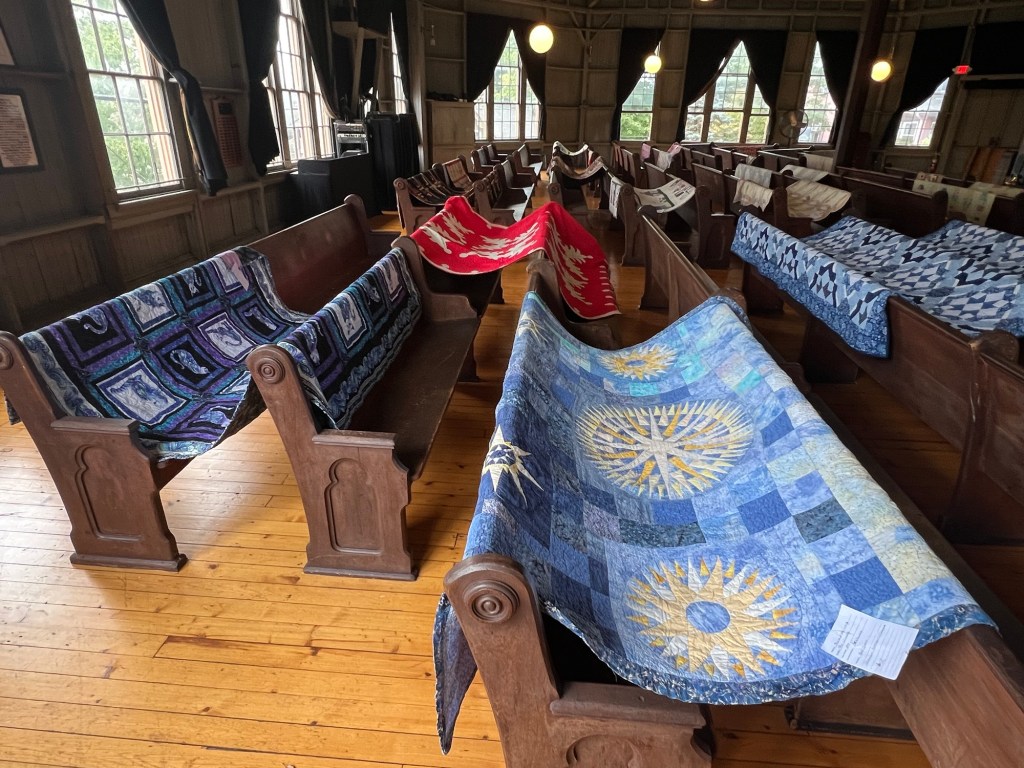
The quilts were all handmade, some really colorful and beautifully stitched. It was a really impressive show of artistry.
The beautiful quilts on display
The colorful quilts on display
After I left the Tabernacle display, I headed up to the Mount Tabor Historical Society Museum for a tour of the museum and gardens. It was located on Trinity Park.
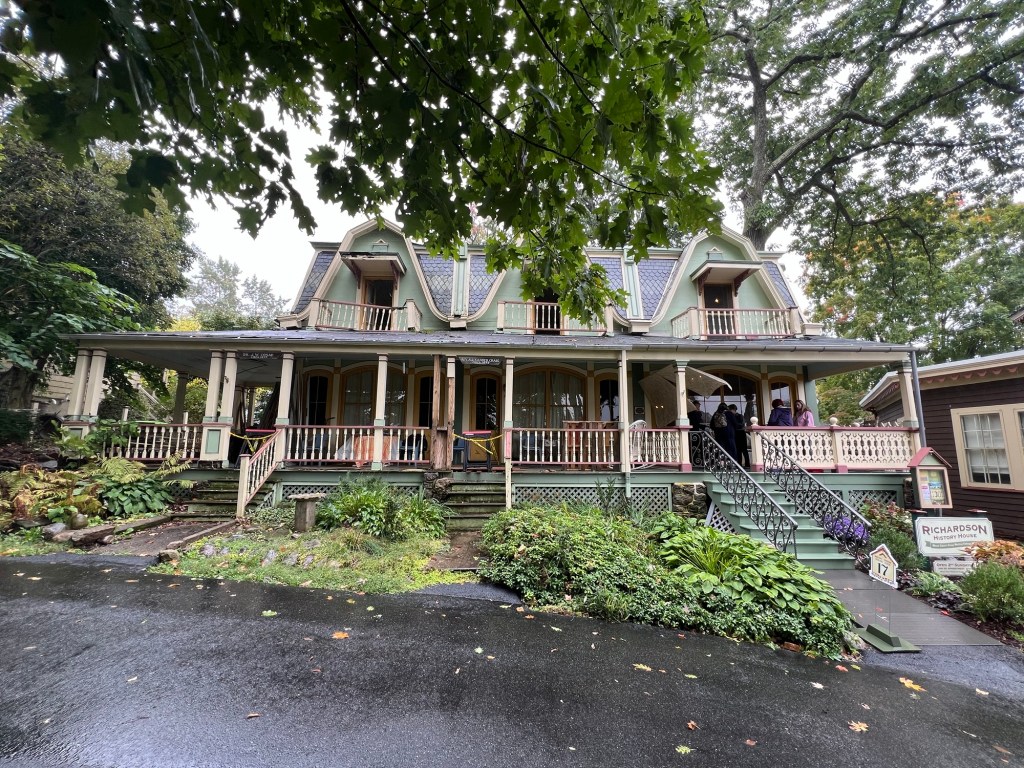
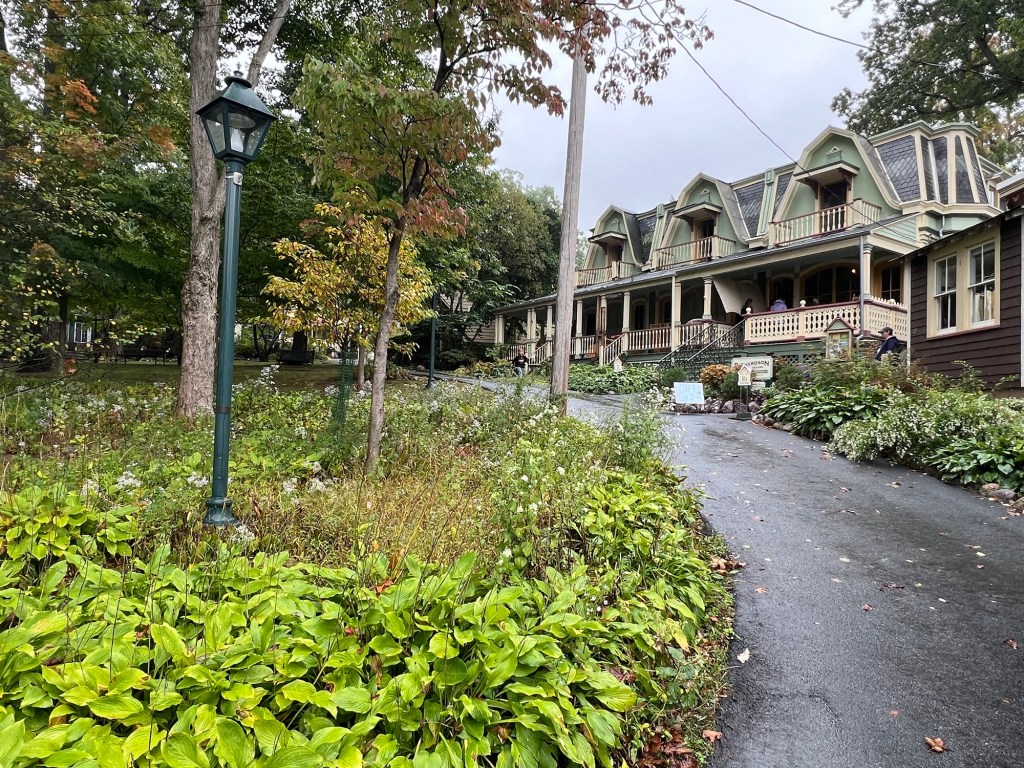
The Mount Tabor Historical Society on the eastern side of Trinity Park
The museum is part of triplex with a private home in the two other former homes. They are undergoing a renovation right now
The J. Smith Richardson History House (1873): A Camp Meeting Cottage Museum
(from the museum website)
The Mount Tabor Historical Society is privileged to share our historic community, founded as a post-Civil War permanent Camp Meeting ground, and the Richardson History House – a Camp Meeting Cottage Museum. The 1873 History House invites visitors to travel back to another era and see what it was like to spend a summer “camp meeting style” in the cottage of J. Smith and Lydia Richardson.
The parlor area in the home of Mr. Richardson
The home on the furthest to the left of the building is the museum, once home to the Richardson family, who were part of this Methodist retreat.
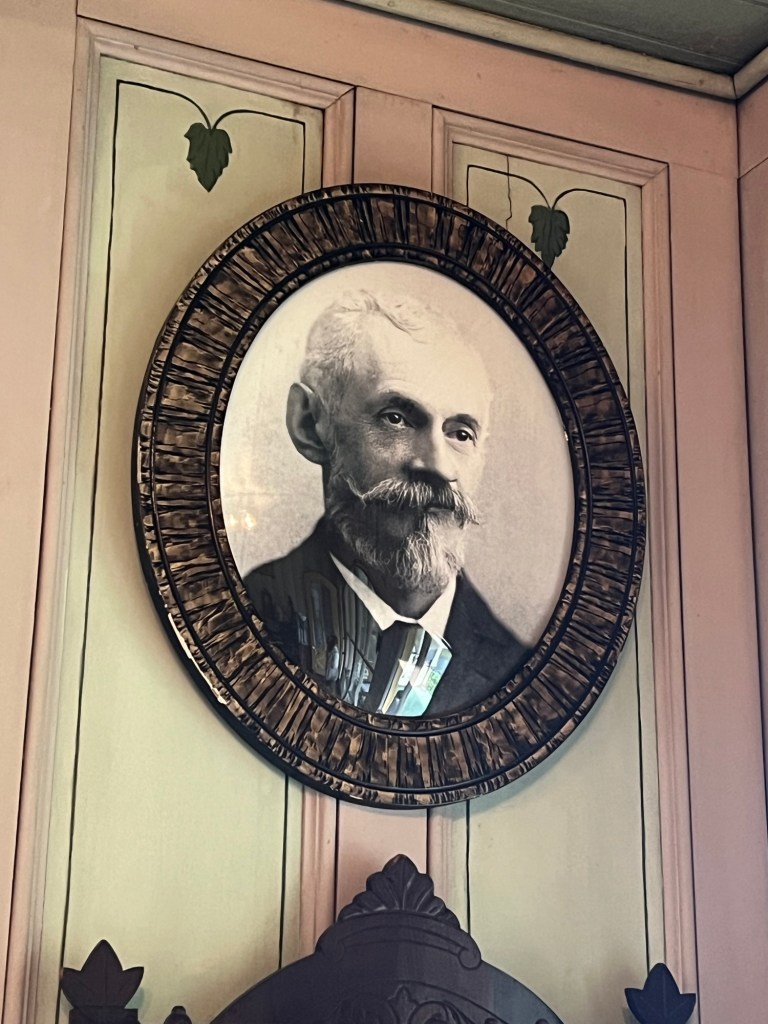
Mr. Richardson’s portrait hangs proudly on the wall overlooking the parlor of the home
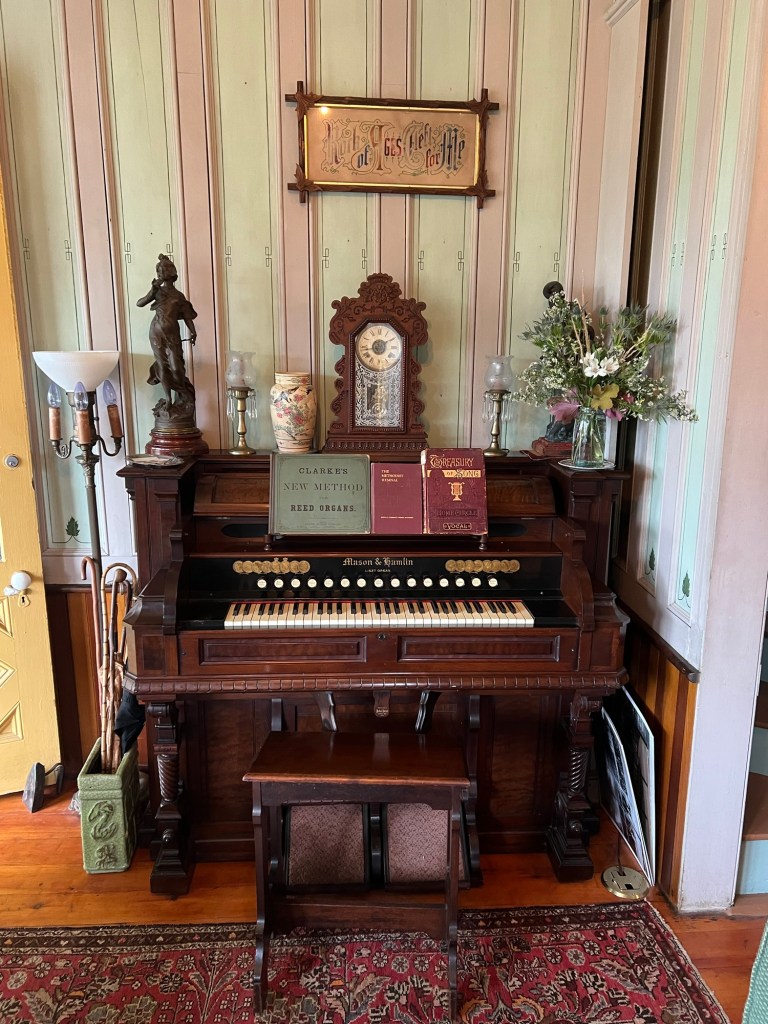
The homes pipe organ that was used to entertain the family
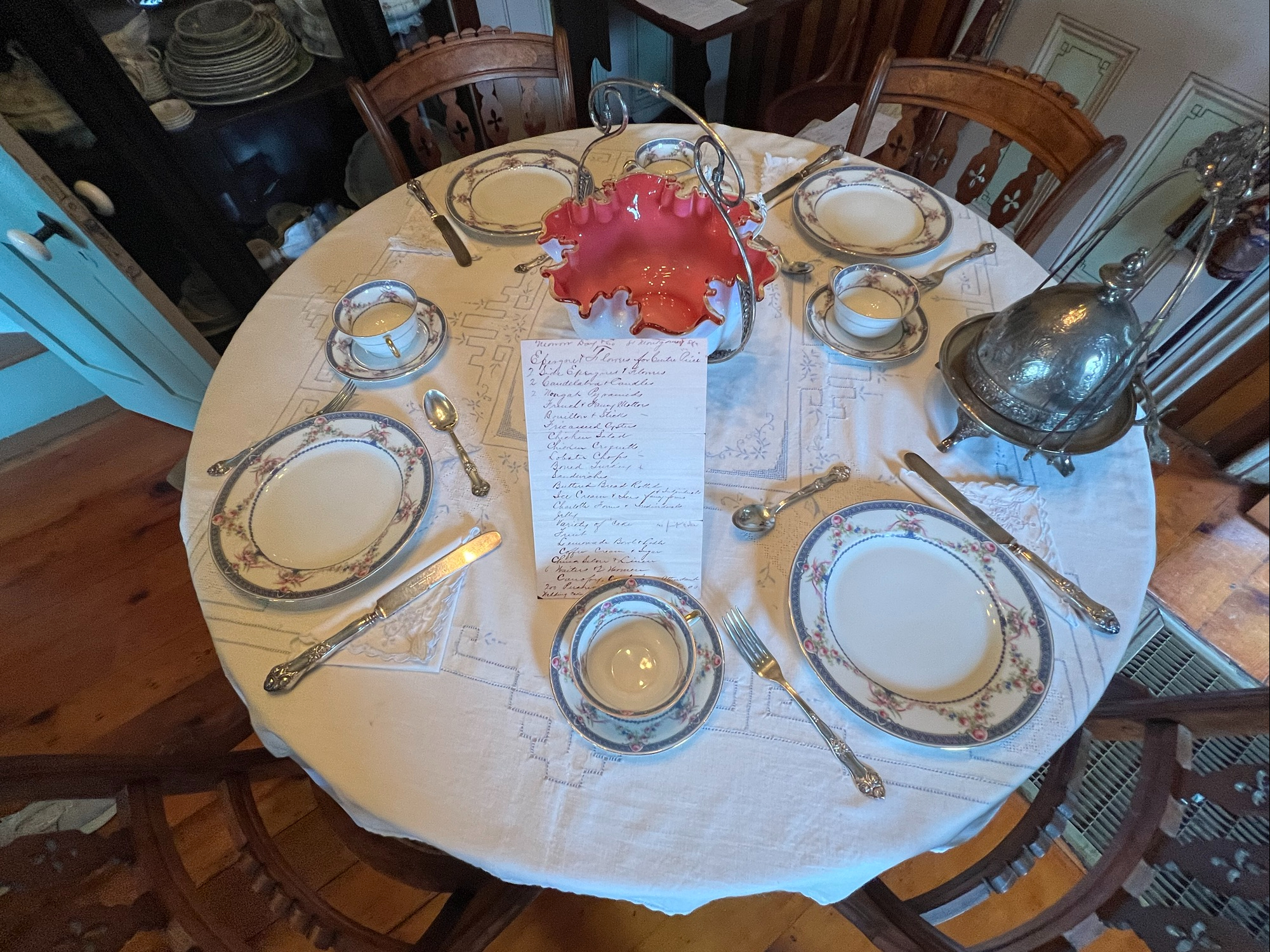
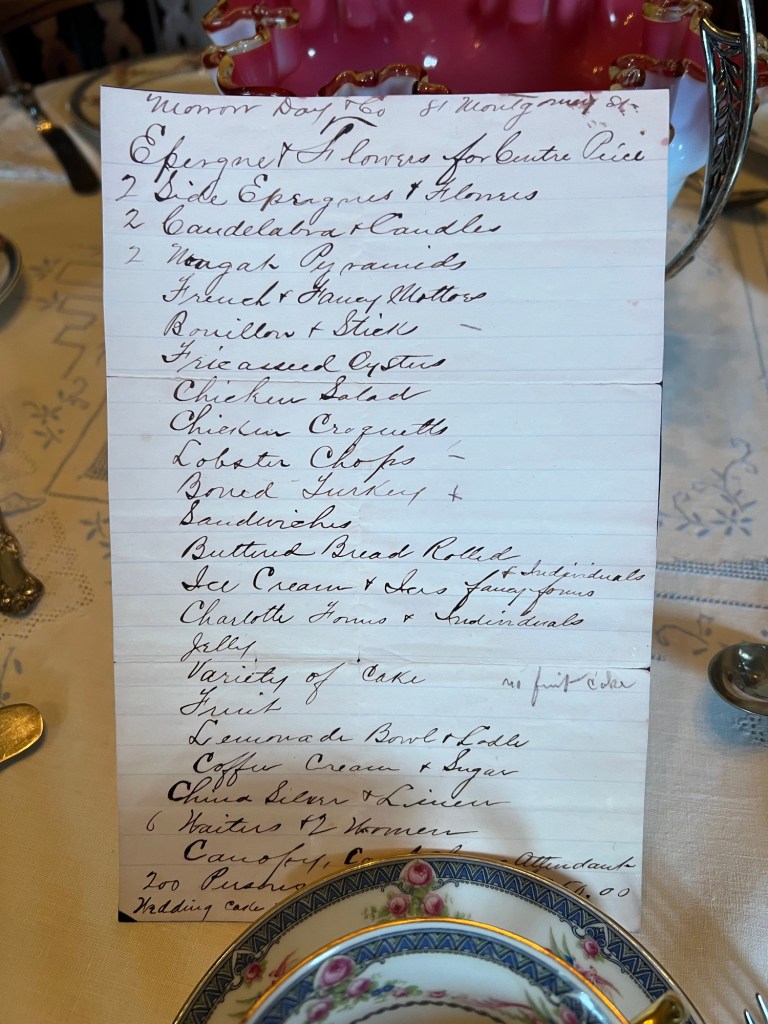
The table was formally set with period China in the Dining Room that was shared with the parlor area. The tour guide told me that the family kept meticulous records of everything and on the table was the wedding menu of Mr. Richardson’s daughter’s wedding.
The Dining Room table set for dinner
The beautiful Victorian China
The bride’s Wedding menu. You can tell they ate well that afternoon
The brides wedding was pretty elaborate for the time and you could tell by the menu they ate pretty well that afternoon.
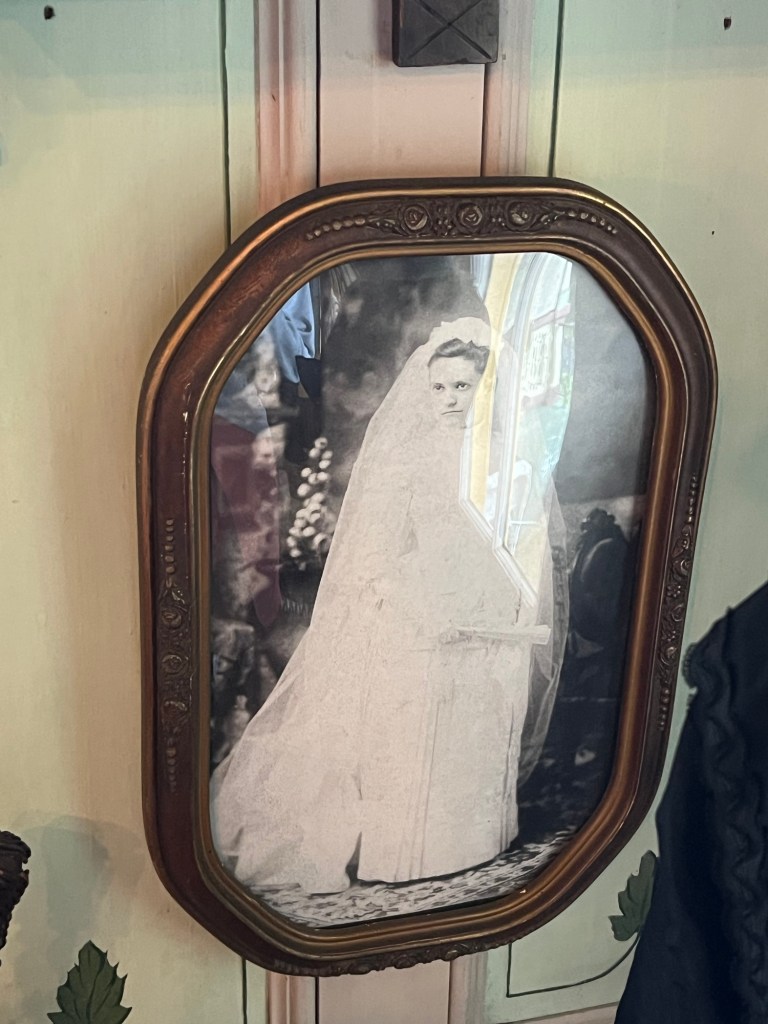
The bride’s Wedding photo hangs proudly in the parlor
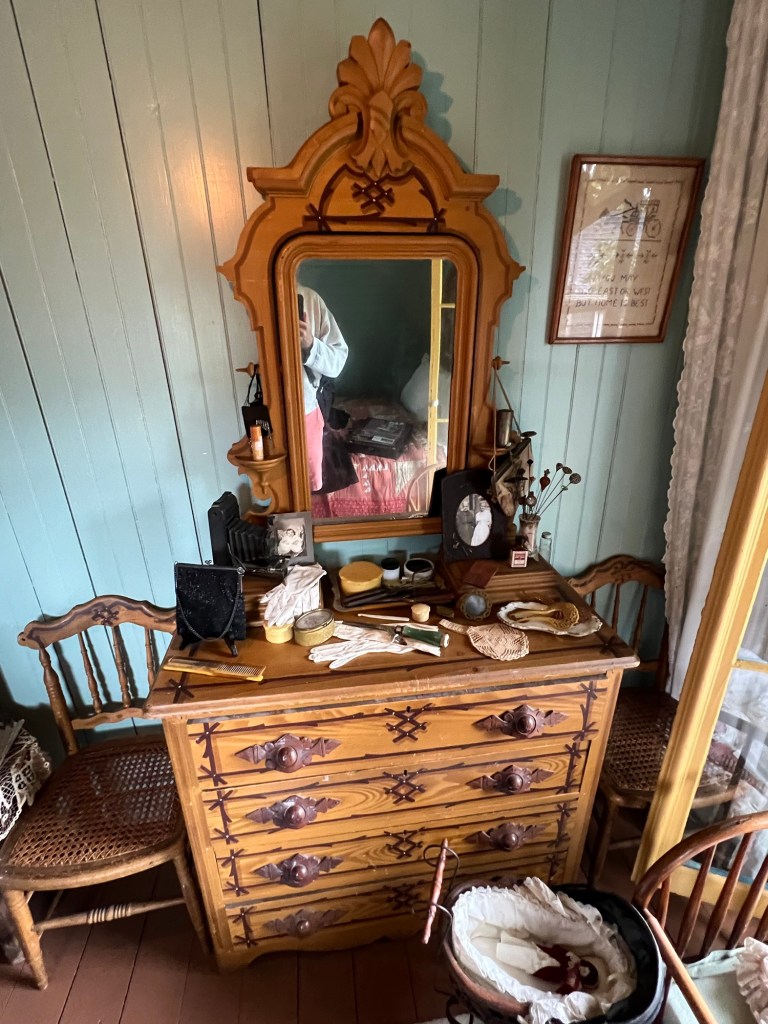
The family heirloom, the bureau, sits proudly in the corner of the room
The family did not leave much behind but this bureau is the one piece of furniture that the family owned. It now holds serving pieces and dinner items. The kitchen is small but has all the modern convenes of the time including a range coal stove and an ice box, which were pretty elaborate for the time.
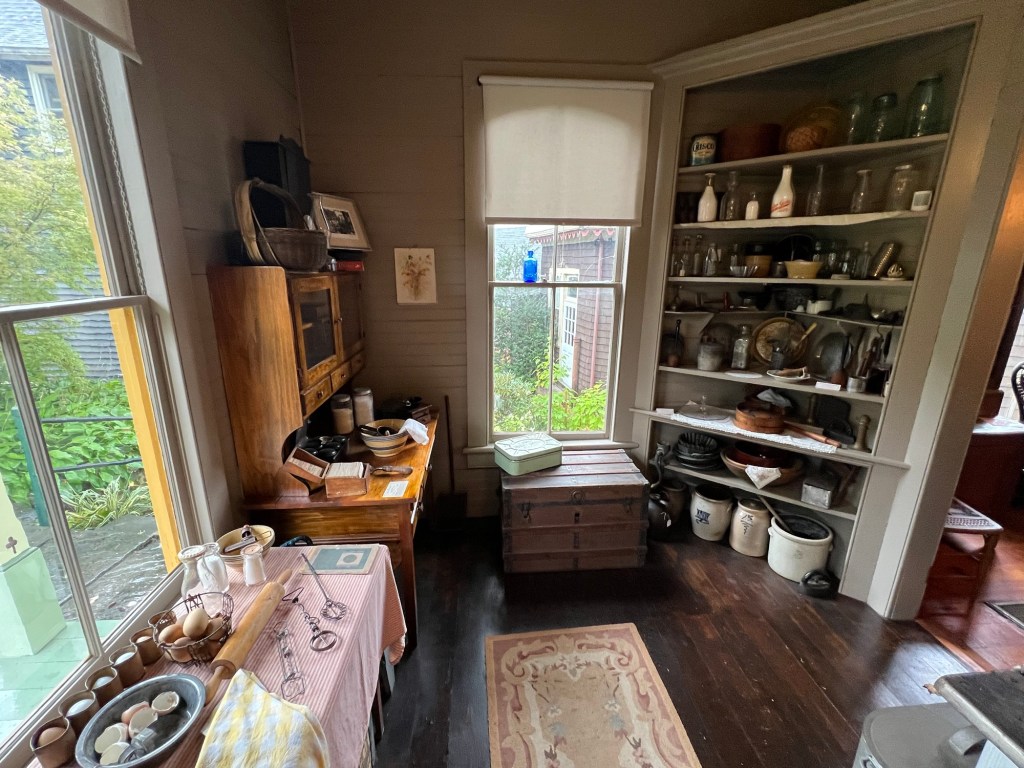
The kitchen of this small summer home
The shelves with all the cooking and storage materials
There are all sorts of baking materials, cooking utensils and items to cook full meals for the household.
Baking and measuring items
Items for baking
The historic map of the Mount Tabor Camp Ground was hung in the kitchen
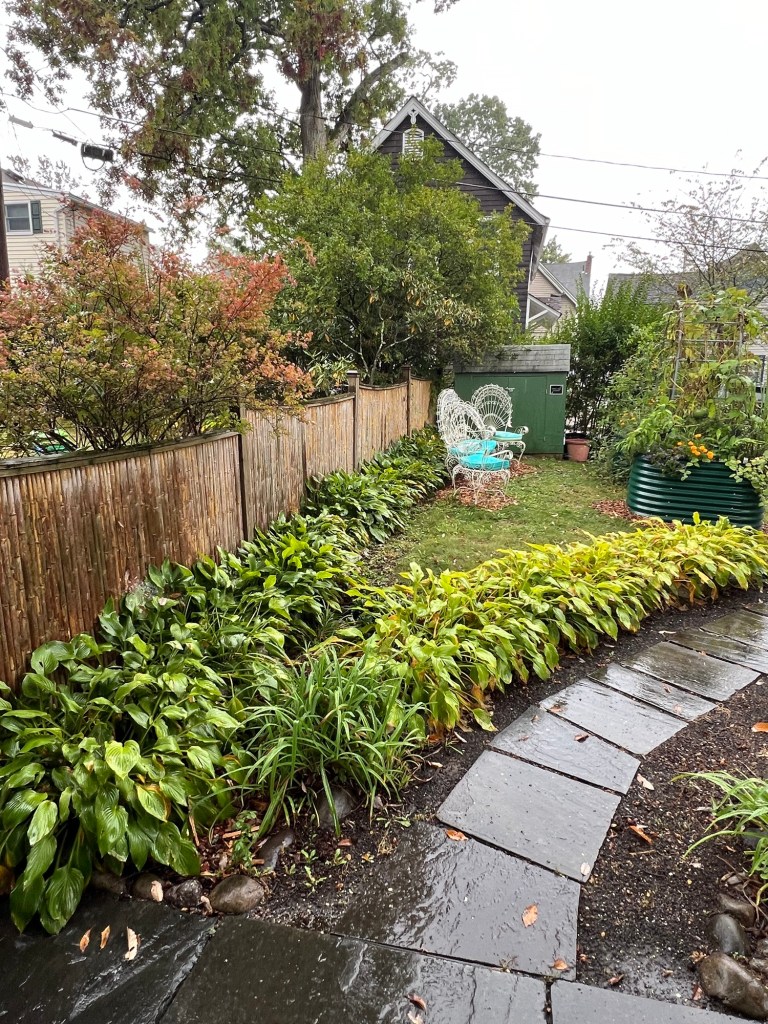
Off the kitchen door was a beautiful garden and a landscaped walkway
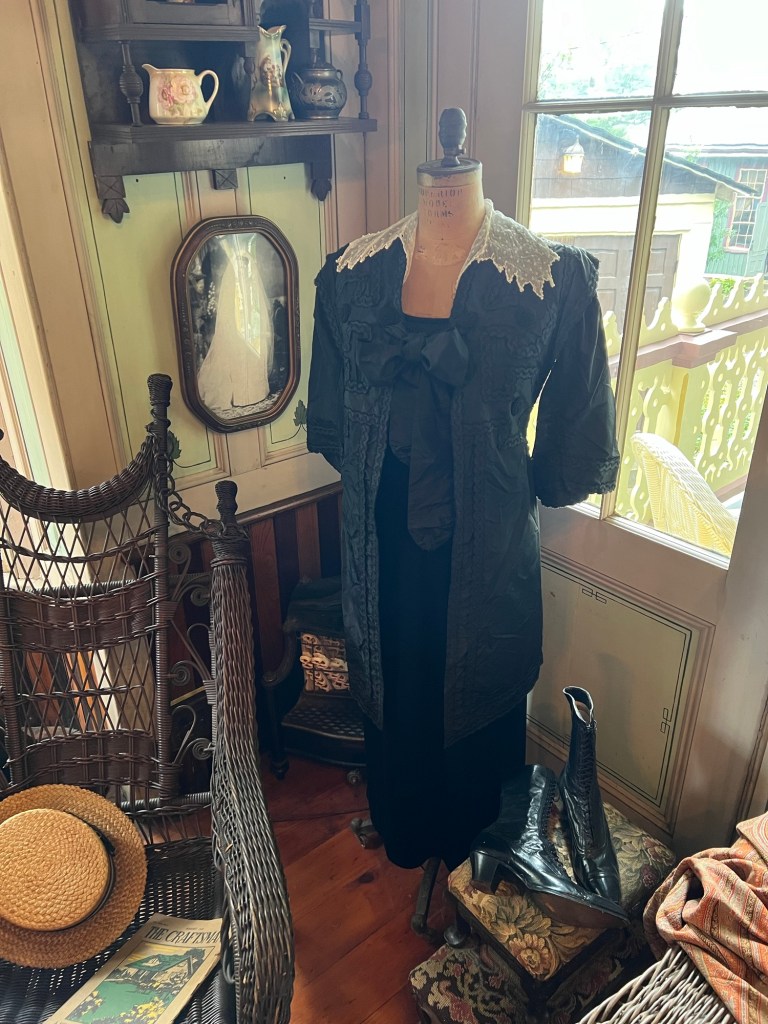
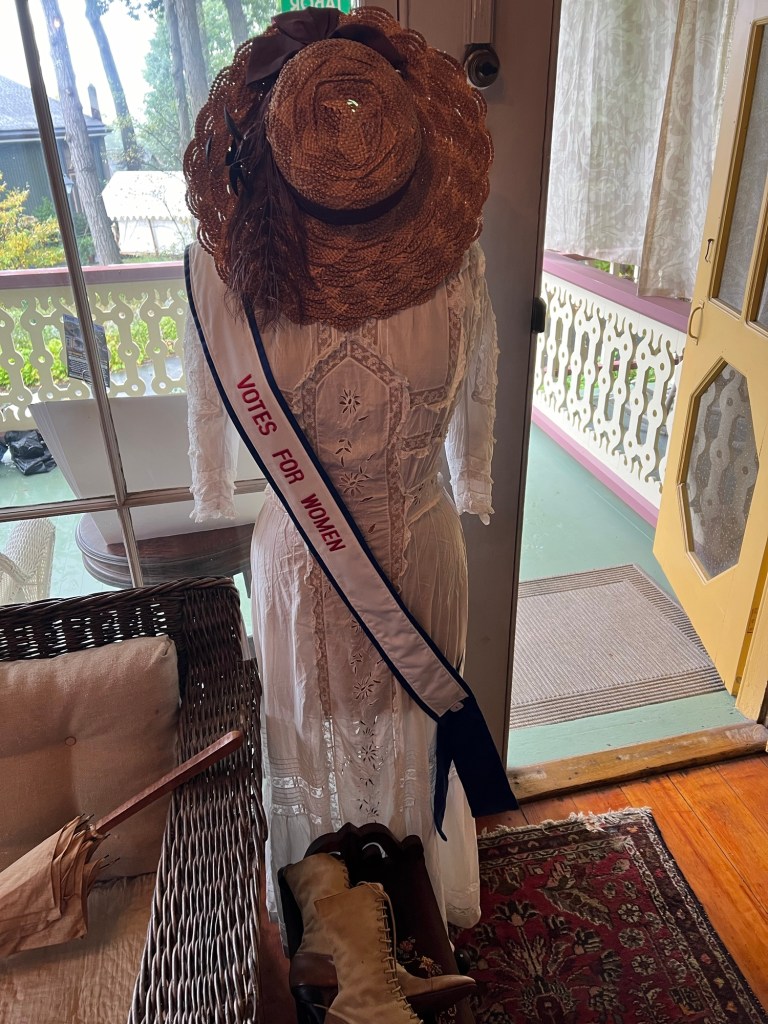
Some vintage clothing was on display in the parlor
Vintage women’s clothing on display in the front parlor
I took a trip up the narrow stairs to the upstairs bedrooms and bathroom. I discovered that the house was much bigger than I thought. There was a nice size bathroom at the top of the steps.
For a small house, the bathroom was nice sized
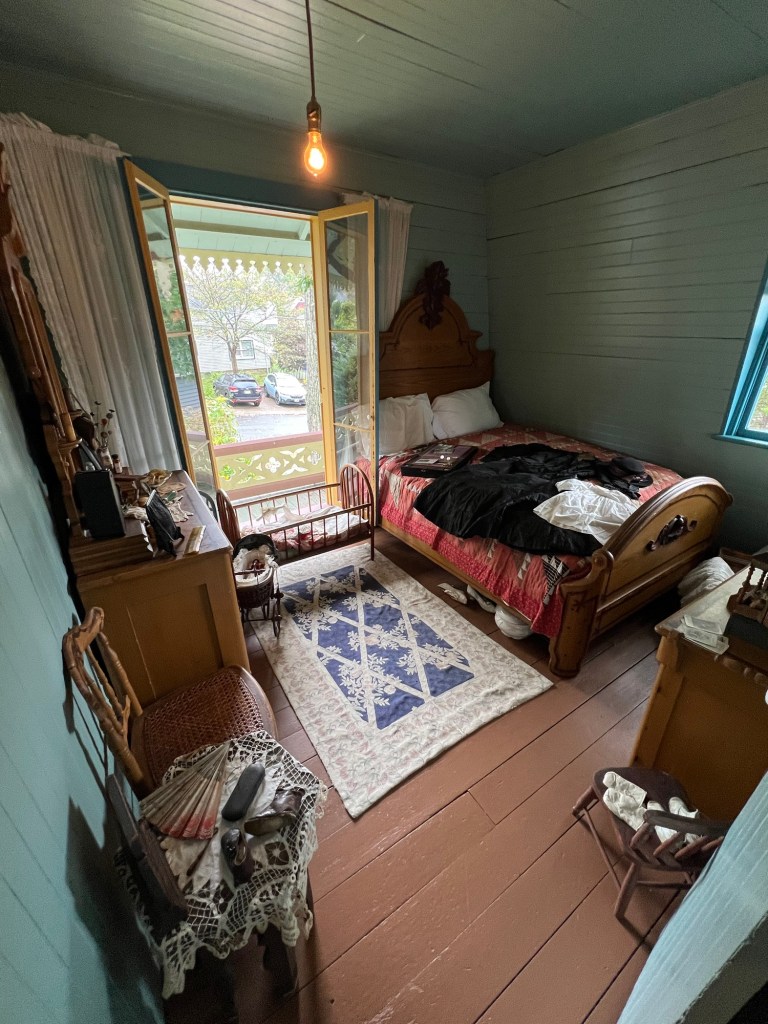
The main bedroom was nice in size and also had a nice breeze from the window
The rooms were decorated with period furniture and bric a brac of the period. On the bed, lay funeral clothing of a family member in morning.
The clothing of someone in morning
The family bedroom set also returned to the house when donated back from the Richardson family
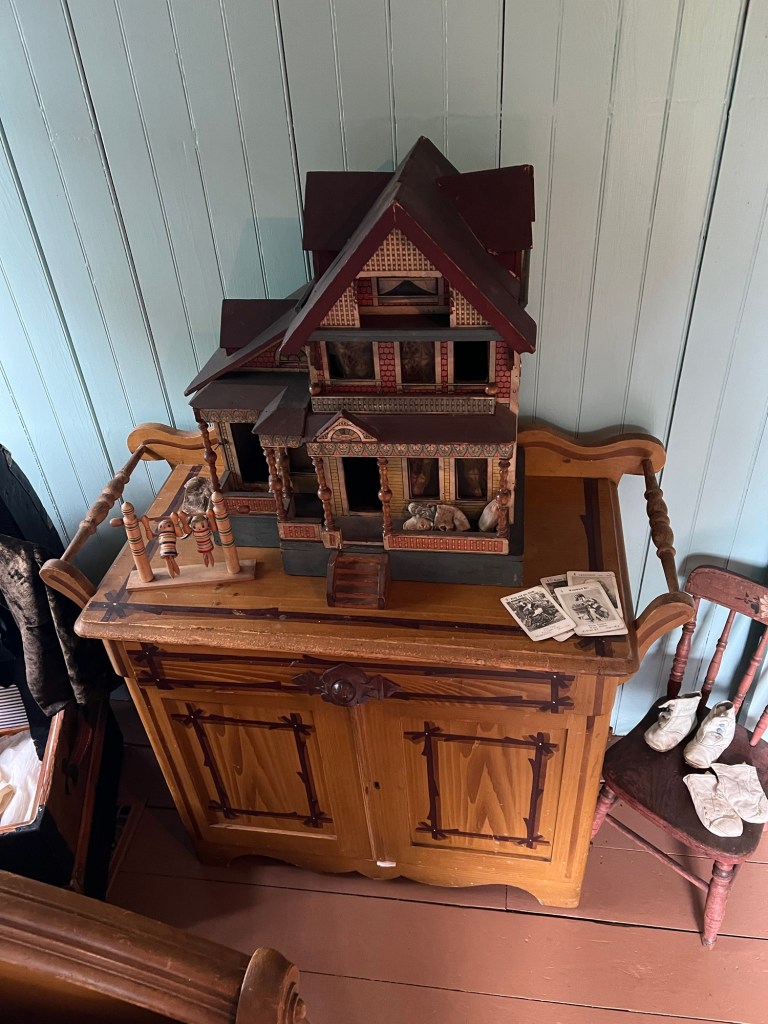
This gorgeous dollhouse was to the side of this bedroom with its tiny furniture and miniature decorations
The other bedroom was a little smaller but again was nicely furnished.
The view from the upstairs bedroom of the garden below
The second bedroom was a bit smaller and contained vintage clothes and toys
Family heirlooms, clothing and toys
The doll carriage for some lucky child
A sewing kit not too dissimilar from my grandmother’s
Baby dolls asleep on the second floor bedroom
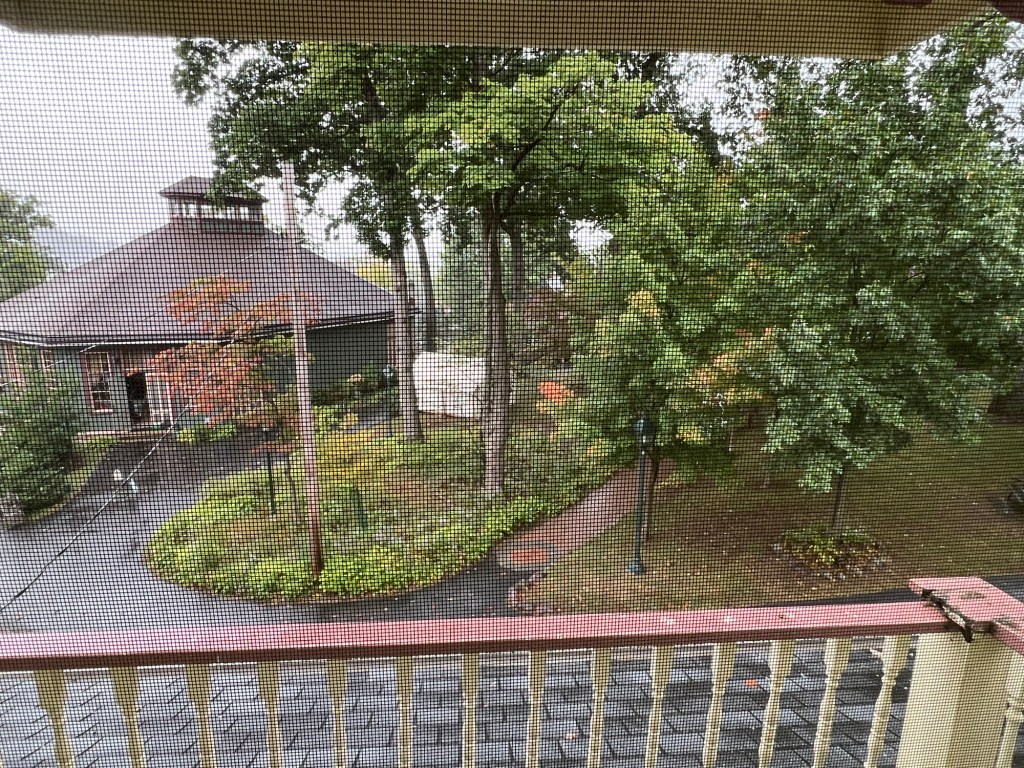
The view from the parlor overlooking the Tabernacle
The Trinity Garden in the middle of historic district
The History of the Mount Tabor Methodist Camp:
(from the Society website)
Mt. Tabor, New Jersey, is a fine example of a 19th century community. Established in 1869 as a Methodist summer camp meeting ground, Mt. Tabor is now a full-time residential community.
While walking through Mt. Tabor, one can see Victorian cottages, complete with gingerbread, and several historic community buildings. Trinity Park is still a busy and central focus of the community. In addition to residences surrounding the park are three octagon structures. The Mt. Tabor branch of the Parsippany library occupies one of them, once known as the Ebenezer Pavilion. The Bethel, a pavilion erected in 1873 and enclosed in 1886, is used as a community meeting hall. Historic displays are featured in the Bethel the day of the annual house tour. The Tabernacle, built in 1885, is used to host large community events, including concerts. The fountain in Trinity Park is a close replica of the original fountain erected in 1875.
Throughout the 1870s and 1880s, private cottages were built at a rapid rate, while some summer residents stayed in tents. By the turn of the 20th century, more than 200 cottages were built, making Mt. Tabor a lively summer resort. The Depression and World War II brought some changes to Mt. Tabor: during these times when families could no longer afford two houses, the cottages were turned into year-round dwellings.
Mt. Tabor is still a special community. Its historic heritage is being preserved and its community is full of good will and participation. There are many events each year, including Children’s Day, an annual Holiday Craft Fair, House Tour, and concerts. The many active committees in town include the Garden Club, Historical Society, and Children’s Day Committee. Mt. Tabor also has a golf course and country club.
In 2001 we celebrated the reconstruction of a decorative iron arch at the entrance to Mt. Tabor closest to Dickerson Rd. at Rt. 53. The original arch was in place around the turn of the 20th century, and the reproduction was a project of the Mount Tabor Historical Society and the Beautification Committee of the Camp Meeting Association. It was completed in June of 2001, and helps one to visualize how Mt. Tabor appeared to people arriving by train, as many did. This project was made possible by contributions from individuals, from the Camp Meeting Association, and from money the Mt. Tabor Historical Society raises from events such as the annual House Tour.
Taking the Walking tour sponsored by the Society:
After the tour of the museum, I started my tour of the houses and gardens of the historic district. In the gloomy weather, I walked all the streets in the neighborhood visiting as many stops as I could.
As the rain subsided, I was able to walk around the neighborhood without juggling an umbrella. I wanted to see the gardens and parks first while the weather nice.
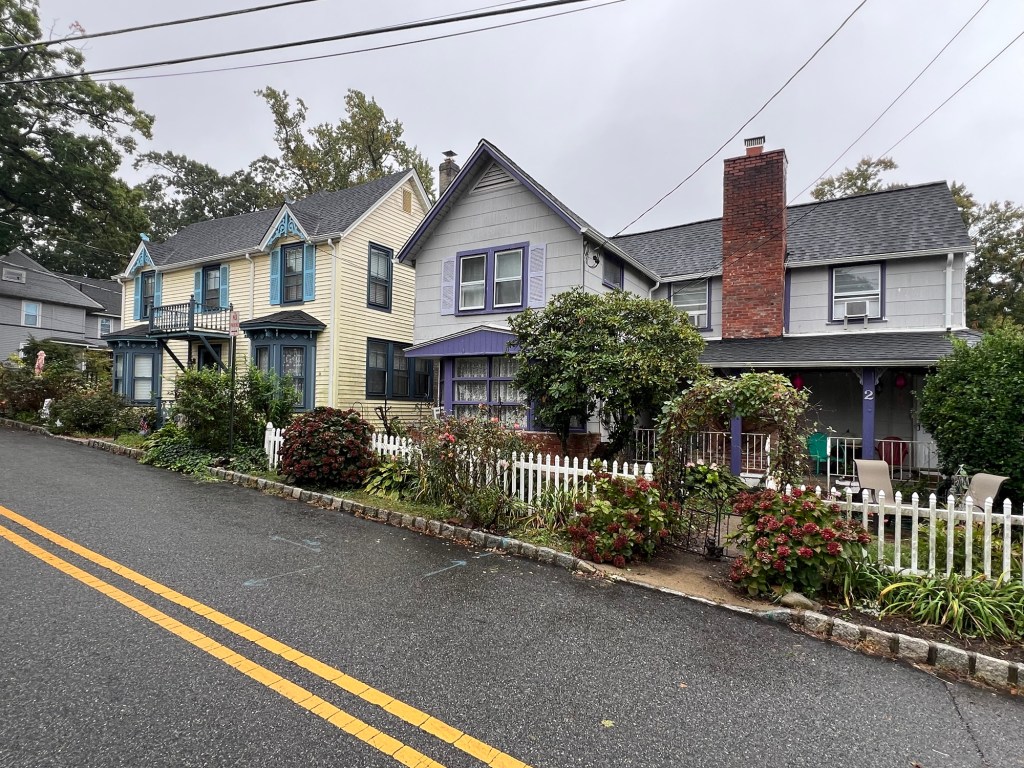
I loved walking around the neighborhood and admiring the homes
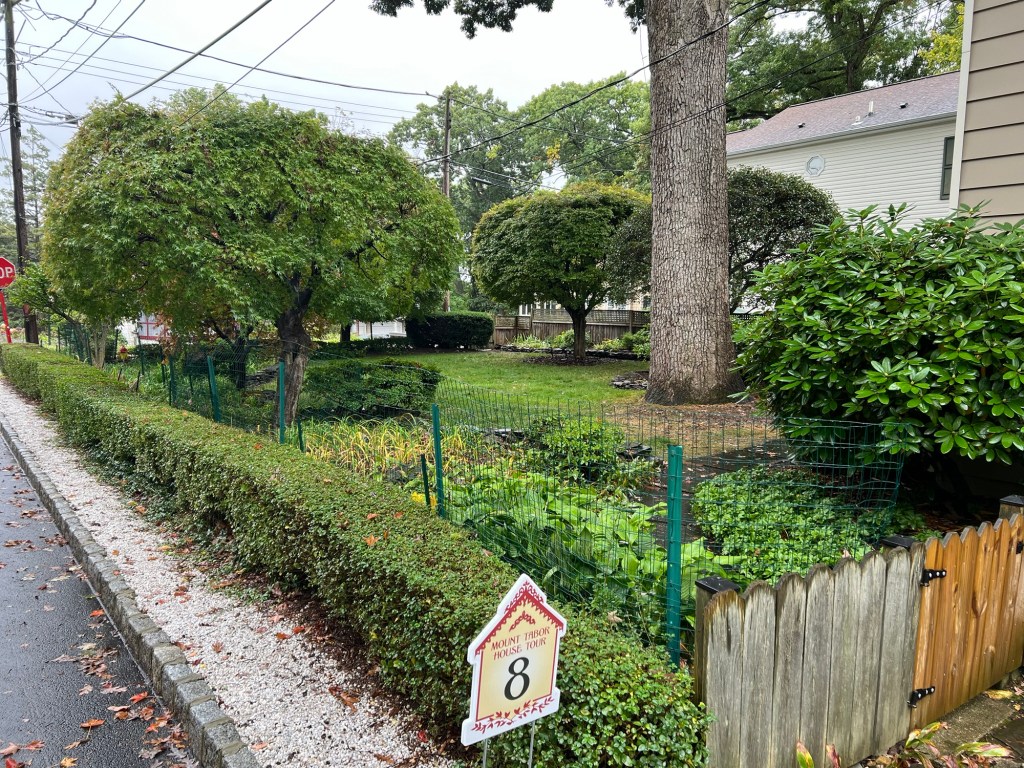
I walked up Strowbridge Avenue to make my first stop to see this whimsical front garden of this beautiful Victorian house.
The garden in front of 6 Strowbridge Avenue
The figures and small structures of this magical garden. I thought I would see ferries and elf’s walking around the yard.
The details of the front of 6 Strowbridge Avenue
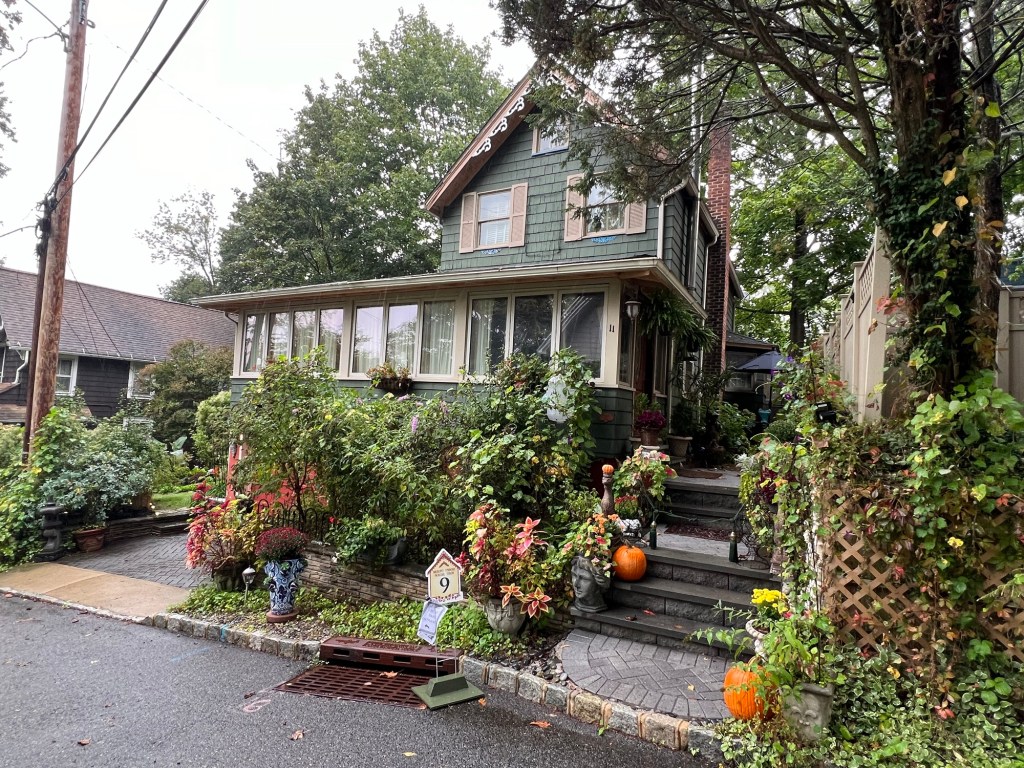
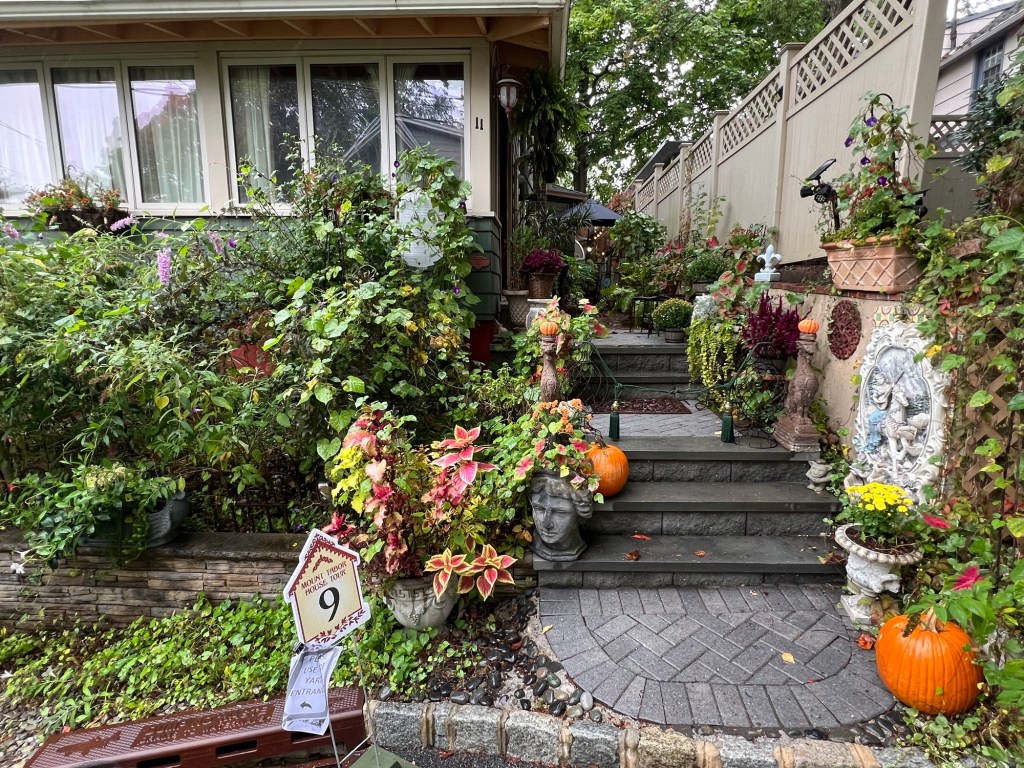
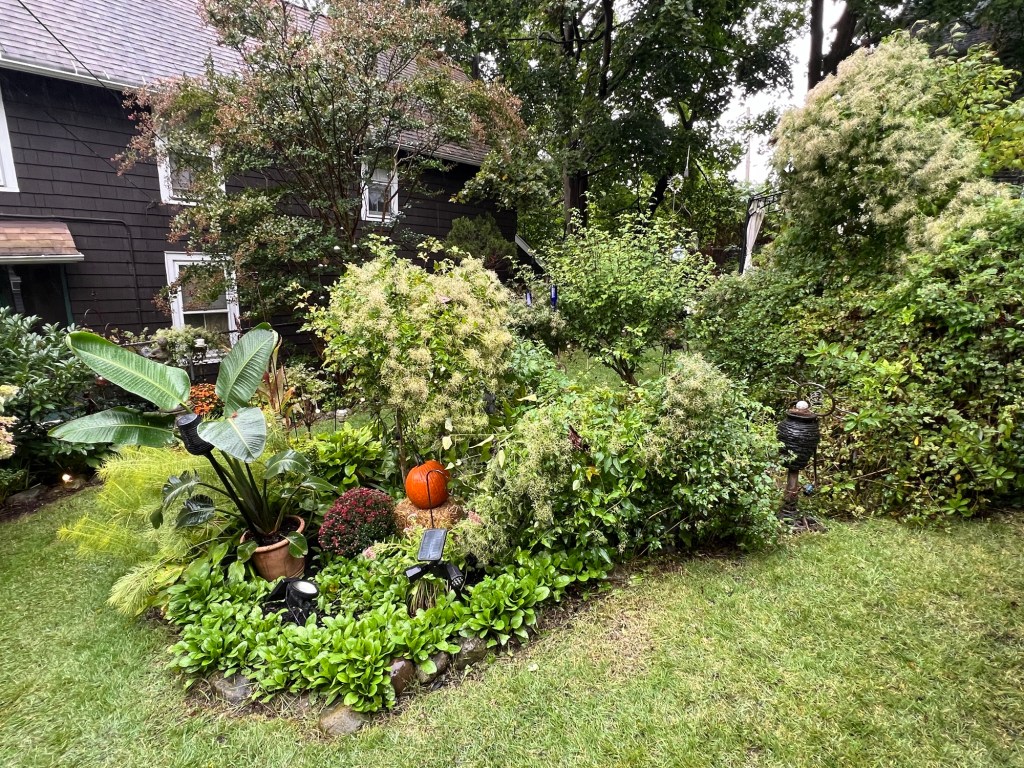
The next house garden I visited 11 Sommerfield Avenue and this yard was hidden from the road to see its many surprises.
The front garden of 11 Sommerfield Avenue
The creative detail of the on just one side of the house
As you enter the garden, its theme was the Fall and Halloween
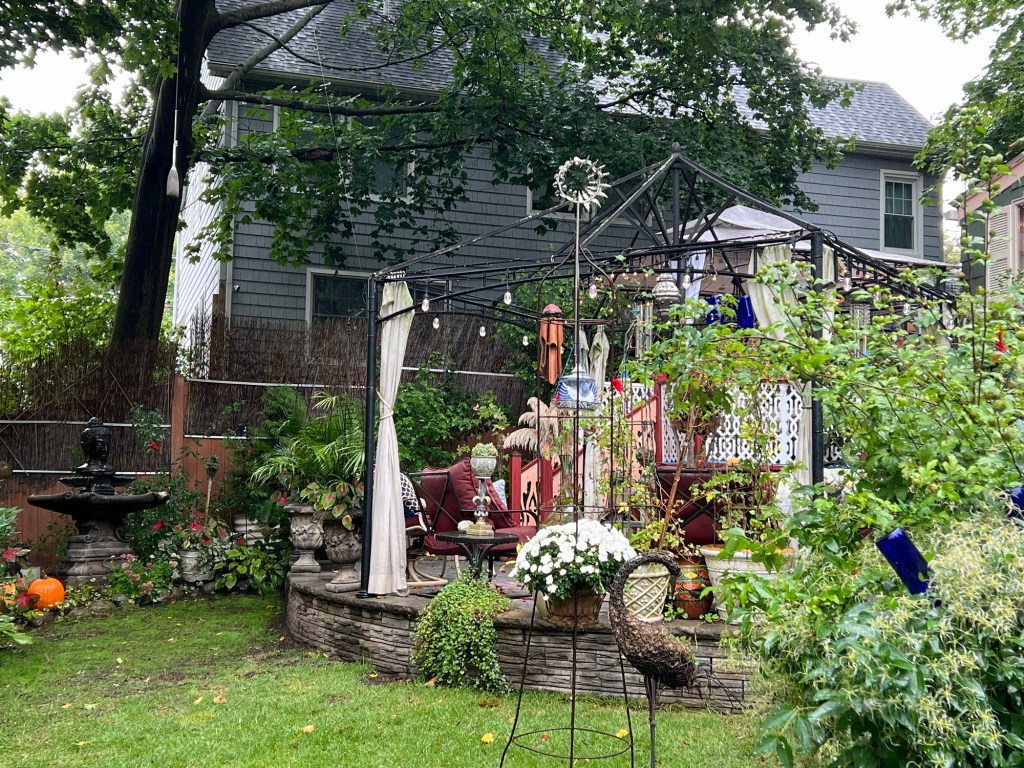
The water features and fountains of their background
The background fountains, water features and patio that make this backyard enjoyable
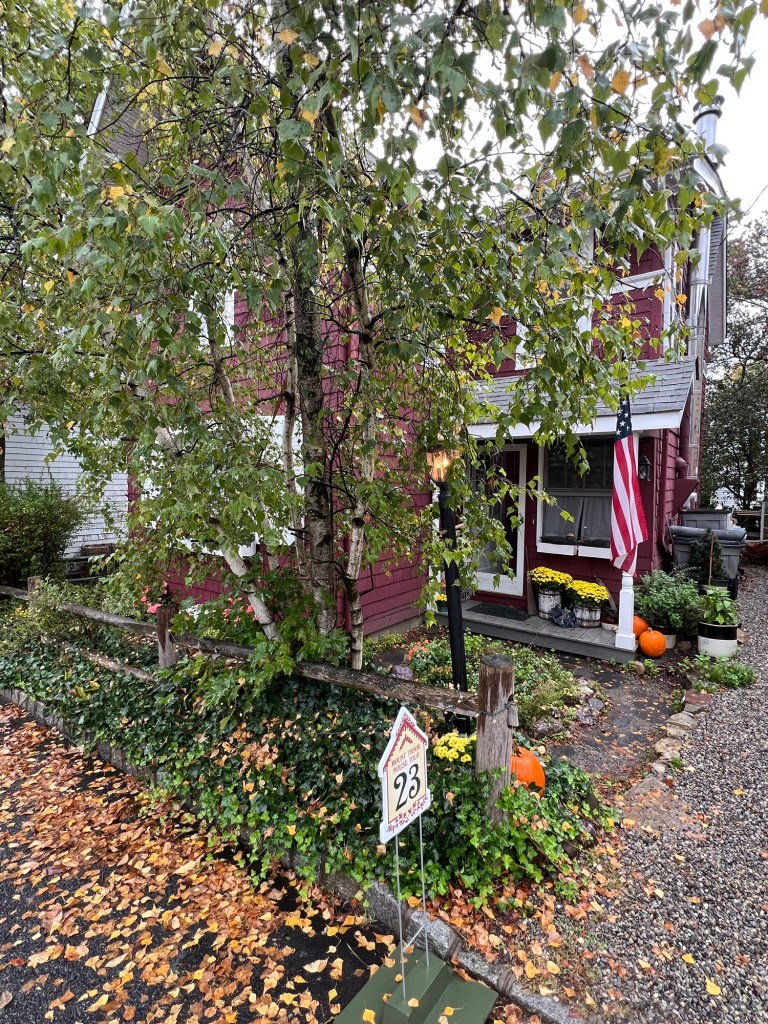
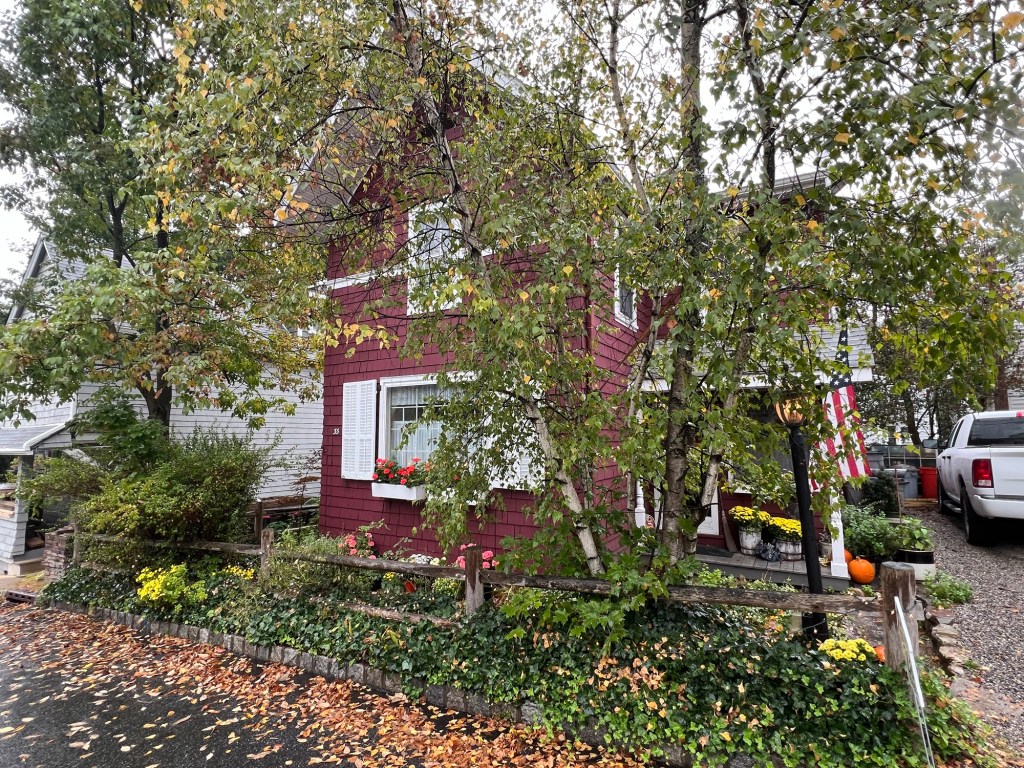
The new cottage home of 33 Embury Place
I walked down Embury Place to visit a last minute addition. I was surprised when the owner told me that six people once lived in the house. I saw the loft space and bunk beds that made this house work as a family home.
The elegance of 33 Embury Place
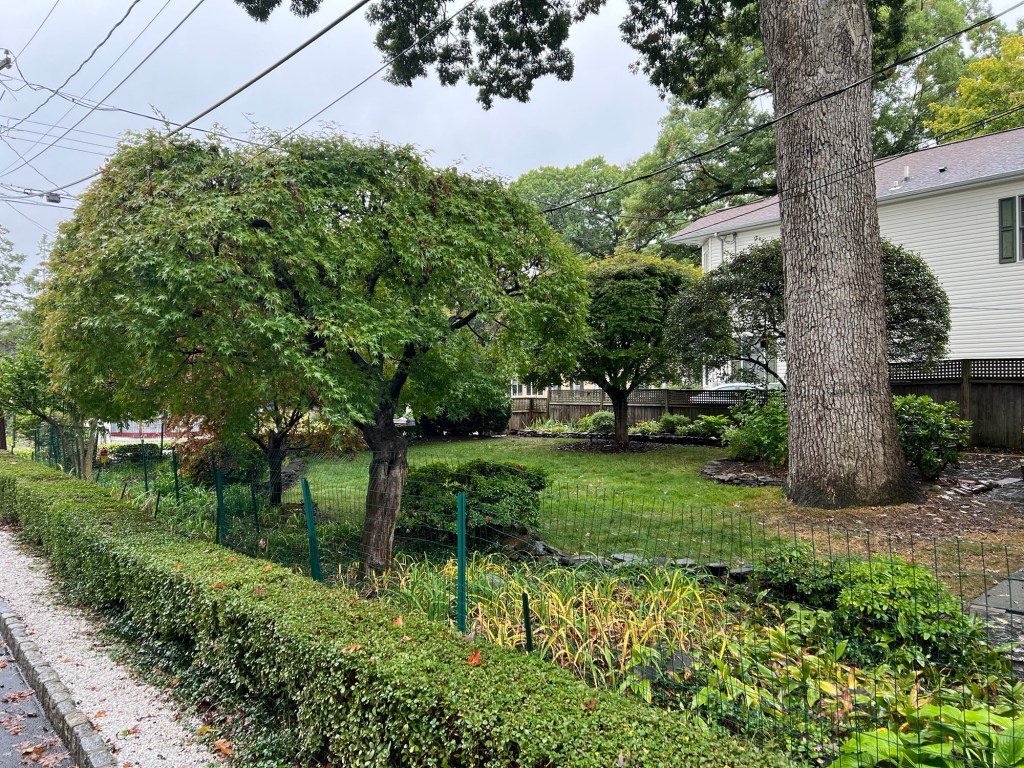
I walked down Morris Avenue, which is the heart of the complex and then walked up the “golden stairs” to West Park Place to next set of gardens and parks. The gardens in front of 12 West Park Place may not have been as elaborate as other homes but was nicely landscaped which complimented Mother Nature.
The gardens in front of 12 West Park Place
The gardens in front of 12 West Park Place
Across from these creative gardens is St. James Park, which sits in the middle of the complex. The park was gloomy with the rain drizzle so I really could not appreciate it. Still I could see how engaging the park must be in nice weather.
St. James Park
The Labyrinth in St. James Park
I made my way back down the stairs and made a walk down Morris Avenue to visit more homes. I noticed that time was running out and I only had an hour to visit this part of the neighborhood.
Trinity Park in full bloom when the rain stopped
Looking down the street down Whitfield Place during the tour of homes
A stuffed bear on display at 60 East Morris Street
The family who opened their home at 60 East Morris Street had a beautiful home. They invited us into their home, had a fire going on their patio and served us homemade cookies and apple cider which I thought was a nice touch. I saw this whimsical bear in one of the bedrooms.
71 Morris Avenue is the home of artist Gabriella D’Italia and her family
The artist’s work on the walls and her collection of puppets
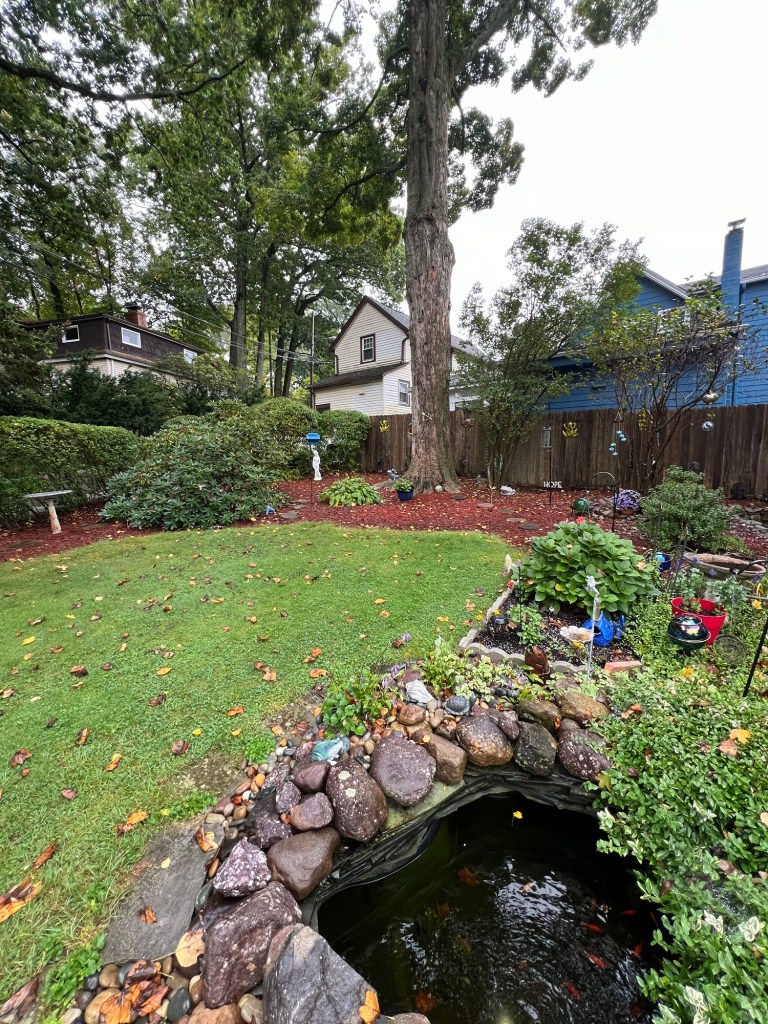
The last set of gardens that I visited were at 36 Boehm Avenue. The rain had stopped and I was able to visit the gardens and not feel rushed.
The yard at 36 Boehm Avenue.
The yard at 36 Boehm Avenue where gold fish I thought were a nice touch
I saw this point of creativity at 26 Whitfield Place
When I finished the tour, I explored the area around Trinity Park. I walked around the park around the Pollinator Garden and admired the foliage.
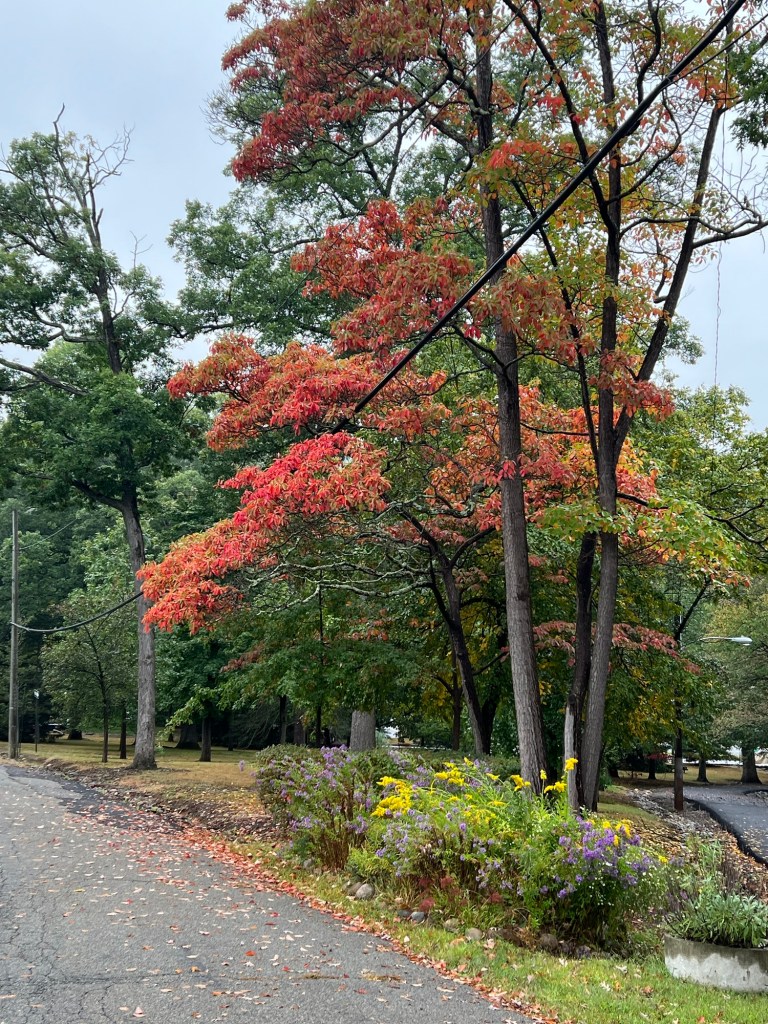
The gardens at the start of the Fall
The map of the historical sign of the complex
The historic marker of the complex
The historic buildings around Trinity Park
The Gazebo in the park
The Methodist church on Simpson Avenue
The old Firehouse where we checked in
The old Camp office
It really was a wonderful walking tour and I learned a lot about the old Mount Tabor site. This was an eye opener of how a former Methodist camp becomes a desirable historical neighborhood that everyone wants to live in. The museum was an interesting look on how people lived in the past here and the walking tour showed how modern times living here that not much has changed. People still making these small charming houses home. This walking tour in Mount Tabor, NJ is every September.
After the tour for lunch:
After the tour was over, I stopped into Downtown Denville, NJ right down the road, which is right off Route 46 and Route 80 for a late lunch. Denville has a very nice downtown with lots of restaurants and stores. Even on a gloomy afternoon, most everything was open. I checked out by Advantage Dining site and found Second Half on Main at 5 East Main Street. This contemporary bar/pub had all the TV’s going for the football game and a packed bar. I ate in the dining room section of the restaurant and was able to stretch out in one of the booths.
The Second Half of Main Street Street at 5 East Main Street in Downtown Denville, NJ
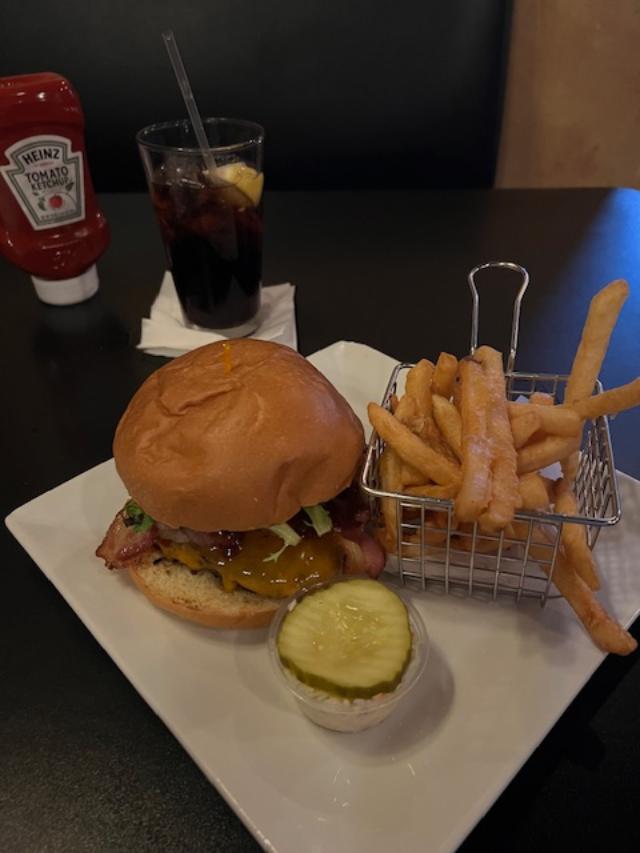
The restaurant is a lively place and the bar area was busy. The menu has a nice selection of salads, burgers, pastas and large entrees with a nice beer listing. It got cold and miserable outside and it was the perfect burger day. I chose the Texas Burger with Bacon, BBQ sauce and sharp Cheddar Cheese and that hit the spot. What I liked about Second Half on Main is the prices are very fair. The burgers will run you around $15.00 and they include the French Fries, something you do not see in the Hudson River Valley or Bergen County anymore. They pull the a la Carte routine since COVID.
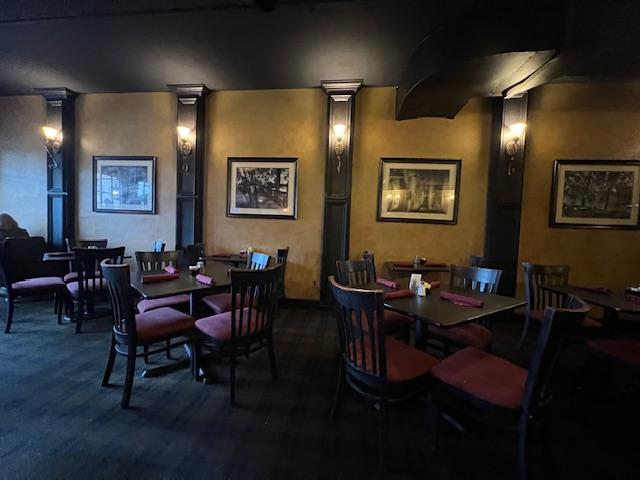
The Dining Room area at Second Half on Main
The burgers here are excellent. Perfectly cooked, stacked with ingredients and are juicy. The fries were also perfectly cooked. On a cool gloomy day, the burger hit the spot. If you are touring in the area, I highly recommend the restaurant. After lunch if the weather is nice, check out Downtown Denville.
The Texas Burger and French Fries at Second Half on Main
The Texas Burger and Fries is the perfect meal on a cool day
Admission: Adults $12:00/Children $10.00/Military $10.00/Members and Children under 3 Free
My review on TripAdvisor:
Entering from the highway, I was surprised at this interesting place of nature and how the Institute is not just part of the community but how it integrates itself into the fabric of helping understand how Mother Nature plays a part in benefiting everyone in this shore community from cleaning the water, sustaining wildlife and preventing flooding.
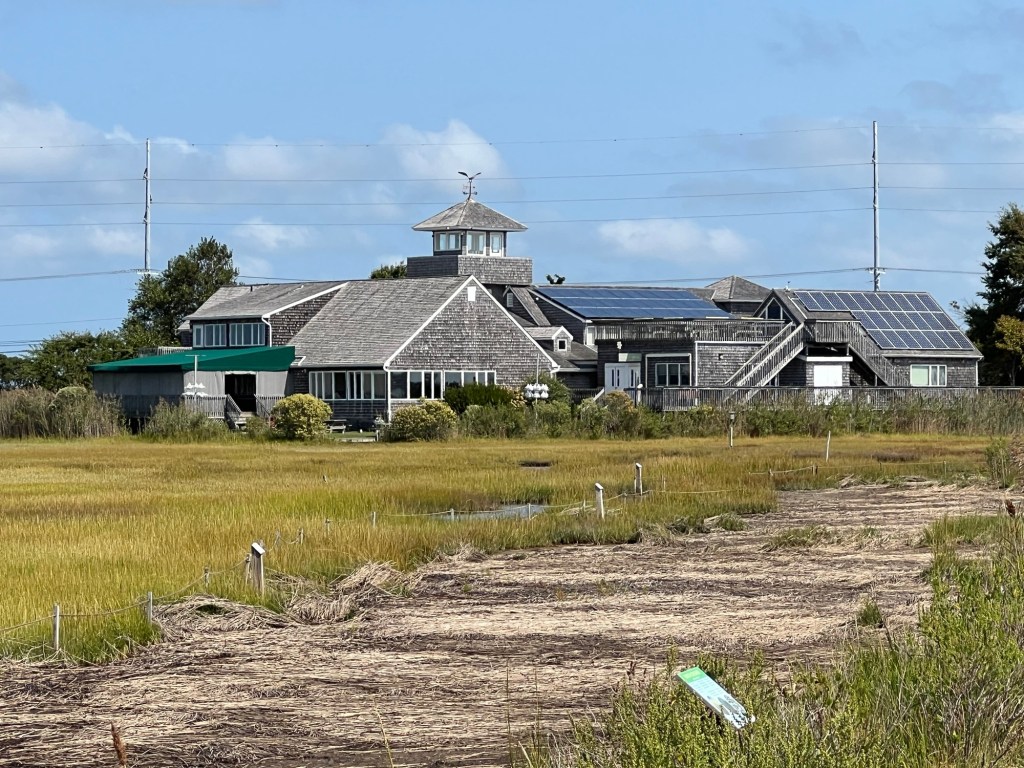
The front of the Wetlands Institute in Stone Harbor, NJ
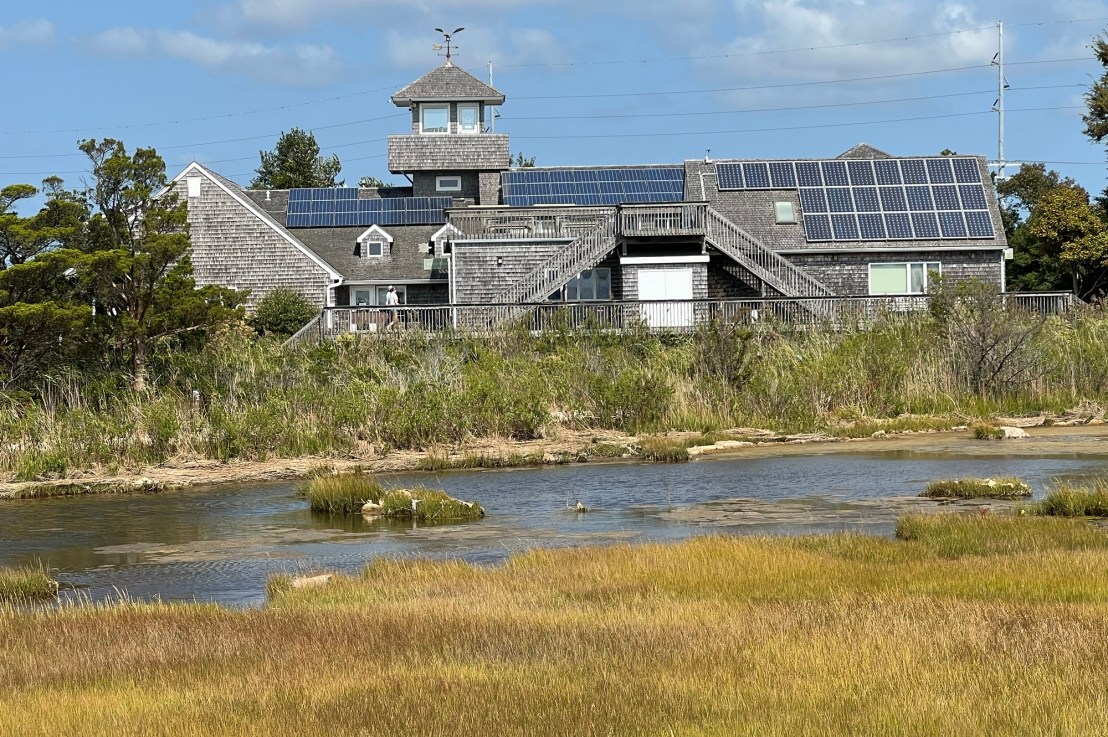
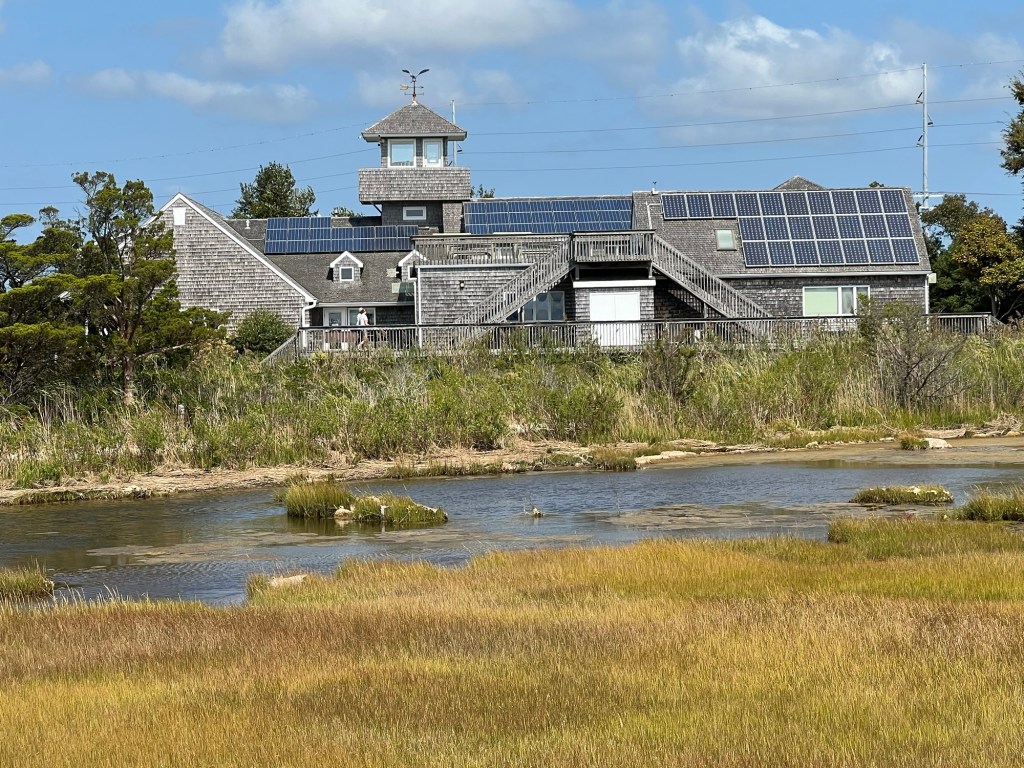
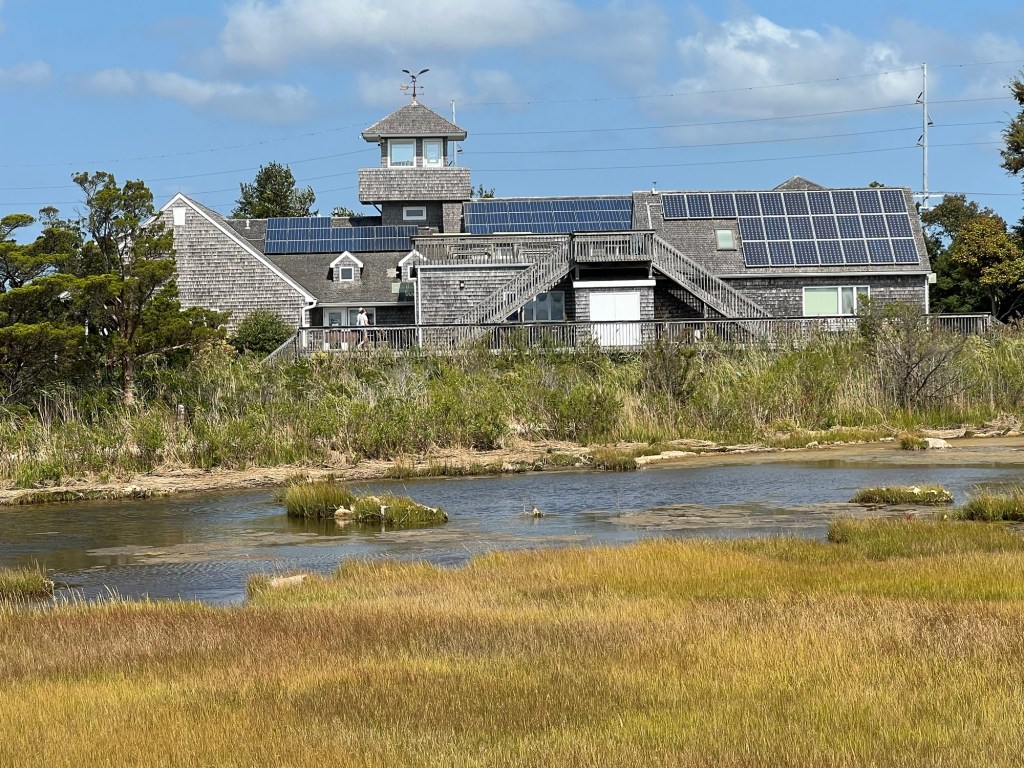
The back of the Institute from the salt marshes
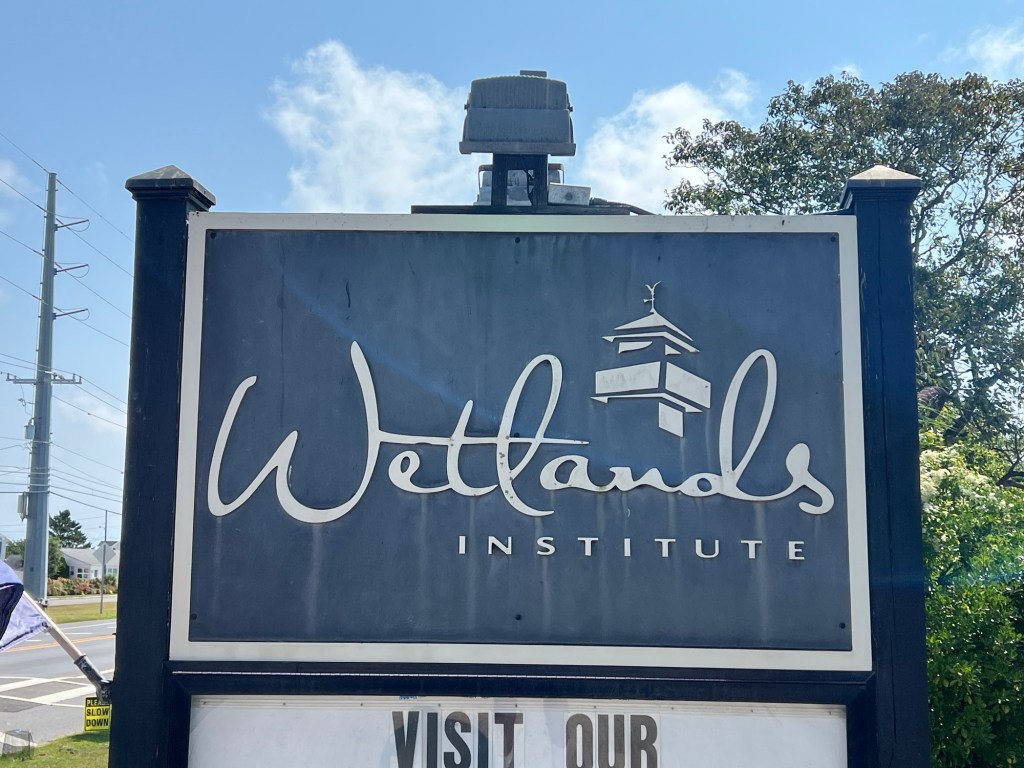
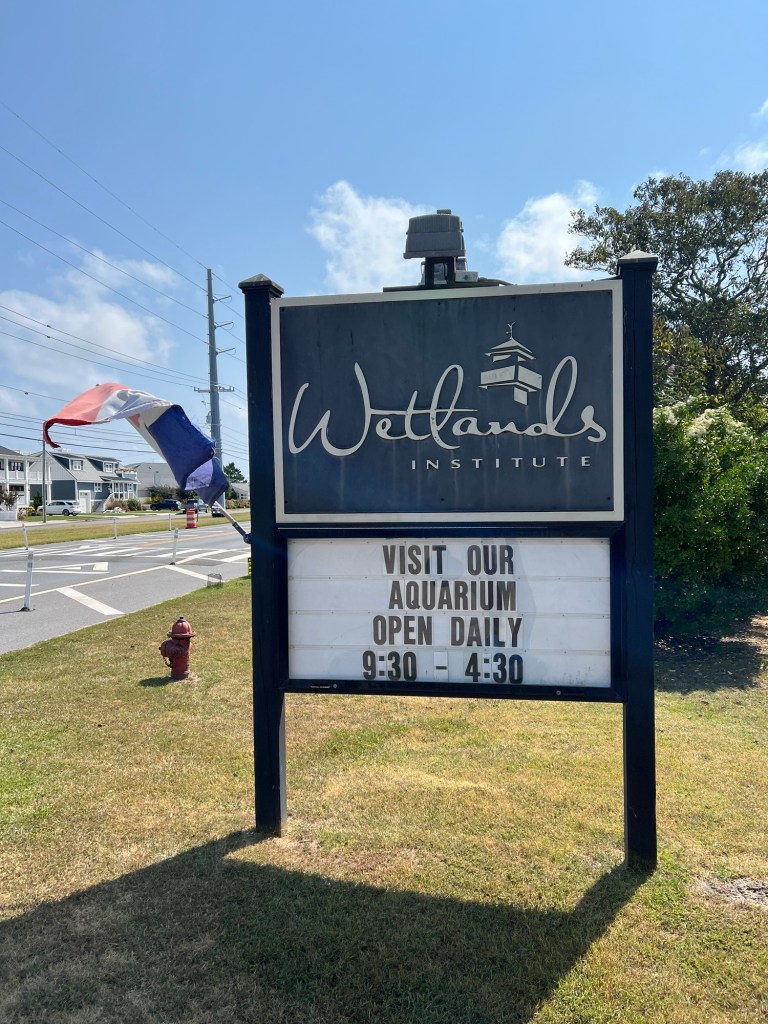
The sign that welcomes you inside
You would almost miss the Institute without the sign
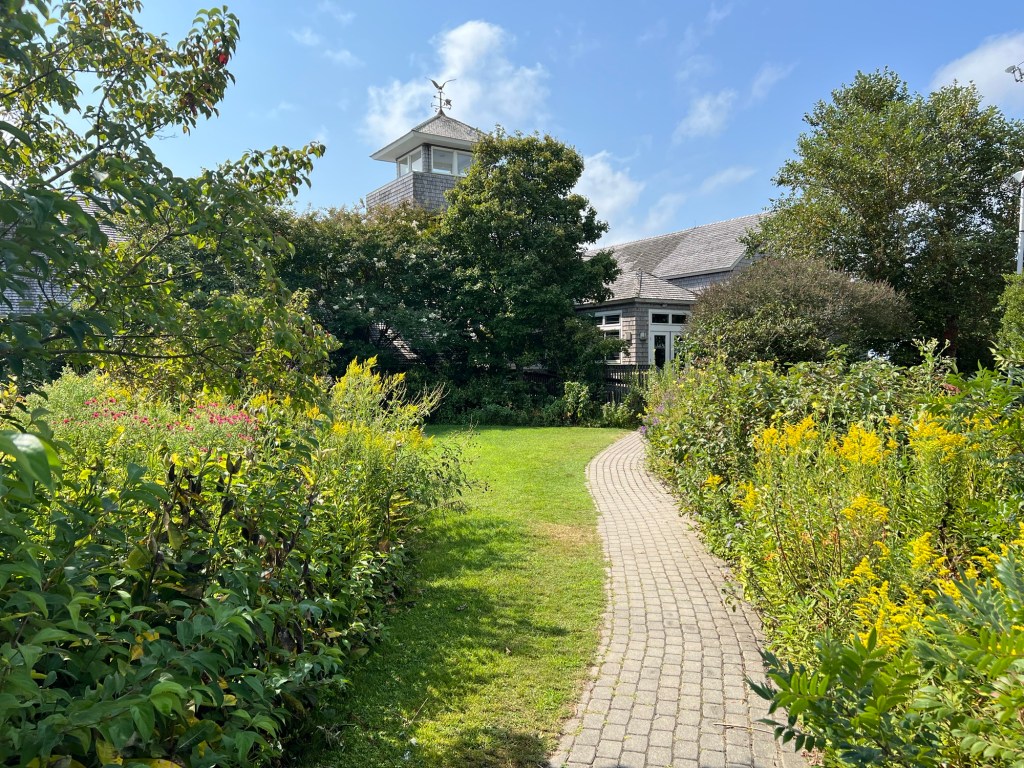
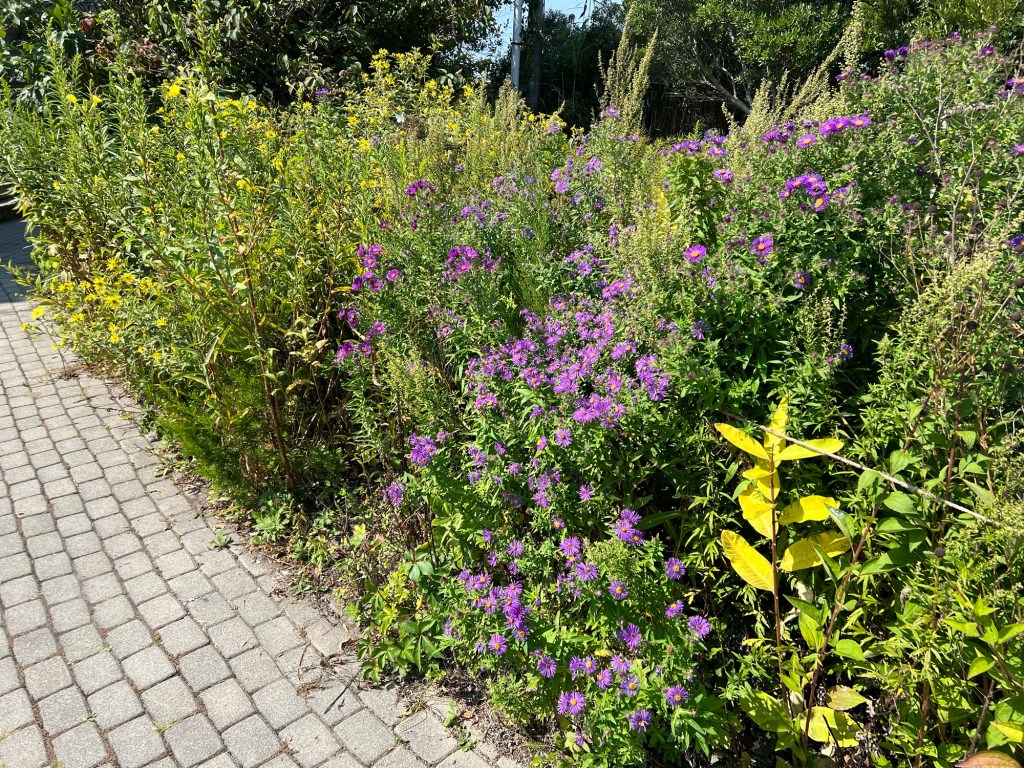
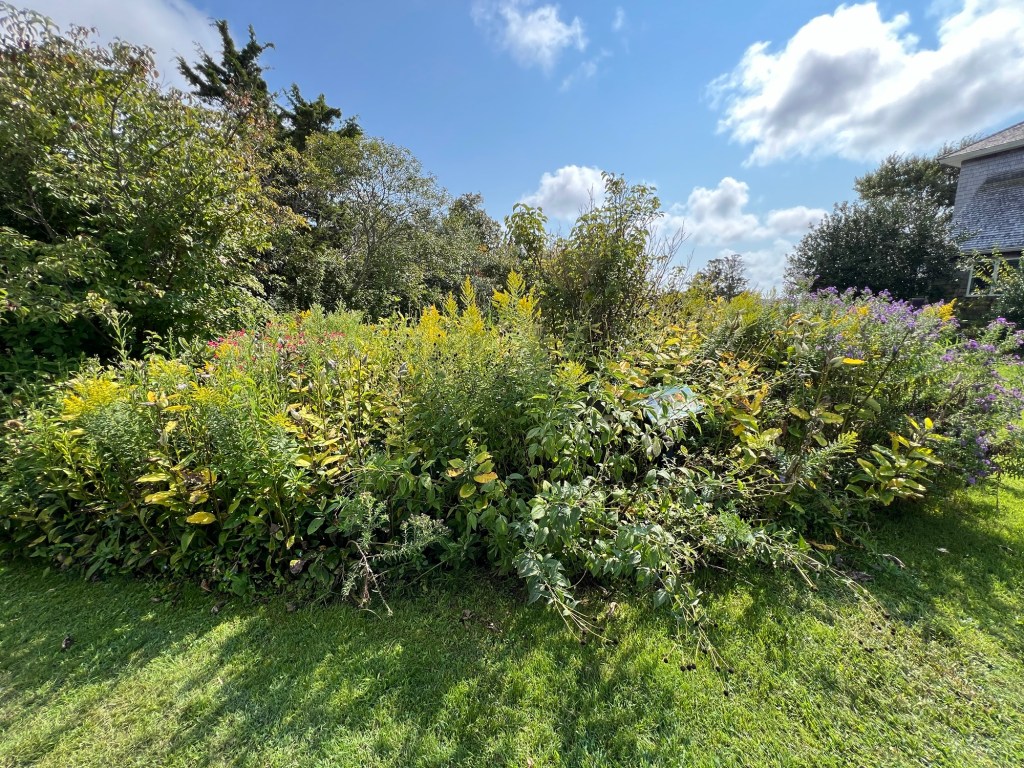
The beautiful gardens in the front during the summer months
The Institute’s gardens in the front of the building during the summer months
The History of the Wetlands Institute:
(From the Institute’s website)
The Wetlands Institute was founded by Herbert Mills in the late 1960s, thereby fulfilling his life-long vision of creating a world-class research, education and conservation center at the Jersey Shore that would educate people of all ages about the beauty and wonders of the coastal environment, and the importance of that environment to their daily lives. His dream was to inspire everyone to want to conserve and sustain that environment forever.
Herb loved birds and nature all his life. In fact, he joined the National Audubon Society at the age of seven. Many of his maturing years were spent as an executive in the glass and canning industries of South Jersey. During those years he further developed his abiding interest in conservation issues, so much so that he left the business world in 1967 to became the Executive Director of the World Wildlife Fund. In 1969, under his leadership, the World Wildlife Fund purchased 6,000 acres of salt marsh in Middle Township. 34 of those acres became the site of the Wetlands Institute’s facility. The rest were held by the World Wildlife Fund until being transferred to New Jersey’s Green Acres Program. Herb also raised the funds for the design and construction of our main building which was designed by Malcolm Wells, a world-renowned and environmentally-oriented architect.
Our building was officially dedicated on September 16, 1972. Herb Mills’ friend and the international president of the World Wildlife Fund, Prince Bernhard of The Netherlands was the keynote speaker (the Institute website).
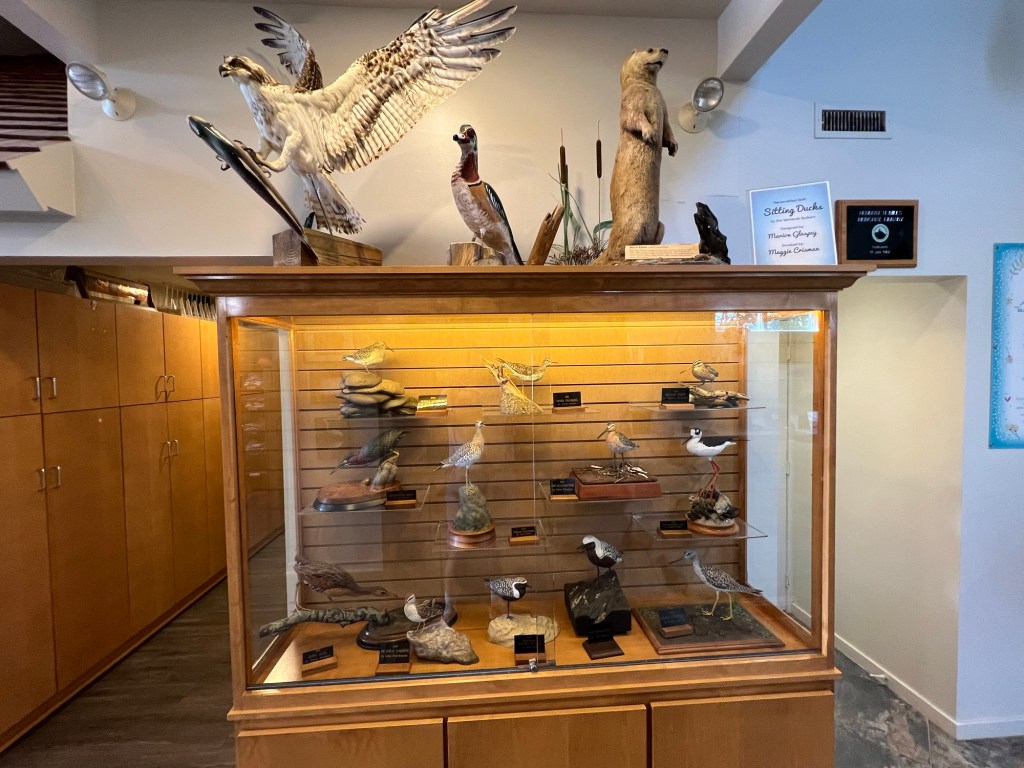
The bird exhibition at the entrance of the Institute
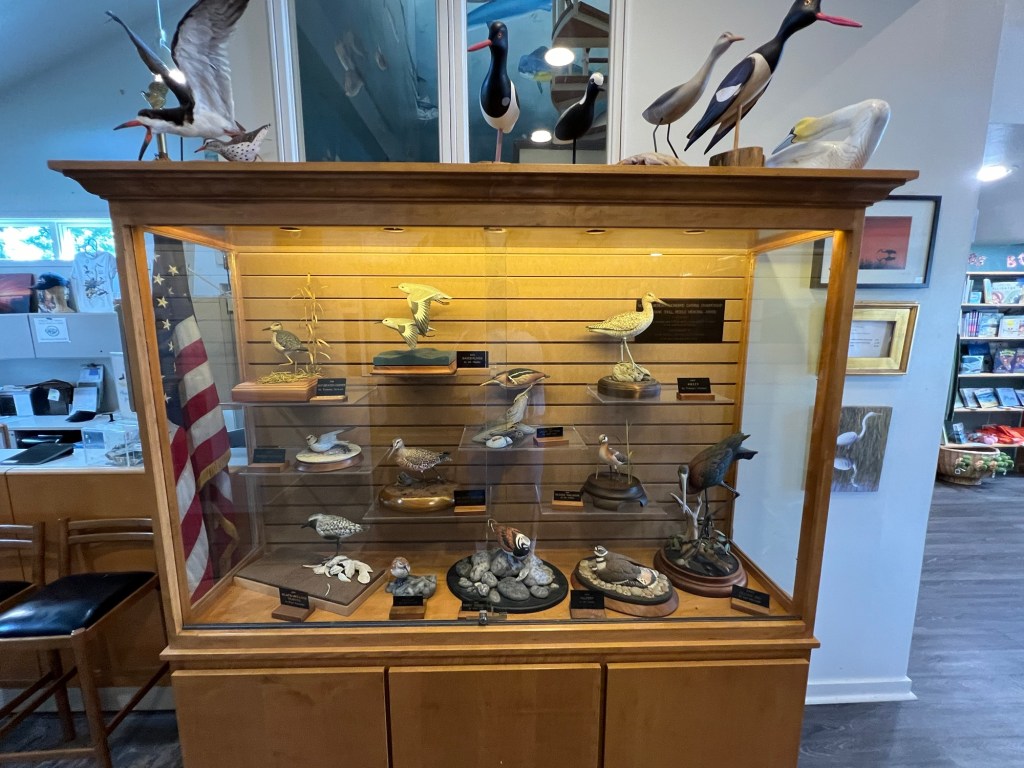
The other bird exhibition in the hallway
Later History:
(from the Institute Website)
In its earliest years the Institute was run by Lehigh University under a dollar-a-year lease. That relationship continued beyond Herb Mills’ untimely death at the age of 62 on October 21, 1972 while addressing an ornithology meeting at Cornell University, barely a month after the Institute’s dedication ceremony.
After a few years, however, the Institute and Lehigh parted company amicably. The late Marion Glaspey, a shy but very determined woman, succeeded Herb Mills as Chairman of the Board and guided the Institute for several difficult years as the Institute struggled to become a self-sustaining, independent entity, and garner and maintain the kind of financial support that is vital to any nonprofit organization. In addition to being totally dedicated to the Institute, Marion was a talented artist and photographer, teaching classes in both subjects, and–most significantly–she was a passionate gardener (she’s the “Marion” for whom our Marion’s Garden is named). She remained on our Board of Trustees until her death in 2000.
Through Marion’s leadership and that of her successors, the Institute has evolved to become a leader in coastal environmental education, research, and conservation. At present the Institute is supported almost entirely by funds from private sources, receiving only an occasional government grant for a special project.
My visit to the Institute in the Summer of 2024:
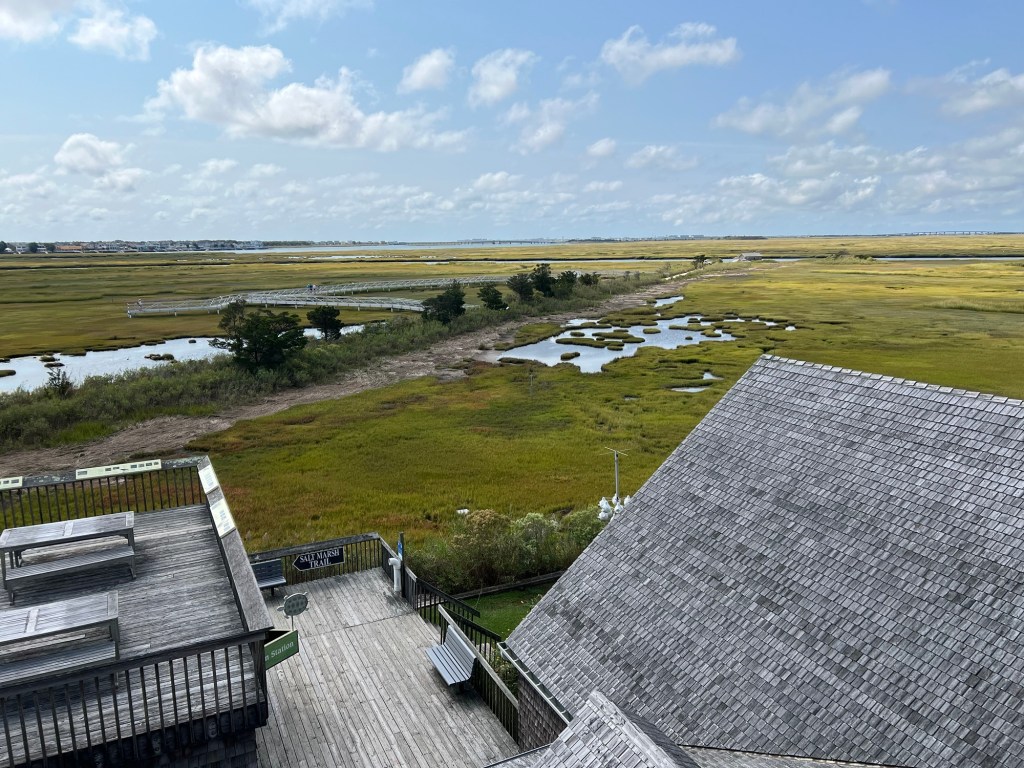
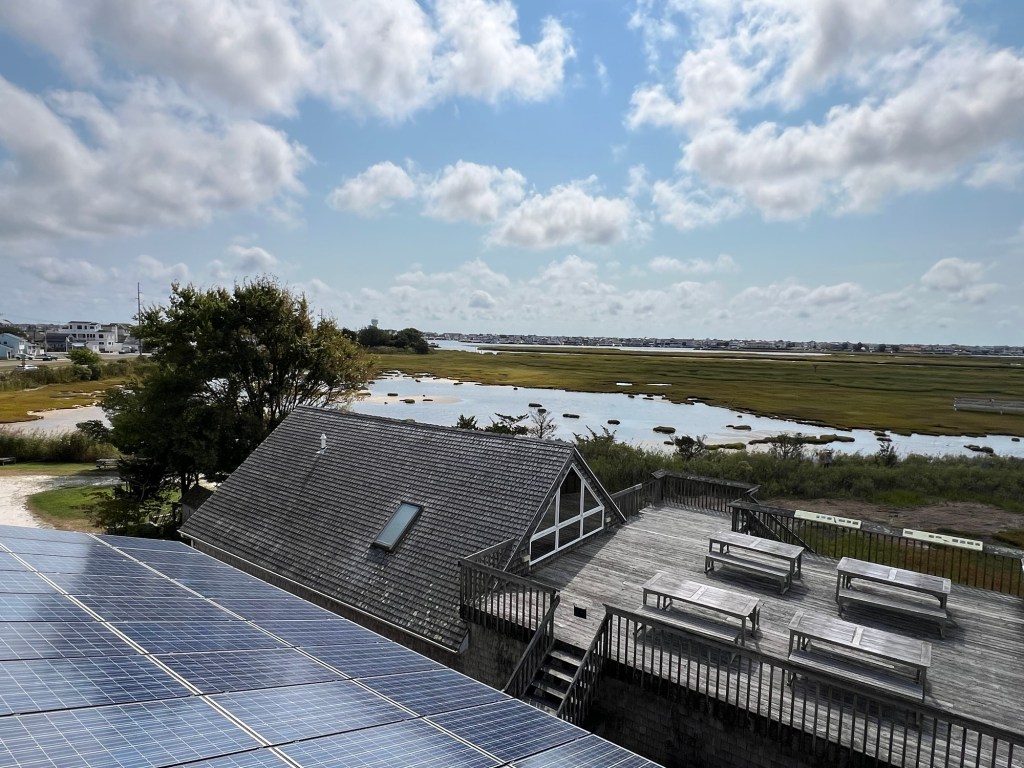
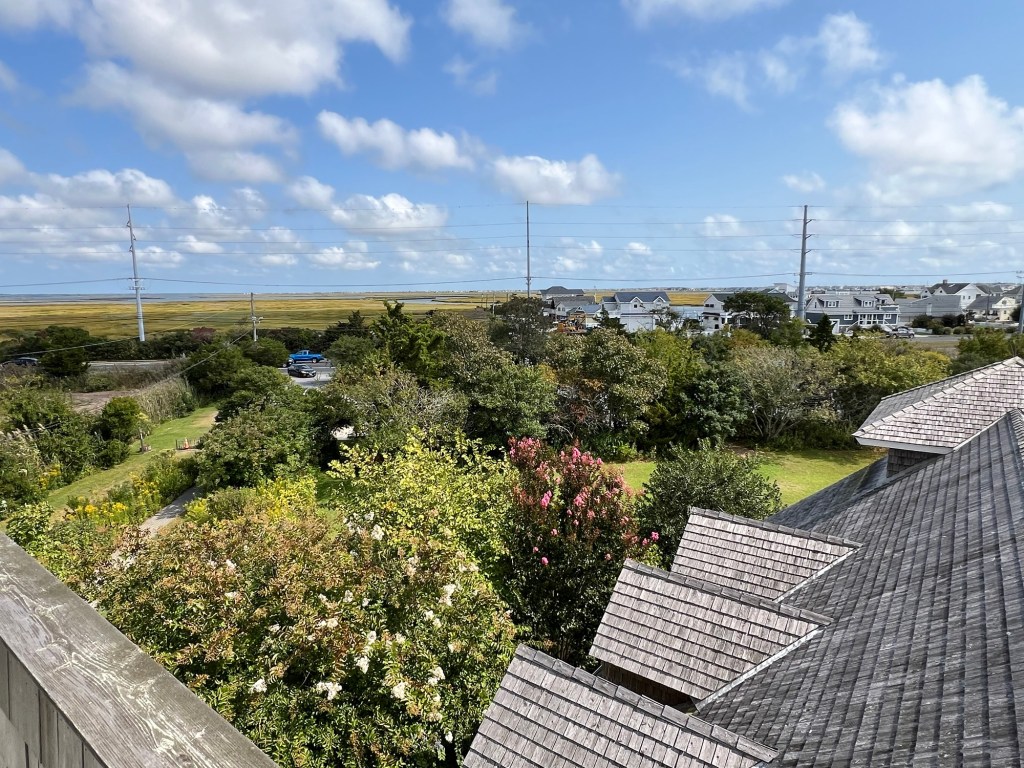
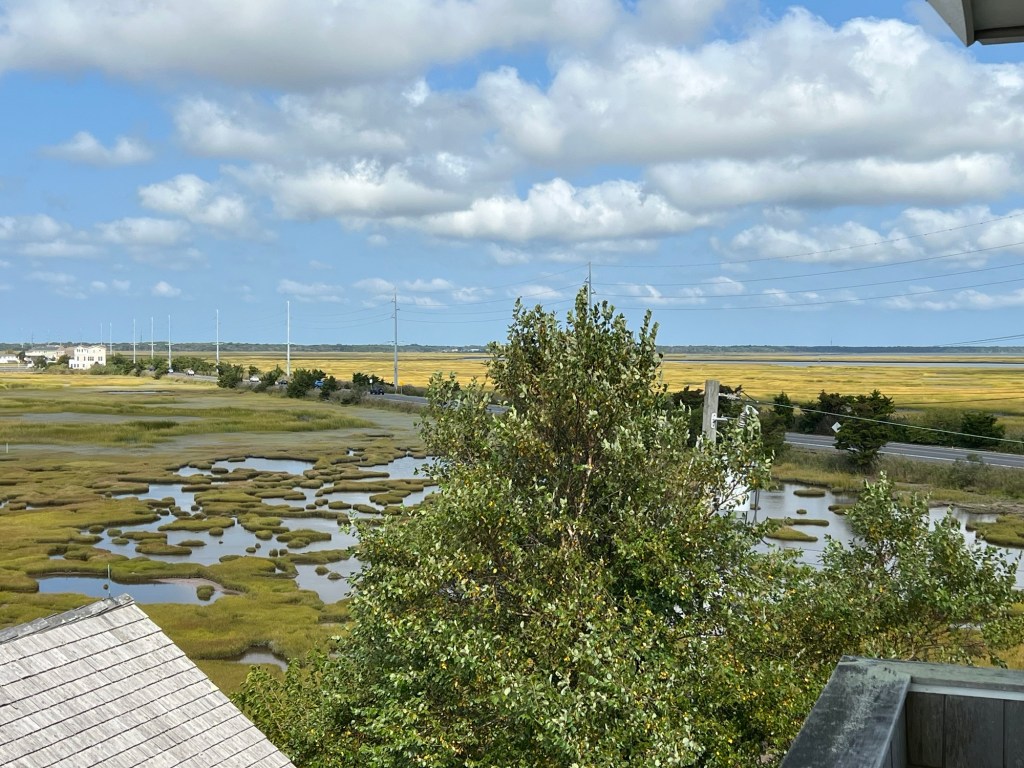
The first stop on the tour of the facility was walking up to the observation deck at the top of the building to view the salt marshes below. It gave an overview of the area that the Institute is trying to protect. The top floor observation gives a clear view of the marshes that surround the town of Stone Harbor and how these acres of area help both the natural population as well as the human population both residing in this beach community.
The view of the Wetlands between the barrier islands and the mainland
The Wetlands closer to the main road
The view of the front of the building and its colorful gardens
The Wetlands that line the highway out of Stone Harbor
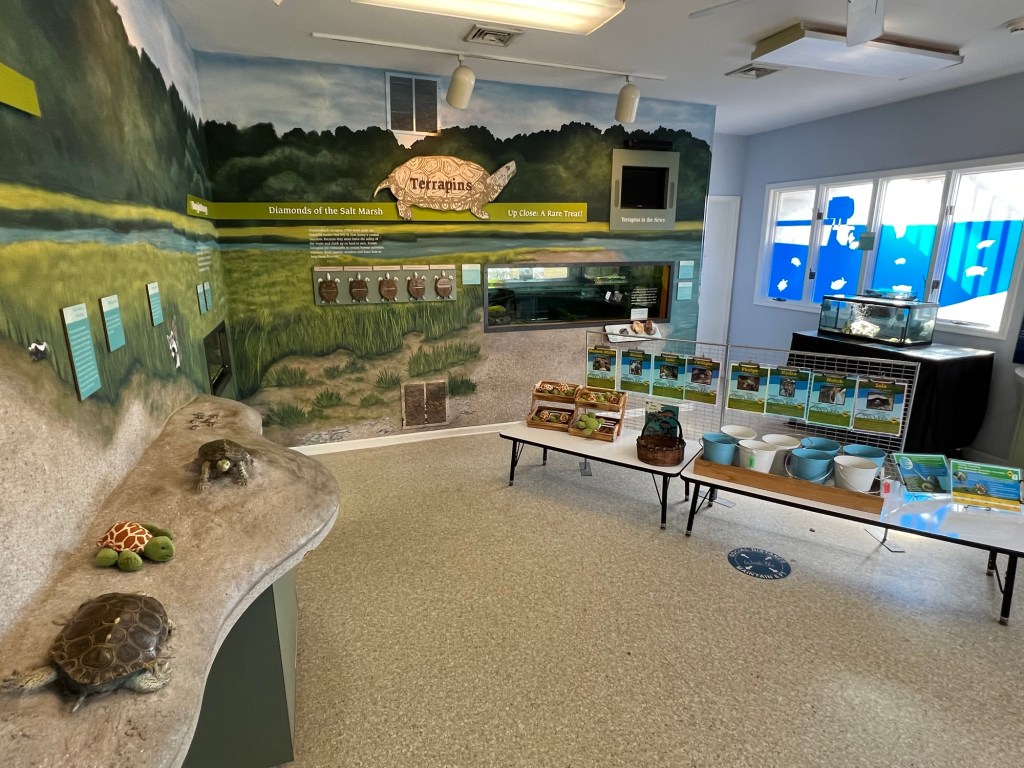
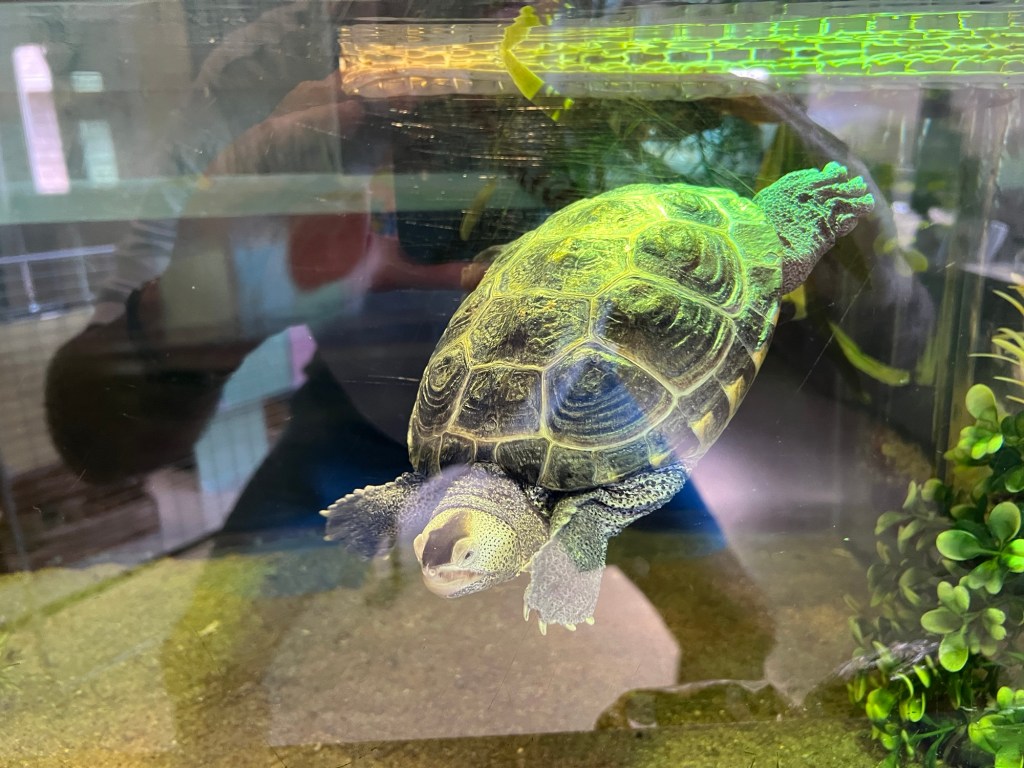
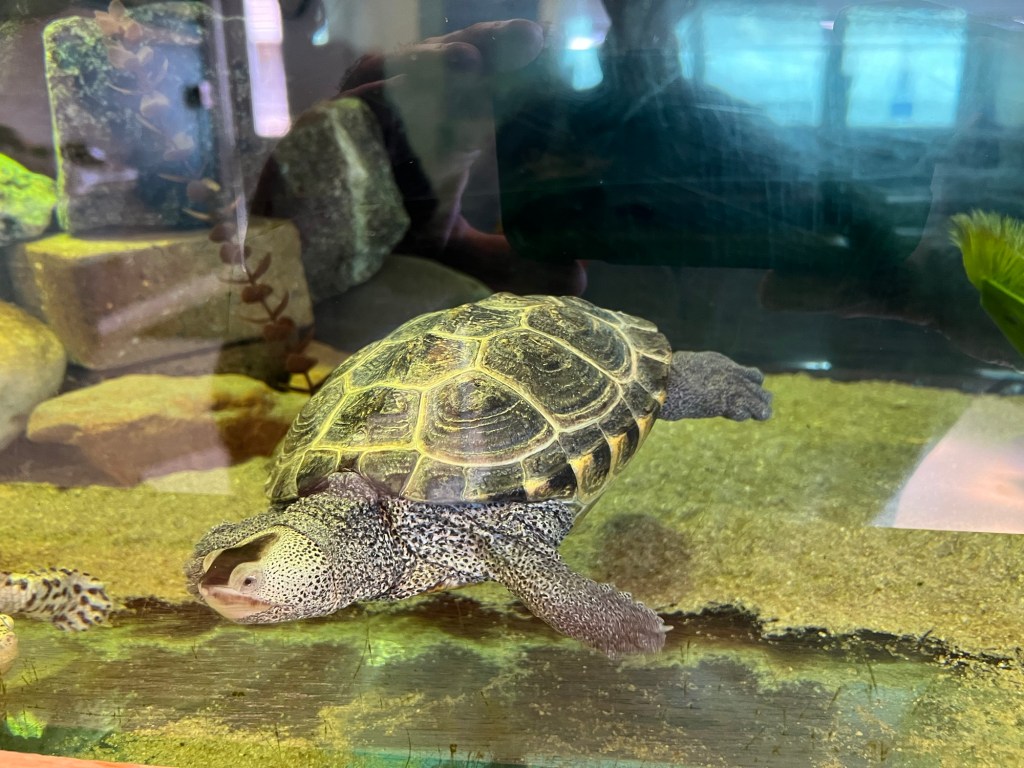
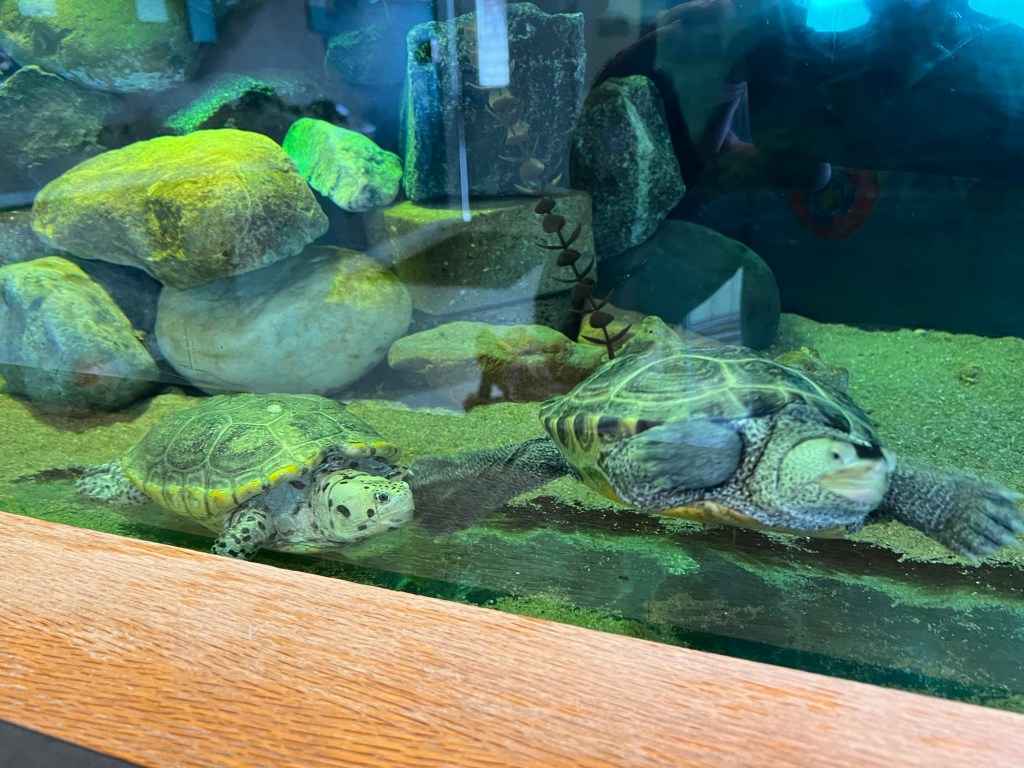
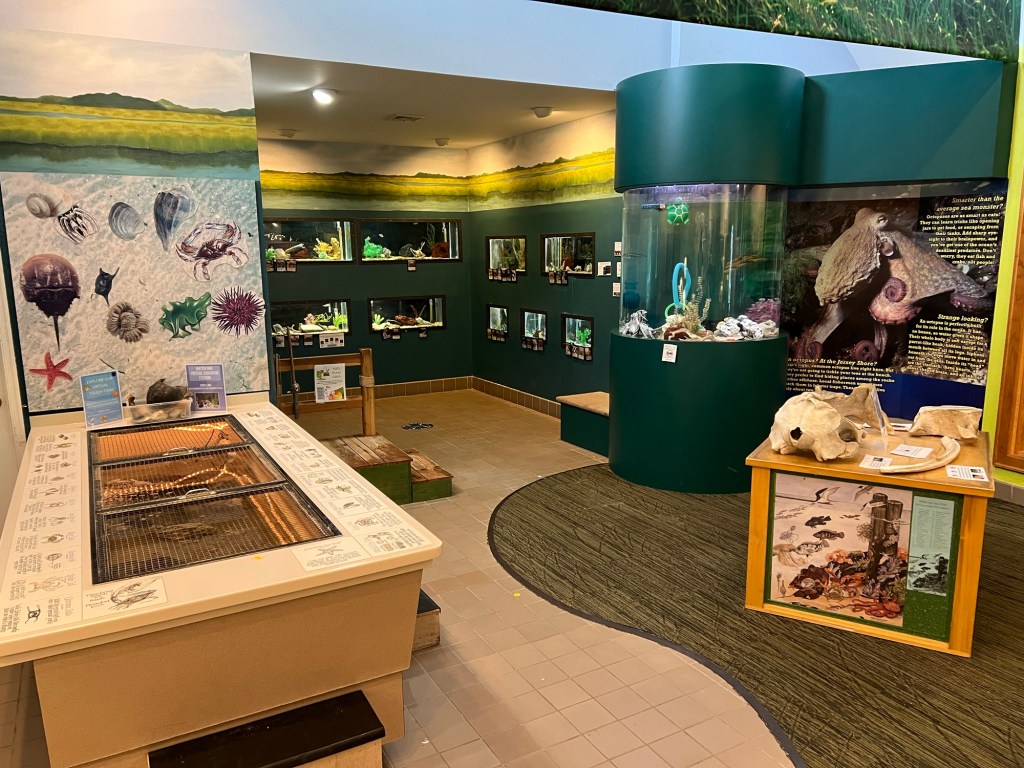
When you leave the deck area and head back downstairs, there is wonderful little aquarium that houses the background of the local fish, crabs and wildlife that are part of the ecosystem that make the salt marshes such an important part of this shore community. One side of the aquarium is dedicated to the local Terrapin turtle whose habitat has long been affected by human encroachment. This conservation effort is ongoing.
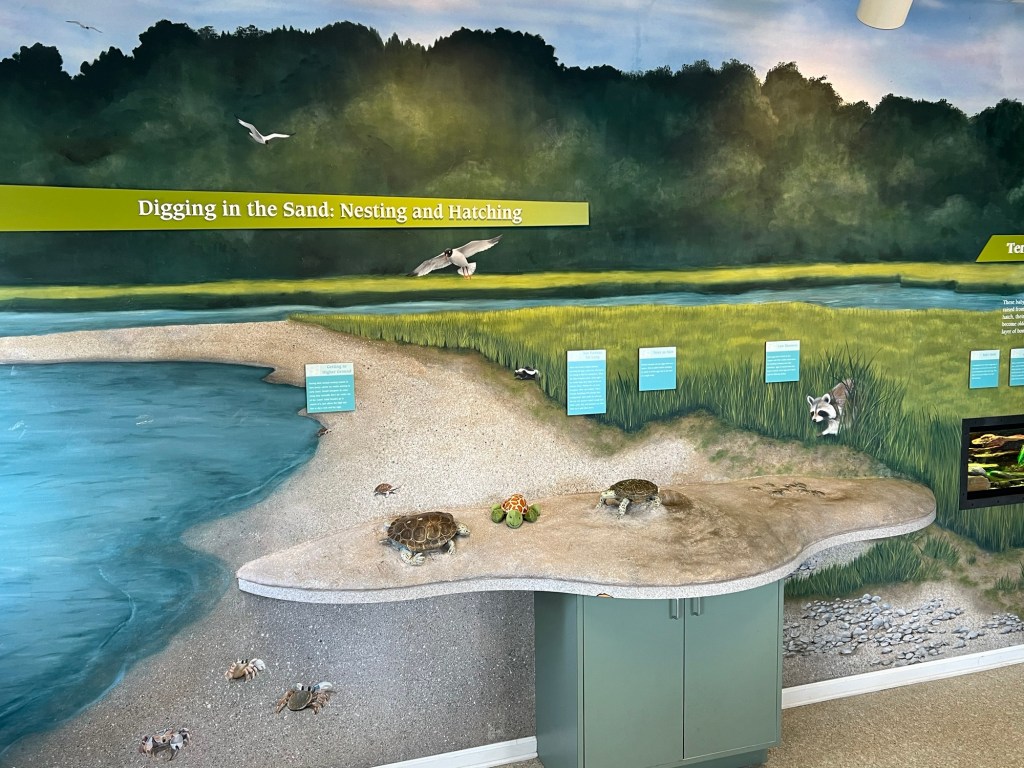
The first room in the complex of rooms is the Terrapin Turtle exhibit showing the habitat of this local creature and its importance in the ecosystem.
Conservation Programs at The Wetlands Institute
(from the Institute website)
Concerns about the local terrapin population led Dr. Roger Wood, former Director of Research at The Wetlands Institute, to establish the Terrapin Conservation Project in 1989. The project has grown and broadened in scope to become the Coastal Conservation Research Program (CCRP), where undergraduate interns work closely with research scientists at The Wetlands Institute on a wide variety of research and conservation projects, including terrapin conservation. Since 1989, over 200 college and university students from more than 100 academic institutions have participated in the program.
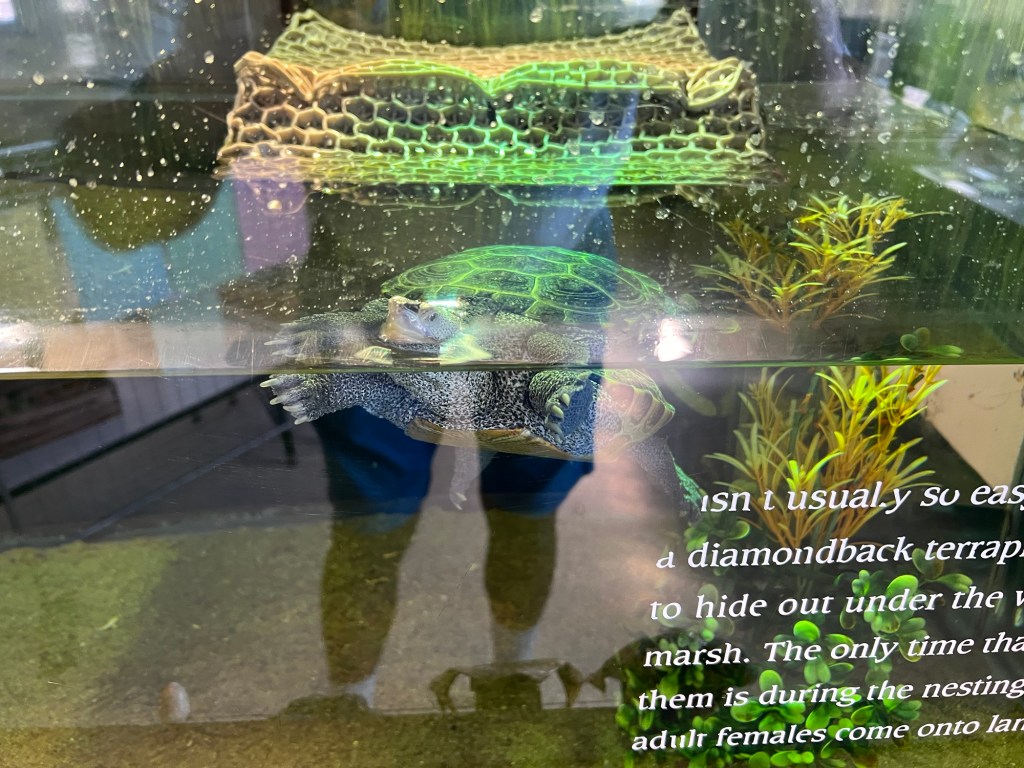
The turtles will just stare at you as walk their display
The turtles swimming around
The turtles in a recreation of their habitat
The turtles in captivity interacting with one another in the tanks
These playful turtles are just part of the chain of ocean animals under study and conservation at the Institute and it is interesting to see to their interaction with each other and then watch us from the other side of the tank to see the human observation.
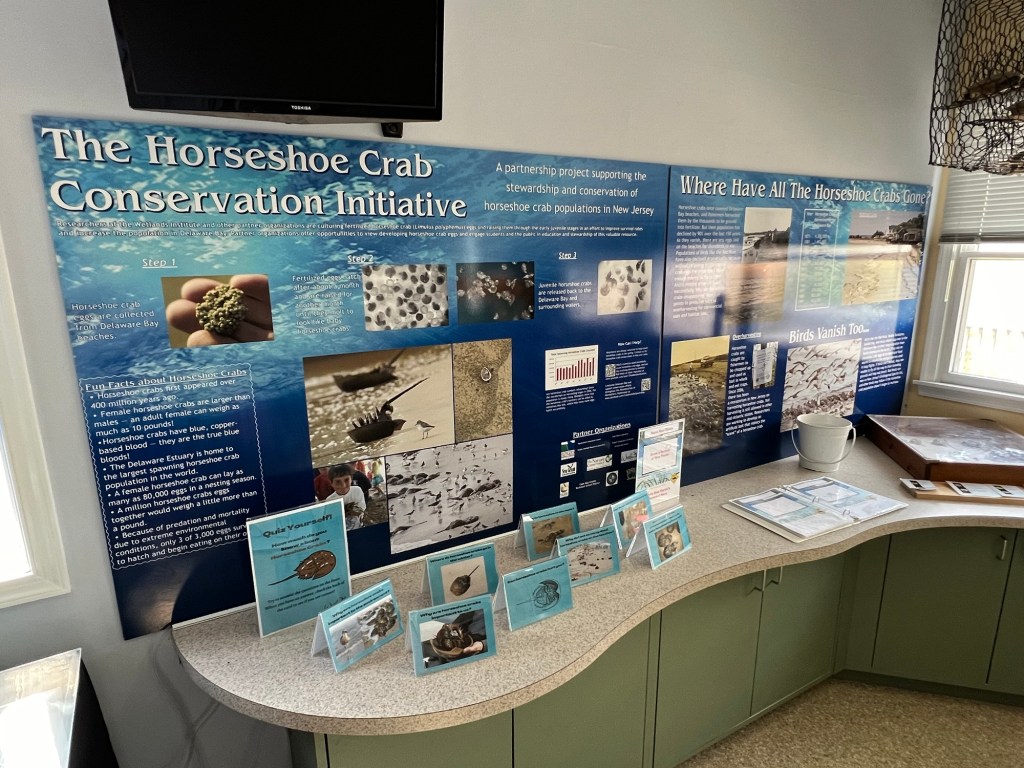
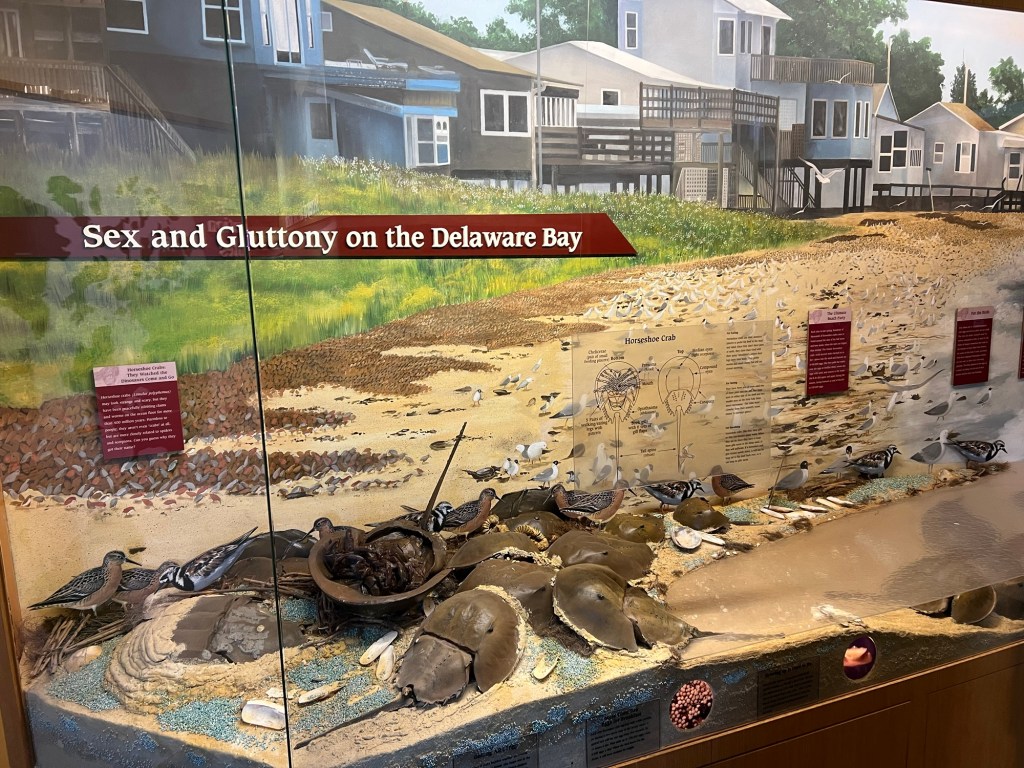
The next exhibition was the Horseshoe Crab conservation tank. The Horseshoe Crab holds a very important role in the ecology of the shore.
The Efforts with Horseshoe Crab Conservation:
(from the Institute website)
In an effort to address the Delaware Bay Horseshoe Crab situation, The Wetlands Institute has embarked on a statewide partnership project to support the stewardship and conservation of Horseshoe Crab populations in New Jersey. As part of this partnership, The Wetlands Institute collects fertilized Horseshoe Crab eggs with the proper permits from spawning beaches along the Delaware Bay and rears the eggs under controlled conditions in our aquarium. After about a month, eggs hatch and newly born Horseshoe Crabs are maintained in their culture tanks. Enclosed in this cultured environment and free of predation, aquaculture dramatically increases Horseshoe Crab survival both before and after the first molts. These small crabs are kept in culture tanks until they are ready to begin feeding, and then are released at their respective egg collection locations.
The Horseshoe Crab exhibit
The Nesting exhibition
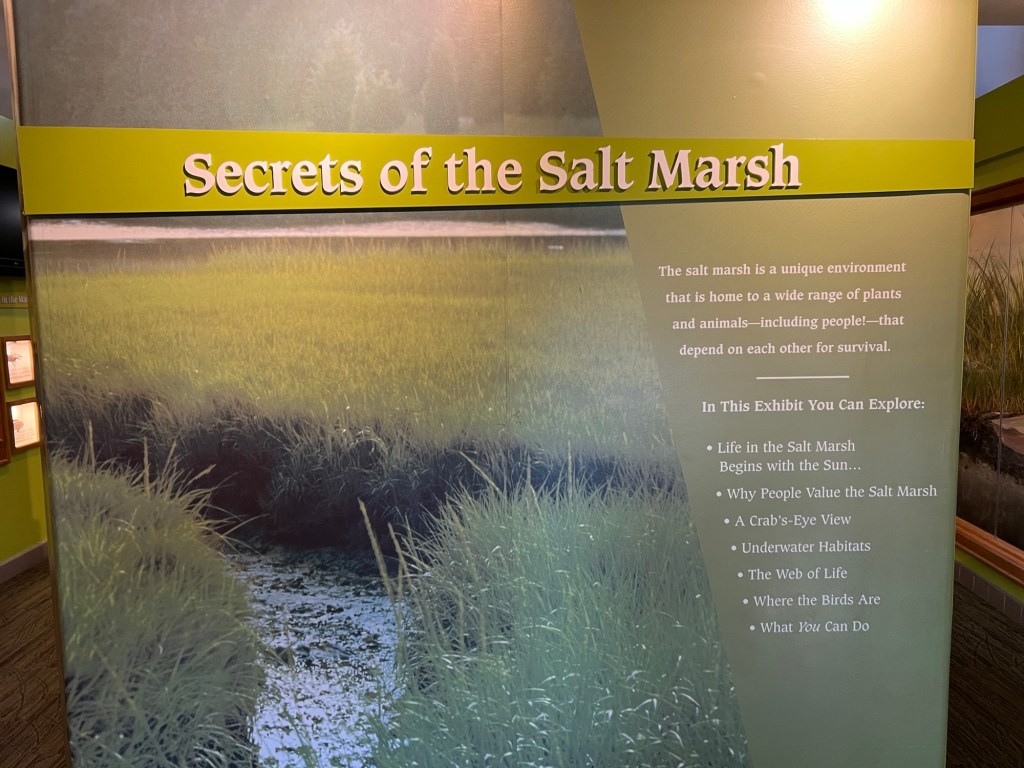
The Salt Marsh exhibition
The exhibit on how shore development is affecting wildlife and the ecosystem
The aquarium was very interesting as the exhibits were not there for amusement but to show the wildlife that lives in our oceans and how they interact with one another.
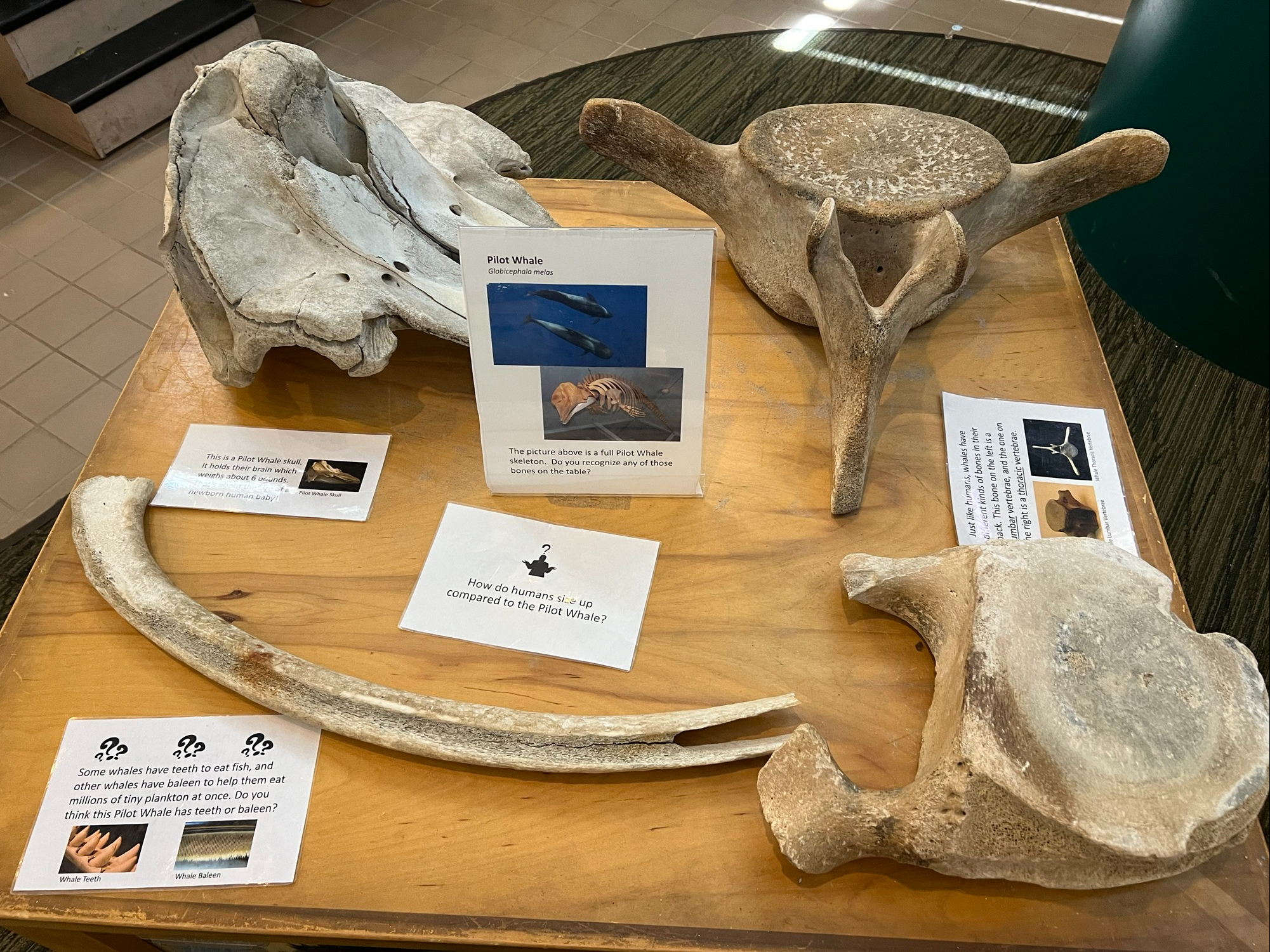
The Whale bone exhibition
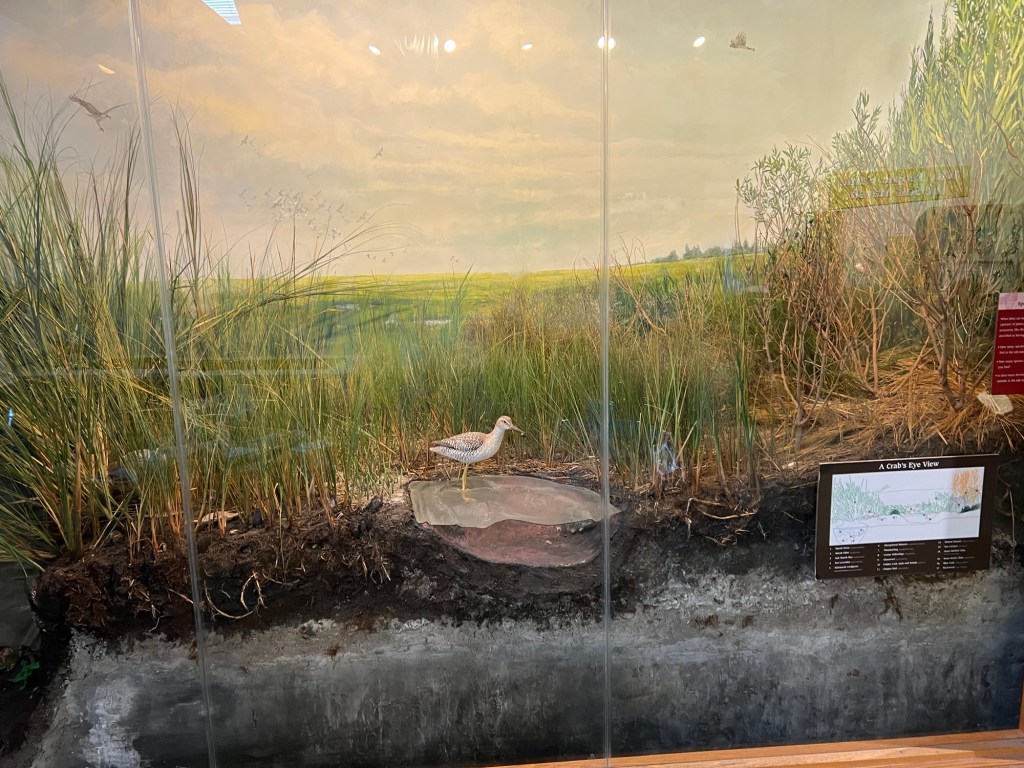
The exhibit on Shore birds and their home at the shore
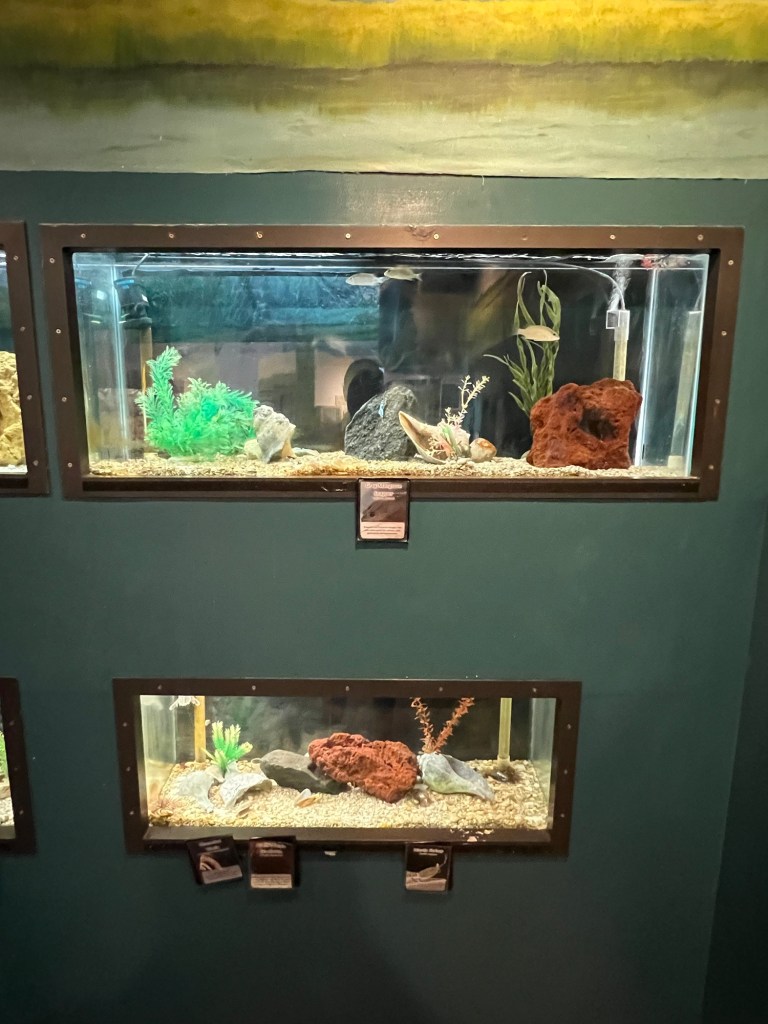
The Aquatic tanks are the interaction we have to the aquatic population. I am sure many of the fish in the exhibition are not native to New Jersey or the Atlantic still it was fun observing them.
The tanks showed the importance of marine life in our beaches and oceans
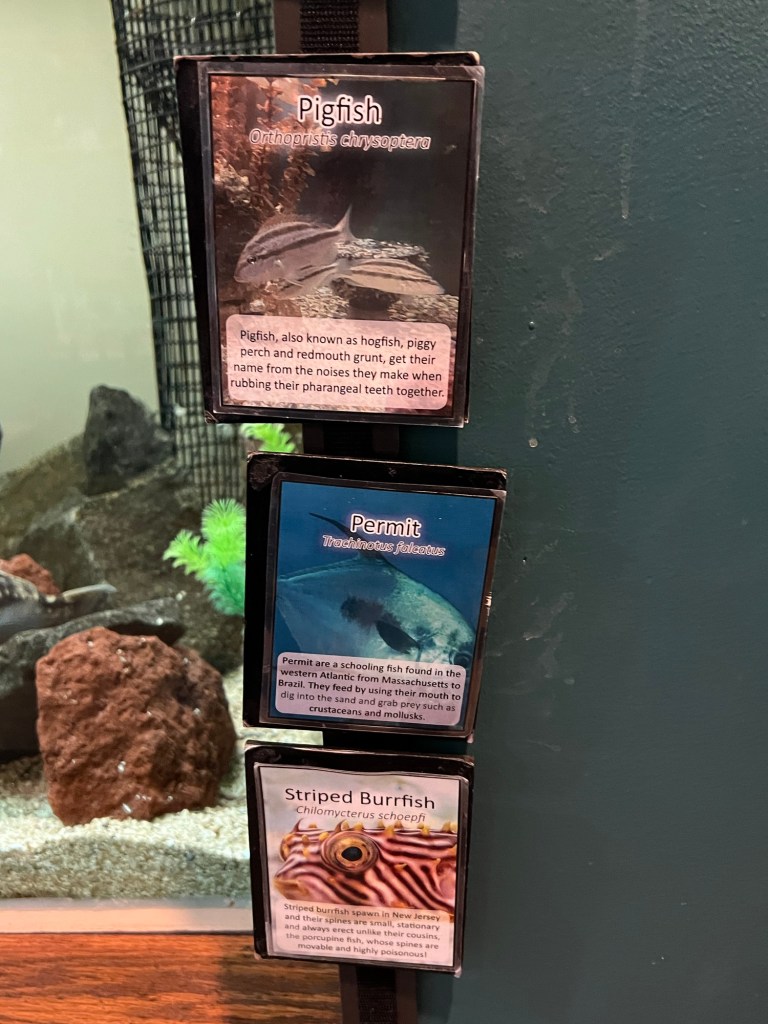
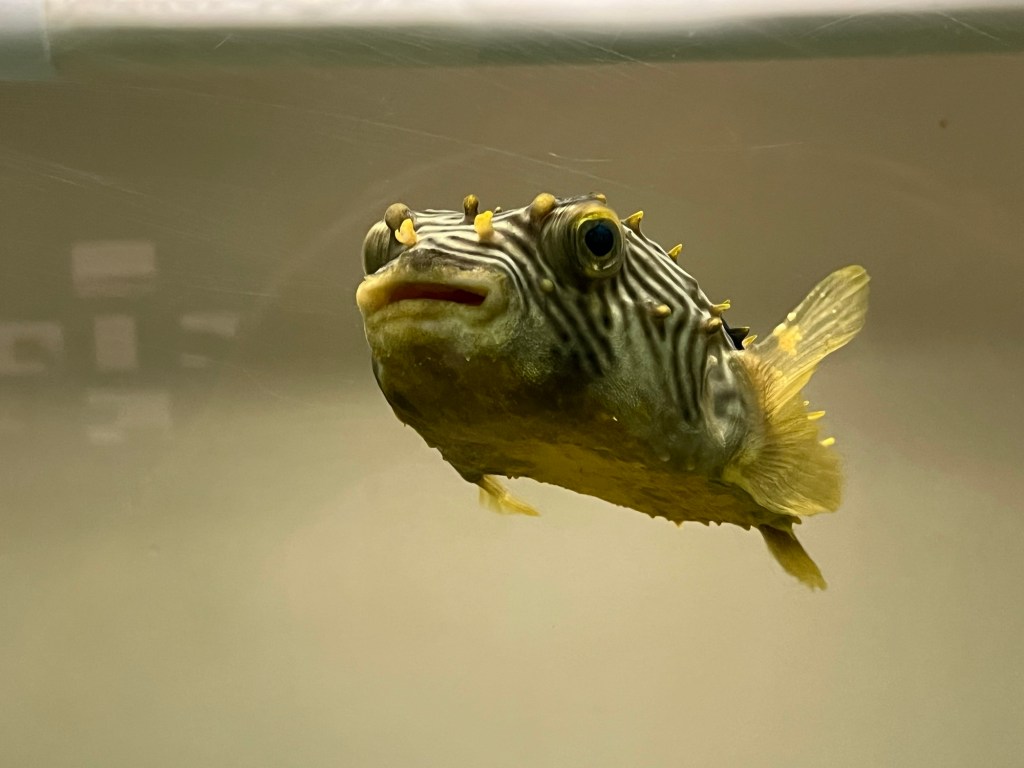
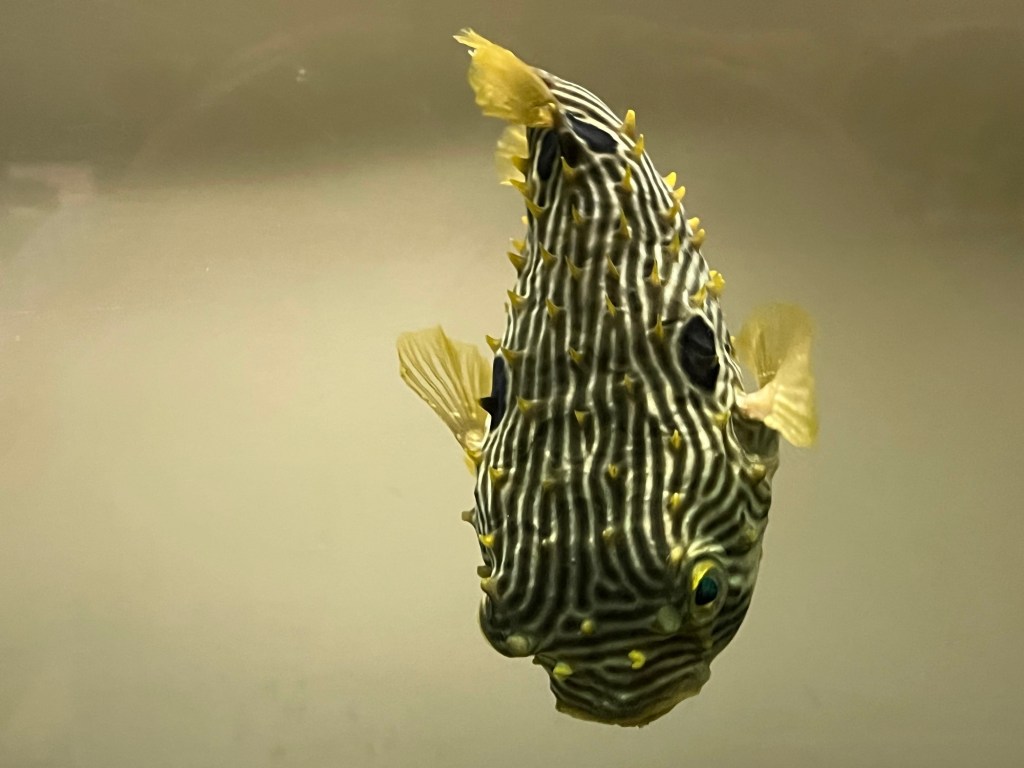
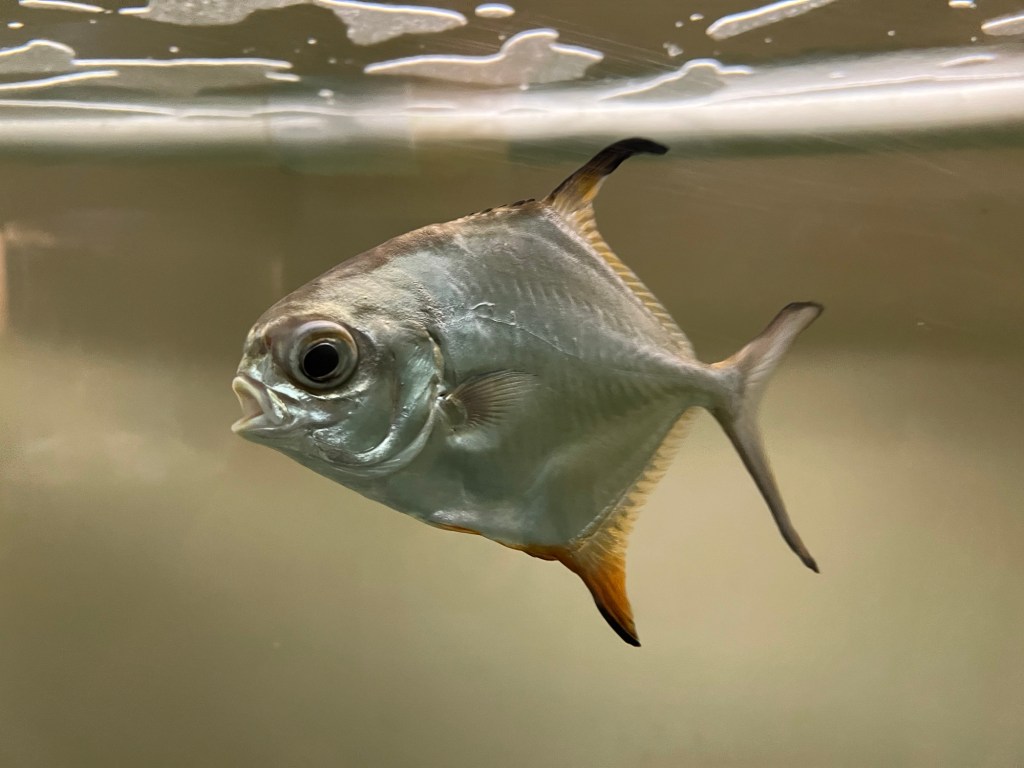
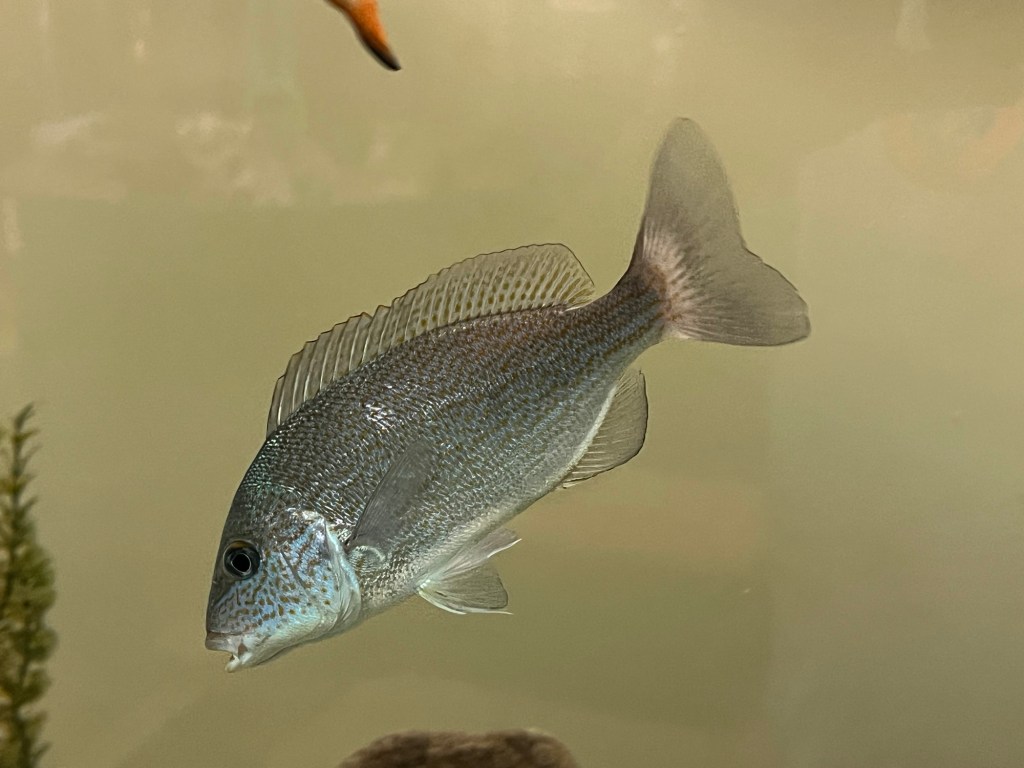
Some of the types of fish in our oceans: the Striped Burrfish, Permit, and Pigfish
The Striped Burrfish
The Stripped Burrfish
The Permit fish
The Pigfish
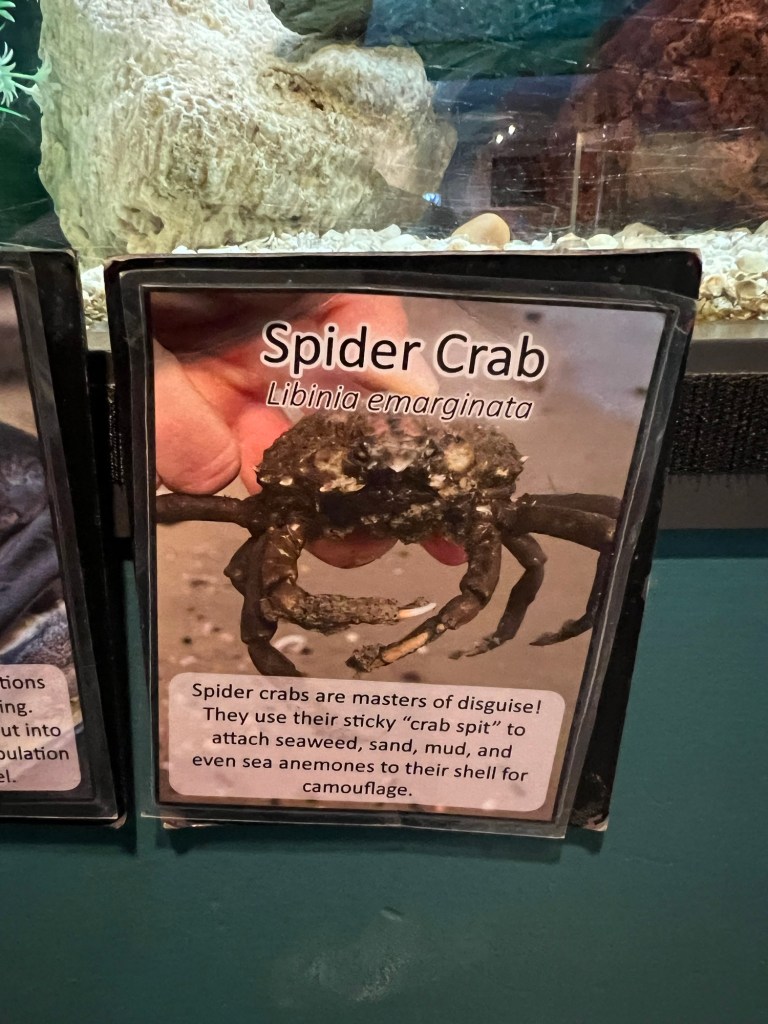
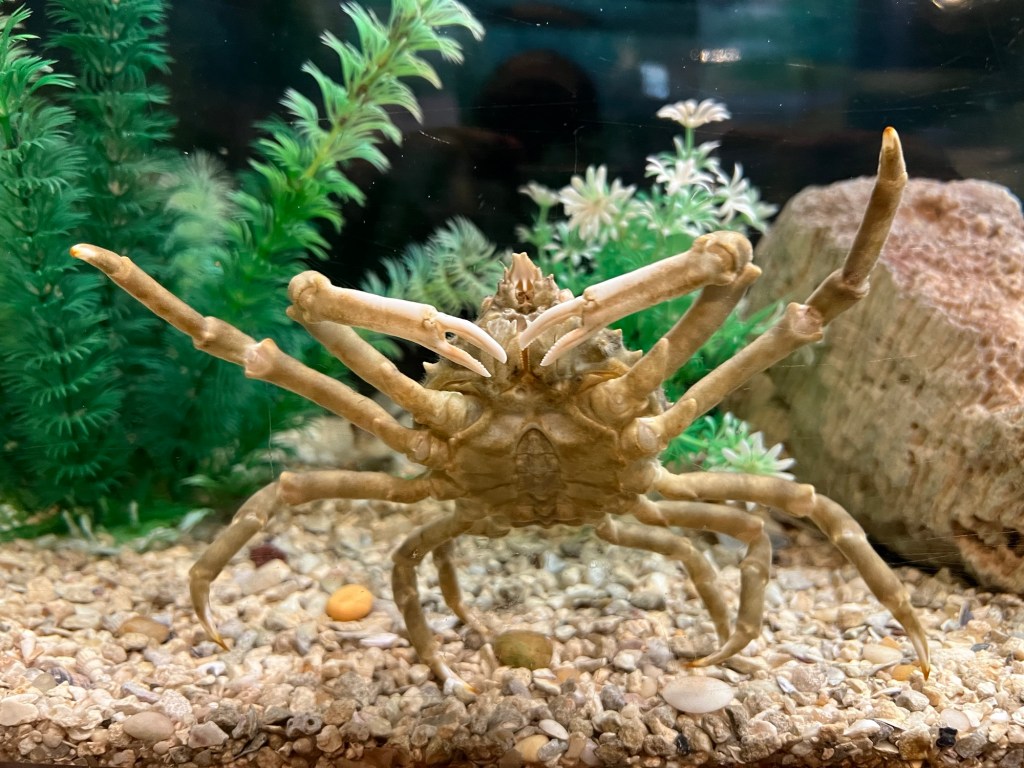
The next tank over held the very active Spider Crab, who seemed to follow my every move.
The sign at the tank of this very playful crab
This guy was following me around the tank
The aquarium was interesting because the fish seemed to be very jaded of being around humans. They seemed so used to seeing us it does not faze them.
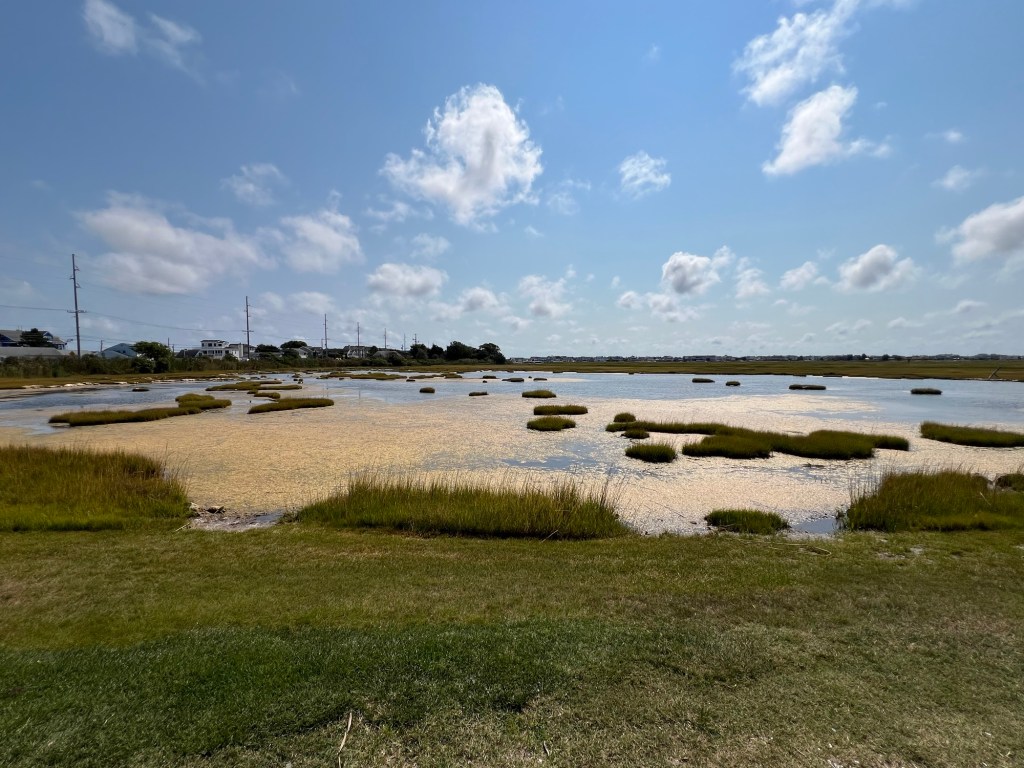
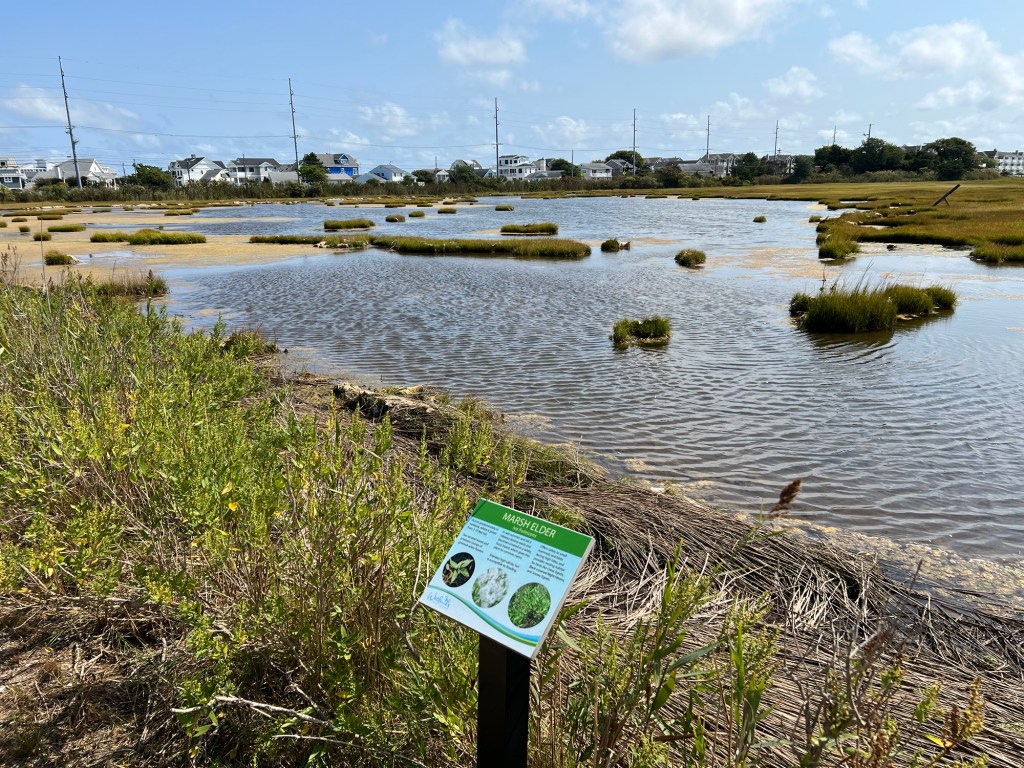
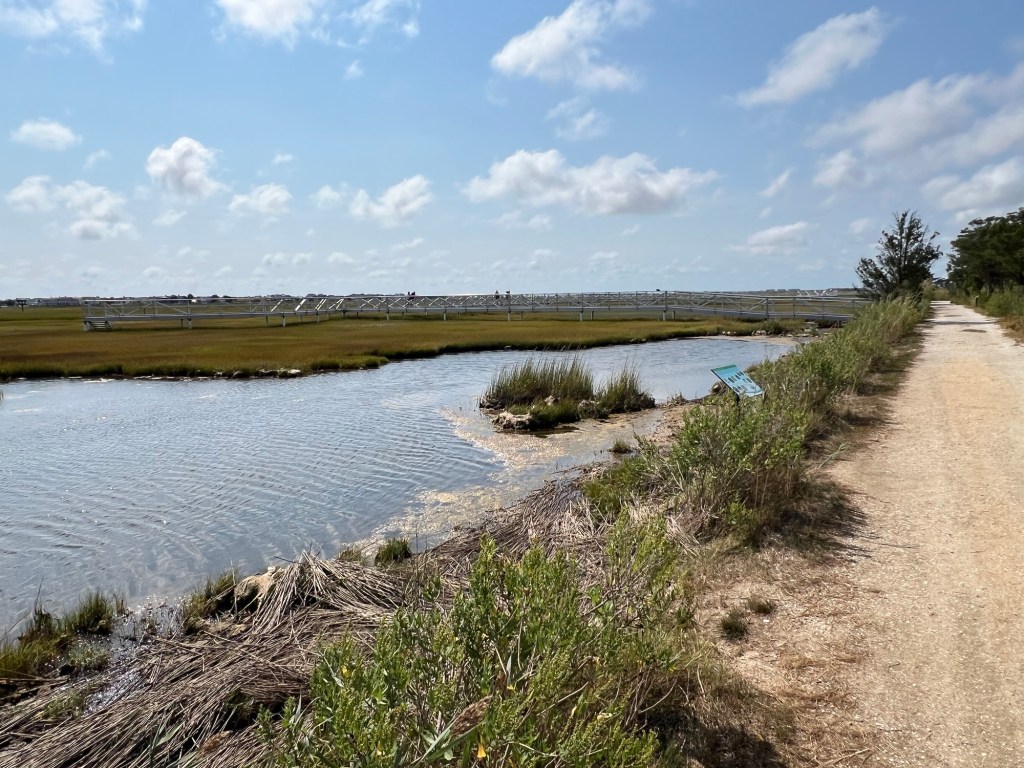
I then toured the salt marshes outside. The Institute has a series of paths and walkways where you can view the marshes and see the cause and effects these natural areas. It was a beautiful warm sunny day when I visited and it was relaxing to just walk along the paths and just take it all in.
The view of the salt marshes from the back of the Institute
A closer view of the marshes from the paths
Coastal Sustainability and Wetland Health
(from the Institute Website)
The Coastal Sustainability and Wetland Health program began with efforts to document the impact of sea level rise on marshes and marsh-dependent species. The health of coastal bird and diamondback terrapin populations is intricately linked to the condition of coastal marsh systems; as a result, monitoring changes in the local population size, behavior, and breeding success of these animals can help us perceive changes within the salt marsh itself. Our work is also increasingly focused on the monitoring of marsh restoration and habitat creation projects. Through beneficial reuse of dredged sediments, we aim to protect the marsh platform from conversion or drowning, and to create elevated coastal bird and terrapin nesting habitat. In order to understand the response of wildlife to these projects, and to document how sea-level rise and coastal flooding are impacting local populations, we are carrying out surveys of marsh-dependent species on The Wetlands Institute property and other restoration sites (Institute website).
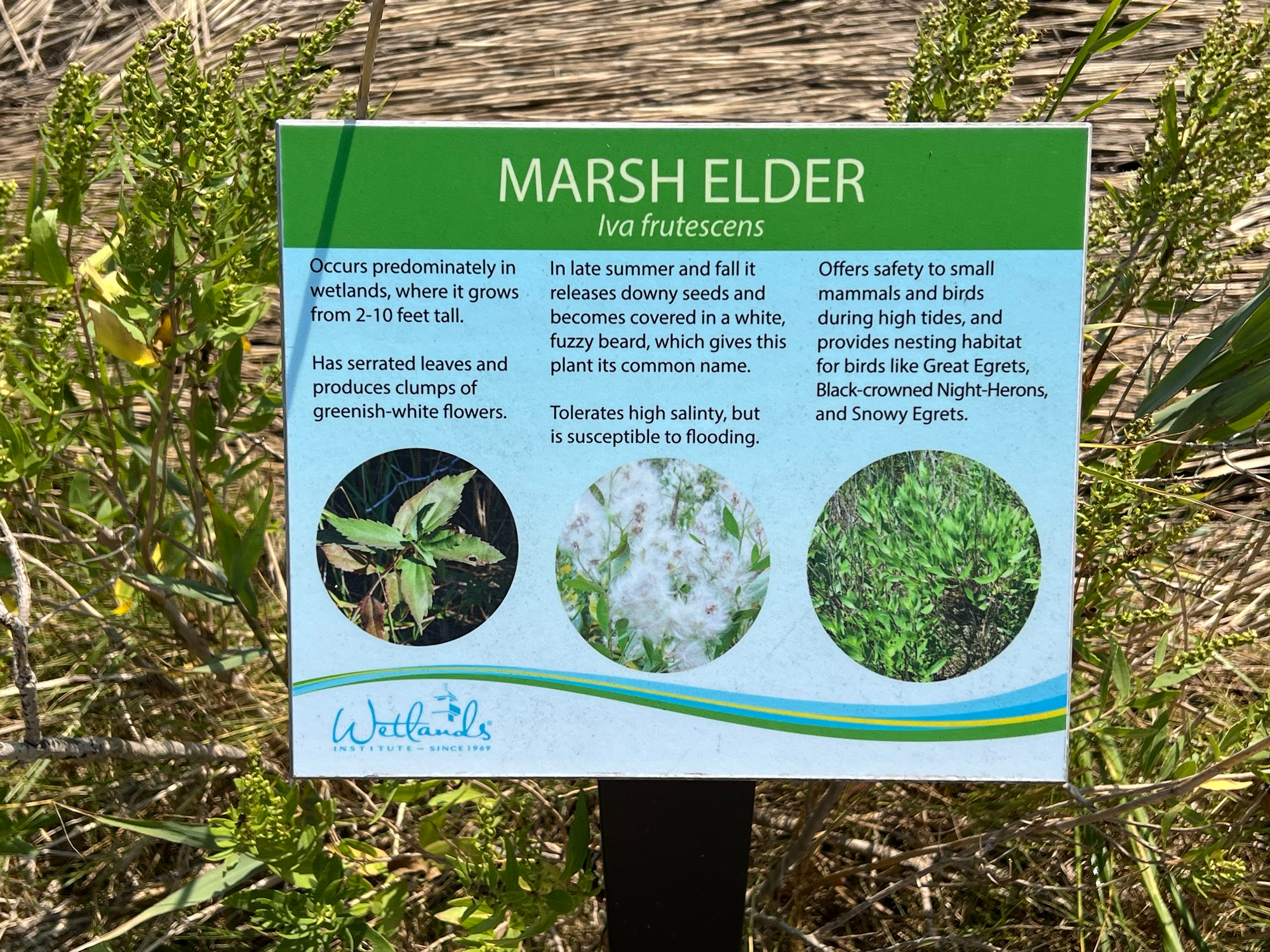
The Marsh Field sign
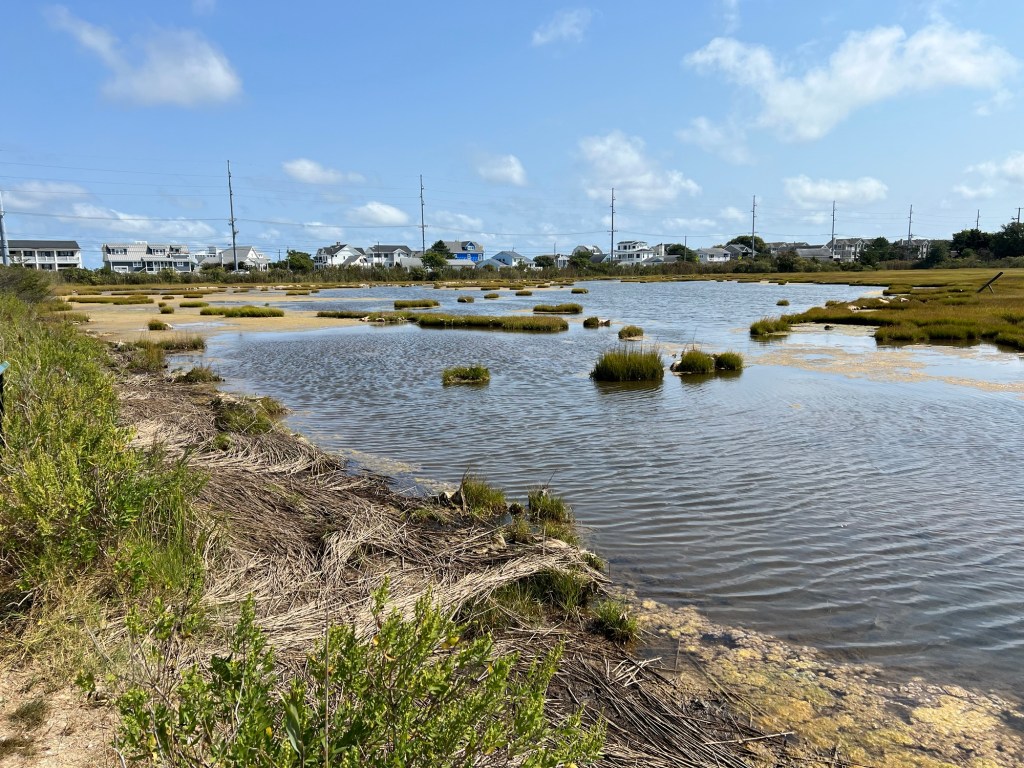
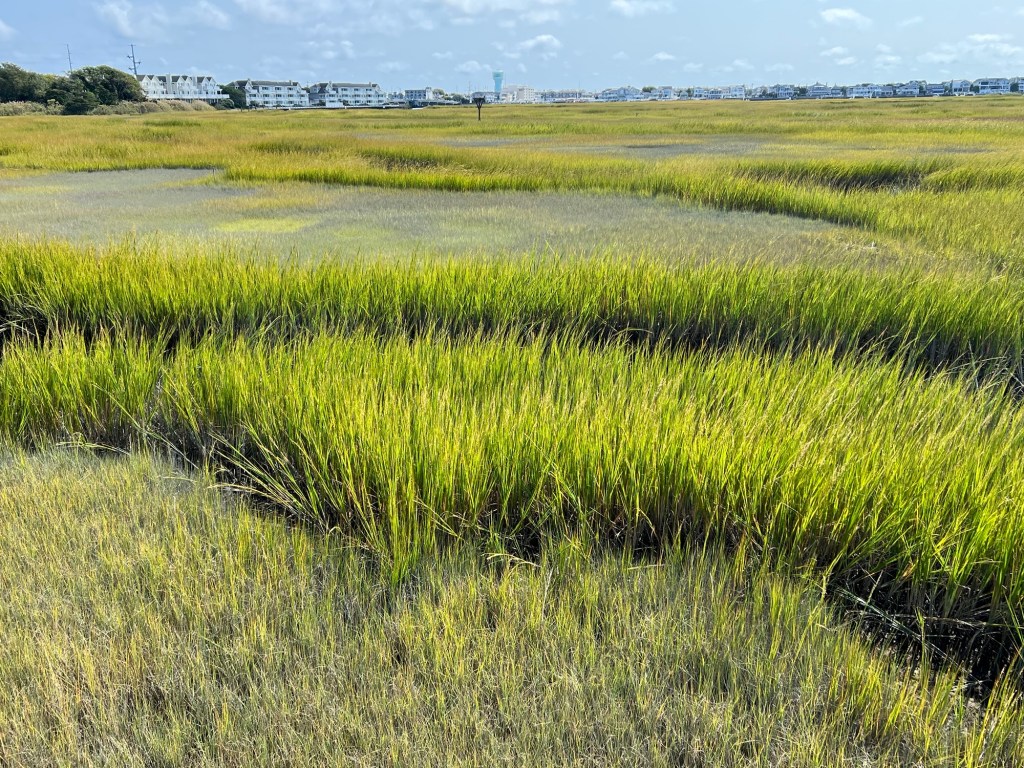
The Salt Marshes
The back of the Institute from the Salt Marshes
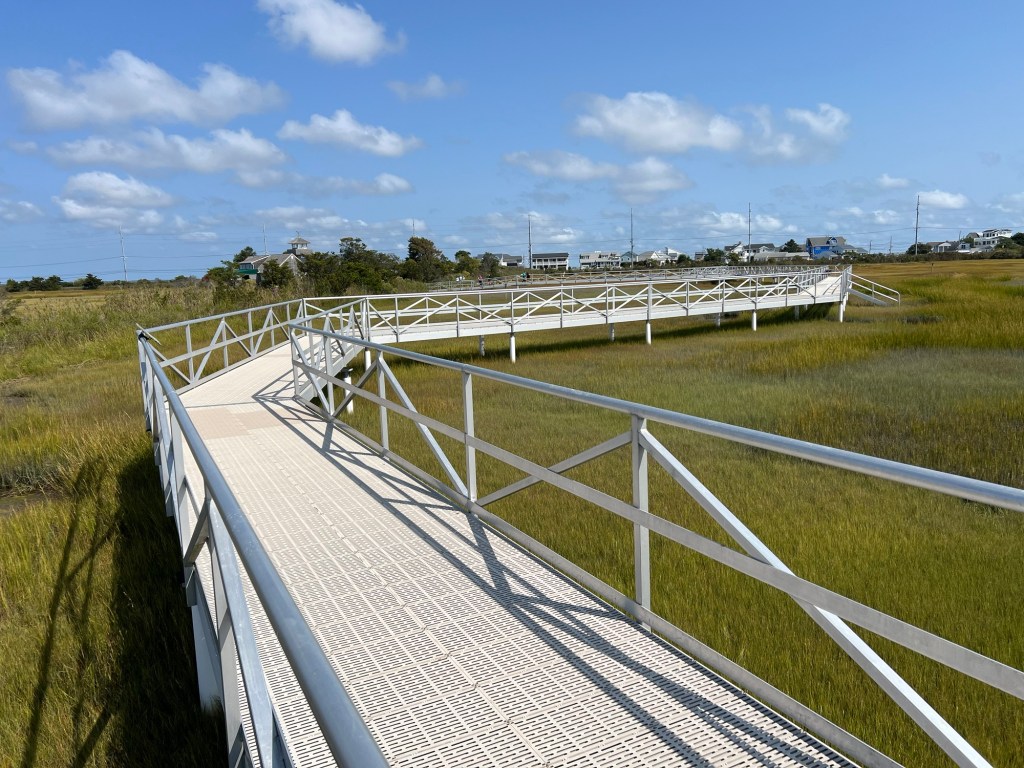
The Institute has a complete elevated walkway where you can walk through the marshes and observe the area.
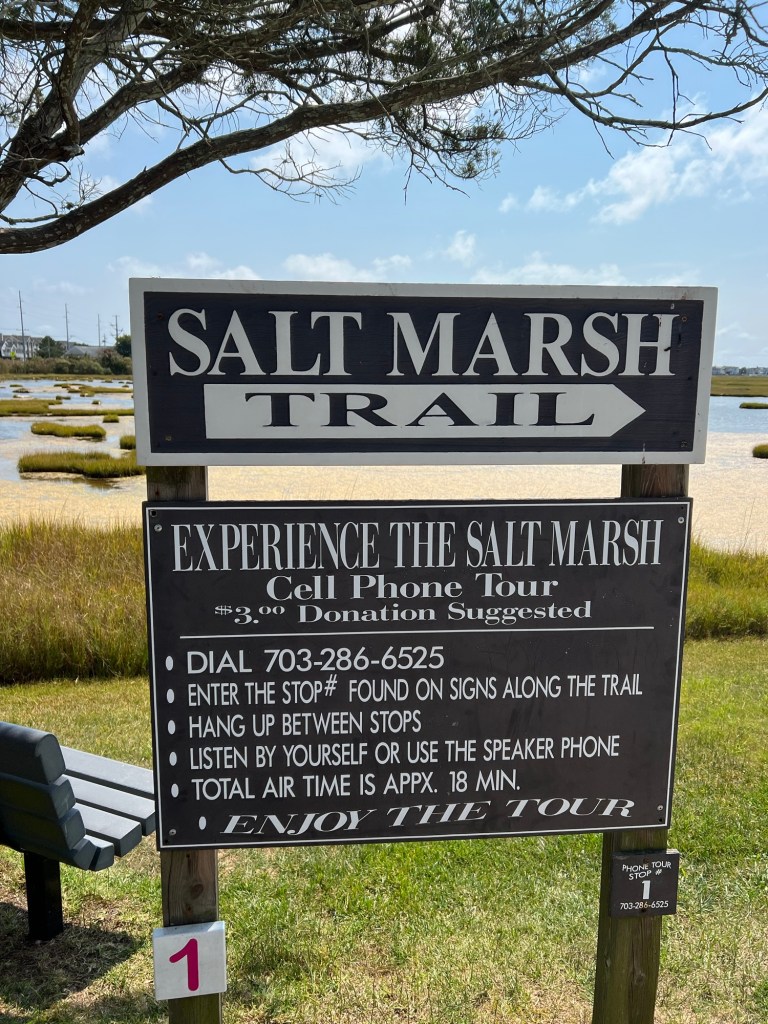
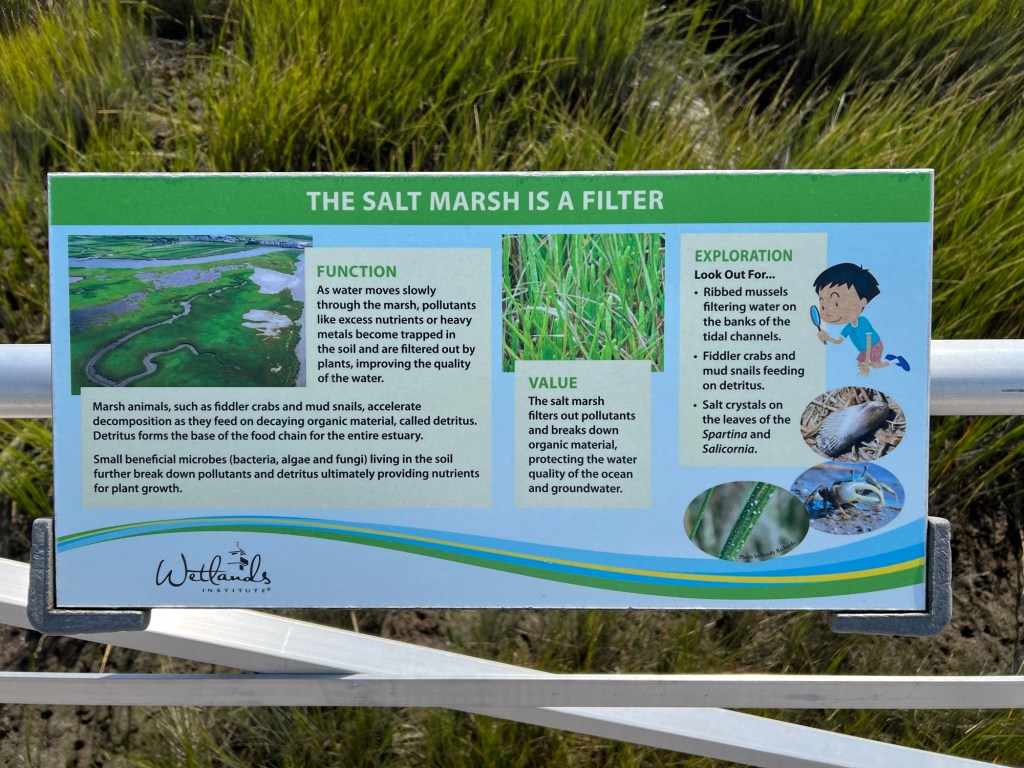
The sign explaining your walk through the marshes
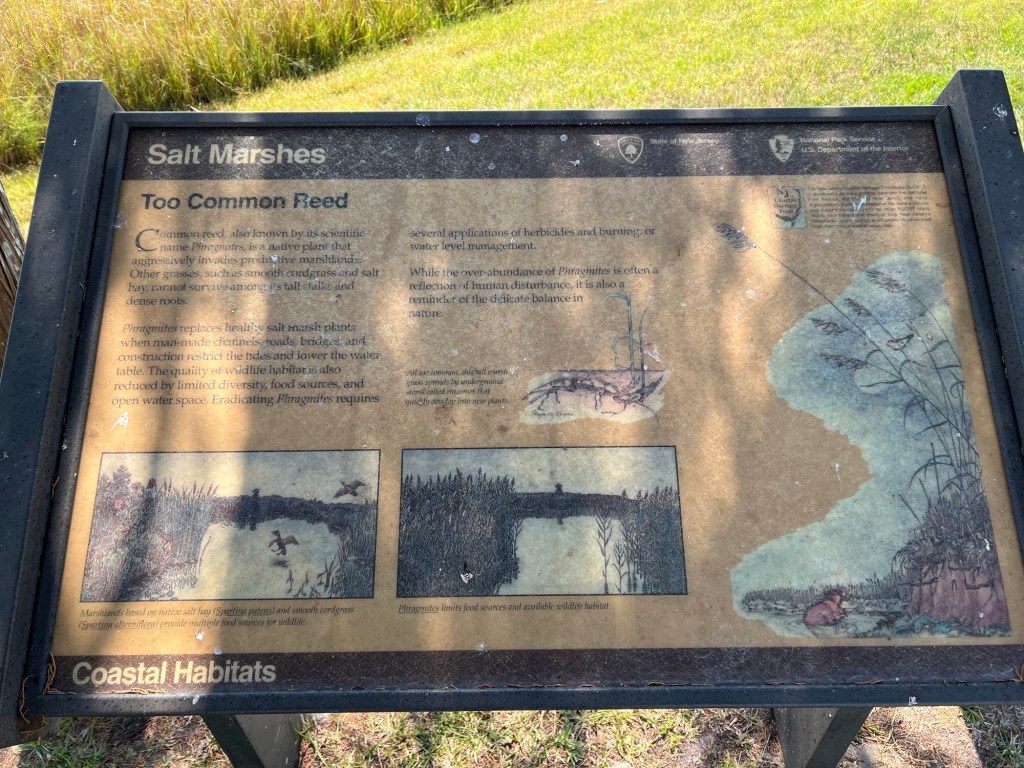
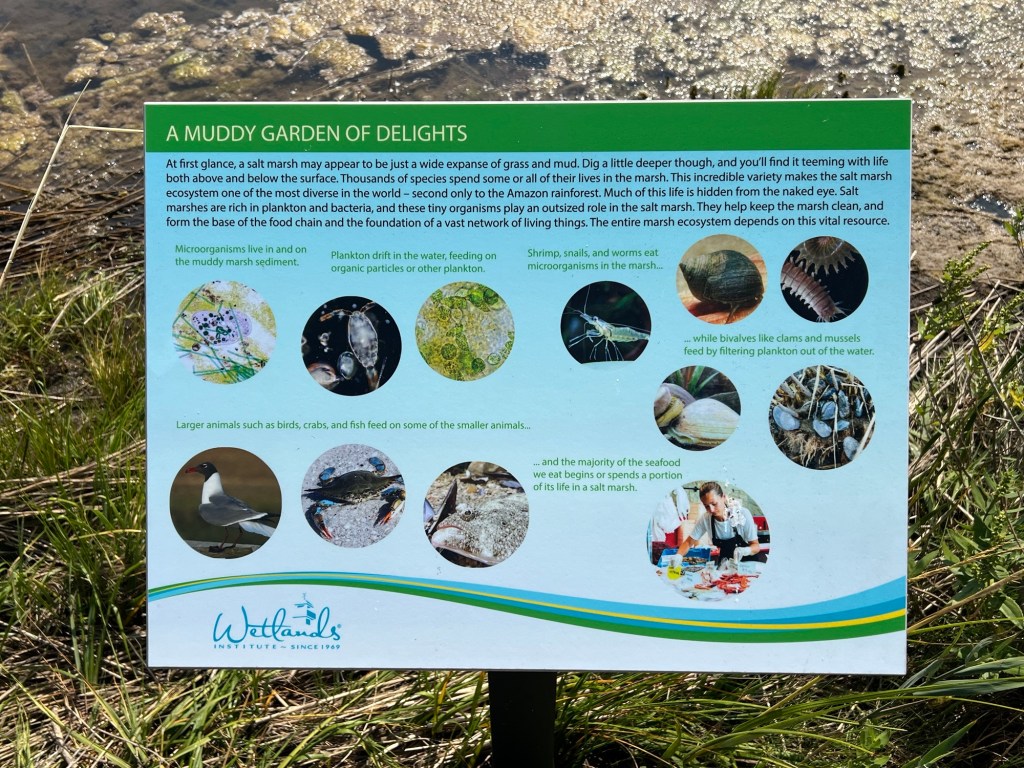
The possible animals and fish you will see on the walk
Plan to take the time to walk through the pathways on a nice day and observe the salt marshes. You will not see many animals or fish but you know they are there. It is interesting to see the town of Stone Harbor in the distance and realize how much these marshes help the human population without them knowing it. Not just are they beautiful to look at but how what an important role in the environment they play.
The beautiful view of the marshes
The elevated walkway goes through the marshes and offers excellent views
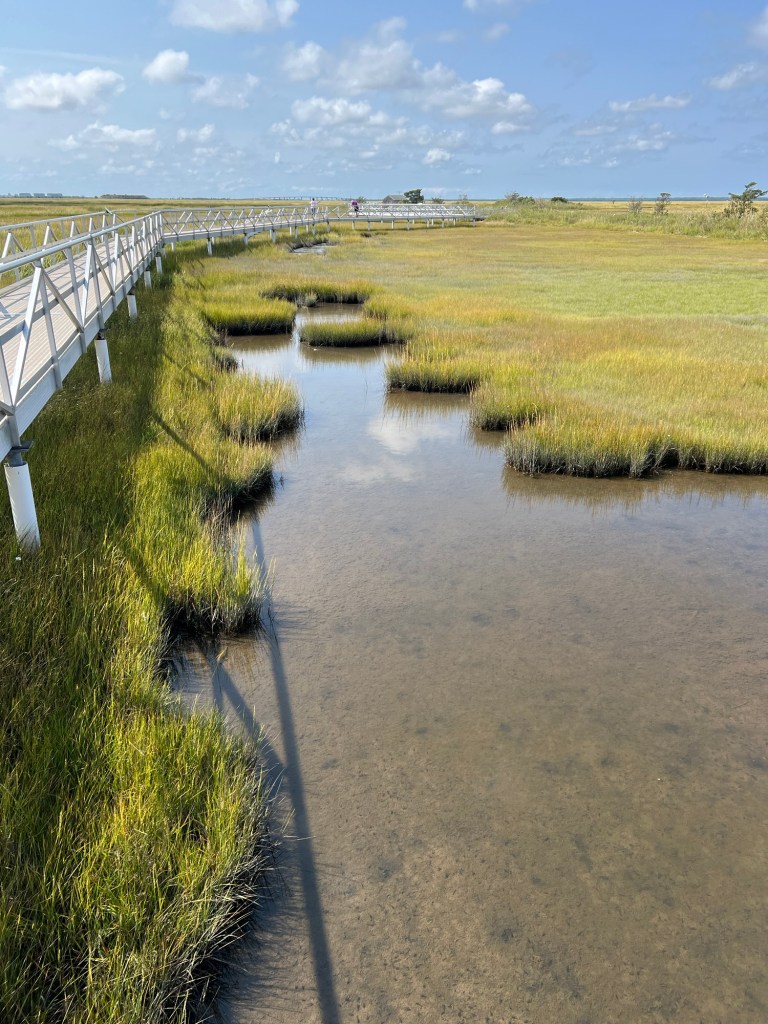
The marshes from the walkway
The effects of a healthy marsh
The breathtaking views of the marshes
When you finish the walk of the pathways and the elevated walkway, this leads you back to the Institute.
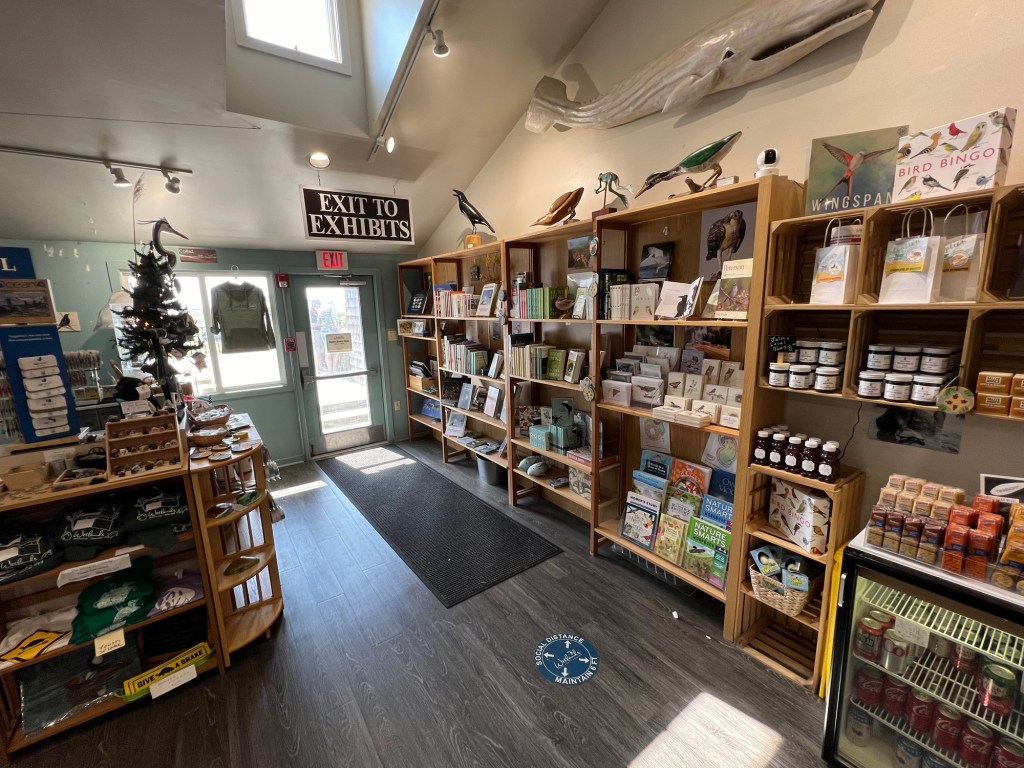
Don’t miss a trip to their terrific gift shop with all sorts of fun items and nautical gifts. I bought a delicious jar of the local beach plum jelly. That was a treat. There are all sorts of interesting gift items in the store from gifts from local farms to items dealing with conservation and nature to children’s items. This benefits the Institute and its mission.
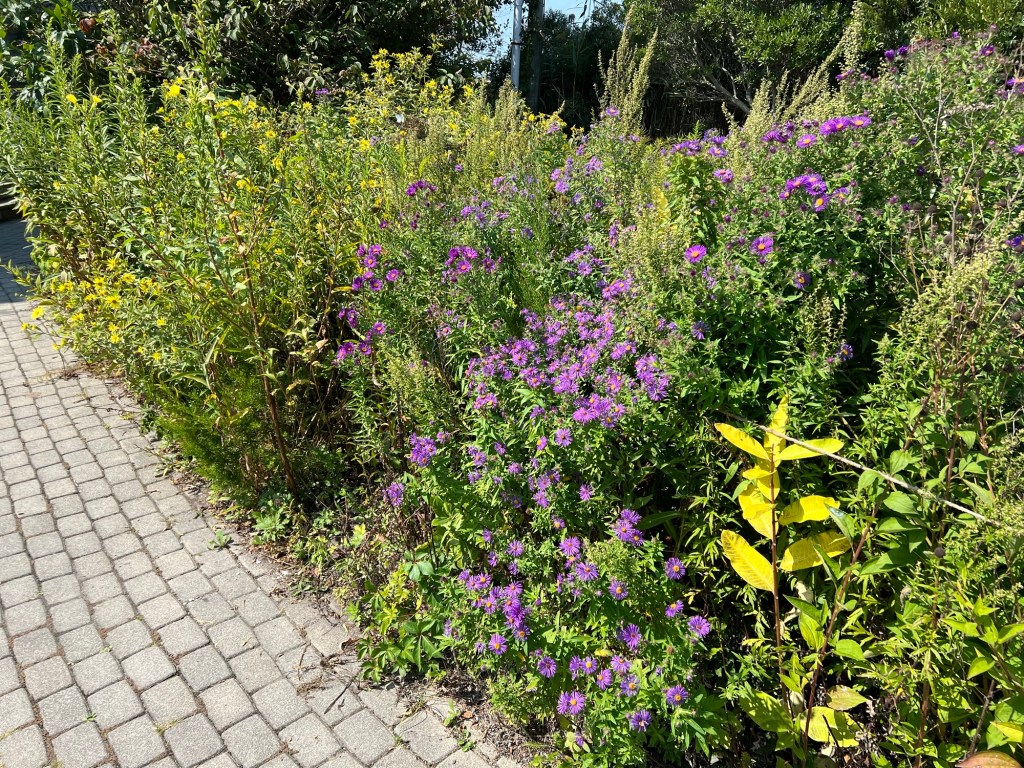
Don’t miss one last stroll through their gardens on the way out the door.
What I liked about the Wetlands Institute was that it was engaging, entertaining and educational all at the same time. You walk out with a lesson learned of the positive efforts being made to save the environment in a way that does preach but first shows the cause and the effect and with simple efforts made can benefit everyone.






























 Visiting a Museum: The Unique, Unusual, Obscure and Historical