
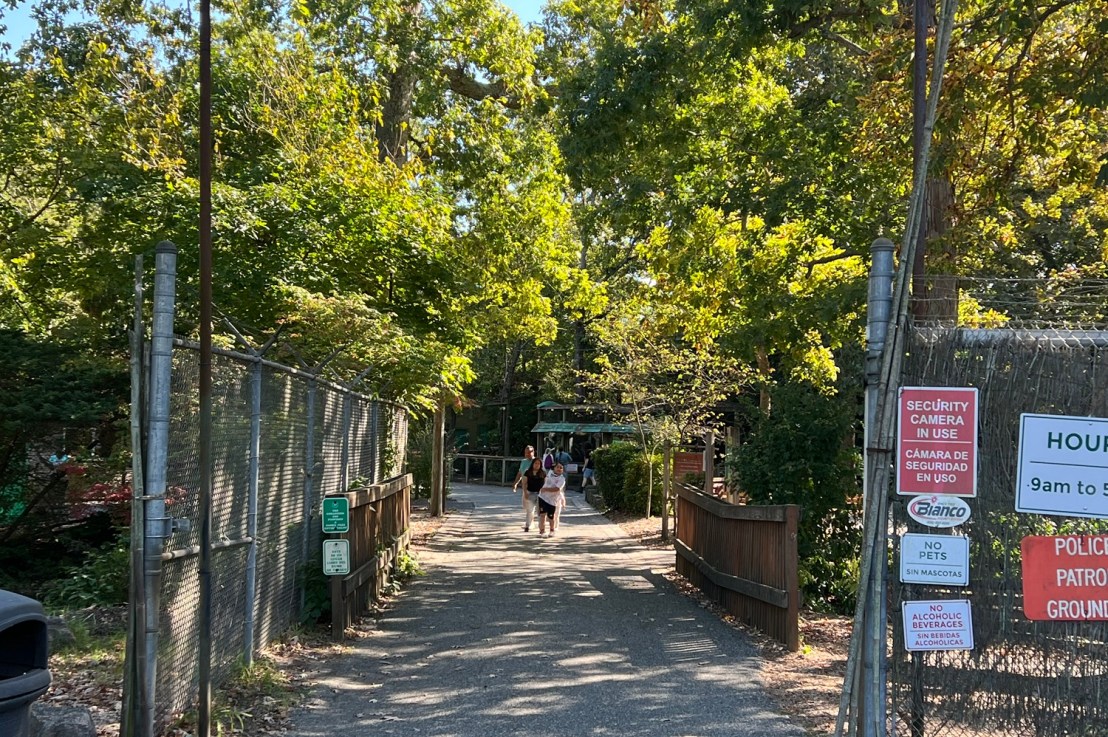
Cohanzick Zoo
Mayor Aitken Drive
Bridgeton, NJ 08302
(856) 453-1658
Open: Sunday-Saturday 9:00am-5:00pm
Admission: Free but donations are accepted
My review on TripAdvisor:
The Cohanzick Zoo is part of the Bridgeton Park system and can be found inside the parks grounds.
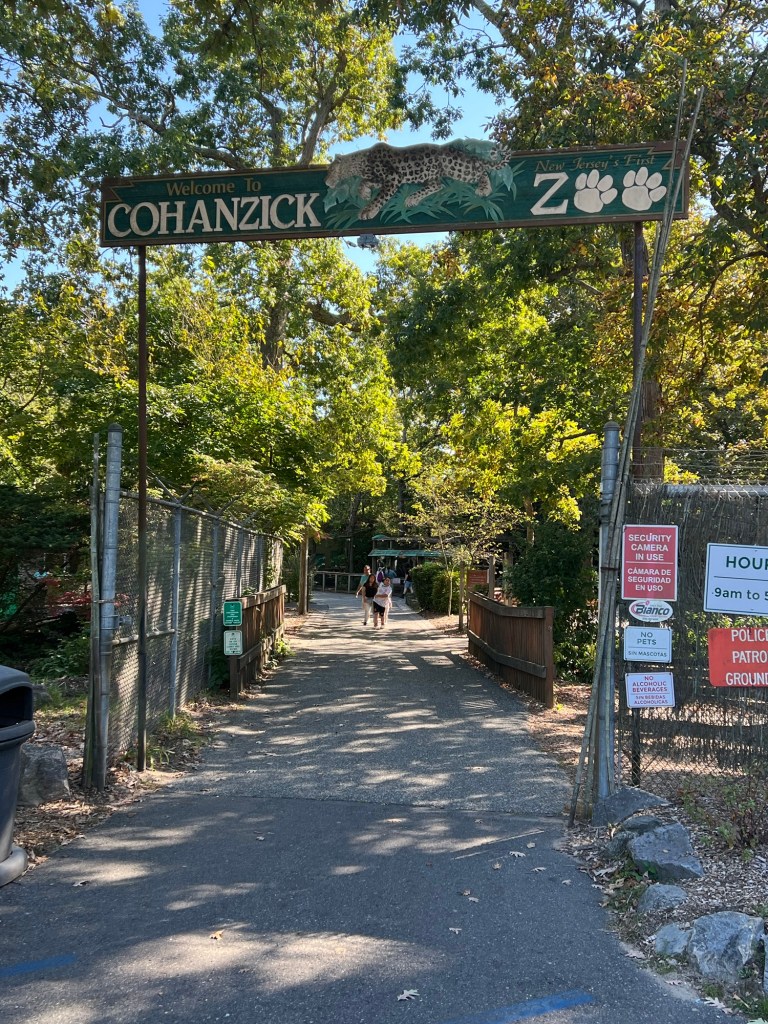
The main entrance to the zoo.
The zoo has an old fashioned feel with smaller rescue animals and equally not too large cages. The zoo is mostly comprised of smaller animals who were rescued from either being poached, illegally transported or had been used as pets, many of them being neglected and abused.
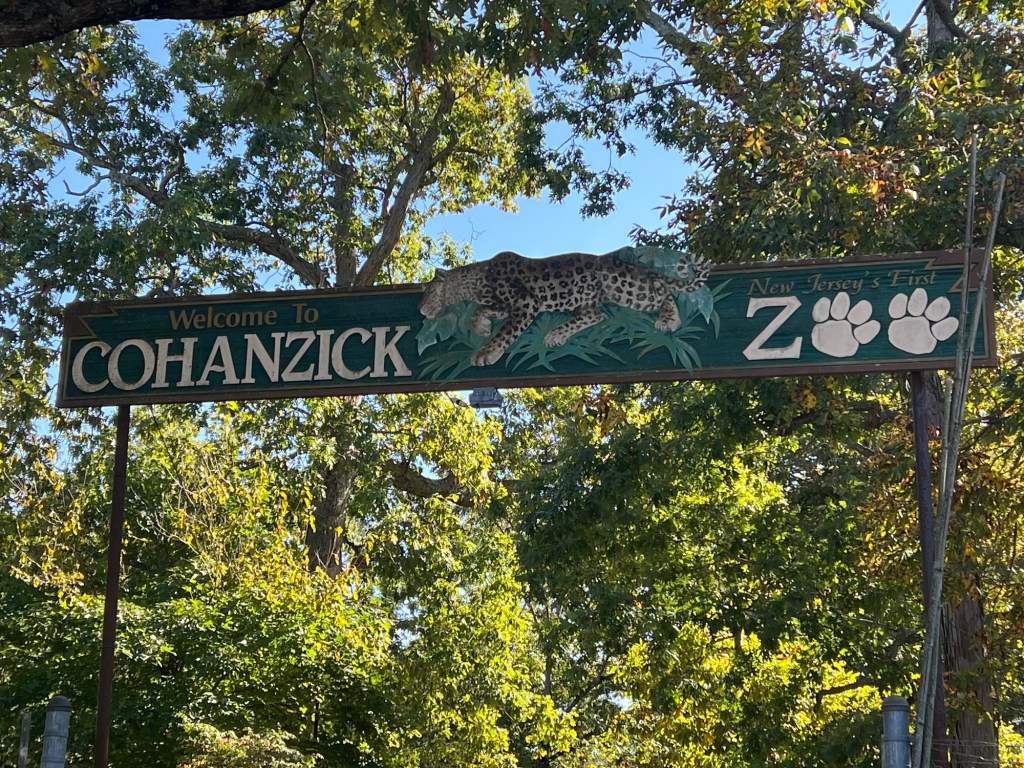
The sign that welcomes you to the park
Throughout the park amongst the cages of wildlife are strolling gardens and animal related statuary.
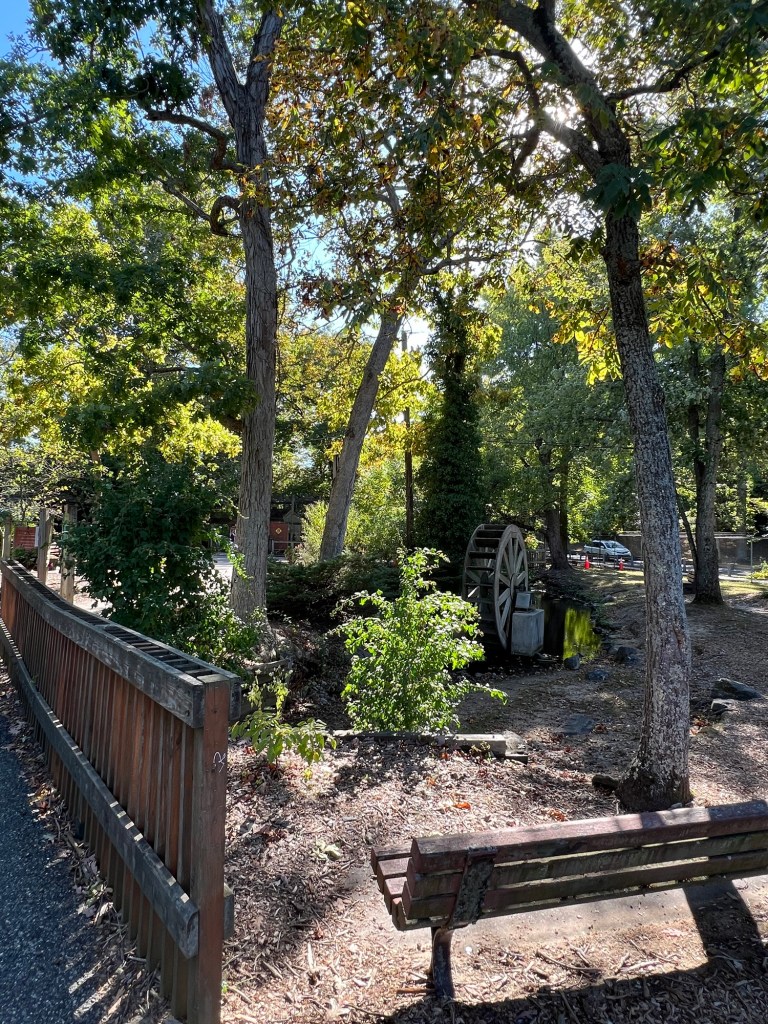
The pathways and gardens were still in bloom the afternoon that I was there and it is a nice way to spend do the afternoon.
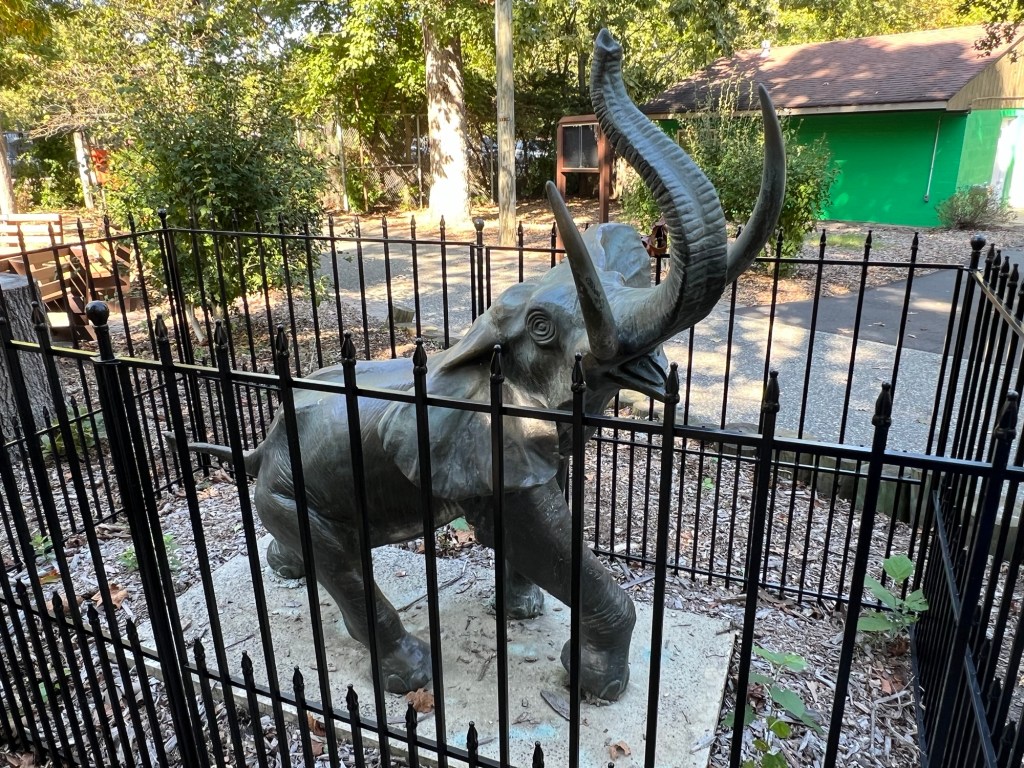
The Elephant statuary at the entrance of the zoo
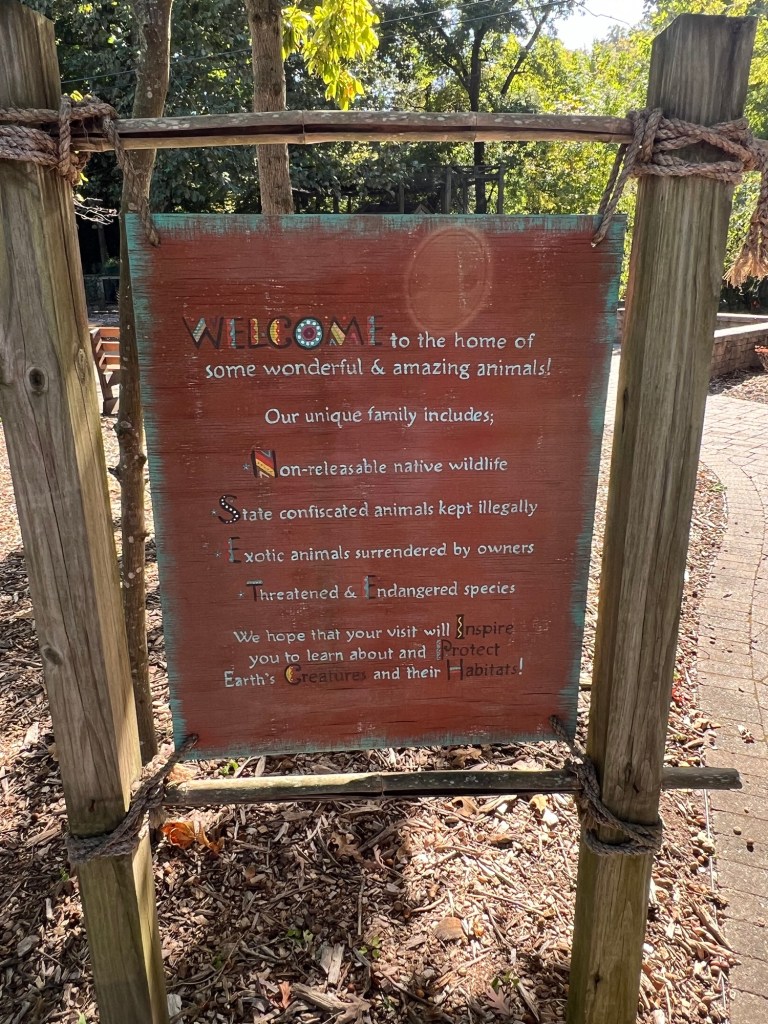
The status of how some animals found their home here
The first resident I finished was the Raccoon House, where it looked like the raccoon was taking a snooze. He really looked out of it when J passed the cage.

The Raccoon House
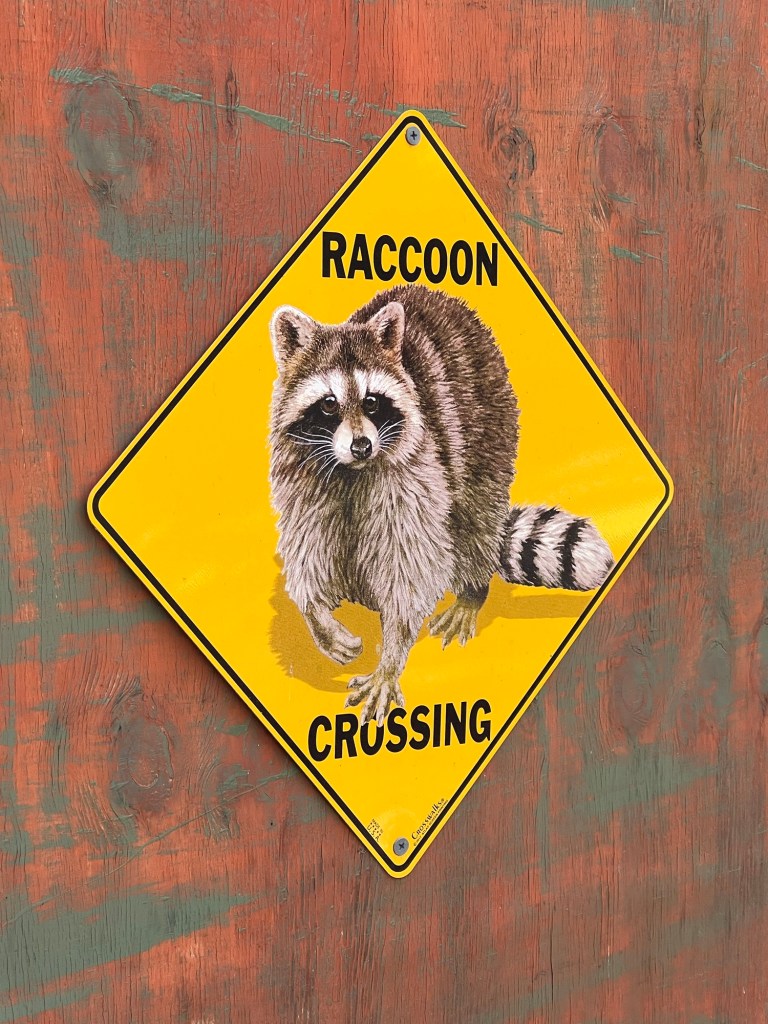
The Raccoon Crossing sign
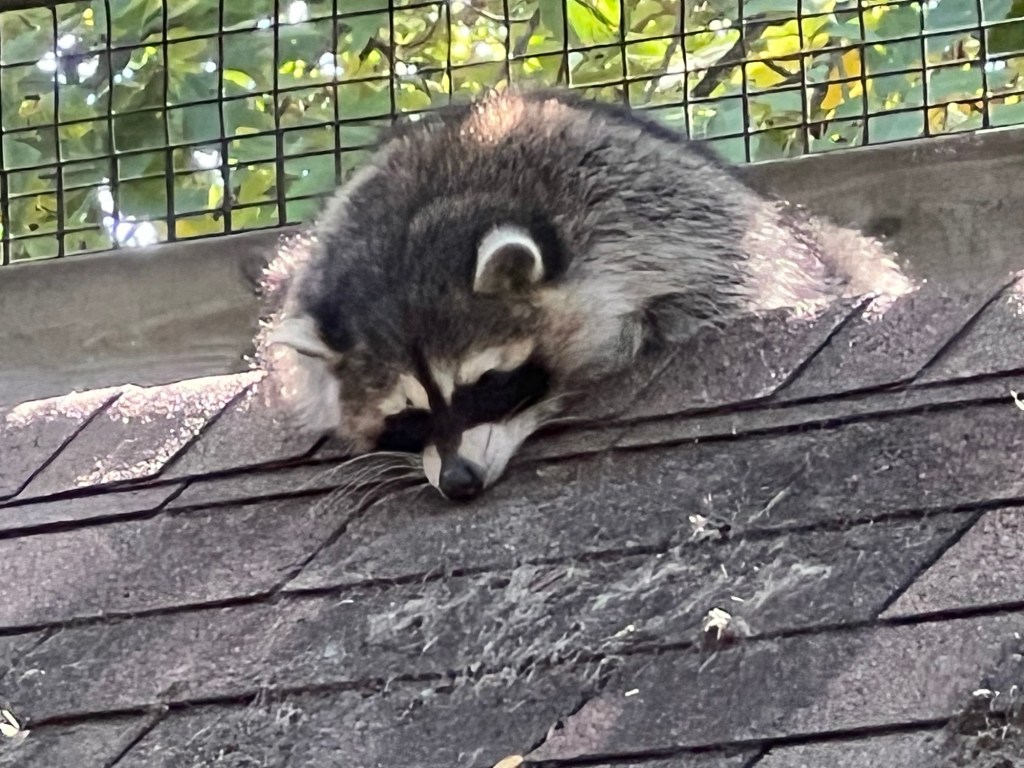
This poor little guy was out like a light
The zoo is one of the smaller more localized ones that I have visited so you can see the whole zoo in about an hour. Then you can walk leisurely around the paths and revisit the exhibitions again. Some of the animals like the peacock family, just wonder around the park and do their thing.
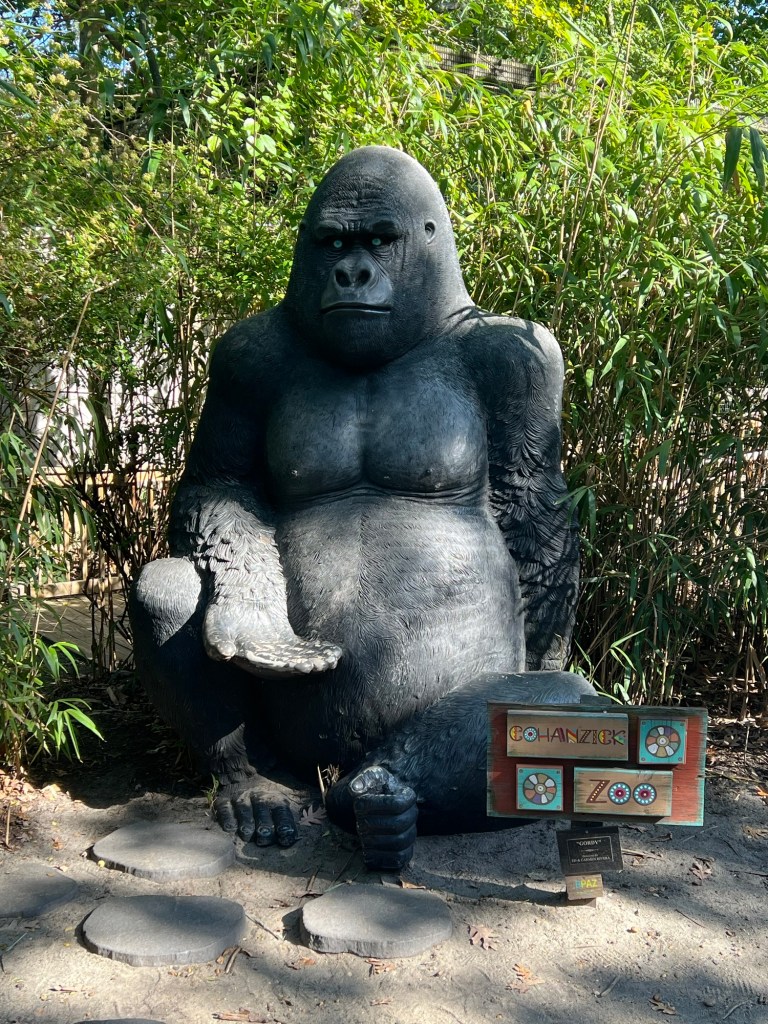
This gorilla sculpture that greets you in the back part of the zoo
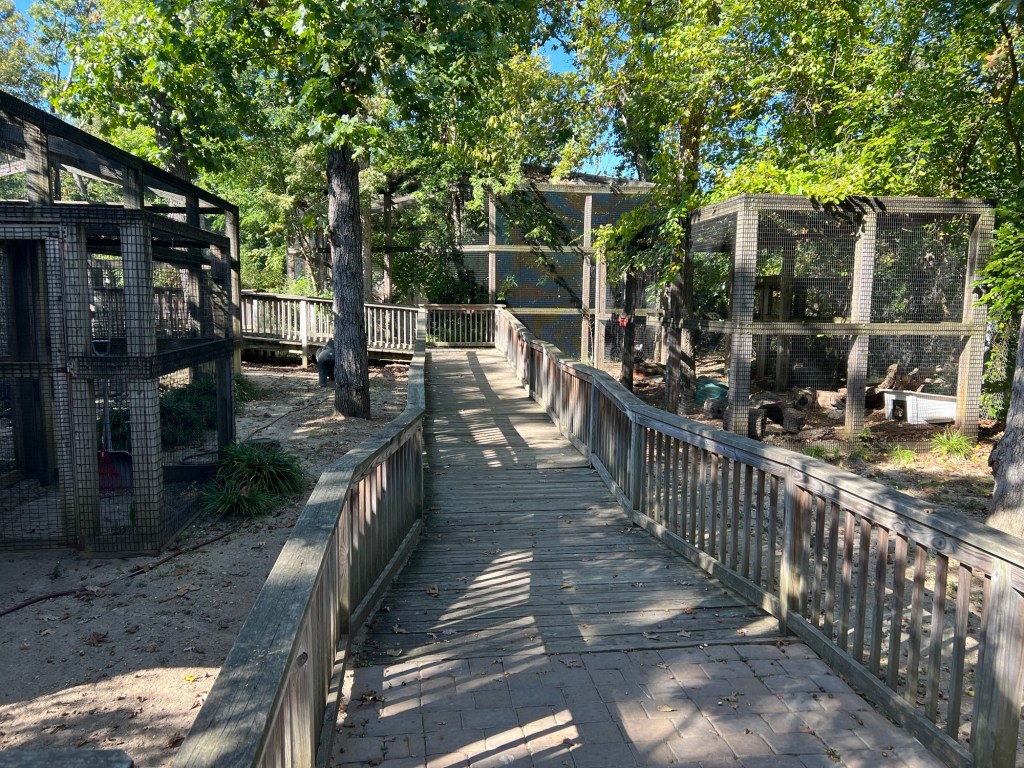
Following the walkway to the back pens where a lot of the small animal and bird displays were located
The next exhibition that I visited was the Sand Hill Crane and I read that the poor little guy had been injured. He seemed a bit more optimistic when I passed the cage. I think that the animals just want some attention.
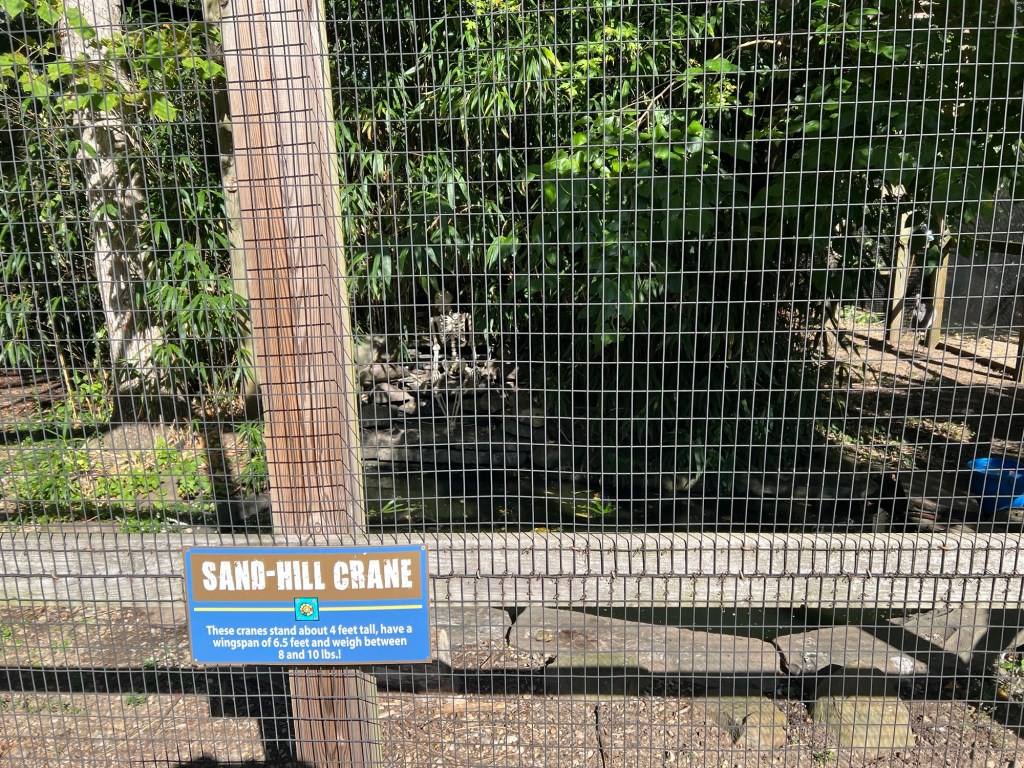
The Sand Hill Crane display
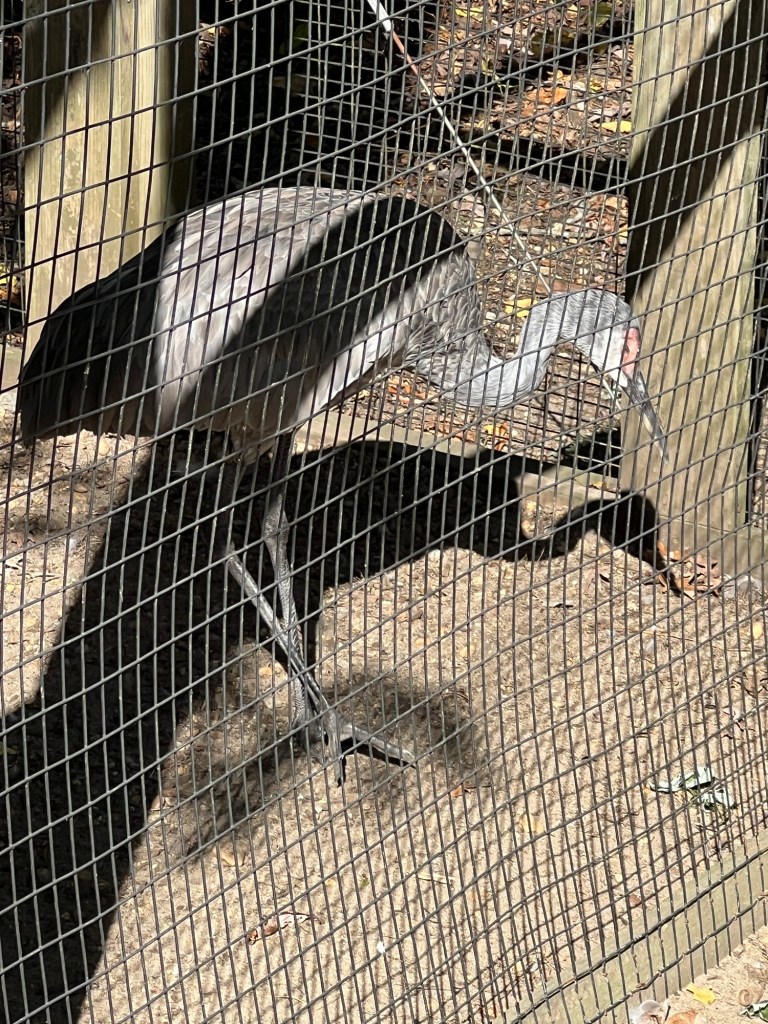
The Crane was watching all of us as we passed his cage
The next small animal that I visited was the Fennec fox and the two that I saw were fast asleep on this warm afternoon. They must have had a busy morning.
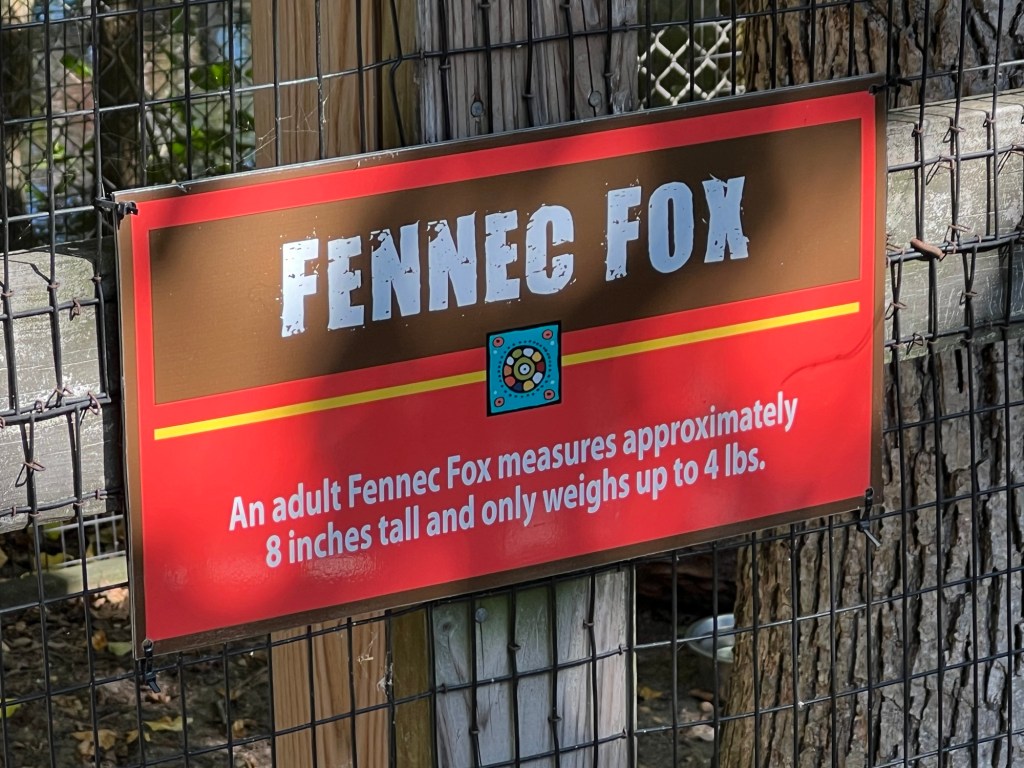
The Fennec fox cage
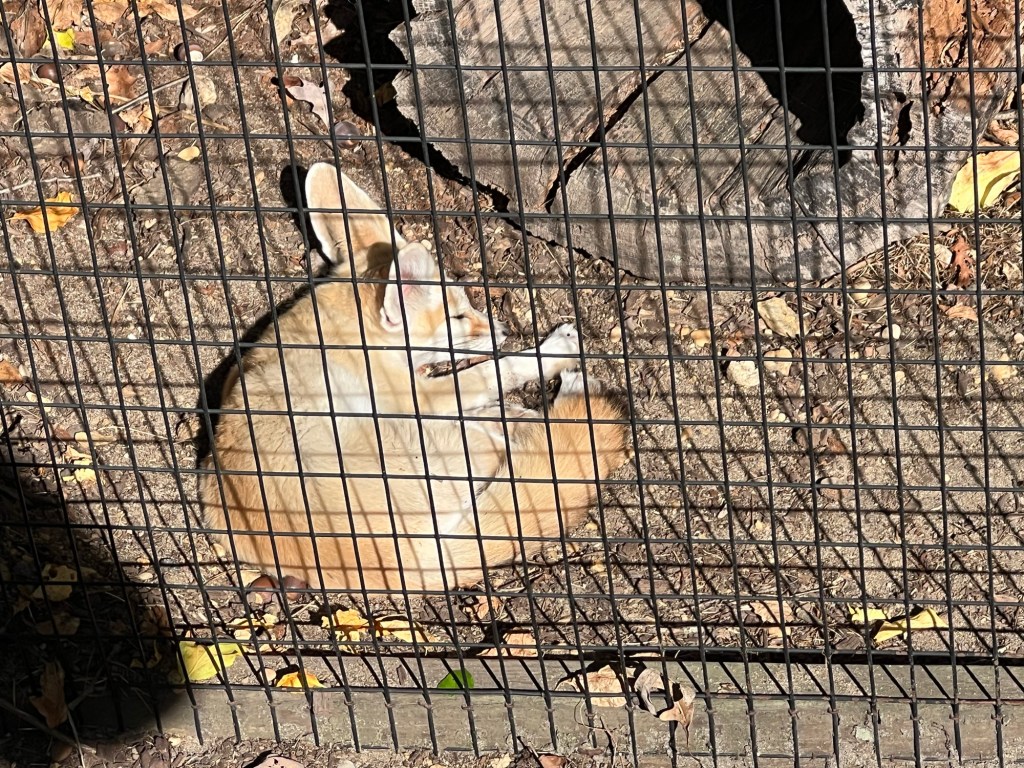
The foxes that I saw that day were fast asleep
While I was walking around the back part of the zoo, there was a peacock family walking around the cages. The father peacock had two small birds with him and they just meandered amongst the cages.
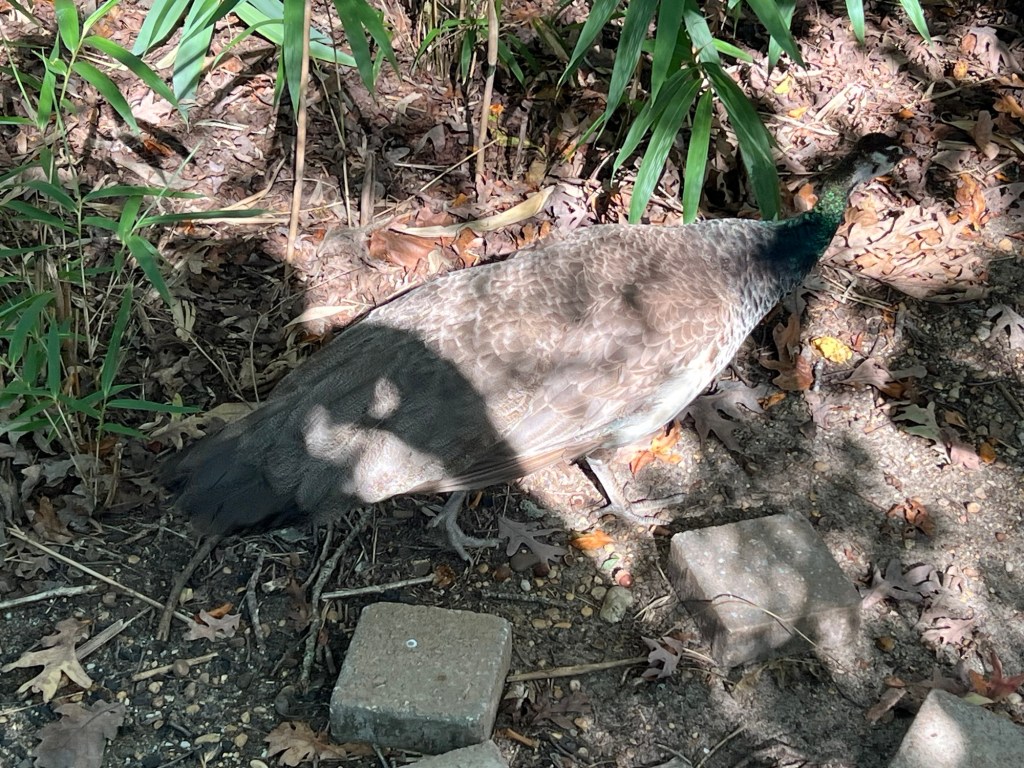
The male Peacock walking around the zoo with his children. They were allowed to walk around on their own without being locked up. They looked like they were having an adventure as a family.
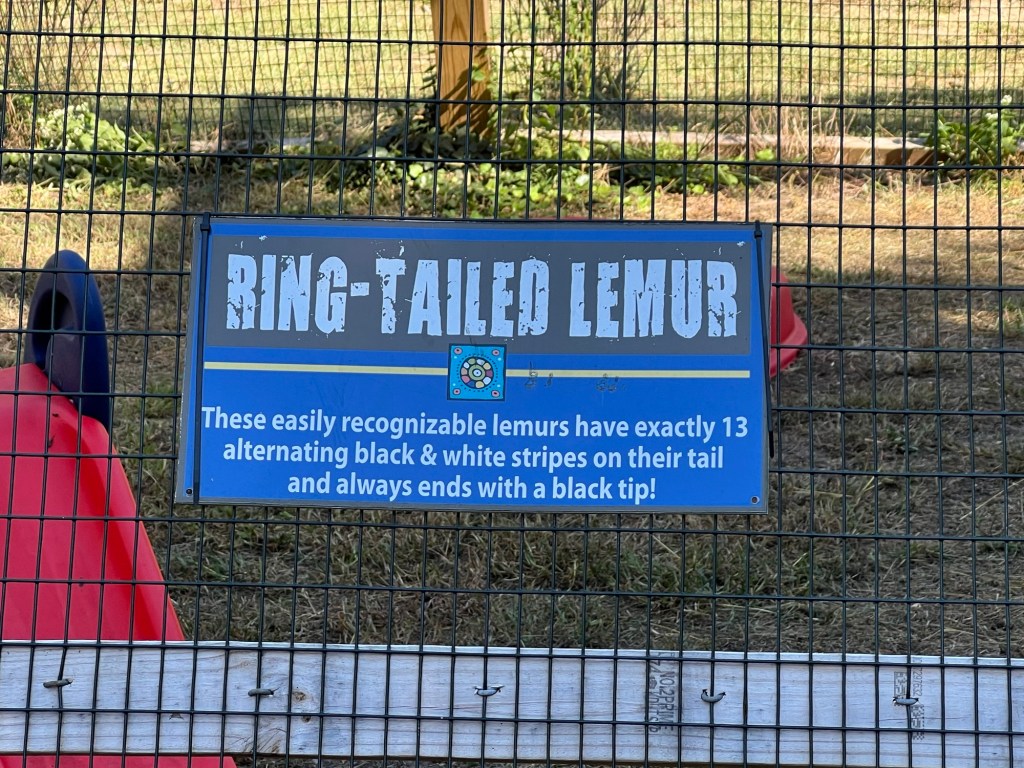
The Ring Tailed Lemur display
I visited the Ring- Tailed Lemur pens and these little monkeys looked like they were plotting an escape. They stayed in a bunch the whole time I watched them and they just stared.
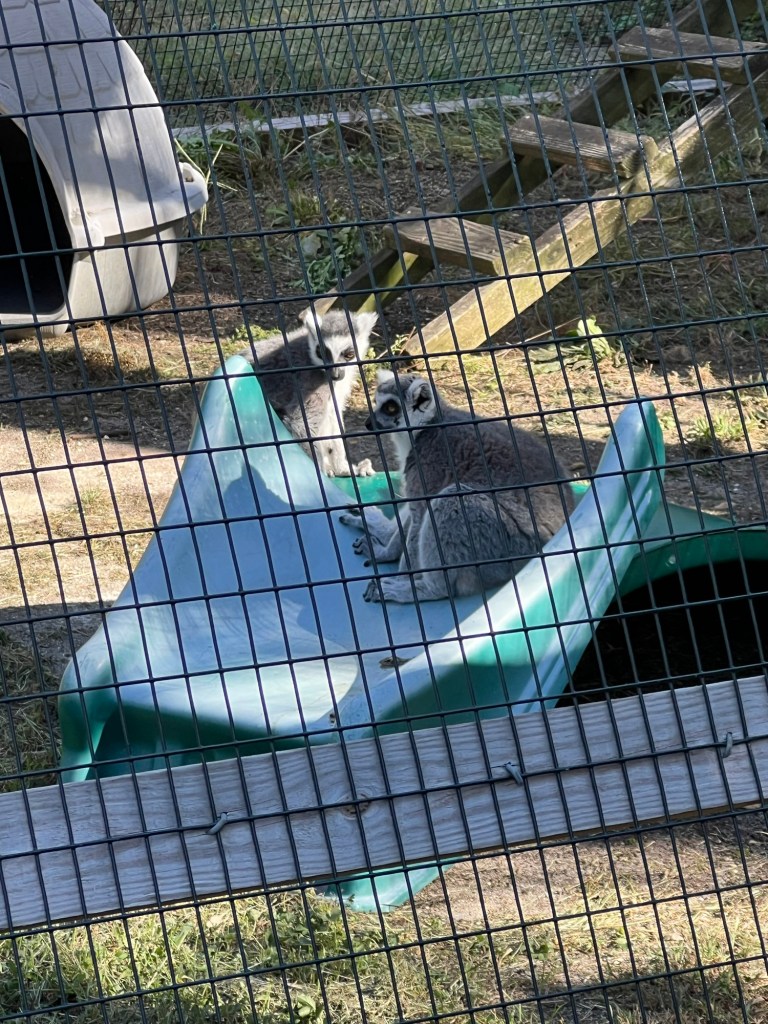
The lemurs just stared back at me as I watched them
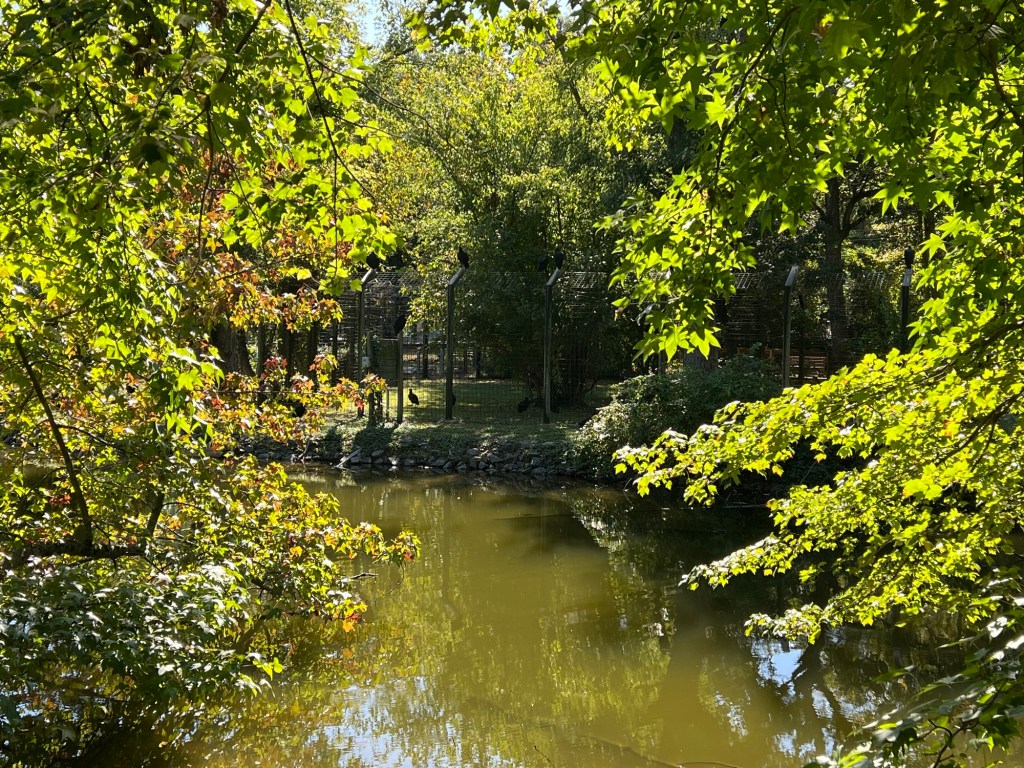
The back part of the museum was beautiful in the early fall
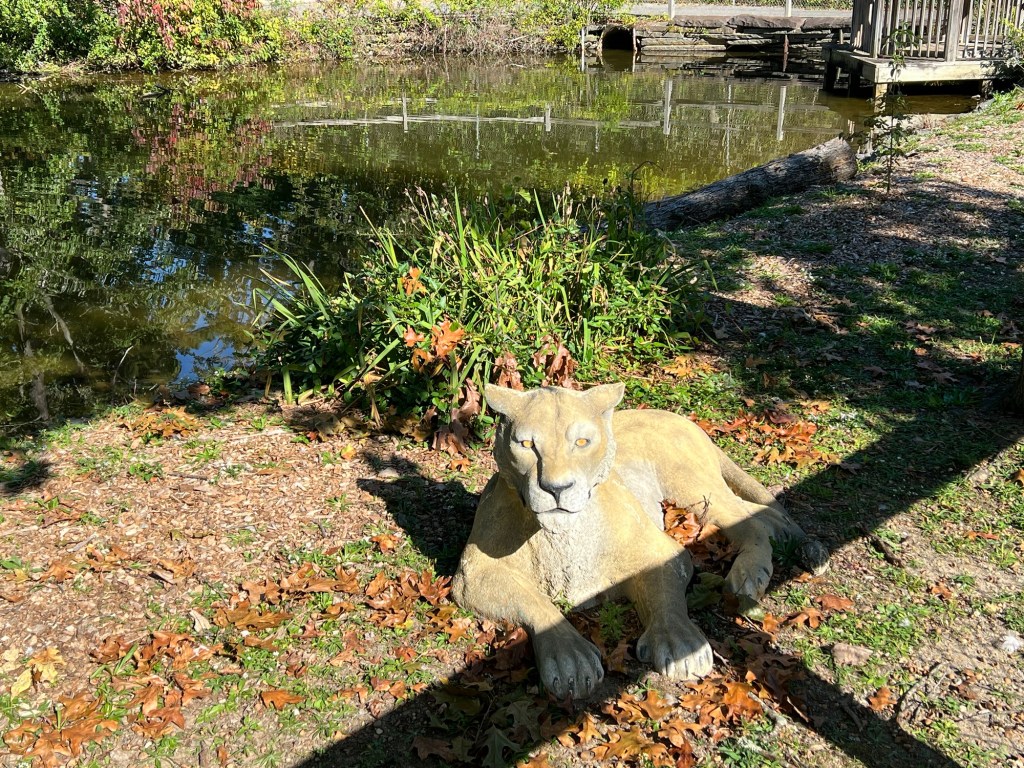
The tiger sculpture along the path at first freaked me out that he had gotten out and just looked at us. He looked real.
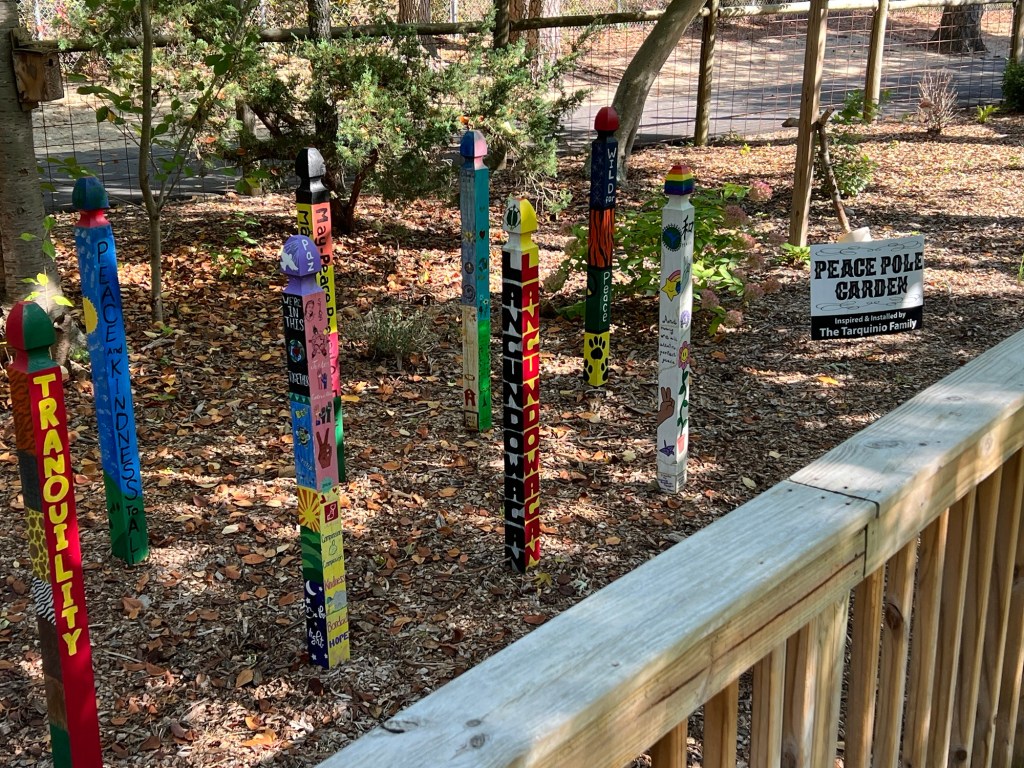
The Totem Pole Garden
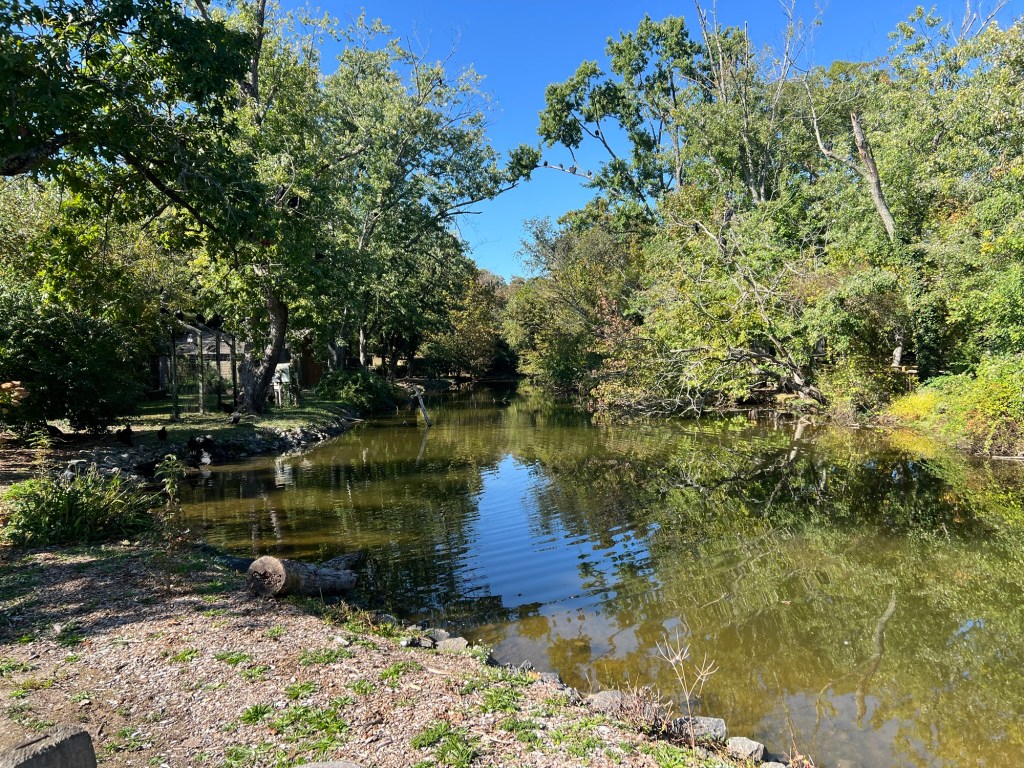
The river running through the gardens in the Fall 2024
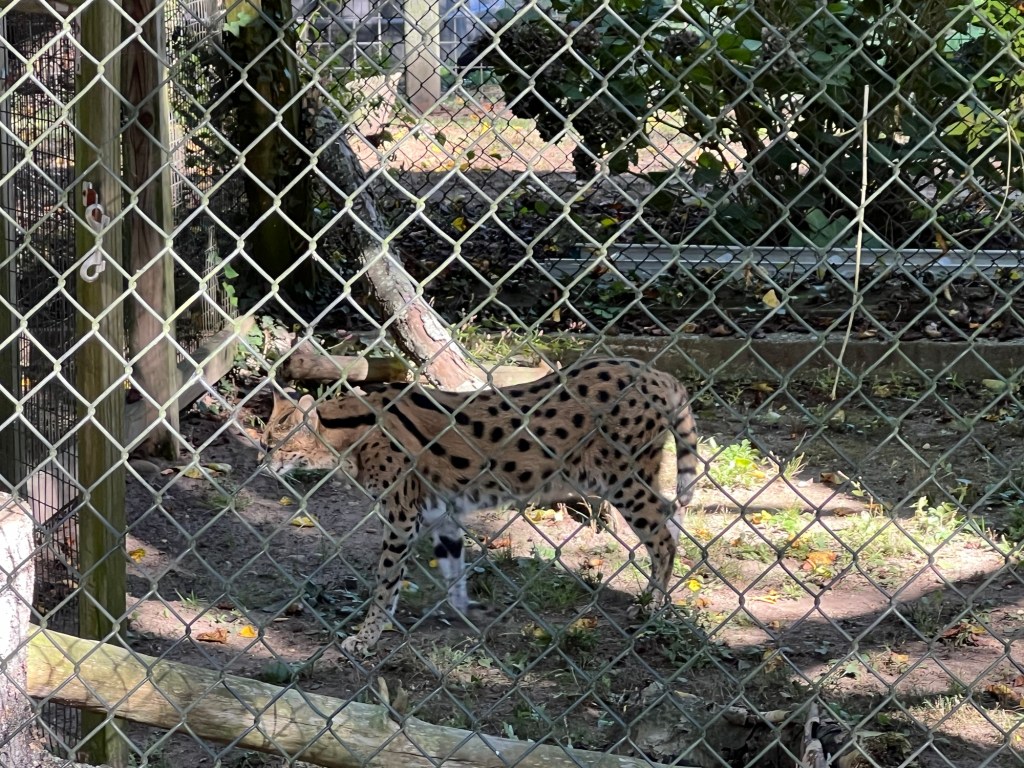
The leopard looked bored in his cage. He justly walked aimless around their cages. They are not being given enough space to move around.
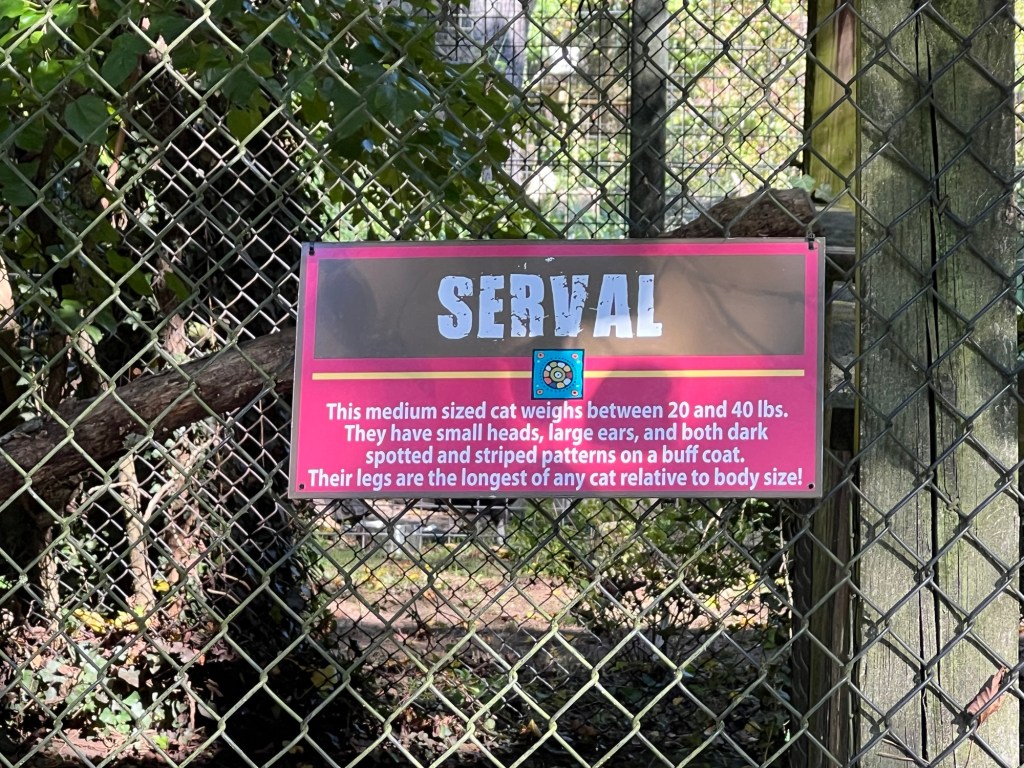
The serval cage
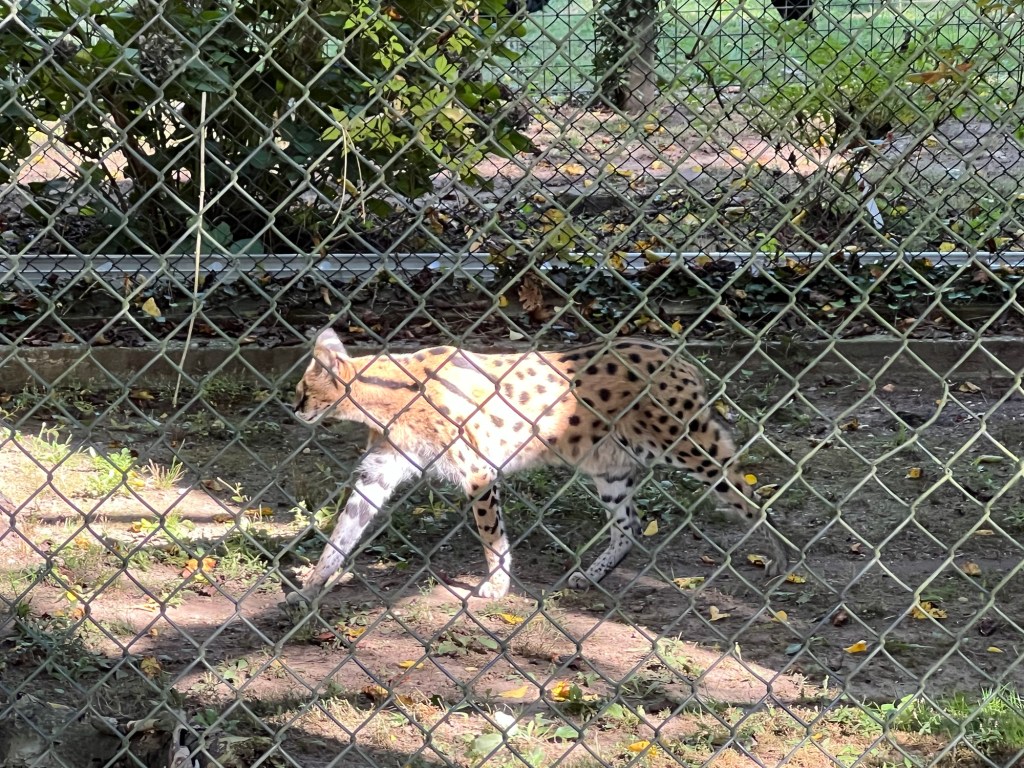
The Serval also looked bored. It just walked in circles around the cage. I was not sure if he was bored or just confused.
The zoo is such a nice way to relax and enjoy a warm afternoon. The animals here are not shy but need to have more space to move around. I think we as humans visiting them amuse them more.
The History of the Cohanzick Zoo:
(from the zoo website)
The Cohanzick Zoo is privileged to hold the title of New Jersey’s first zoo, and to this day remains one of the only municipal-ran zoos in the state. It all began back in 1934 when the City of Bridgeton found itself in possession of a small herd of deer which the citizens thought should be exhibited. And thus… a zoo was created!
The Zoo is part of the Department of Recreation and Public Affairs. Located in Bridgeton’s city park, which spans over 1,100 acres, the zoo is home to over 100 different mammals, birds, and reptiles. Over 45 different species from all around the world are represented here.
The Zoo, originally named the “Bridgeton Zoo”, was later named the Cohanzick Zoo in 1972. “Cohanzick” coming from the band of Lenape Indians who resided in the area alongside the Cohansey River, which resulted in the band of the tribe being named the Cohanzick Indians. This river flows through and around the park, adding a unique water feature.
Up until about 1970 the Zoo was a fairly small operation, running more like a petting zoo than a modern zoological care facility. This change was facilitated by Jerry Alden, who became Director of Parks and Recreation for Bridgeton. Knowing a local with a love and talent for taming wildlife, Henry R. Ricci was offered the position of curator, which he happily accepted. His defining point for change was, “Close it up, or make it a zoological garden and educational center,”.
Between 1970 and 1973 big changes came to the small zoo. Part of this is thanks to a visit to the Governor’s office in Trenton by zoo resident, Maggie, a jaguar. Her visit was rewarded with a $25,000 gift to the Zoo from the state government, per Gov. Cahill. A sanitation program was put in place, proper care and diet programs were developed for the animals, and more natural habitats were built. Dr. Ernest Zirkle, a local veterinarian who up until then had cared for the animals as a public service, was made a formal member of the zoo staff. Another big change, was the formation of the Cohanzick Zoological Society. The Society, which still exists today, comprised of local volunteer citizens, has the mission of supporting the Zoo through driving public awareness and fundraising efforts.
Since then, the Zoo has been on an ever-evolving mission to better its experience for both its animals, and its visitors. Thanks to funding from both local government and public donations, the Zoo is able to provide free admission to visitors, maintain necessary renovations, and keep up appropriate care for the animals.







 Visiting a Museum: The Unique, Unusual, Obscure and Historical