Tag: Small museums in New York State

Montgomery Village Museum                             142 Clinton Street                               Montgomery, NY 12549

Montgomery Village Museum 142 Clinton Street Montgomery, NY 12549

Montgomery Village Museum

142 Clinton Street

Montgomery, NY 12549

(845) 457-7576

https://www.facebook.com/MontgomeryVillageMuseum/

https://www.villageofmontgomery.org/our-community/village-history/523-museum-hours.html

Open: Sunday 3:00pm-6:00pm/Monday-Saturday Closed

Admission: Free but donations are accepted

My review on TripAdvisor:
https://www.tripadvisor.com/ShowUserReviews-g48196-d27005812-r967710754-Montgomery_Village_Museum-Montgomery_New_York.html?m=19905

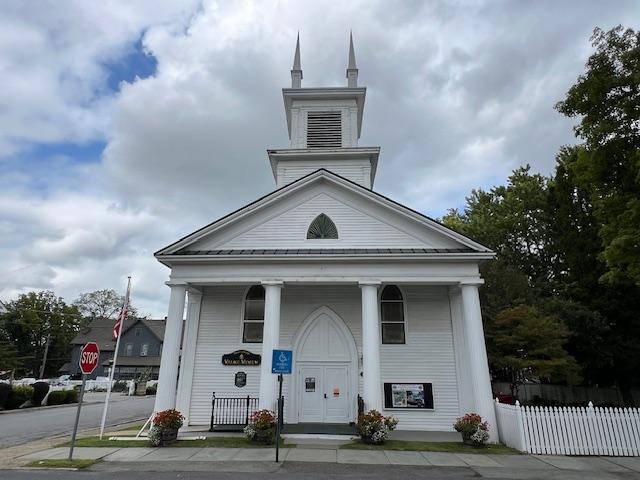
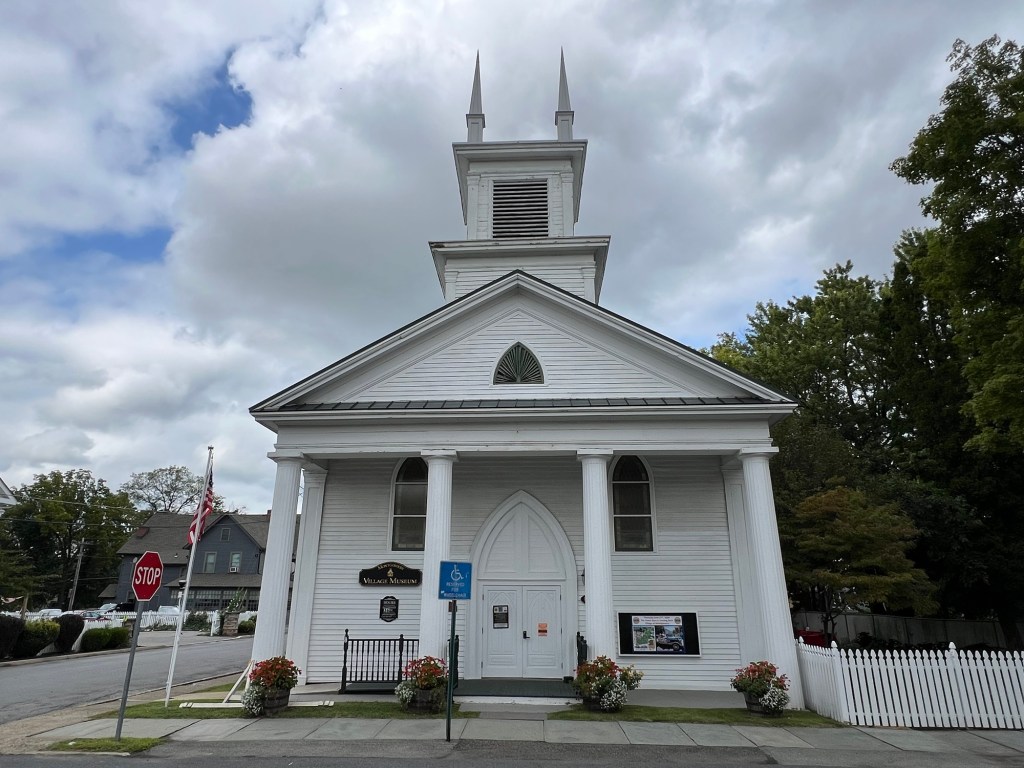
The Montgomery Village Museum at 142 Clinton Street
The Museum in the front of the museum
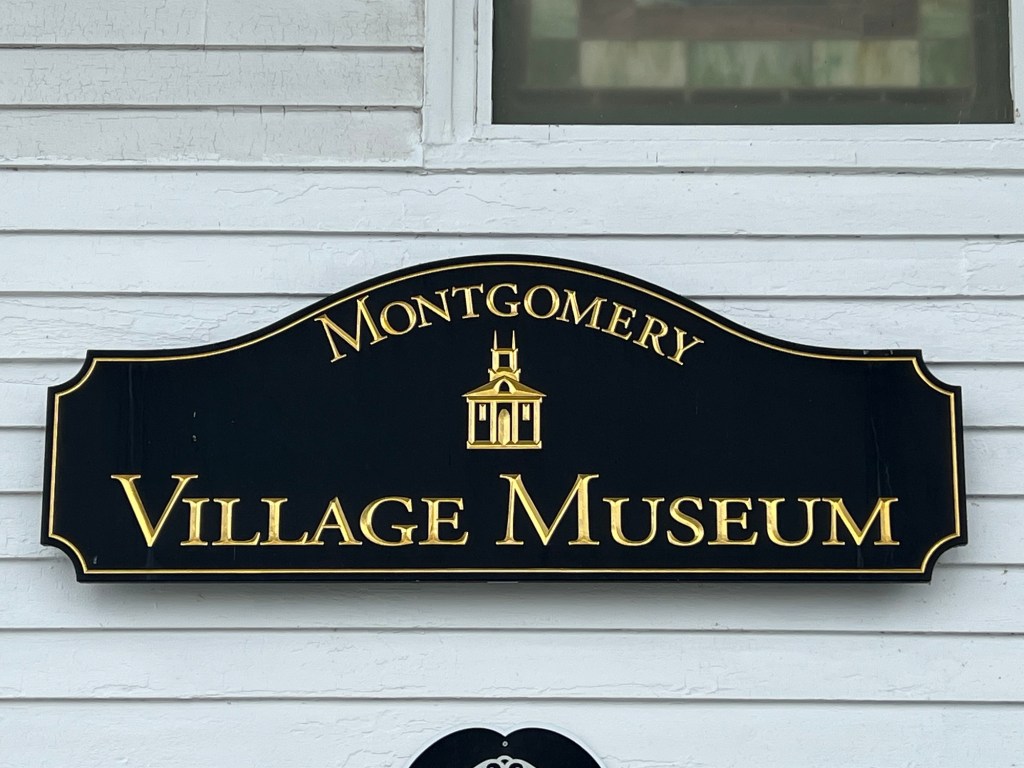
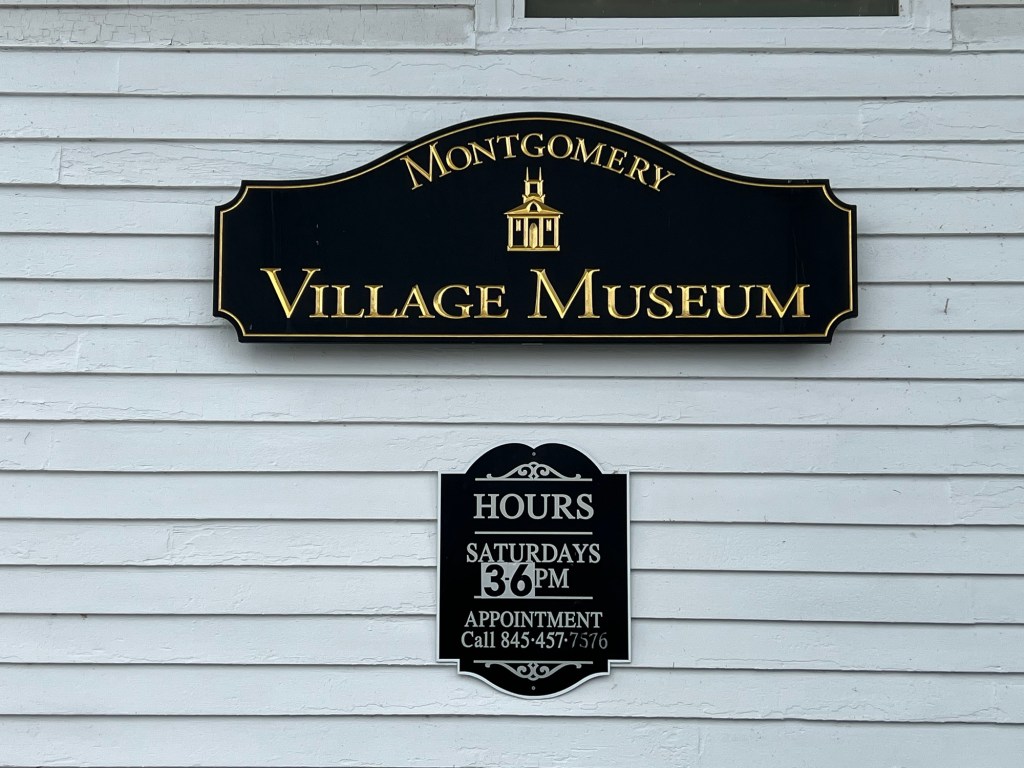
The museum sign welcomes you
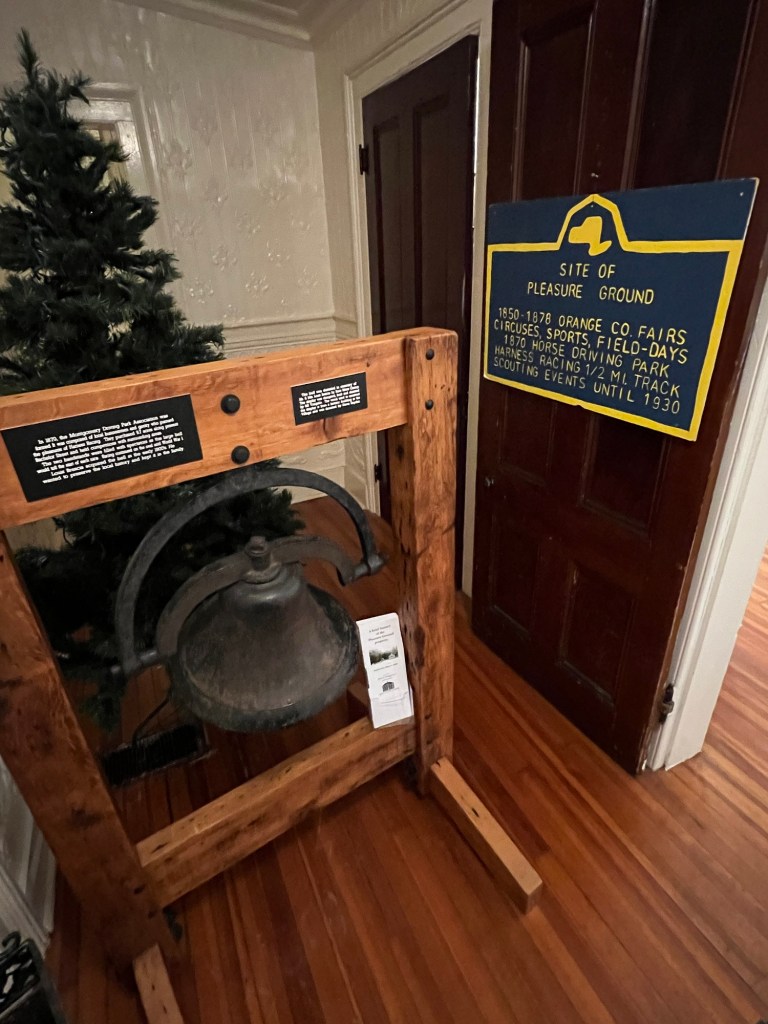
Village memorabilia on display
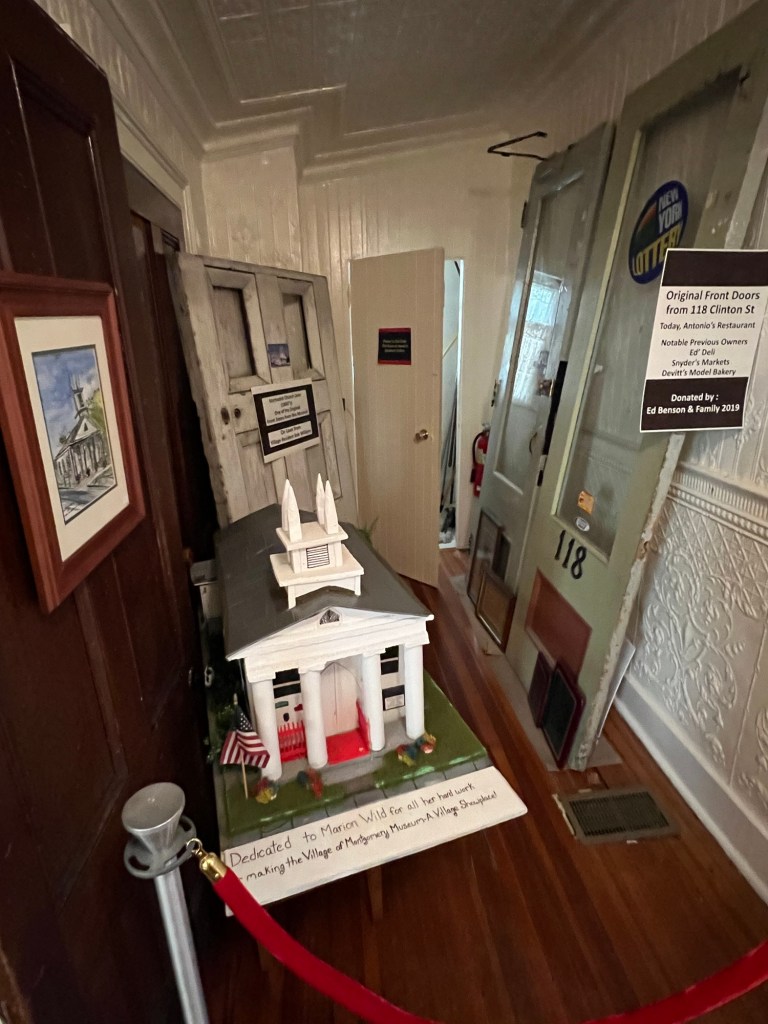
The display on the local church’s

The Montgomery Village Museum in Montgomery, NY is a village run museum that tells of story of the town and its development. The museum of filled with wonderful displays of all aspects of the town. The history of the town is displayed in an organized way display by display with plenty of signage and docents to explain things to you if you want more information. You can tour the museum at your own pace.
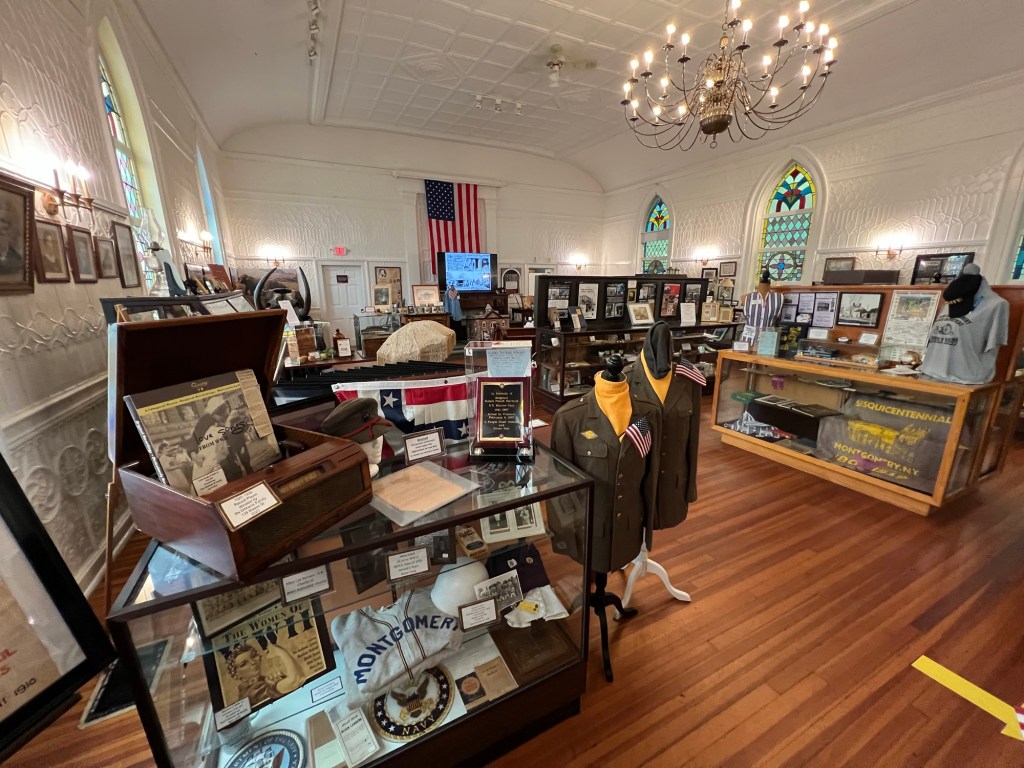
The front gallery of the museum
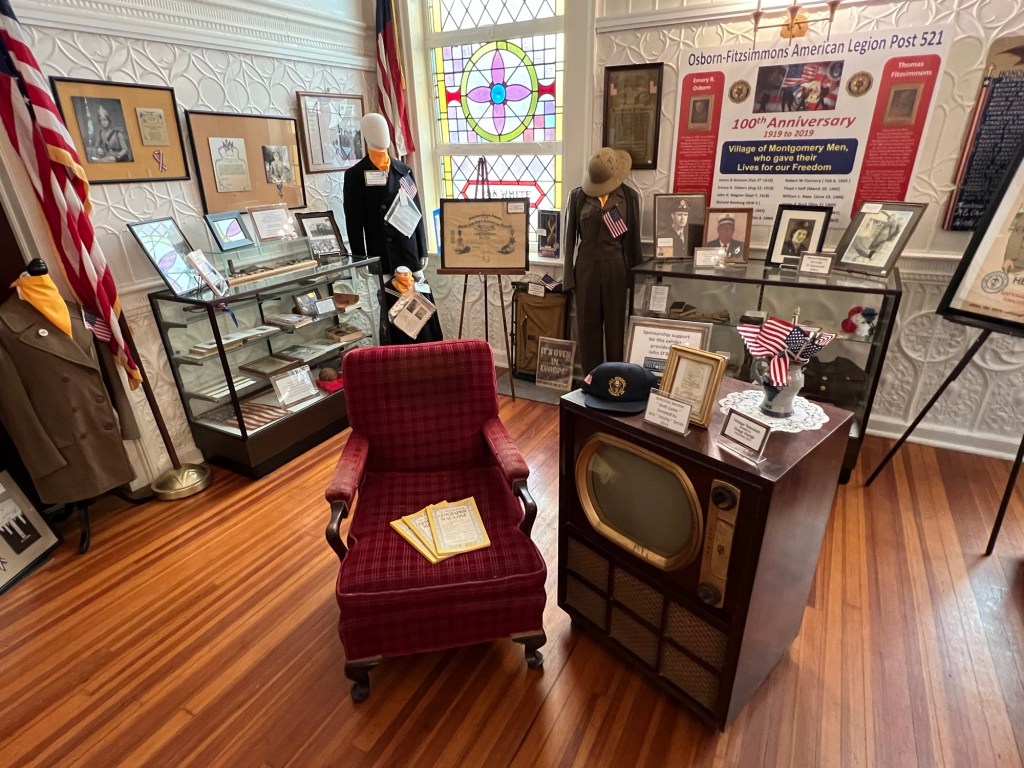
The front display of the Veterans and the VFW of the Village of Montgomery, NY
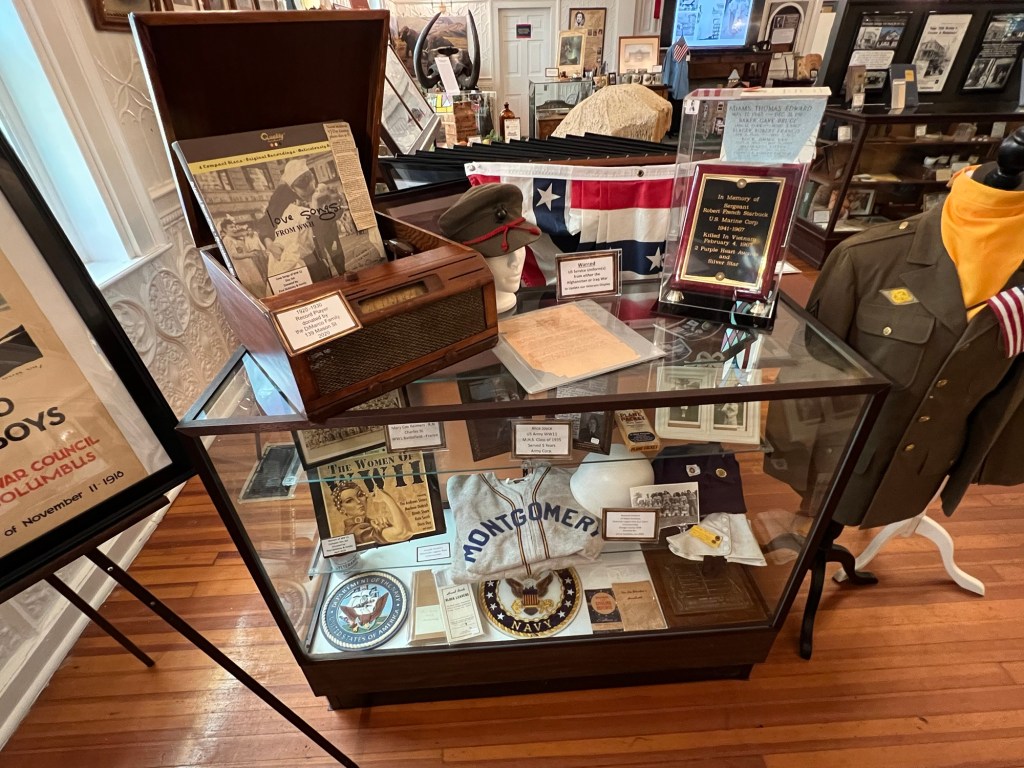
Display of Armed Forces memorabilia
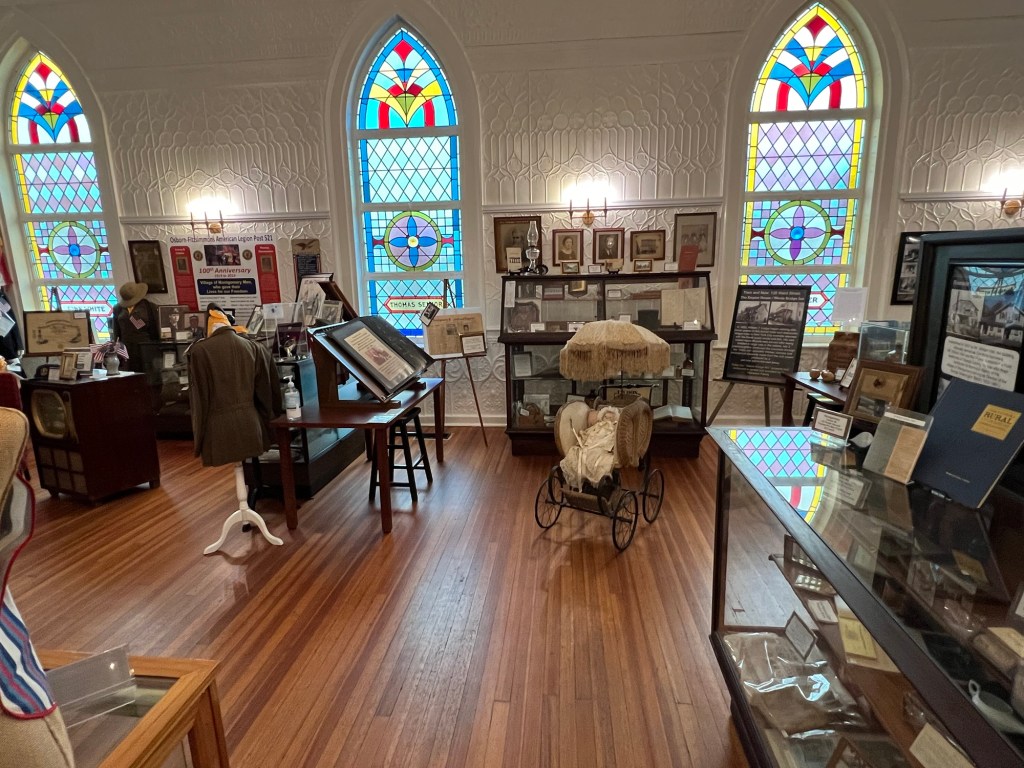
The gallery of Town Council, Downtown merchants and Veterans items
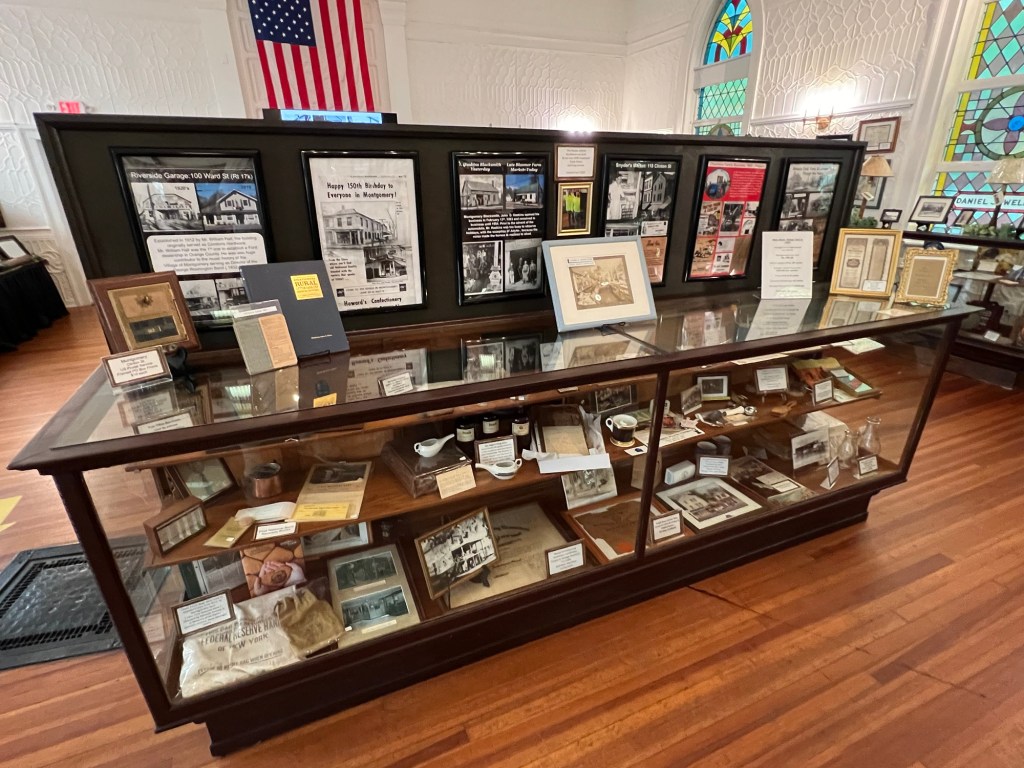
The Downtown Merchant’s display
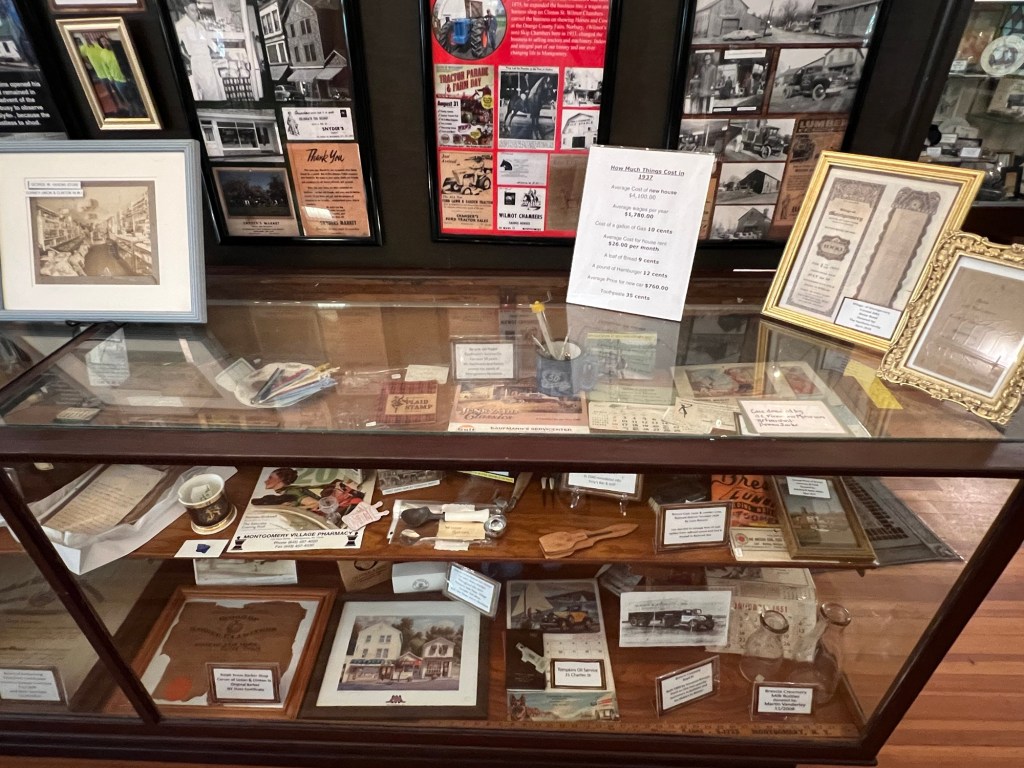
Some of the local merchants have been in town for over a hundred years
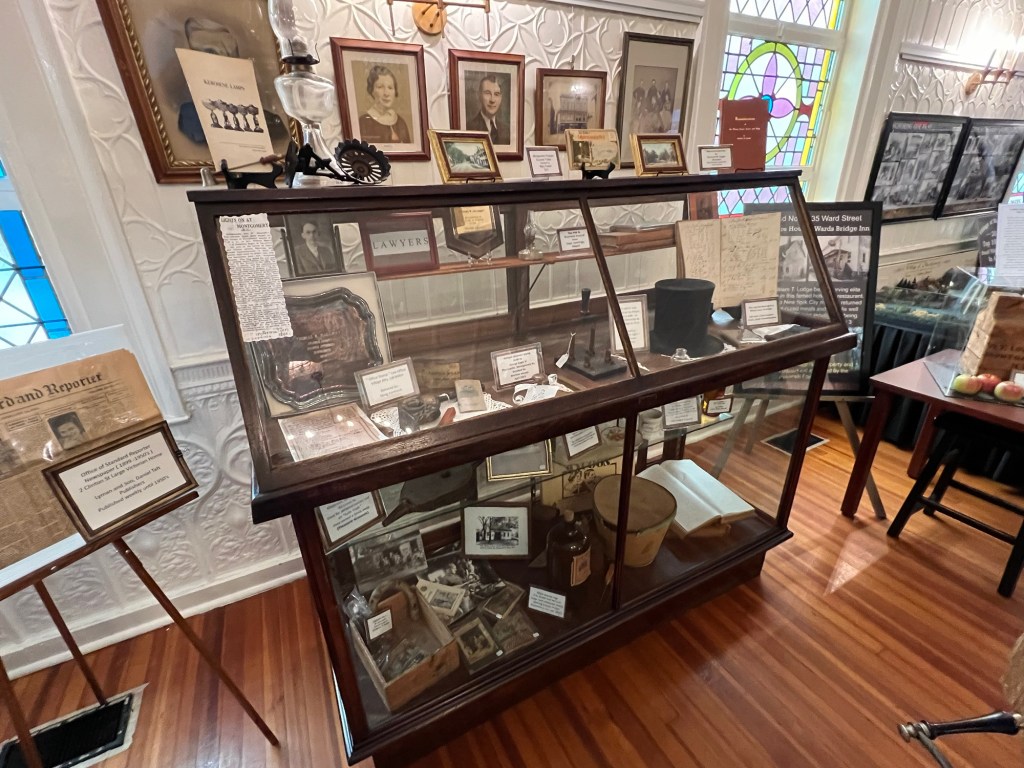
The artifacts on the Town Council and the Chamber
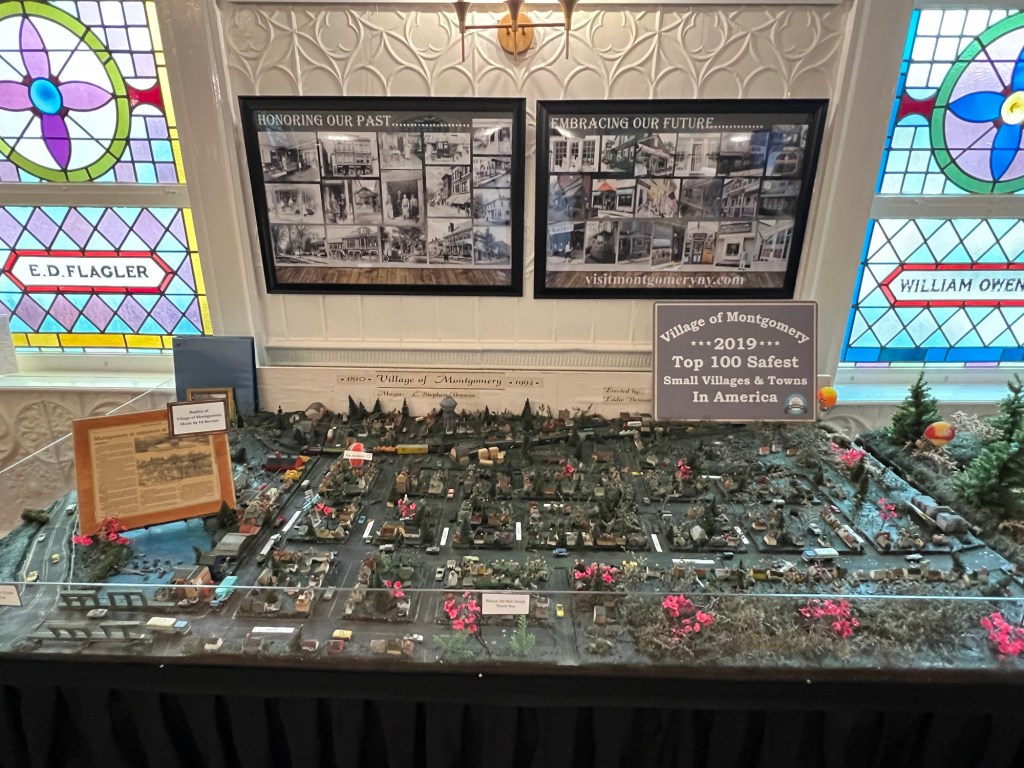
The 100th Anniversary of the Town of Montgomery, NY shows a diagram of the town and its historical past
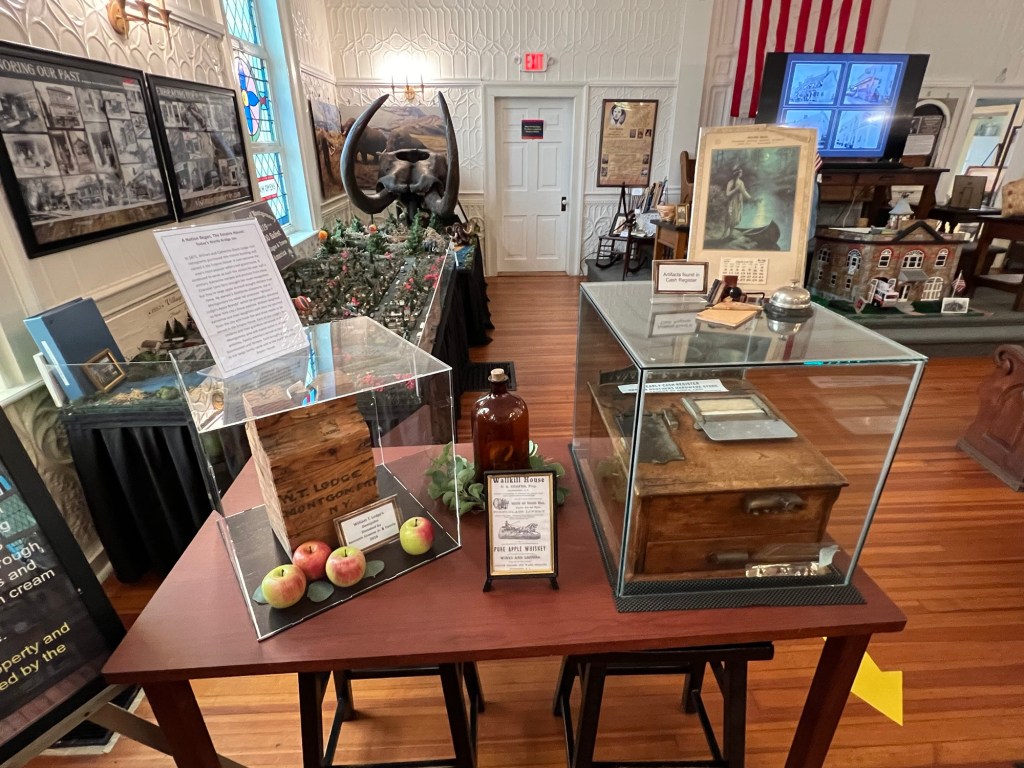
Some of the items of the rural home past

What I thought was interesting about the museum was the discovery of dinosaur bones in the area. The skull of a Mastodon and other bones were found in digs between here and Newburgh.
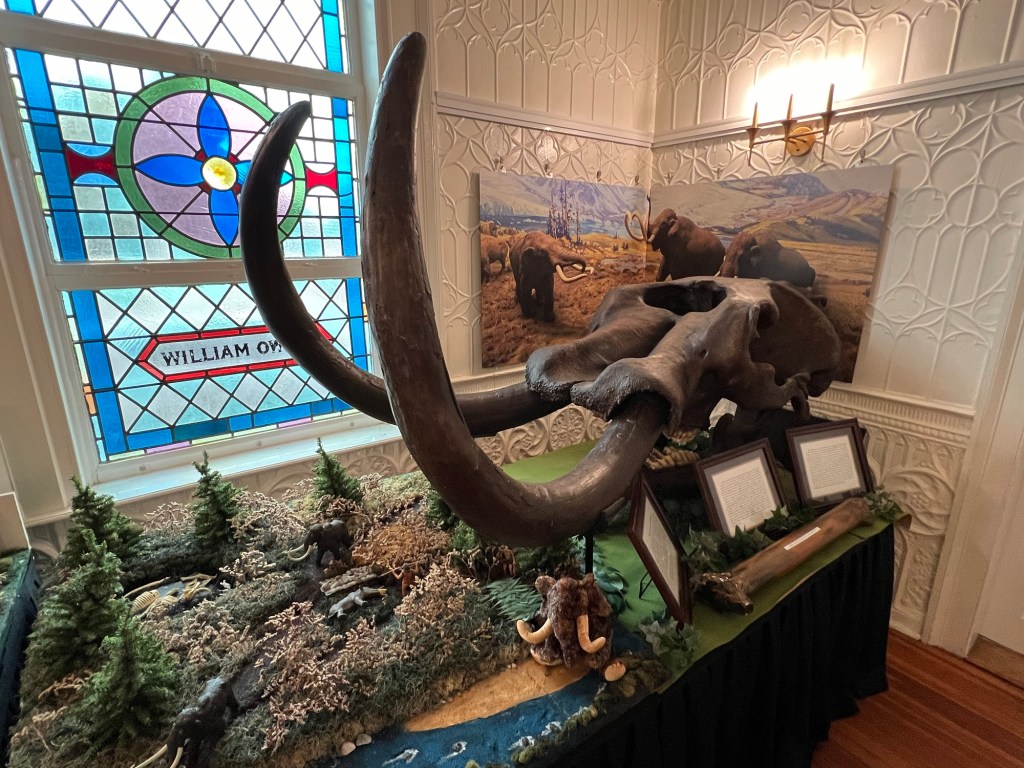
The Mastodon skull at the museum
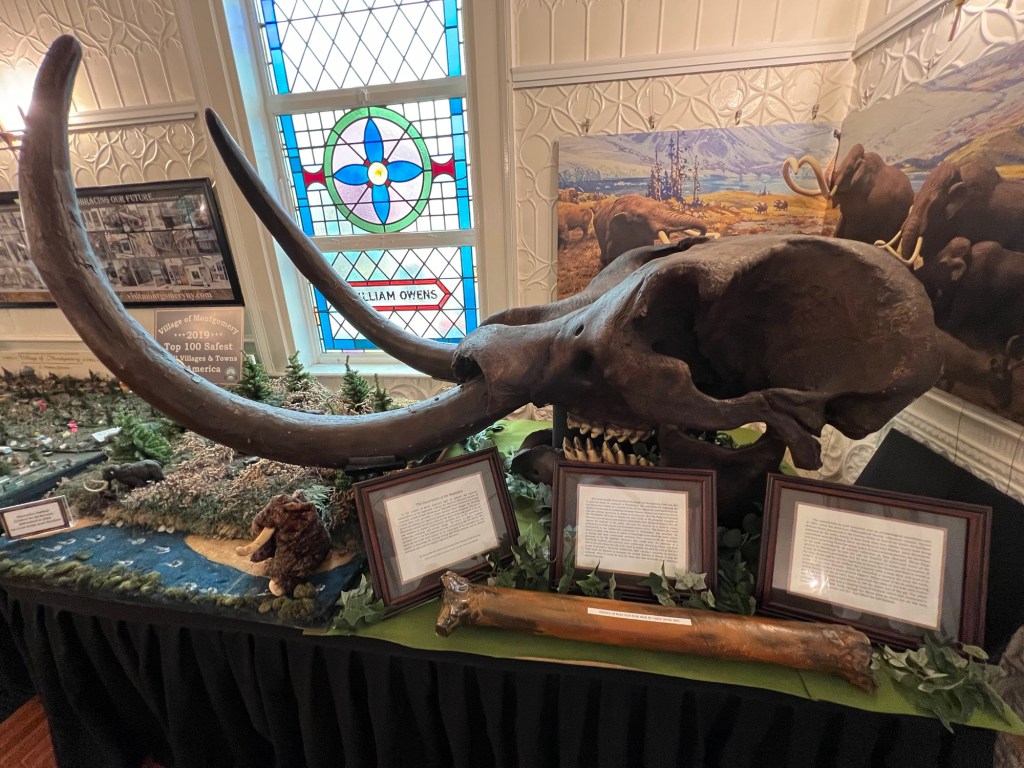
The skull and bones and the site
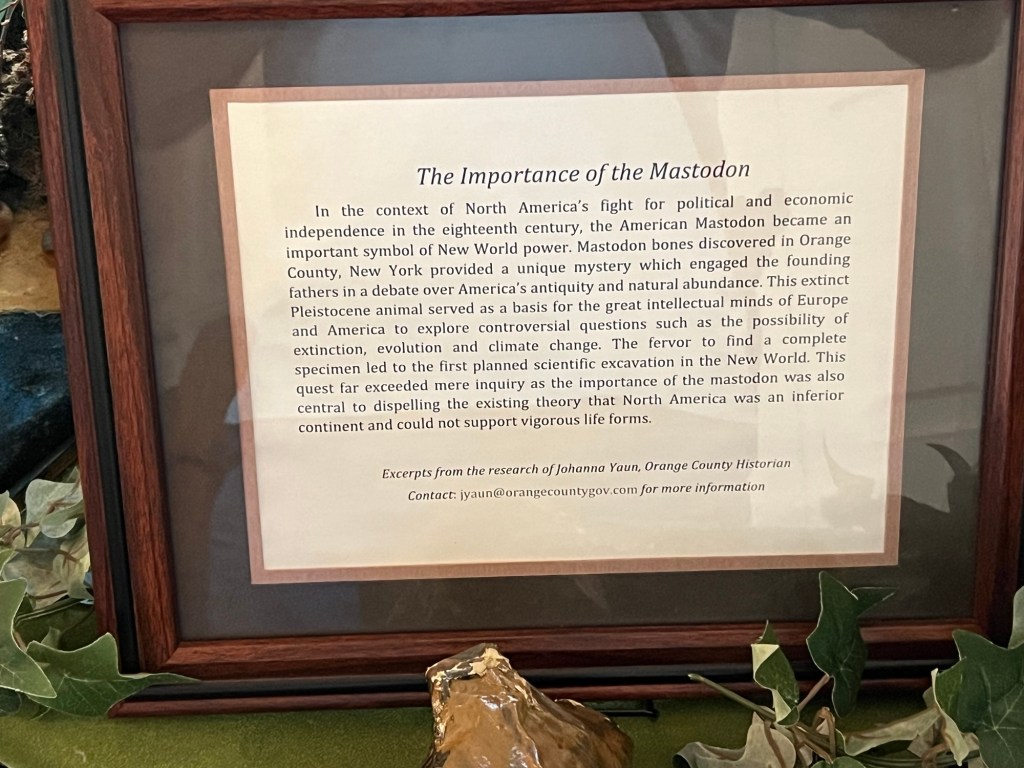
The Importance of the Mastodon story
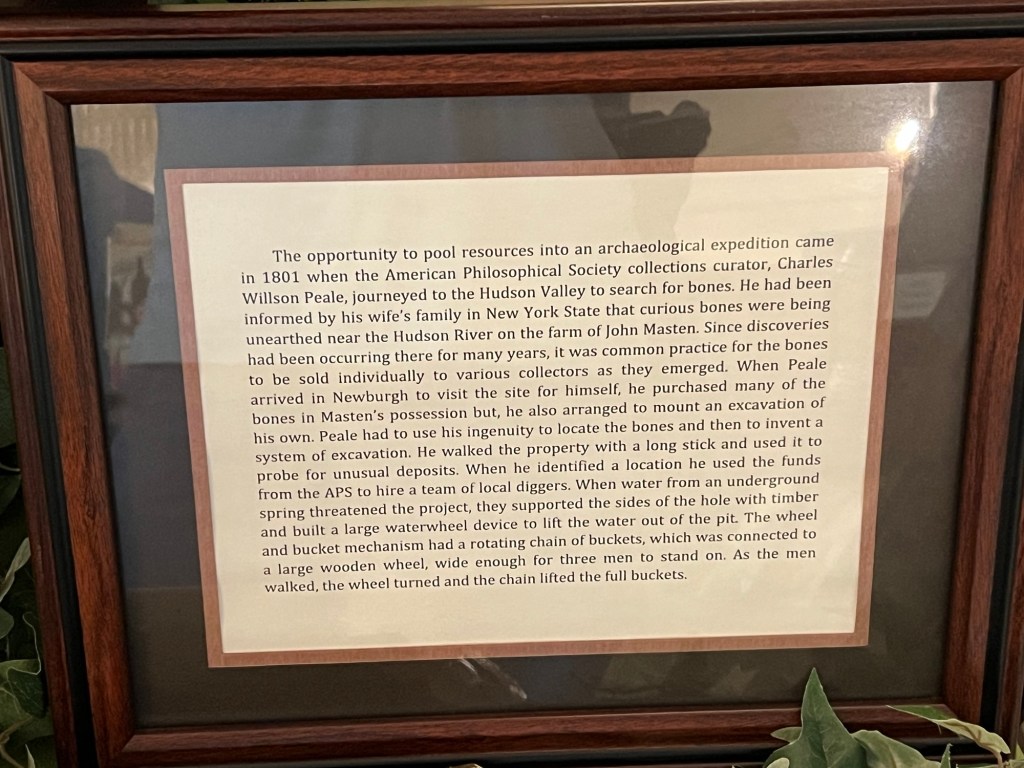
The write up on dinosaur bones
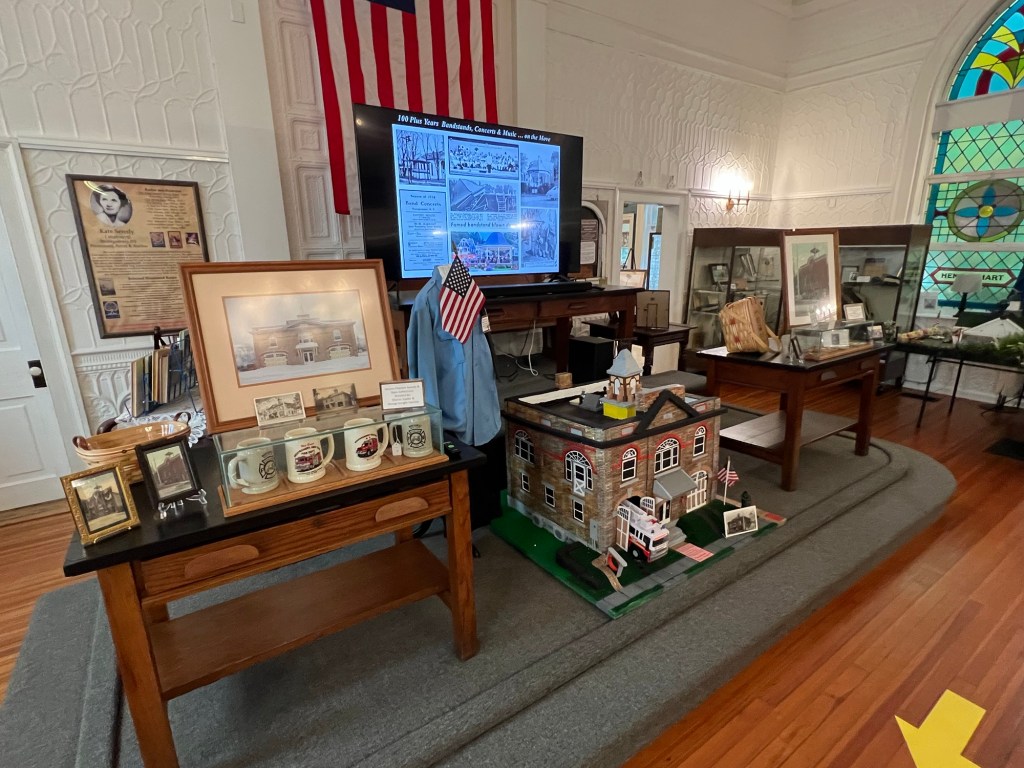
The display on the Montgomery Fire Department

The museum has an extensive collection of items from the County Fire department telling its own story of the fire service in this community. The Orange County Firefighters Museum is right across the street with all the larger equipment and gear but here we get to see the pictures of the department over the years and some of the small artifacts.
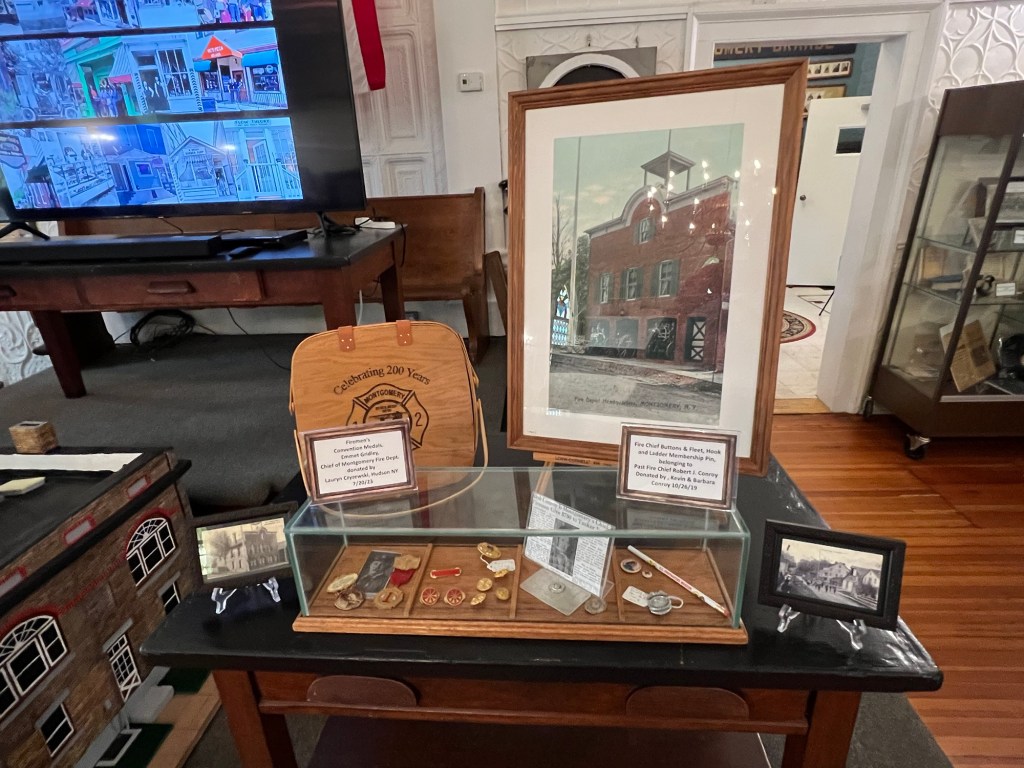
Display on the Montgomery Fire Department
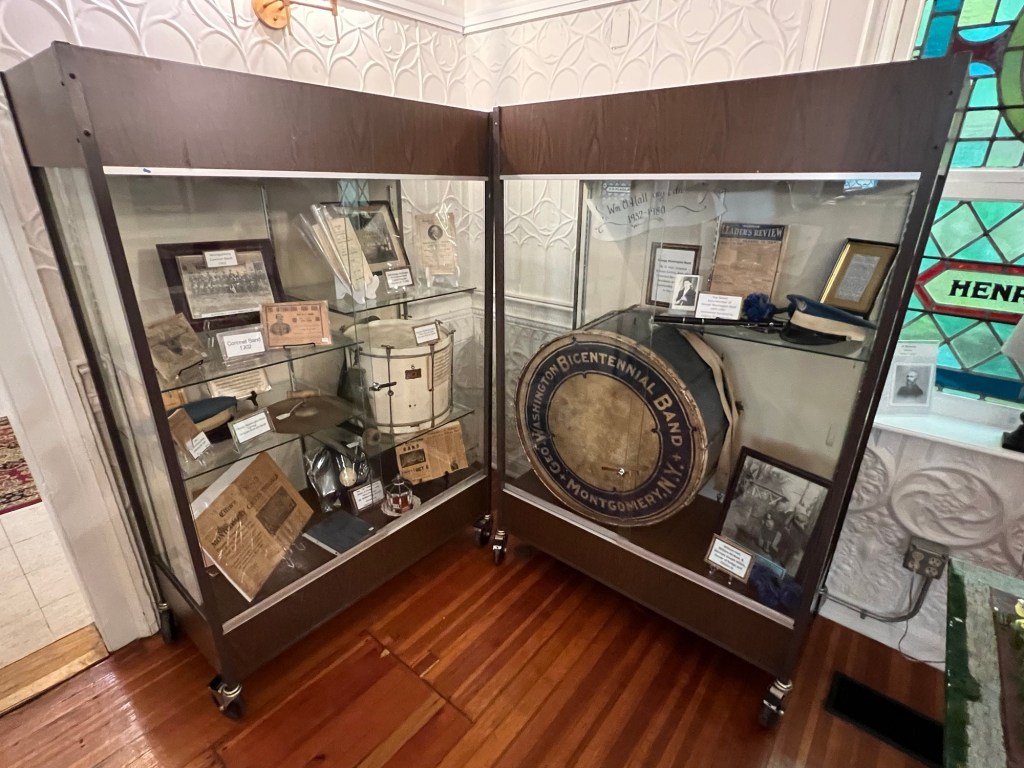
The display on the Montgomery Coronet Band display
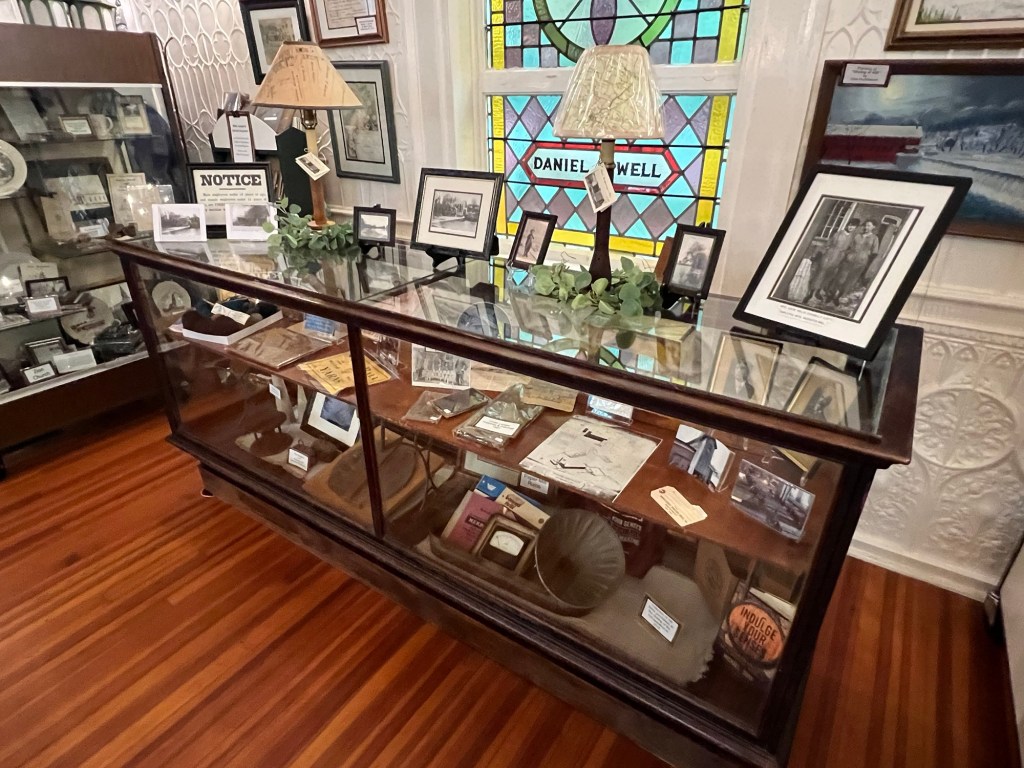
The Textiles industry in Montgomery
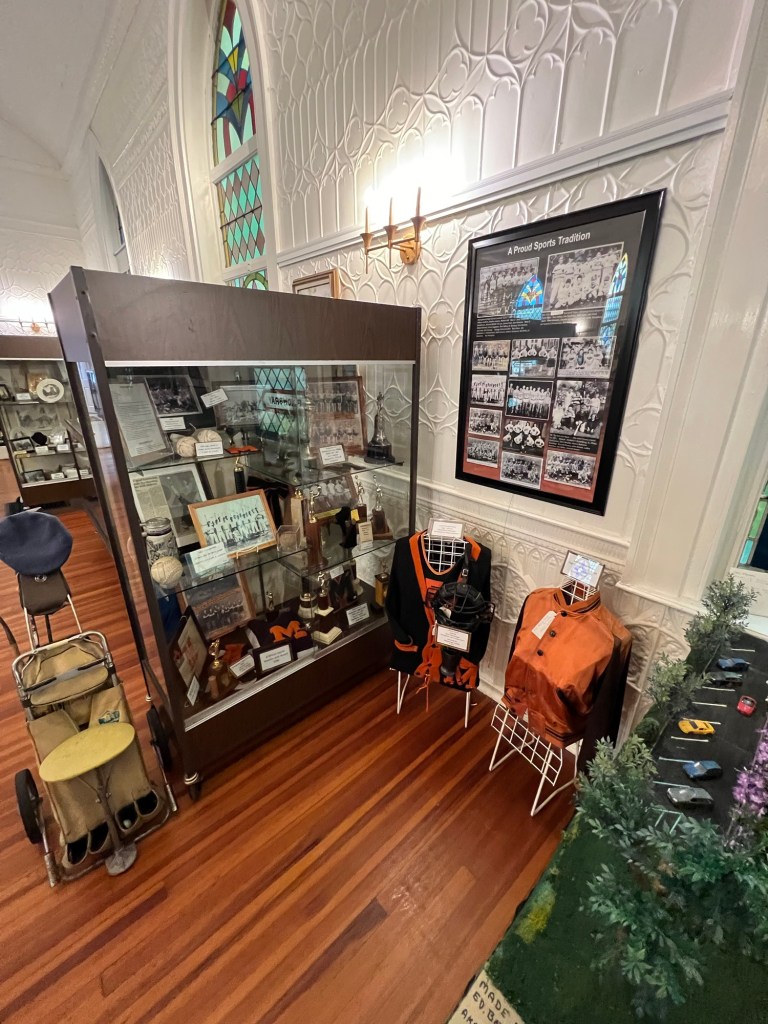
The display from Montgomery High School from sports to the marching band

The museum has an extensive collection of memorabilia from Montgomery High School over the past one hundred years that include marching band and sports to the way the school teaches. It is amazing that in many ways it does not change much.
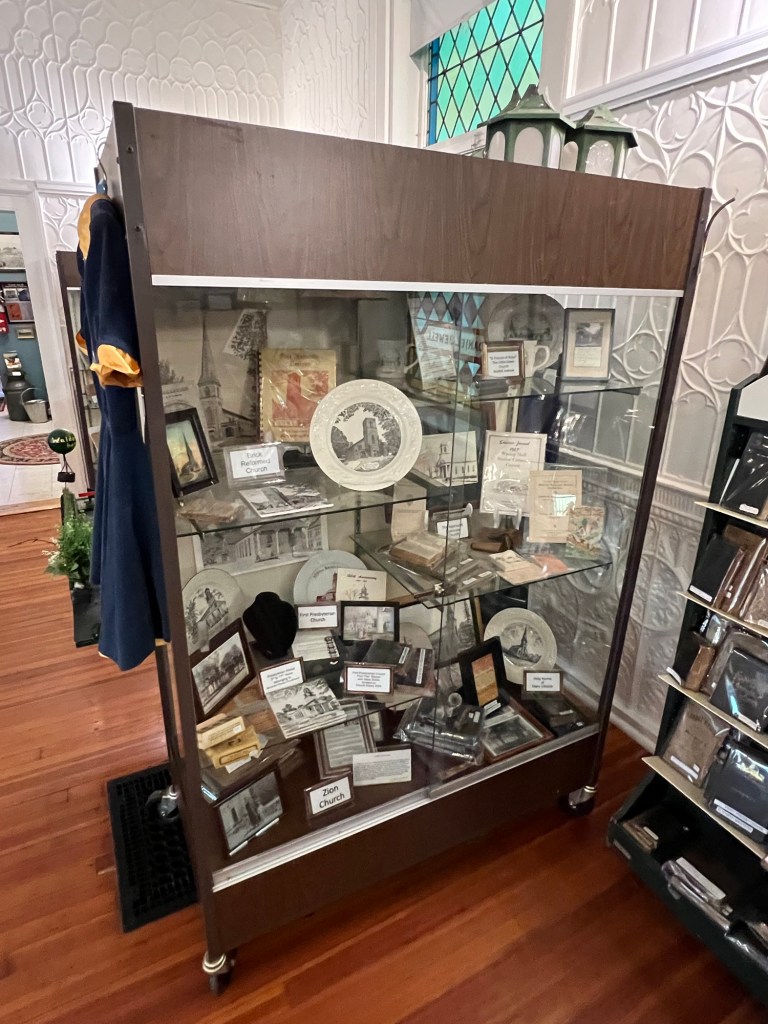
More artifacts from the schools
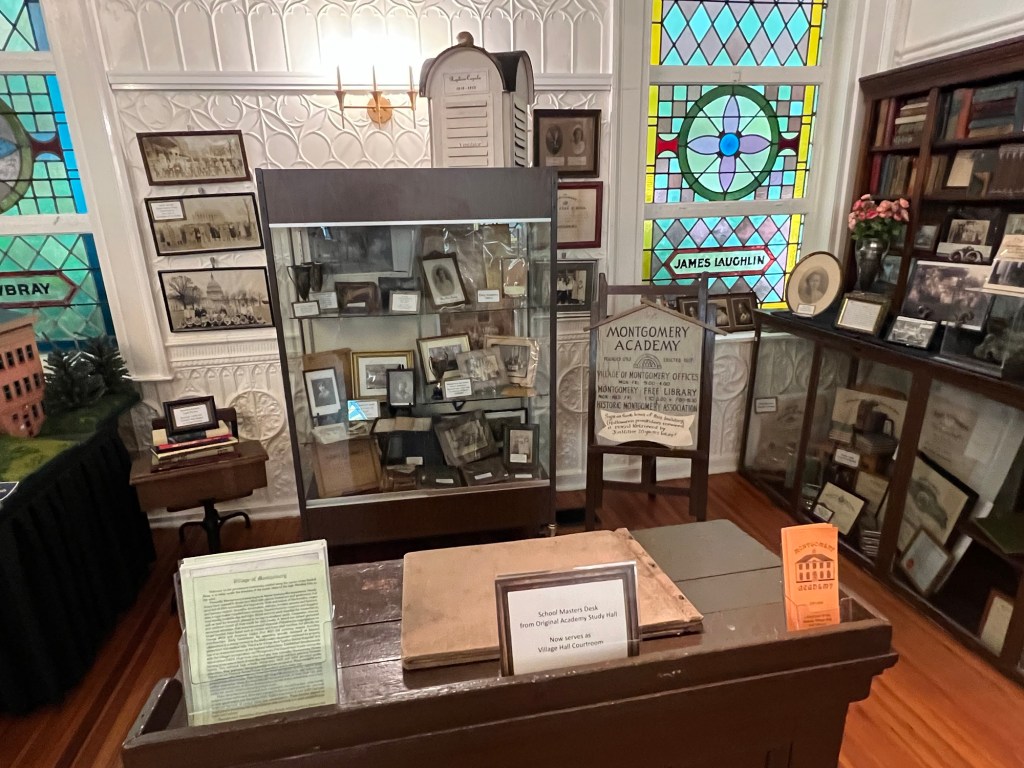
Displays of the schools and libraries in the county
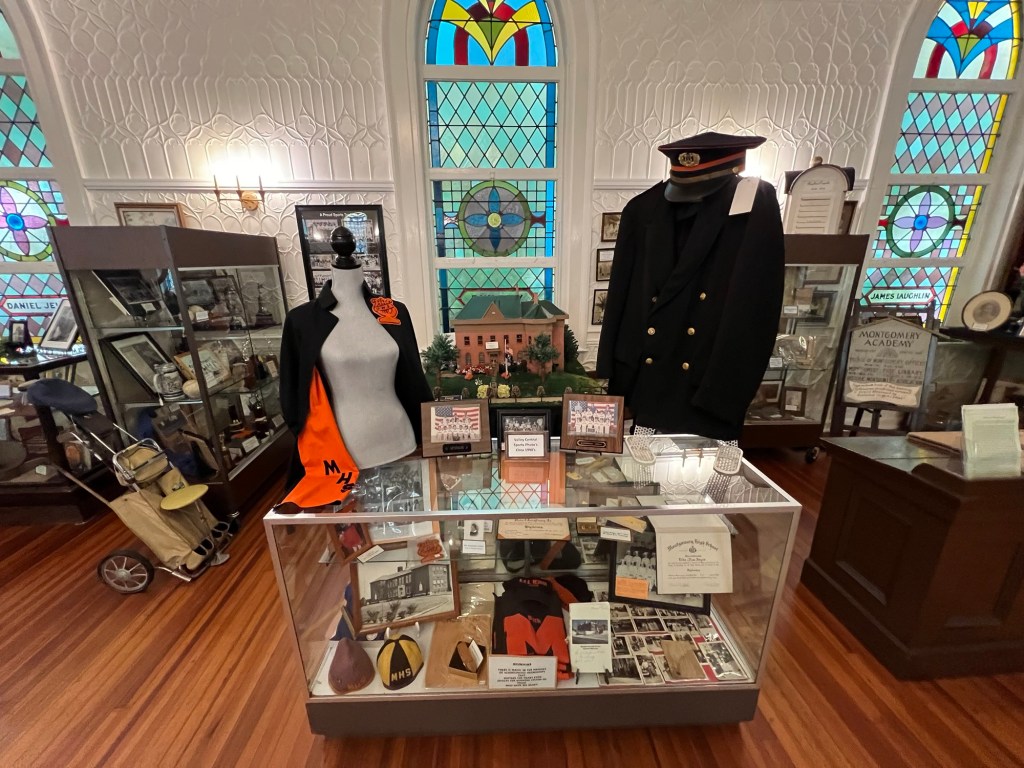
The Montgomery High School band and sports
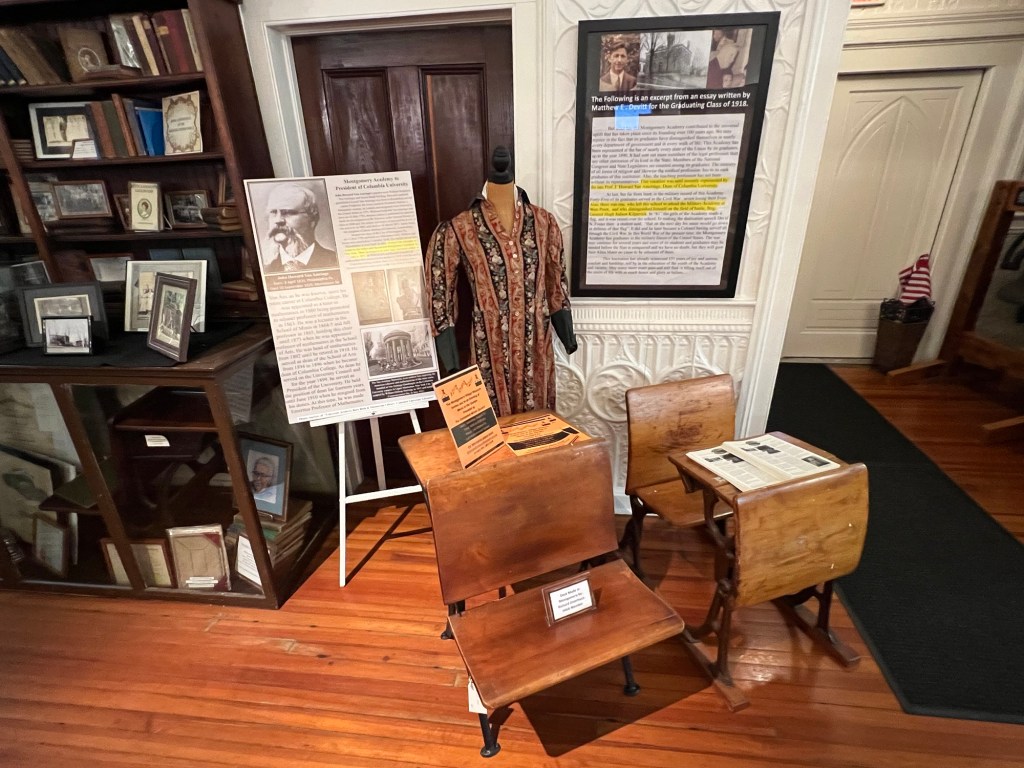
A old school house display
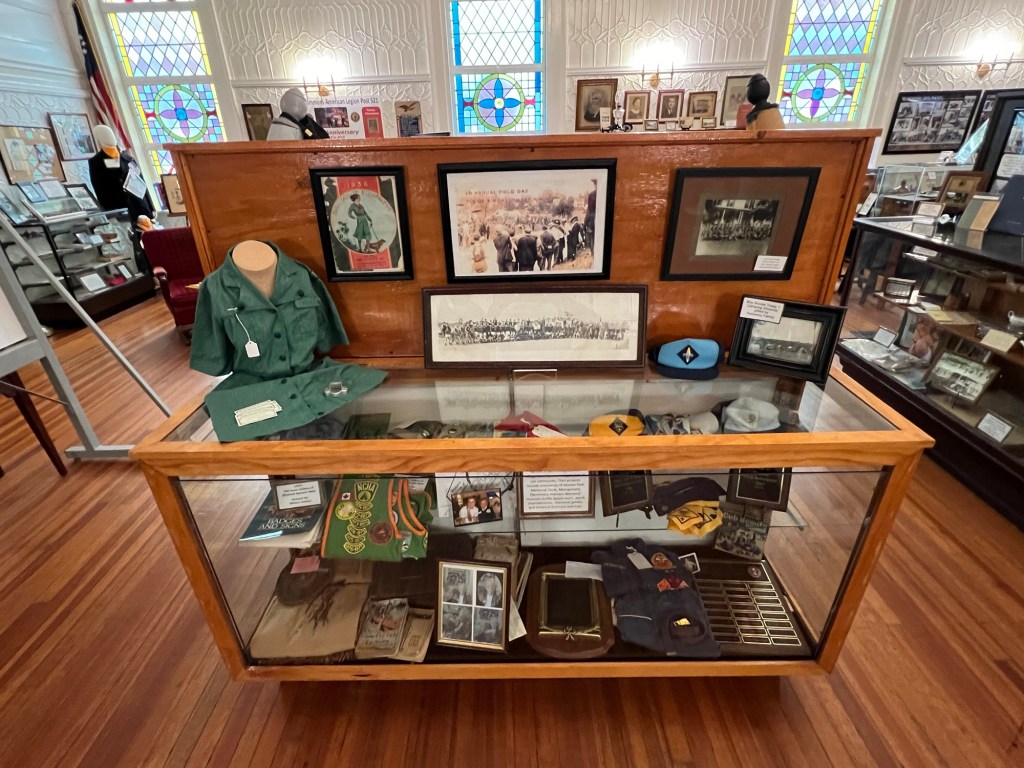
The Girl Scout and Boy Scout display
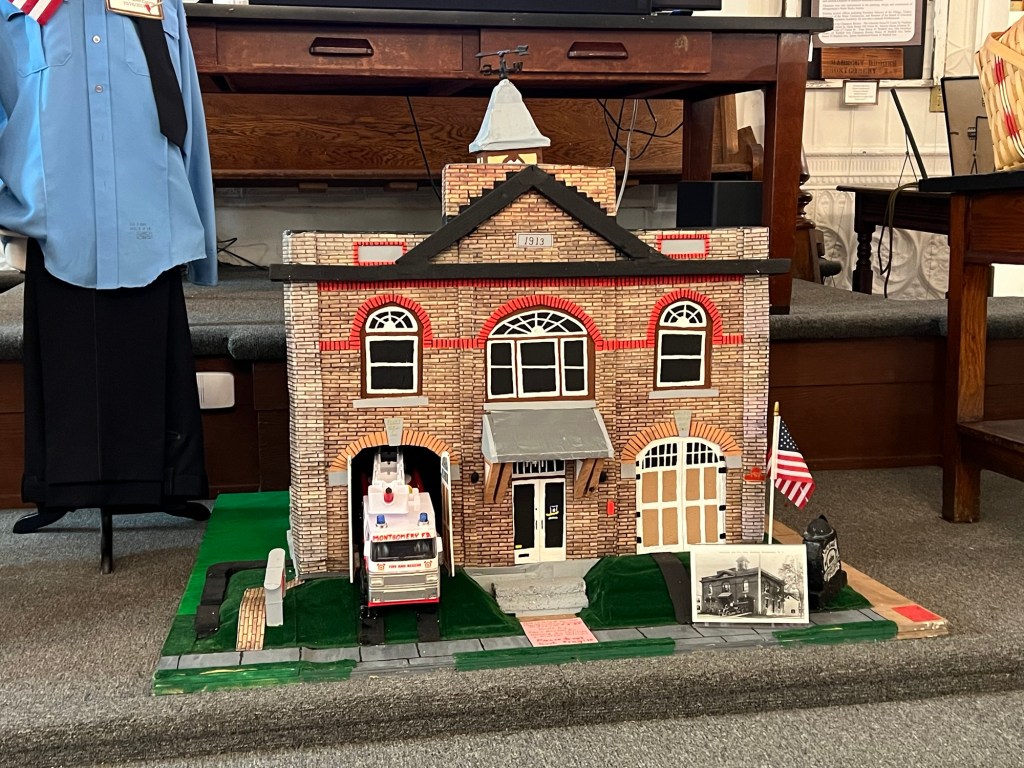
The original fire department display that sits across the street
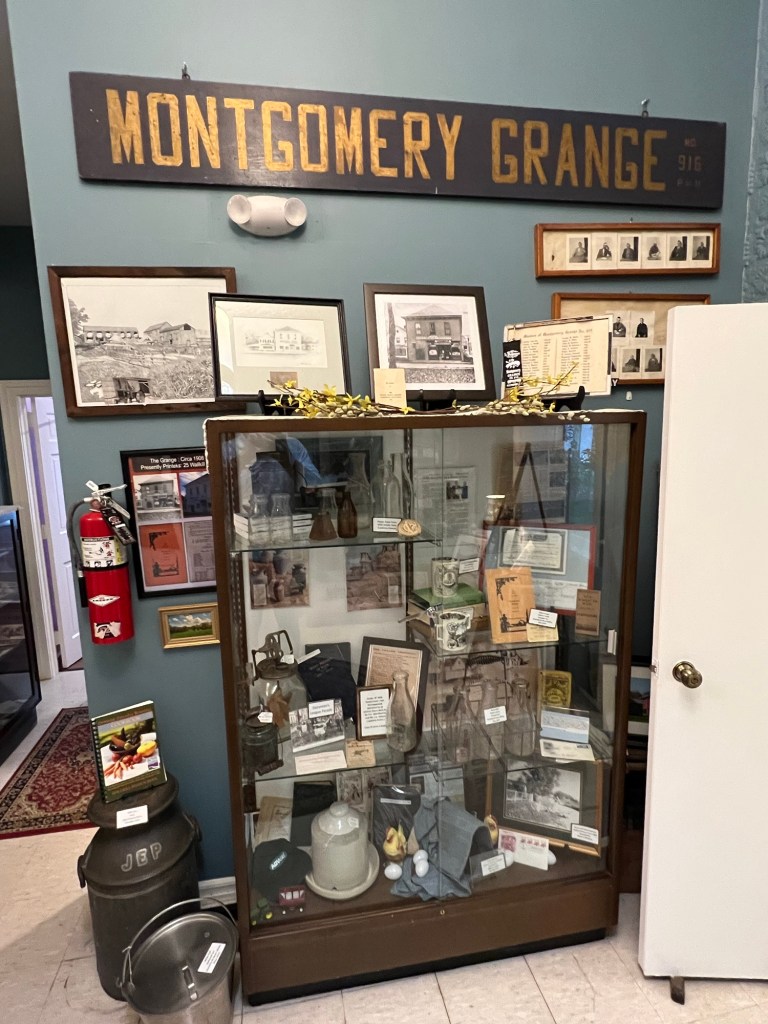
The Montgomery Grange display
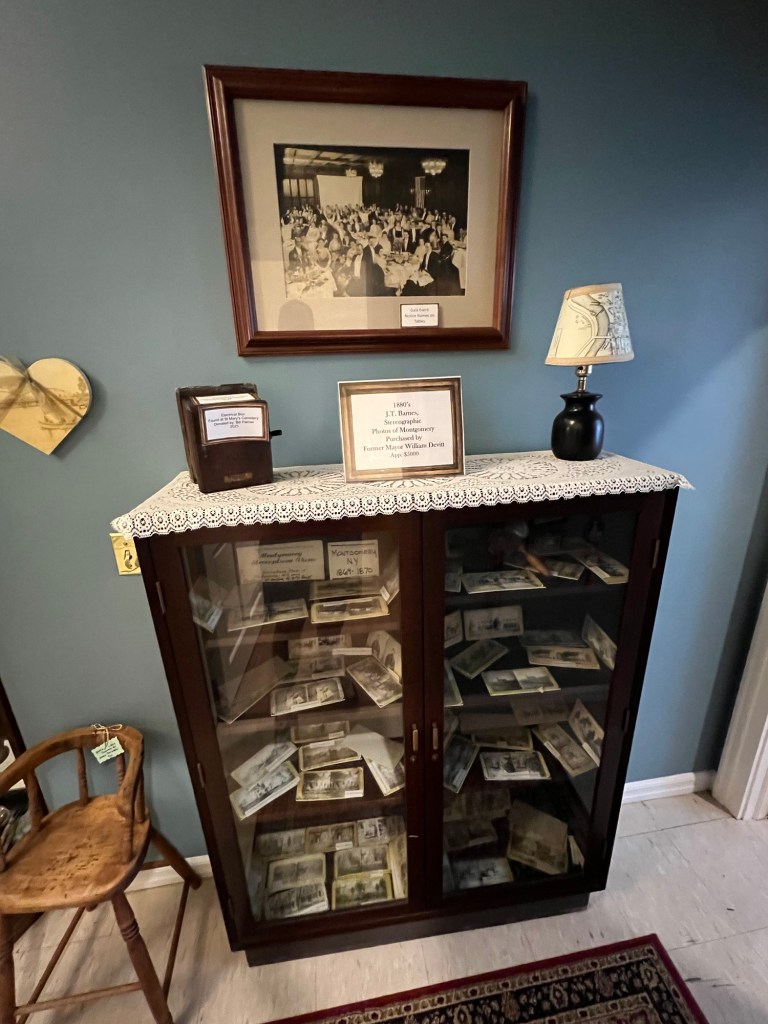
The Picture Display of old photos of the past of the Village of Montgomery, NY
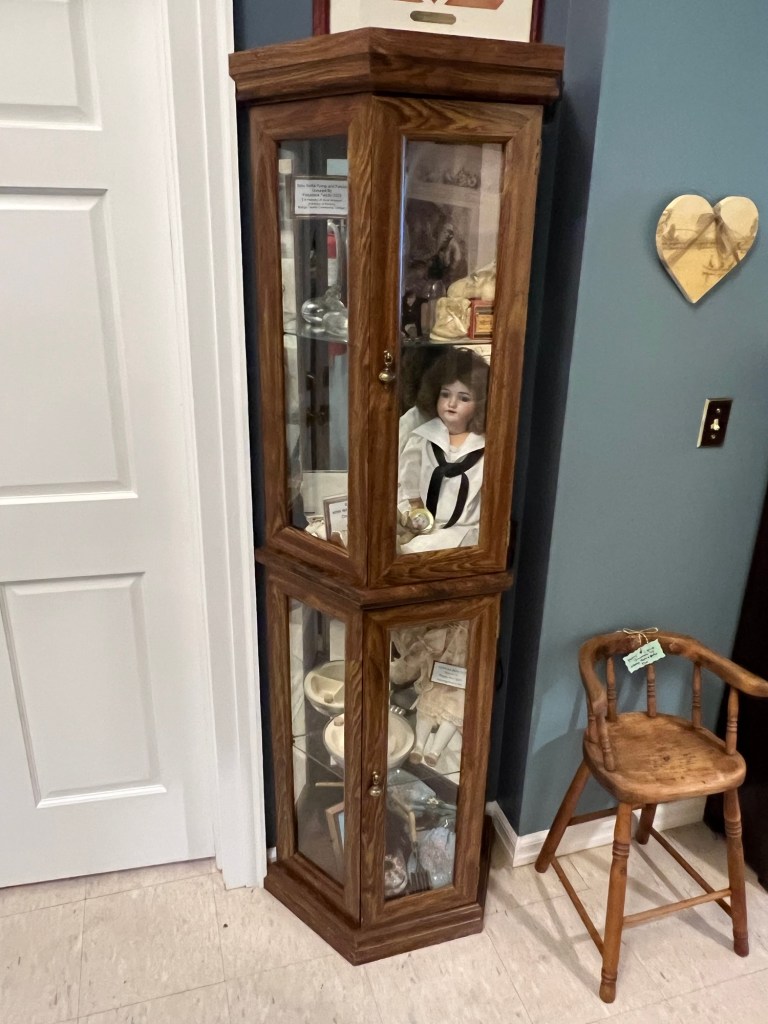
The Toy and Doll Display will delight any young child
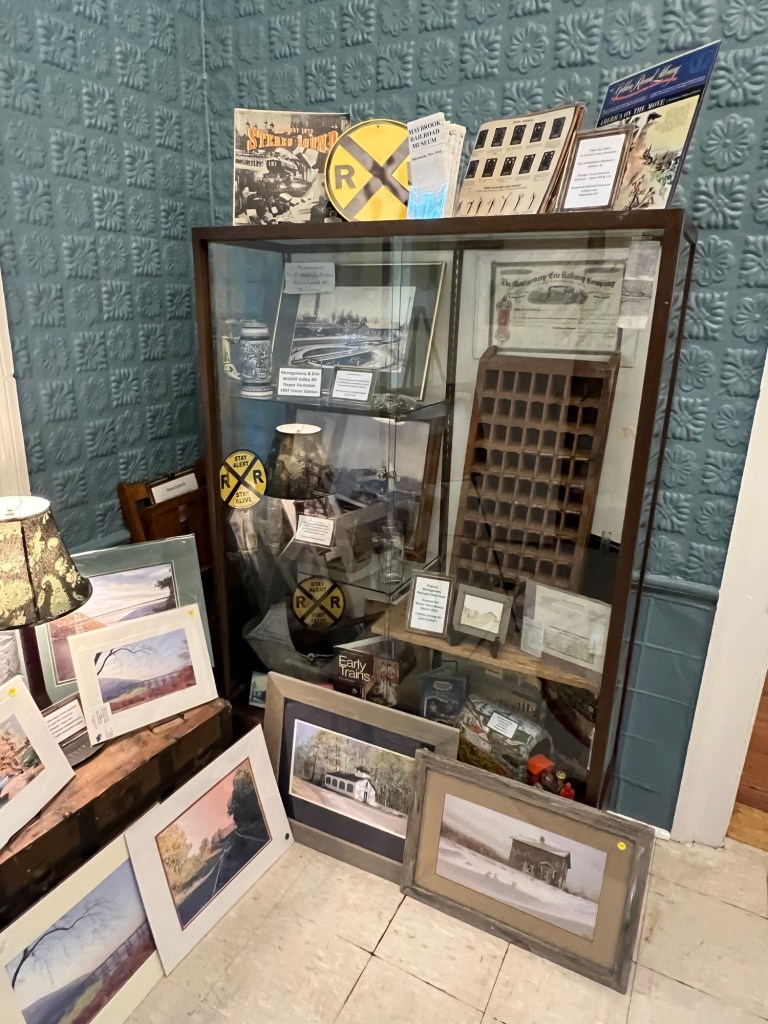
The Art display in the back part of the museum

The afternoon I was at the museum, they had an outdoor concert in the garden of the museum. It was warm night so sitting outside enjoying the music was really nice.
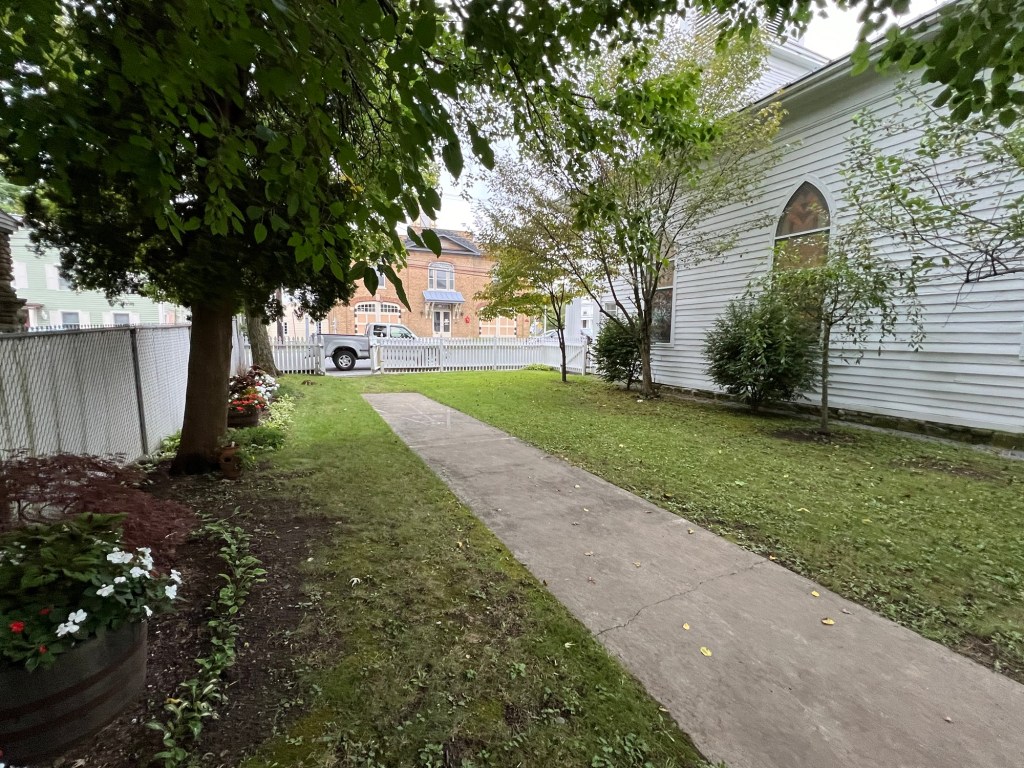
The museum’s well tended gardens
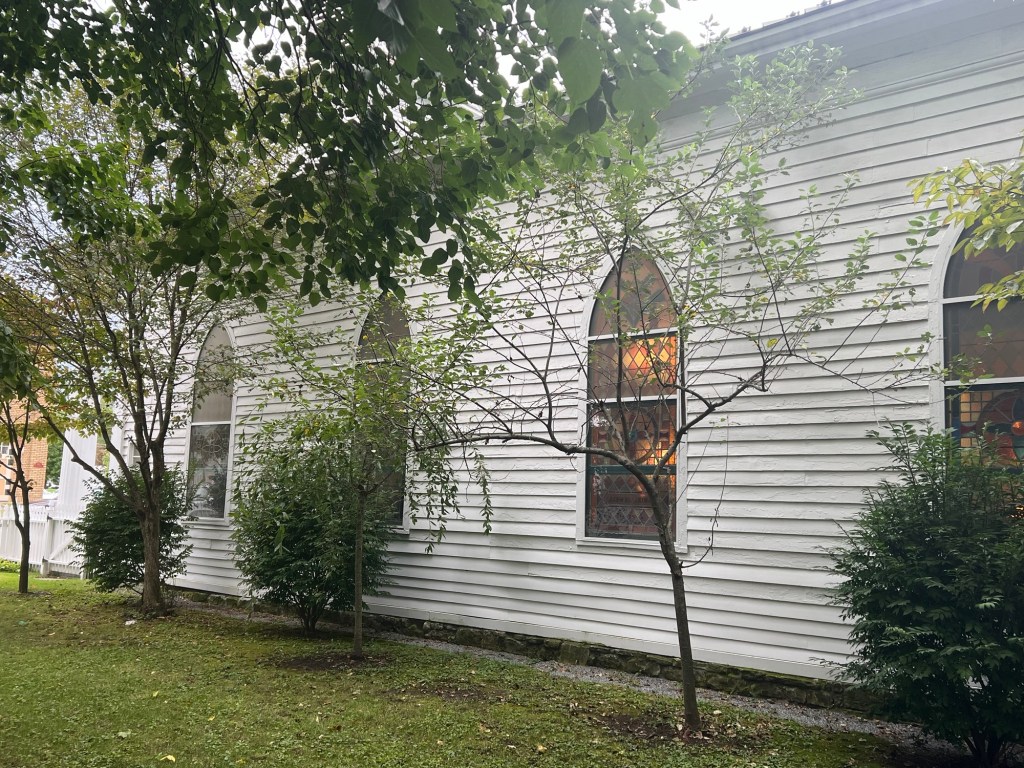
The gardens by the side of the museum
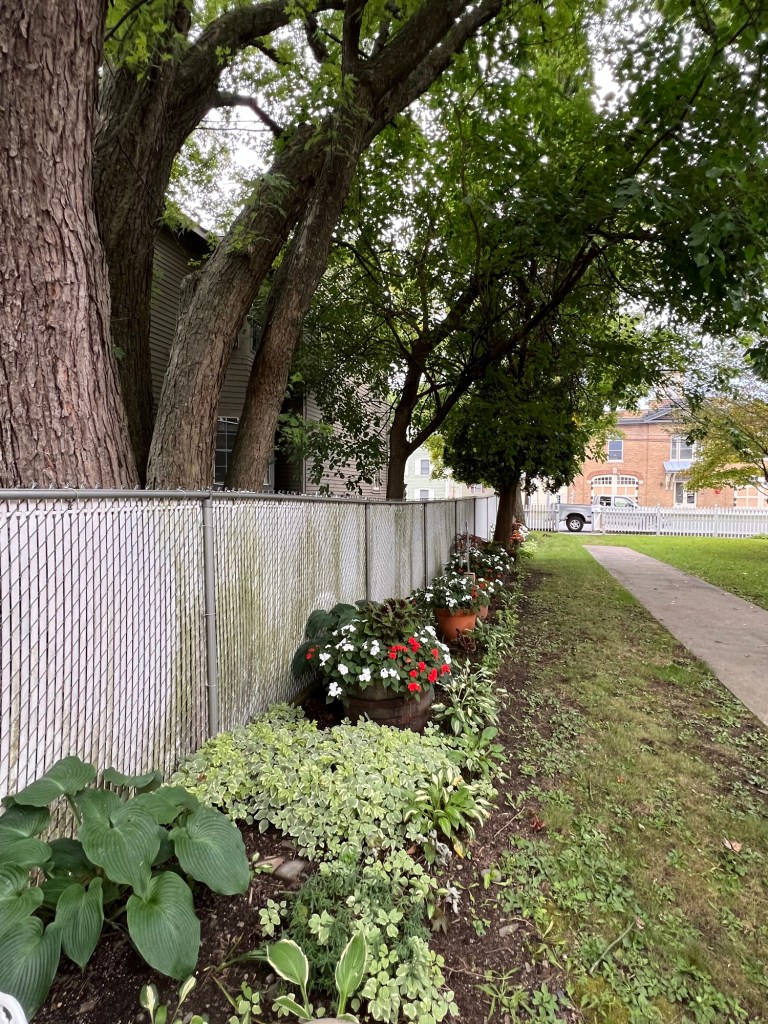
The gardens in bloom by the fence
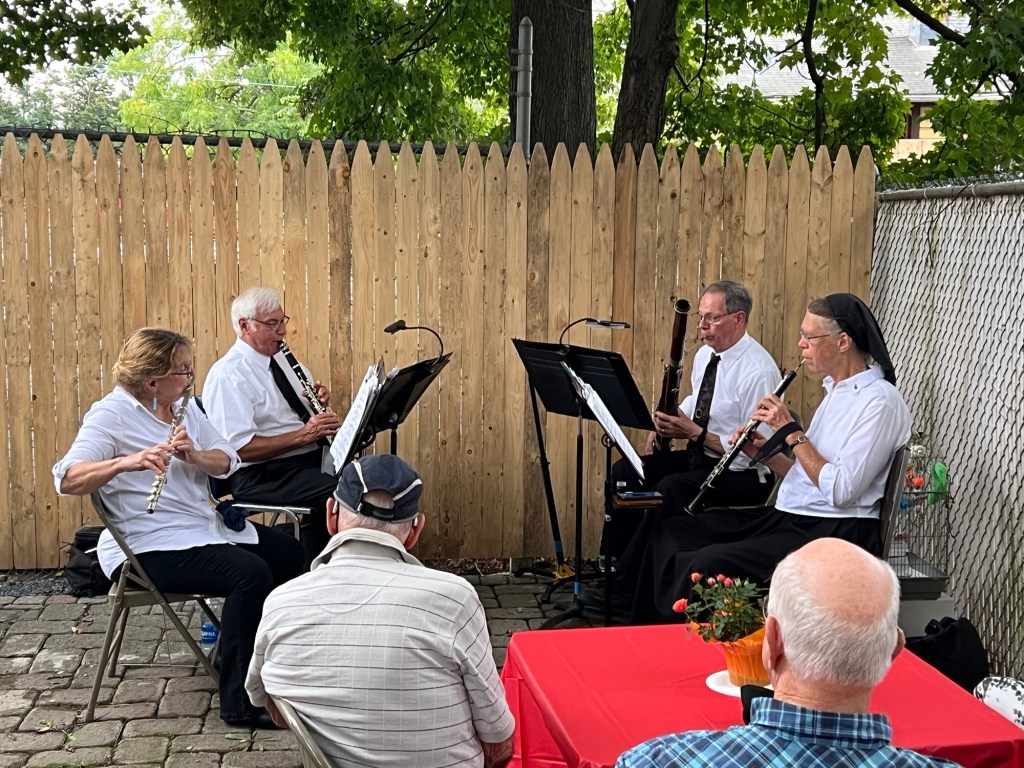
The musical performance of the quartet

The video of the concert:
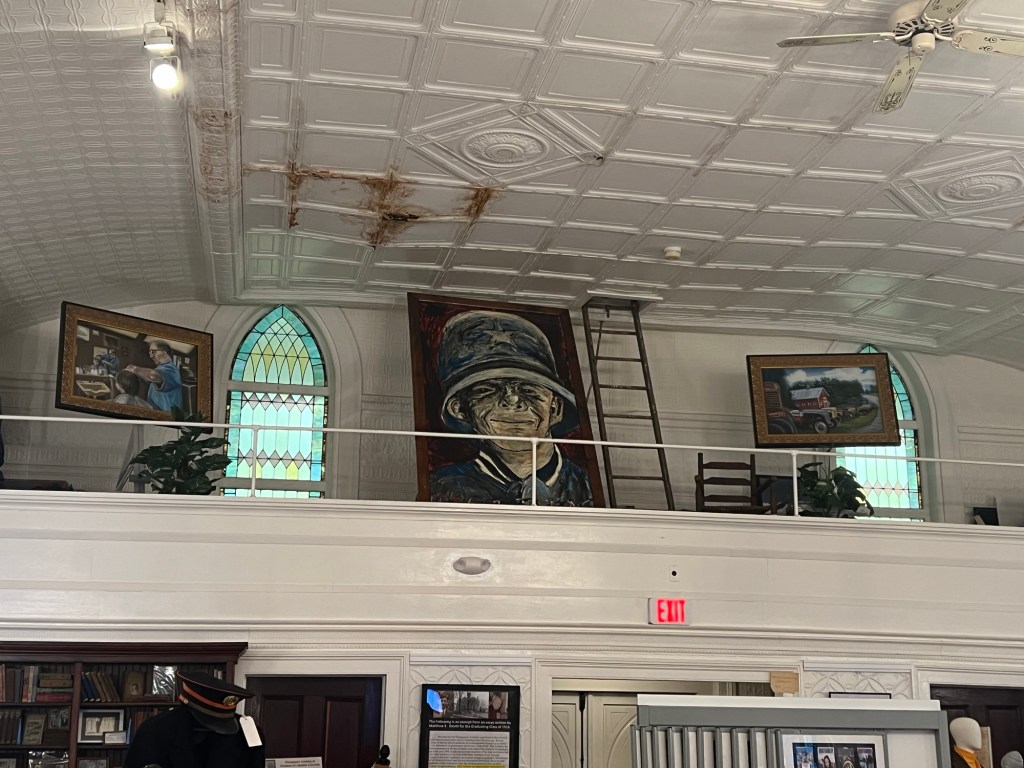
The large paintings above the front door as I was leaving that evening.

One last look at all the galleries at the museum gave me a glimpse of the extensive collection of artifacts at the museum and the story they tell of the community of Montgomery, NY.
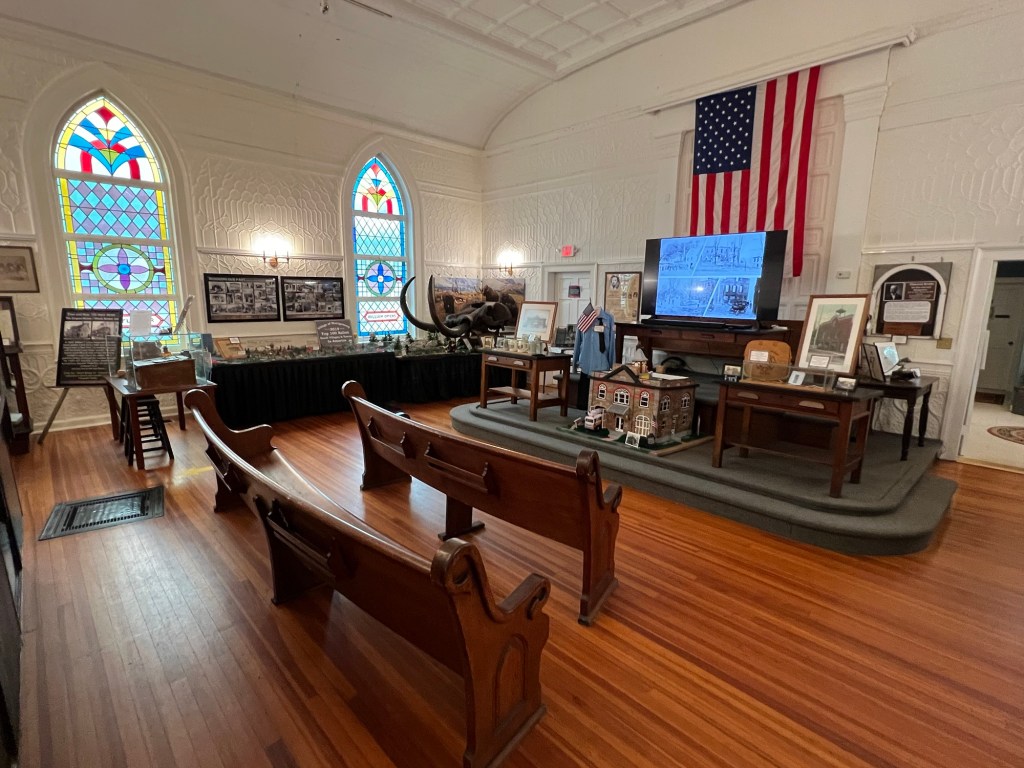
The back gallery
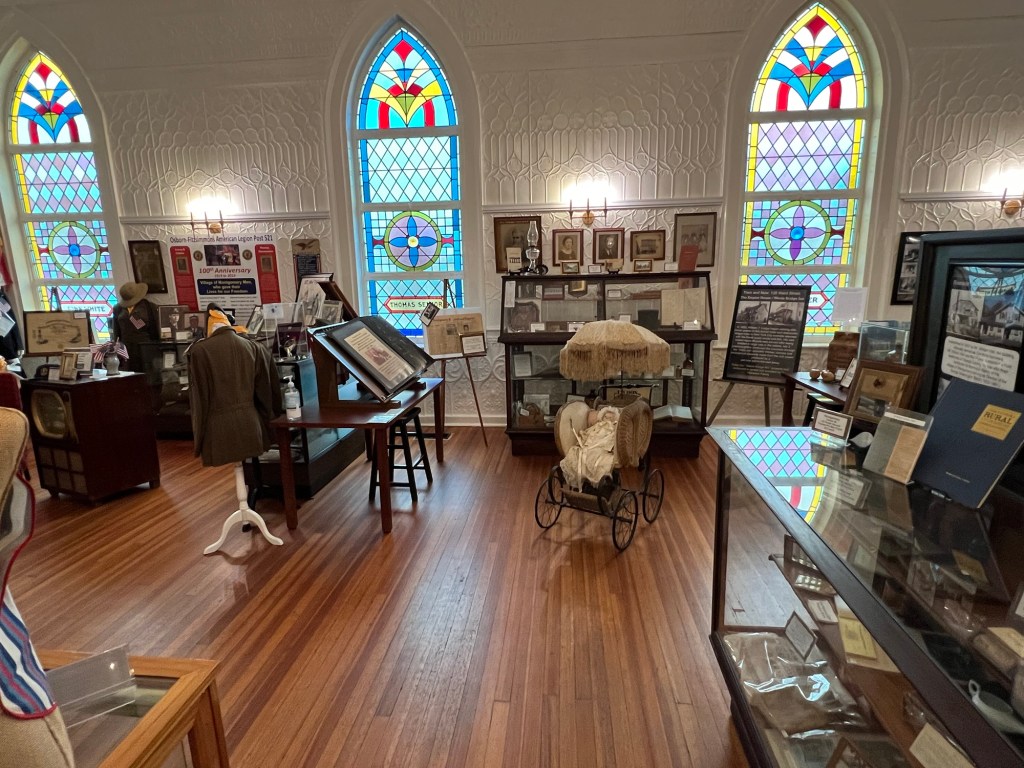
The front gallery
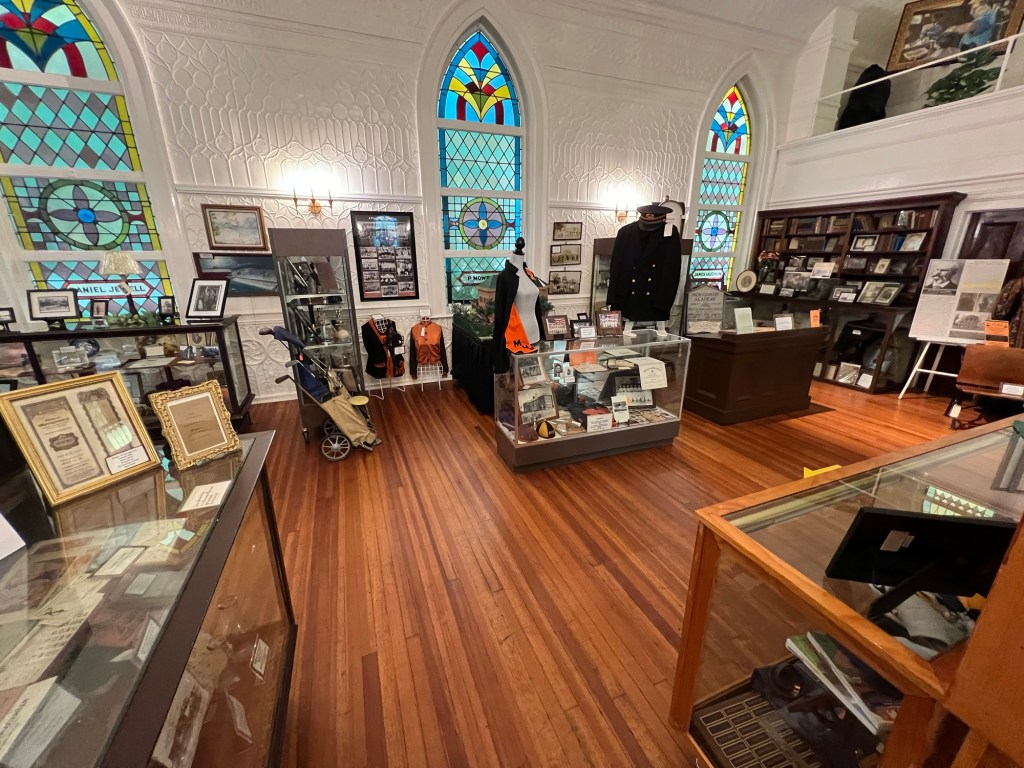
The side gallery

For such a small museum, the displays really give an interesting look at the county and how it has progressed over the years. What have been new to us in the 1950’s, 60’s, 70’s , 80’s and forward has now become the past to newer generations. The Montgomery Village Museum tells that story in detail.

A visit here is a nice way to spend the afternoon. Then take a tour of Historic Montgomery, NY. There is a lot to do and see.
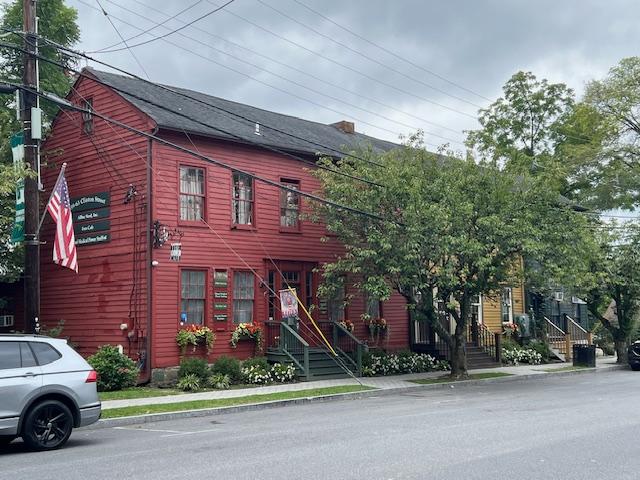
Exploring historic Downtown Montgomery, NY
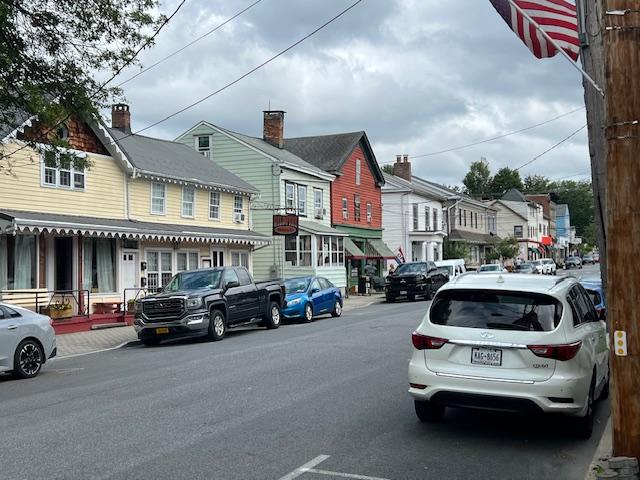
Exploring historic Downtown Montgomery, NY

The Borscht Belt Museum                                     90 Canal Street                                                 Ellenville, NY 12428

The Borscht Belt Museum 90 Canal Street Ellenville, NY 12428

The Borscht Belt Museum

90 Canal Street

Ellenville, NY 12428

https://www.borschtbeltmuseum.org/history

https://www.facebook.com/borschtbeltmuseum/

Open: Sunday 12:00pm-5:00pm/Monday-Wednesday Closed/Thursday-Saturday 12:00pm-5:00pm

Admission: Free but donations are being accepted

My review on TripAdvisor:

https://www.tripadvisor.com/ShowUserReviews-g47676-d26587886-r914784651-Catskills_Borscht_Belt_Museum-Ellenville_Catskill_Region_New_York.html?m=19905

The Catskill Borscht Belt Museum at 90 Canal Street.

The museum sign

This museum will be the talk of the Hospitality Industry. The Catskill Borscht Belt Museum is in its beginning stages with the building bought and the renovations going on. The museum has not opened fully to the public yet as it is still in development and will not open until 2025.

The temporary main gallery

The museum is opened now with a pop-up exhibition on the resorts of the Catskill region “Vacationland: Catskill Resort Culture 1900-1980” with the rise of these resorts that catered to the thriving Jewish, Italian, Irish and Black middle classes who were barred from the resorts of the WASP elite. These were all inclusive hotels that catered to families who would spend summers together until a new generation of travelers developed with air travel, air conditioning developed and assimilation of the population by the 1980’s.

The main gallery of the pop up exhibition.

The exhibition shows how the Depression era generation spent their hard earned dollars and created an enclave where they thrived and enjoyed themselves. It was the type of vacation that we only see today at all inclusive resorts like Sandals and Club Med and on cruise ships.

The Main Gallery pop up exhibition “Vacationland”

The era of travel with the family ended in the 1980’s with women going to work, different educational standards and more people going to college and the change in the work schedule. This on top of the blatant discrimination of that era being ‘smoothed over’ time. People had more options and it was obvious from the timeline that the younger generation wanted different vacations from their parents.

The food service at the hotels

This will be a very interesting museum when it is completed and opened. For now, we get a teaser of what is to come. I am looking forward to it.

History of the Borscht Belt and of the Museum:

(from the museum website)

Curatorial Mission

The Borscht Belt Museum will not solely focus on entertainment, glamour and design. Its curatorial mission will include weightier themes and narratives embodied by the era; the antisemitism that spurred the creation of a Jewish vacationland, the refuge the Catskills provided to African-Americans, Irish-Americans, L.G.B.T.Q. and other communities, and the forces of assimilation and tolerance that eventually helped fuel the grand resort era’s decline.

The Hotel Exhibit on the places of that era.

In addition to its permanent core exhibition, the museum will have space for temporary and visiting shows, ensuring the institution delivers fresh interest to audiences and remains culturally relevant over time. The Catskills continues to serve as a refuge for all  – an ethos that will find voice in the museum’s curatorial mission.

A Home with History

Beginning with a pop-up exhibit in July 2023, the Borscht Belt Museum will make its home at 90 Canal Street, in Ellenville, N.Y. The museum building is a glorious Neo-Georgian gem built in 1928 for the Home National Bank. For more than a half century the bank helped nurture hundreds of local hoteliers and bungalow colony owners whose ambitions, grit and self-sacrifice defined the resort era.

The Borscht Belt Museum will illuminate and celebrate the golden age of the Catskills resort era, when millions of urban dwellers sought refuge in the mountains of upstate New York, leaving deep imprints on mainstream American culture, from stand-up comedy and comfort food to mid-century modern design and popular concepts of leisure. 

The permanent museum will open in 2025. A pop-up exhibit, Vacationland! Catskills Resort Culture 1900-1980, will welcome visitors beginning in early July 2023 through the end of the summer.

The hotels of the “Vacationland” exhibition.

History of the Borscht Belt:

(from the museum website)

No Hebrews Entertained”

The Borscht Belt was born out of bigotry. At the turn of the 20th century, hotel advertisements in the region often used phrases like “No Hebrews Allowed” and “Gentiles Only” to keep out Jewish patrons. This 1902 advertisement from the Brooklyn Daily Eagle features The Nichols in Liberty, N.Y.

In a delicious twist of history, a Jewish family by the name of Grossinger would later purchase the hotel and absorb it into the sprawling and iconic resort complex that bore their name.

The Borscht Belt

The region came to be called the Jewish Alps, Solomon County or more often, simply The Mountains. But another expression, the Borscht Belt, so-named for the hearty beet soup born in Eastern Europe, has had more staying power. What began as a patchwork of Jewish-owned farms whose proprietors took in summertime boarders to make ends meet grew into a sprawling constellation of all-inclusive resorts, hotels and more modest bungalow colonies and kuchalayns – establishments with shared kitchens.

The larger, more successful establishments like Kutsher’s, The Concord and The Nevele had thousands of rooms, nightclubs, indoor pools and ski slopes – and in the case of Grossinger’s, its own airstrip and post office.

The Dress Code and pool standards of the era at the hotels.

End of the Resort Era

Then, seemingly out of nowhere, many of the hotels began to falter, and by the 1980s, all but a handful were gone. It’s hard to pinpoint a single factor in the resort era’s demise, but cheap airfares, air conditioning and an easing of the antisemitism that spurred the Borscht Belt’s creation all conspired against establishments that were barely profitable in the best of times. Assimilation also played a role. Younger Jews simply craved more “modern” forms of leisure that did not remind them of their immigrant parents and grandparents. As the flow of guests began to ebb, the cost of drawing top-notch entertainment, keeping lobbies up to date and guest rooms looking fresh became prohibitive.  

Changing tastes

Today, most of the big hotels have been demolished or swallowed by nature. A few have found new life among the expanding communities of Hasidic Jews. But the legacy of the Borscht Belt era lives on in the all-you-can eat buffet of a Carnival Cruise, the barbed quip of a stand-up comic and the very notion of the American vacation. 

The Catskills Borscht Belt Museum will preserve and honor that legacy so sit back, savor that plate of chopped liver and stay tuned for more about this quintessential American story.

The final scene from the movie “Dirty Dancing” based on that era.