
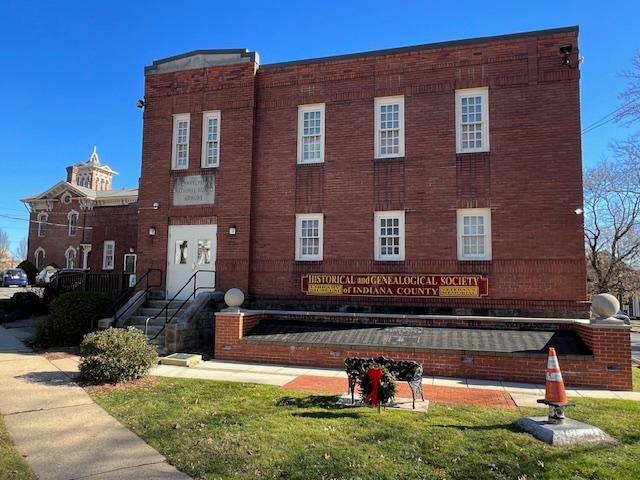
The Historical & Genealogical Society of Indiana County
621 Wayne Avenue
Indiana, PA 15701
(724) 463-9600
Open: Sunday-Monday Closed/Tuesday-Friday 9:00am-4:00pm/Saturday 10:00am-3:00pm
Admission: Free but accepts donations.
My review on TripAdvisor:
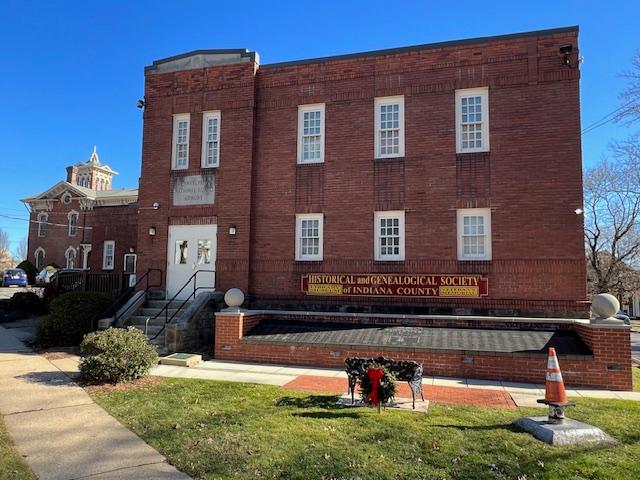
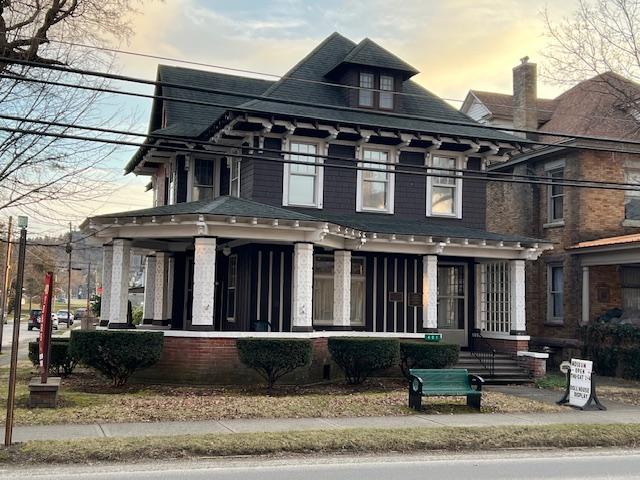
The Society from the front of the building at 621 Wayne Street.
The Historical & Genealogical Society of Indiana County displays the story of the founding and the development of Indiana County, PA from its origins as a stop on the path of the Native American Lenape tribe at their crossroads to the Midwestern part of the country to its development as a coal mining and timber town to its modern day development as the County seat of Indiana County and where the crossroads once again passed with the railroads and shipping and transportation. Now serving as the County Seat and a prosperous College town, home to the University of Indiana Pennsylvania.
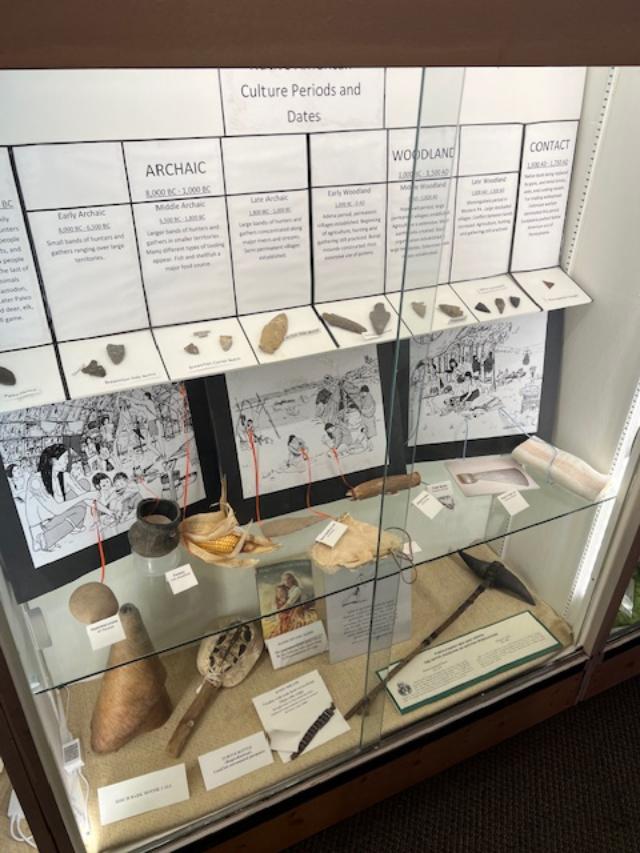
The inside gallery of the Historical & Genealogical Society of Indiana County open with the history of the local tribes that once lived here and then continue on with displays of the coal mining and timber industries.

The galleries open with the history of the Native Lenape tribes that lived here before colonization.

The Coal Mining display
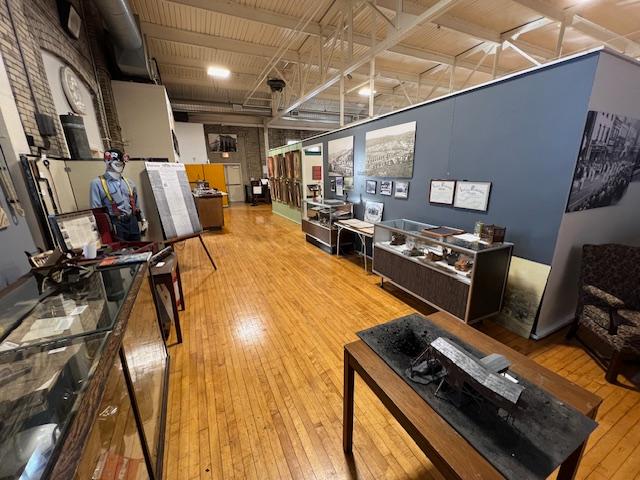
The Mining Industry

The History of the Mining Unions and their role in life in the mines for their workers.
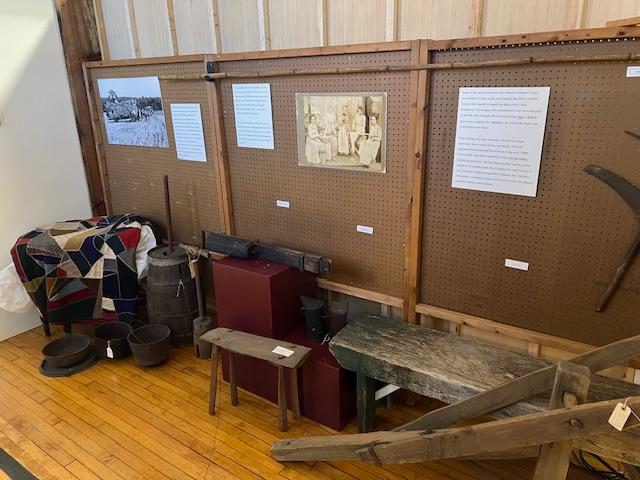
The Logging Industry display of items.

The Logging Industry display on the first floor.

Everyday life in Indiana, PA for townspeople.

The Sports Hall of Fame for the Town of Indiana, PA.

The “Miss Evergreen” pageant winners from the last fifty years.
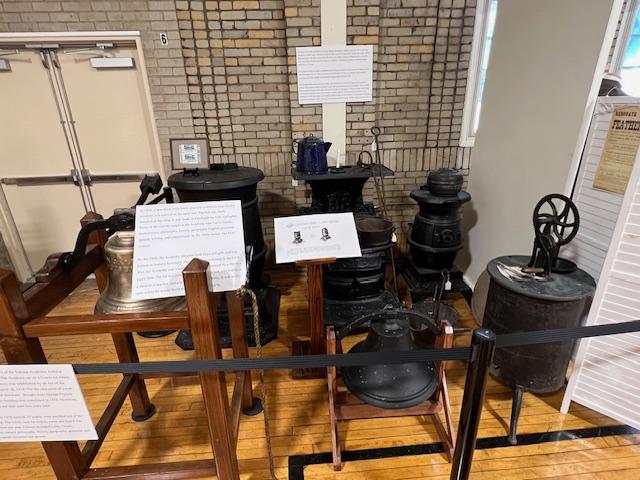
The Metal works industry

The town’s Medical industry and background display.
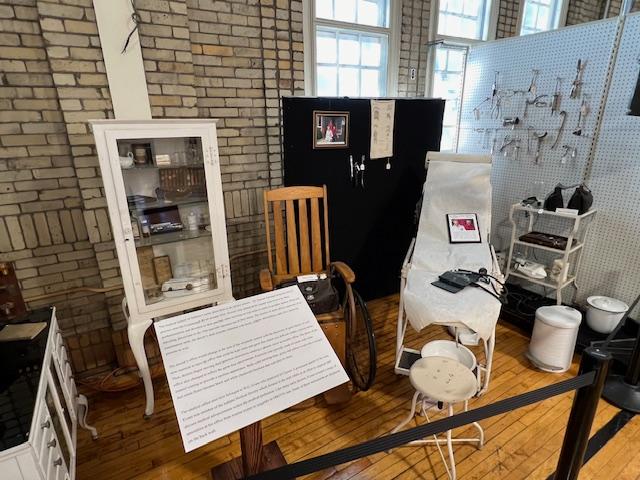
An early doctor’s office display at the museum.
The Military Museum on the Second Floor of the building:
(From the Society website)
The second floor of the Armory holds our military exhibits which cover various engagements from the Revolutionary War to the recent wars of Afghanistan and Iraq. Almost every branch of the military is represented with an assortment of clothing, weaponry, and objects from the warfront and at home. This area honors the men and women who made the highest sacrifice for county and country.

The Society’s Military Gallery on the second floor.

The Military displays on the second floor of the Society.

The Revolutionary War display of local items used during the war.

The local display of Civil War uniforms from the Union Army and rifles.

The Veteran’s display on the first floor.

The WWI and WWII uniform display on the second floor.
The Clark House:
(From the Society website)

The Clark House is closed with the exception of special events.
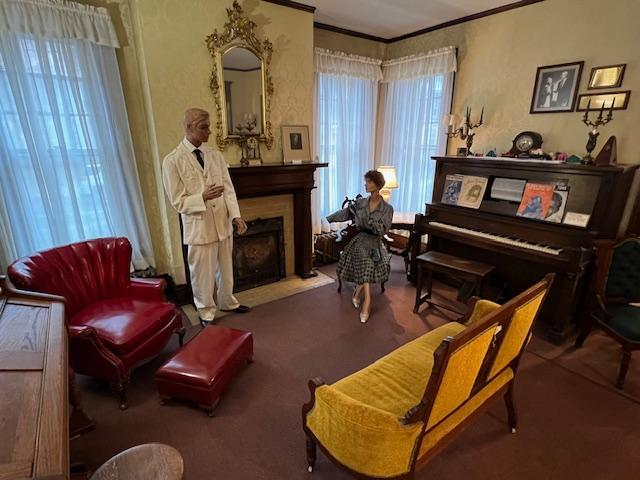
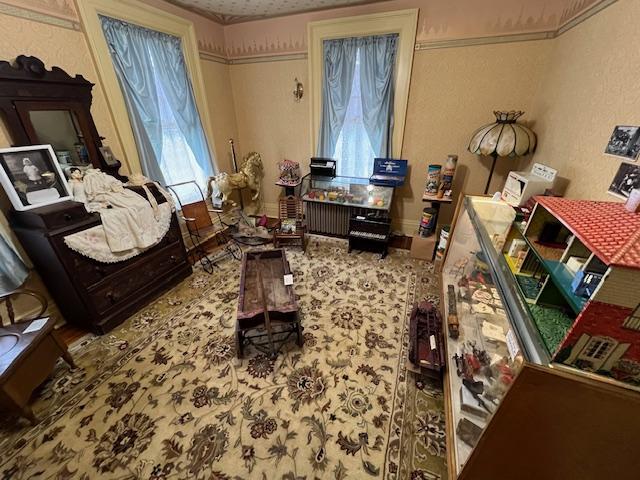
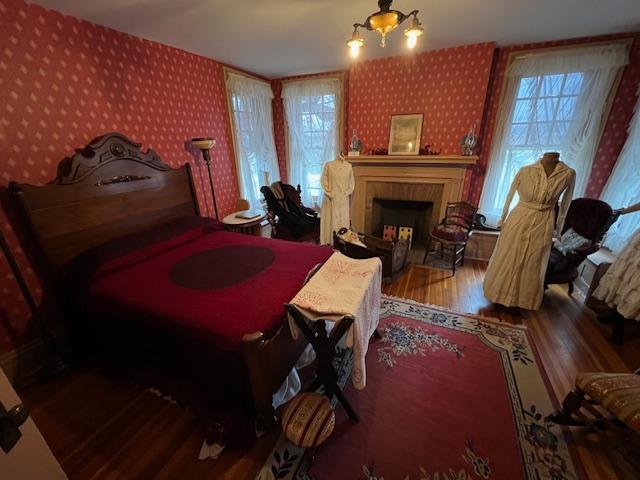
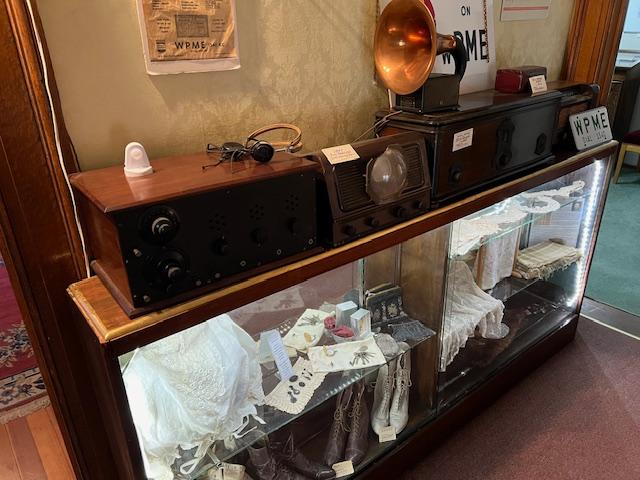
The final exhibit area is inside the Clark House. This 1870 mansion showcases Indiana County at its peak — the Gilded Age (c.1860-1901). Viewing the architecture, furniture, décor, and possessions of the Clark Family – as well as other local families – allows us to reflect on our history so we may better understand the people of the past.
The Society’s Mission:
(From the Society website)
Through a broad range of activities, The Historical and Genealogical Society of Indiana County seeks to promote a greater appreciation of the Indiana community’s rich heritage and a better understanding of life today.

The side entrance to the museum.
The History of the Society:
(From the Society website)

The entrance to the Historical Society.
Dedicated to preserving the history of Indiana County, this multi-faceted non-profit has operated continuously since 1938. In addition to running the Historical Museum and Helman Library, the HGSIC conducts educational tours for local school and scouting groups, works with other community organizations, and provides research services for personal and professional needs. The HGSIC is also steward of the Clark House and the Armory, both listed on the National Register of Historic Places.
On November 16, 1938, the Society was founded as a private, nonprofit 501(c)(3) membership organization by six friends in the living room of Frances and Blaine Helman. Frances Helman was a genealogist, and her extensive collection of reference materials and research formed the foundation for the Helman Library. Volunteers and researchers alike have added to it through the decades by clipping newspapers and donating their own research and materials.
On April 1, 1939, with a membership of twenty-six, the Indiana Evening Gazette announced that the Society had been formed and a request to move their materials to the Indiana Free Library was granted. At that time, the Society’s holdings included fourteen books, several pamphlets, and tombstone inscriptions from a number of local cemeteries. This would be the first of several homes for the library.
A year later in May 1940, membership reached 134 and the Society was officially incorporated. Soon after, they moved to Wilson Hall on the IUP campus, where they shared a room on the first floor and stored newspaper files in the basement.

The Indiana Free Library, the second home of the Historical Society in 1939.

The third home of the Historical Society was Wilson Hall in May 1940.
In the winter of 1951, the Society moved into the Clark House, previously known as Memorial Hall. To move the contents of the library, the books were piled onto a sled at Wilson Hall then pulled to a parking lot and loaded into a car. The process had to be repeated in reverse once they arrived at the Victorian mansion on South 6th Street. At the time, the library collection didn’t even fill the bookshelves in the former study of Judge Silas M. Clark. Once occupied by the HGSIC, the name of the building soon changed to the History House and finally to its present name, The Clark House. The library grew quickly, and by the 1960s, the library held over 2000 surname folders. These were busy decades for the Society. Under the editorship of Frances Helman, the Society produced a genealogical quarterly titled Your Family Tree from 1948-1966. Society members wrote history articles for local newspapers, pamphlets and booklets such as fair guides, and county history books. Original scholarly works were published as well as reprints of primary reference materials.
In November 1957, the Society received the deed to the Buena Vista Furnace, and throughout 1965-1967 undertook a project to stabilize and open the site for public access. The HGSIC eventually outgrew The Clark House – the library spilled out of the parlor to the entire first floor, the second floor held artifacts and offices, and the basement had a less-than-functional museum. In 1999, through the generous support of the Indiana County Commissioners and the hard work of numerous volunteers, the HGSIC purchased the Armory, the former home of the Indiana County National Guard and Company “F”. After replacing the roof and figuring out how to open the ammunition locker, the HGSIC established the Historical Museum and the Memorial to the Veterans, a condition of their purchase of the building.

A move in the winter of 1951 to the Silas M. Clark House, one of the current buildings owned by the Historical Society.
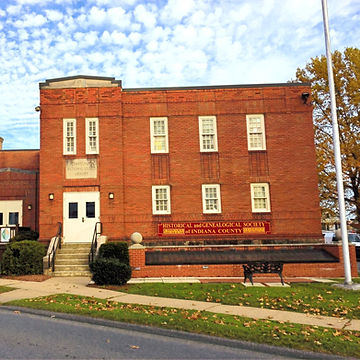
The former Indiana County National Guard Armory is the current home for the Historical Society.
Once the renovations were complete, it was once again time to move. With this move, the materials only had to go across the parking lot, it was still a major undertaking. Heavy wooden shelving units, then hundreds of volumes, dozens of filing cabinets full of surname and subject folders, and and the whole Helman Collection soon rolled across the lot with the help of volunteers. Artifacts soon followed, including agricultural equipment, textiles, iron furnaces, and art.
Today, the library houses over 26,000 surname files, over 1000 family histories, thousands of subject files, numerous county histories, and hundreds of other reference and subject books. The Society continues to reprint important reference books as well as new works exploring Indiana County’s past. Keeping up with technological advancements, the Society is scanning collections for easier searching. Classes and workshops on genealogy are still offered, and
several volunteers carry on the work of expanding the surname and subject files. Not only is the library named after Frances Helman, but so is the HGSIC’s most prestigious award. The Helman Award is given to those individuals whose contributions add greatly to the society’s ability to serve our members, researchers, and community.
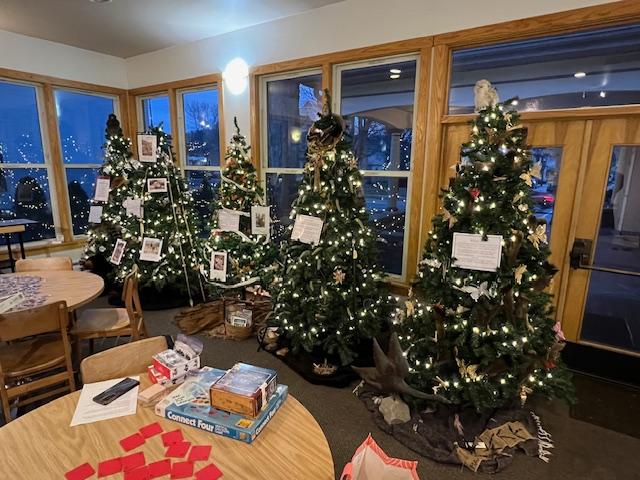
The HGSIC is proud to partner with other community organizations to help keep history alive through programs held on site and in the community. Each December, the Indiana Art Association holds their Open Arts Exhibit, showcasing art from local artists. The IUP Paranormal Society has conducted a number investigations in October and dependent on scheduling, these investigations are open to the public. During the spring and summer, the Evergreen Garden Club plants bursts of color in our gardens and continues to help make the point look inviting for all of our visitors. Local schools come here for tours, in particular we have partnered with the Fifth Grade Class at Horace Mann and present a Civil War Encampment, which the thoroughly enjoy.
Our volunteers give periodic programs at the Indiana Free Library, neighboring historical societies, local schools, and Friends of the Indiana County Parks. In 2016, the HGSIC was active in the planning and celebration of Indiana Borough’s Bicentennial, and now displays the time capsule to be opened in 2066. The grounds also hold the Indiana Borough Sesquicentennial time capsule buried in Clark House lawn in 1966. The Historical Society continues to explore new opportunities to partner with local, state and national organizations to continue to bring programs about Indiana County’s history to our residents.
The Historical and Genealogical Society of Indiana County is about more than just the past. With a vibrant volunteer base and a growing number of visitors, we continue to offer programs and events, tours and classes, far into the future.
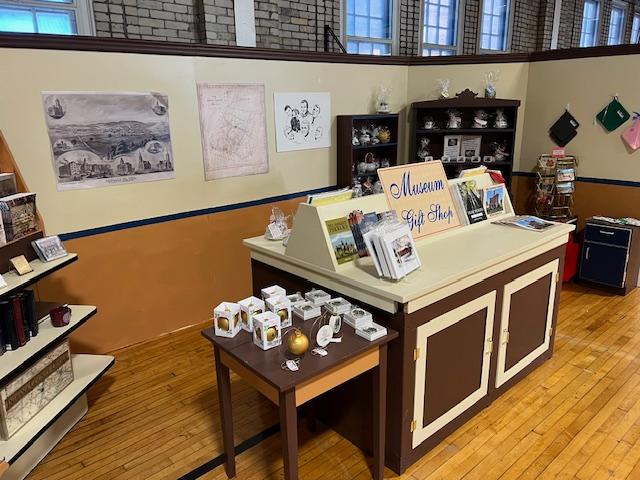
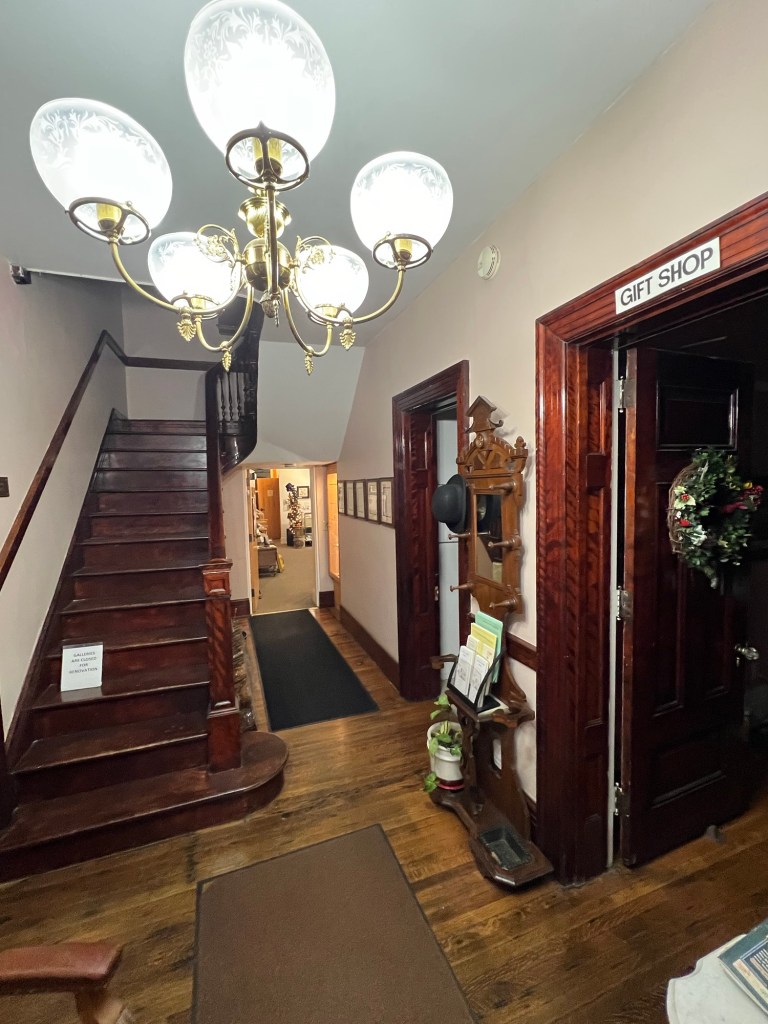
The Society’s Gift Shop near the entrance of the museum.

















 Visiting a Museum: The Unique, Unusual, Obscure and Historical