
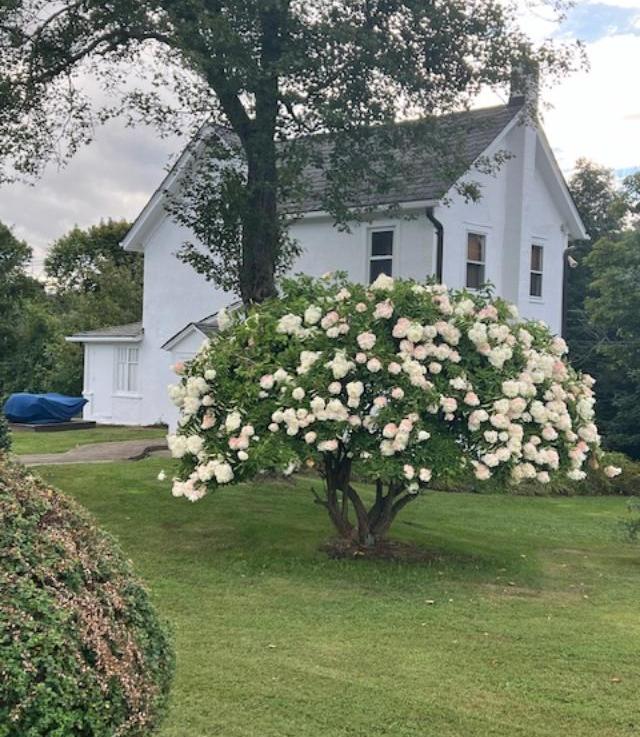
Lake Hopatcong Historical Museum
State Park
Landing, New Jersey 07850
((973) 389-2616
My review on TripAdvisor:

The Lake Hopatcong Historical Museum is right on the lake
The museum sign inside the park
I recently visited the Lake Hopatcong Historical Museum and learned so much from this lake community with its resort past and development from a artist colony to a hotel and amusement resort from the late 1880’s to WWII to the residential community it has become today. It really does show how transportation has shaped and developed vacation resorts not just in New Jersey but in the Metropolitan area.
The development of the railroad lines into the area bringing visitors from the large urban areas to the development of the automobile and it developed the hotel industry to modern jet travel which led to the decline of the area as a resort and becoming the lake community it is today, the museum guides you through the early history and the important visitors that became part of the community. While there are still traces of the old resort here and there, the rich history of the Lake Hopatcong shows us how time marches on in all places.
On the first floor is the Lenape Native American display and the description of the first residents of the area. There was all sorts of household and fishing items on display at the museum when Native Americans lived in this area in the warmer months.

The Lenape settlement in the Lake Hopatcong district
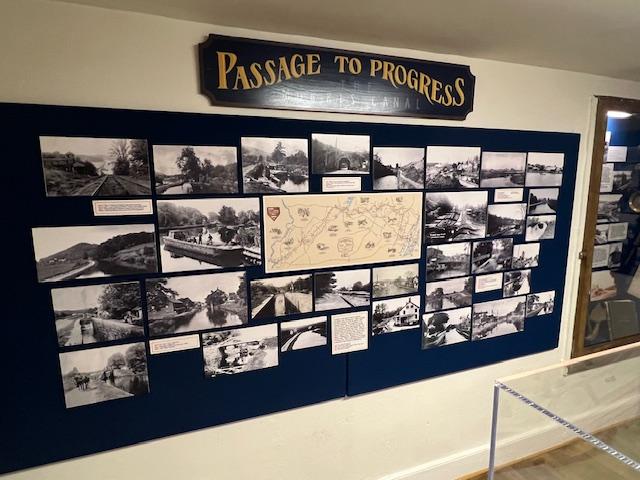
As the area settled and Dutch and English settlers pushed out the Native Americans, the area became settled with farmers and fisherman and with the opening of the Morris Canal as part of the lock system, a transportation head. The opening of the Morris Canal brought new business and new opportunities to the area.
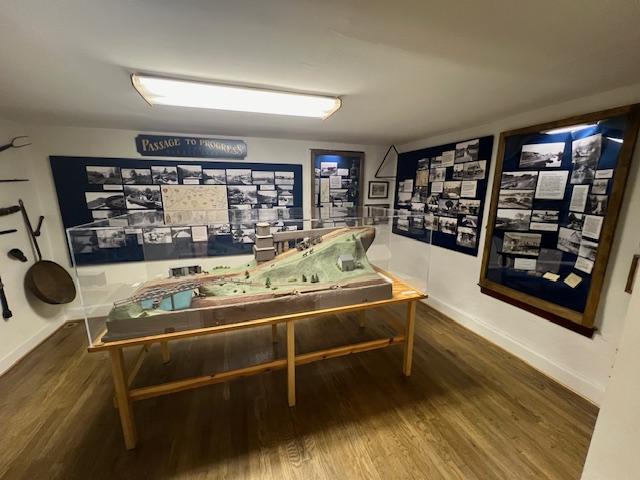
The Morris Canal display at the museum and the development of the shipping industry in the area

The Morris Canal in its years of use
It was after the Civil War and the affluence of the Industrial Age transformed this area with the advent of the railroads passing through the community. Five day work weeks and weekends off for pleasure opened up this lake community first to boarding houses and then the building of luxury hotels for longer stays. Residents from the urban areas would come to the ‘country’ for fresh air, swimming and recreation.
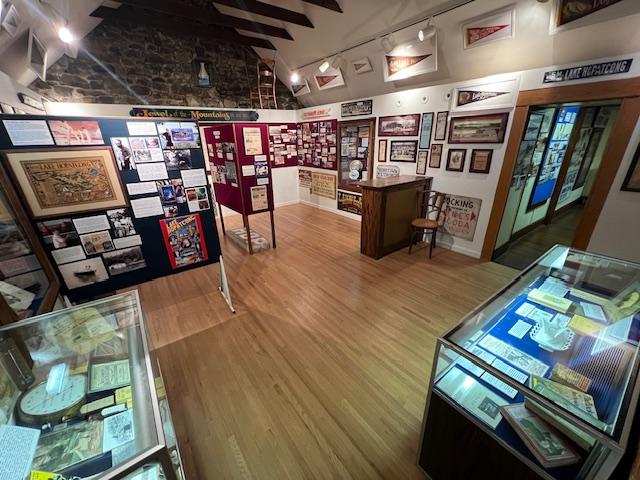
The Hotel and Resort development of Lake Hopatcong
The development of the lake region for hotels

The hotel industry at Lake Hopatcong

The resort development signs

The advent of WWI

The aftermath of WWI
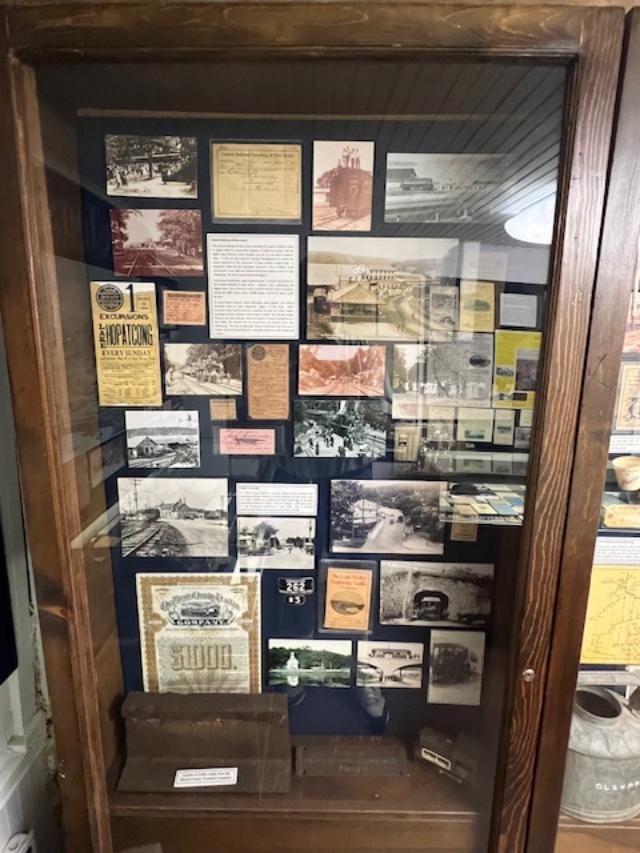
The growth of the resort community

The resort displays
With people staying at the resorts, they needed more to do than just swimming, boating and fishing. Families would arrive and from there was the development of the amusement industry. This would start with pleasure gardens, carousels and games which led to the creation of Noland’s Point and Bertrand Island Amusement parks. Noland’s would be the victim of the Depression as such a small area did not need two amusement parks and Bertrand Island would continue on until 1983 as times and tastes changed and investment was not put into the park. In its day though, it was a place of fun and merriment.

The history of Noland’s Point
Bertrand’s Island became the center of amusement and fun and the park remained a mainstay of the area for almost 100 years. With the building of bigger and more elaborate parks such as Great Adventure and the growth of shore communities, these inland smaller parks were bypassed by time. While still popular, they did not hold the attention of the Baby Boom and Gen X crowds who wanted new parks to visit. Still the memories of warm summer evenings and our first Miss America from New Jersey, Bette Cooper, the former Miss Bertrand’s Island, still hold true today.
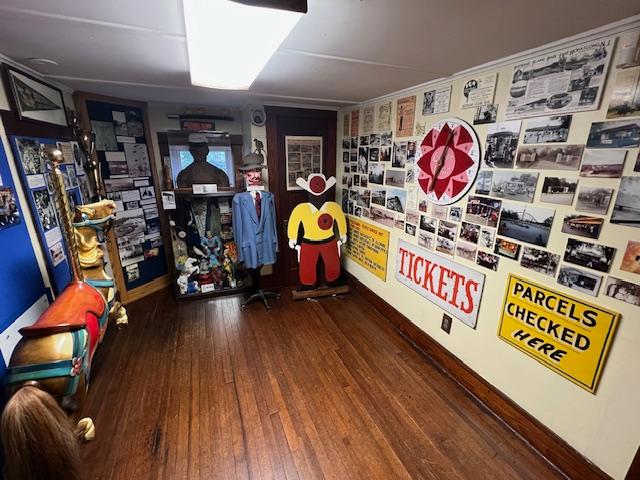
The Bertrand Island Amusement Park display was the most interesting in the museum

Bertrand’s Island display
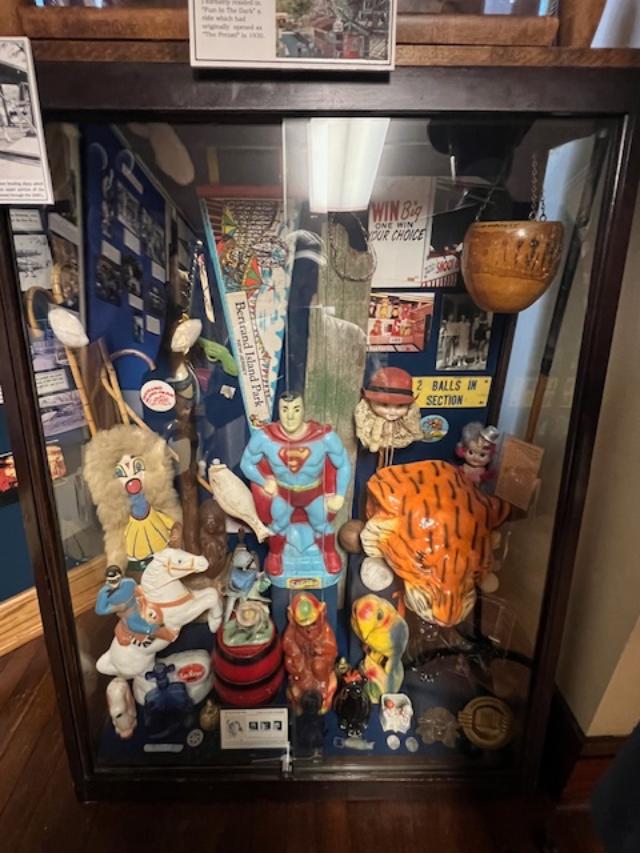
Prizes won at the park
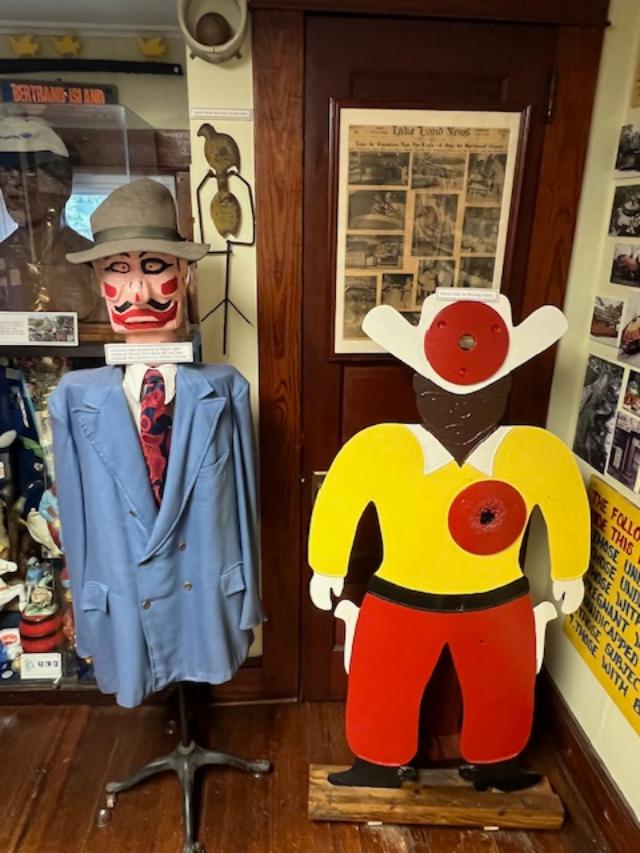
Part of the rides and games at the park
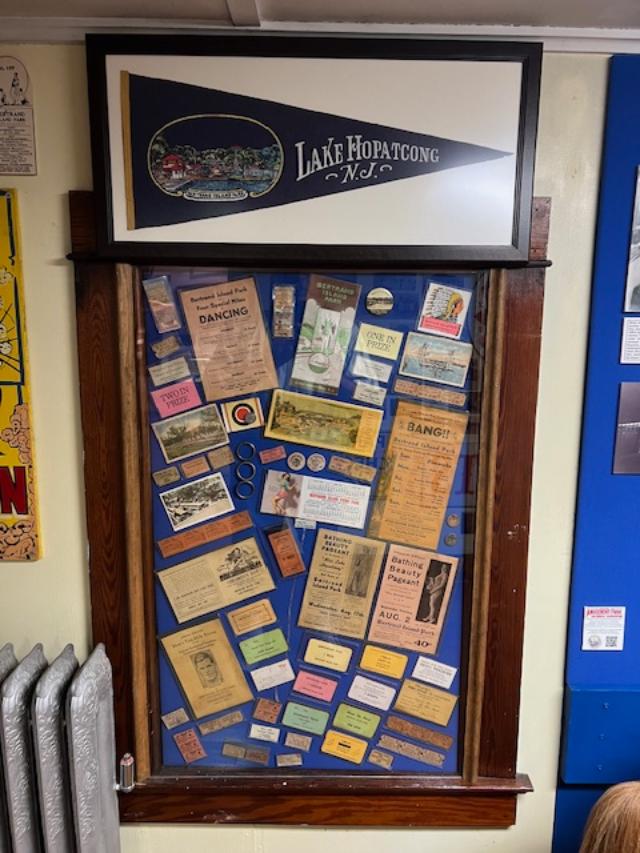
Games and rides

The Miss Bertrand Island Beauty Contest
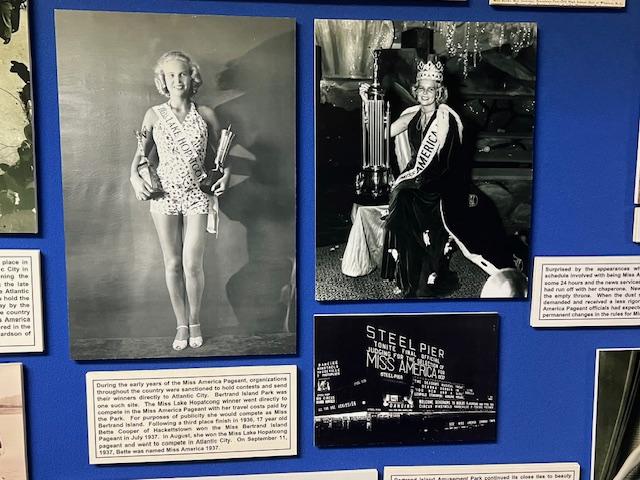
Miss Bertrand Island, Bette Cooper, Miss America 1937
The museum tells many interesting stories of the lake district and the displays are very detailed and interesting to read. There is a treasure trove of artifacts and historical items at the museum to admire and reminisce about for those who had visited in the past. The museum is a wonder book of a time between the wars before air travel changed everything that a trip to the lake region was a place for vacationing and for long days of relaxation.
Plan about two hours to really visit the museum and share in its rich history.
Mission Statement
(from the museum website)
Our mission is to collect, house and preserve artifacts and documents relating to the civil, political, social and general history of Lake Hopatcong and to encourage the education and dissemination of information about Lake Hopatcong’s history.
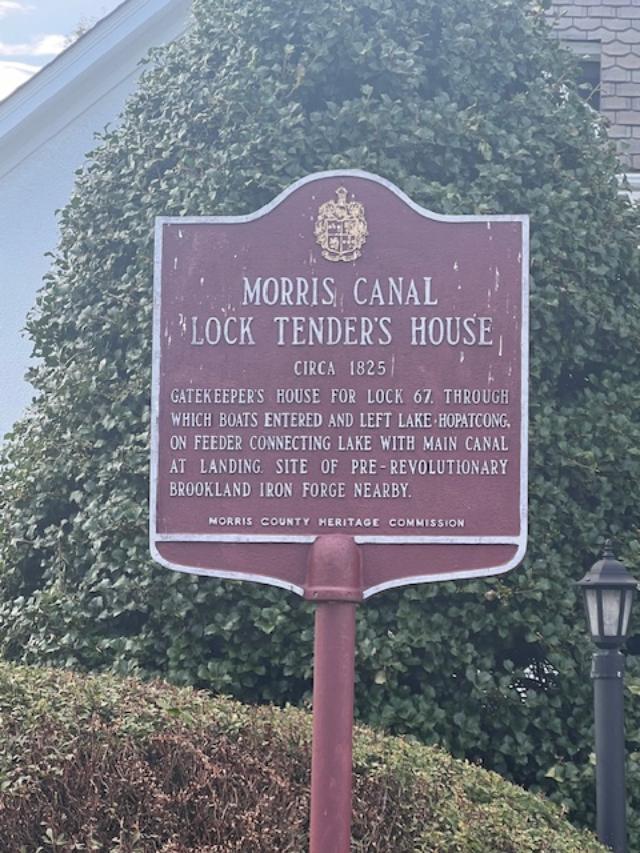
The historic plaque for the house
History of the Museum:
(from the museum website)
Since 1955, our organization has housed, cared for, and displayed items relating to the unique history of New Jersey’s largest lake. With some 750 members, it is one of the largest historical groups in the State of New Jersey. Our four major programs regularly sell out at 200 attendees and our museum has been recognized as one of the finest small museums in the state.
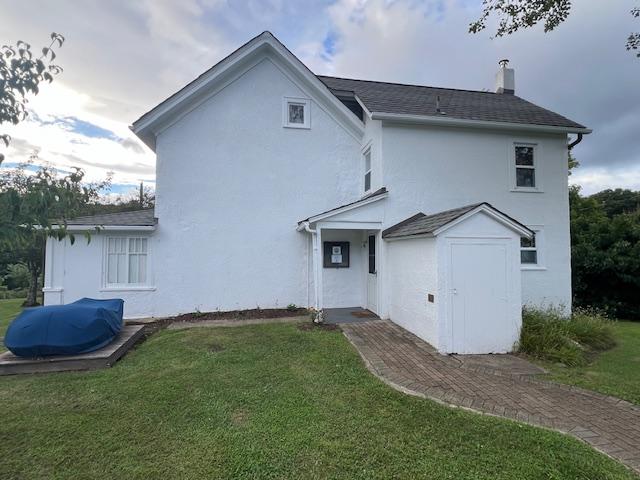
The front of the museum. This is the former Lock Keepers home
The concept for a historical organization at Lake Hopatcong took shape in spring of 1955 when an article in the Lake Hopatcong Breeze declared “It has been suggested that we have a museum at Lake Hopatcong to house the many interesting treasures pertaining to the history of our lake and vicinity….” The July issue reported much interest in the idea of a museum and the Lake Hopatcong Businessmen’s Association asked Alice Apostolik, editor of the Lake Hopatcong Breeze newspaper, to continue investigating the concept.

The front of the museum from the parking lot of the park
The interest fostered led to the formation of the Lake Hopatcong Historical Society on August 10, 1955. With eight people in attendance, an organizational meeting was held at Langdon Arms (where Gatwyn’s Restaurant is now located on Route 15). Dues were established at $2.00 per year with life membership set at $20.00. Langdon Arms was set as the society’s official headquarters, but it was agreed that the monthly meetings should be rotated to other areas of the lake, such as the Hopatcong House, a hotel formerly on Lakeside Boulevard in Hopatcong where The Liquor Factory’s building is now located.
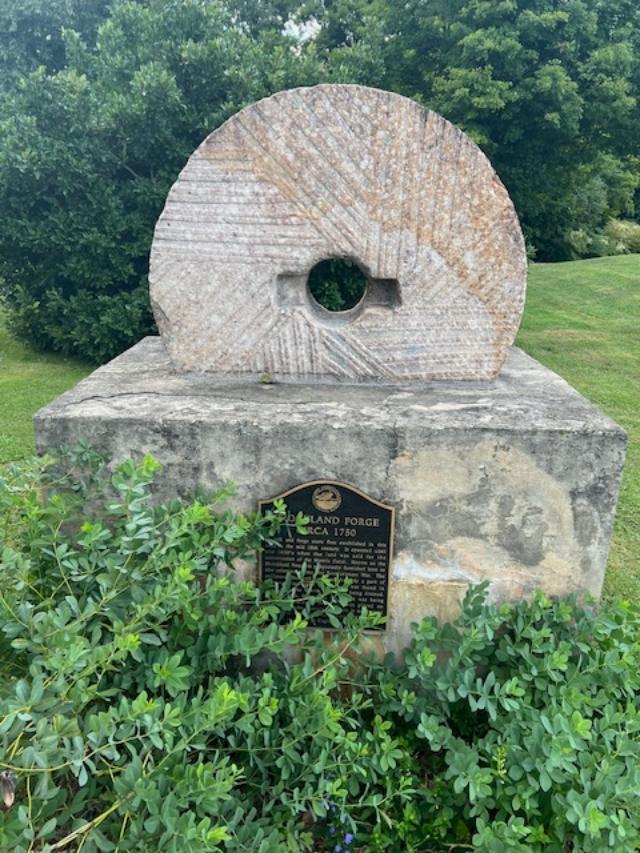
Part of the lock equipment at the lake
The first regular meeting of the newly formed historical society was held in September 1955 at the Ehrlich’s “rathskeller,” which originally served as famed inventor Hudson Maxim’s observatory and ice house and is the small stone tower which still stands off Sharp’s Rock on the west shore of the lake. From the beginning, the goal was to establish a museum for the lake. In the late 1950’s, a group of members had dreams of buying Hudson Maxim’s house shortly before it was torn down. Alas, the plan to purchase the property for $11,000 failed by a single vote of the officers and trustees. In the early 1960’s, an effort was made to buy the old Landing Post Office building, an odd octagonal structure which once sat near the traffic light at Landing. This plan also failed and while the Lake Hopatcong Historical Society was an active organization during these early years, it would take some ten years from the organization’s founding before a suitable building could be located and agreement reached.

Artifacts and mementoes from the museum at the entrance
In the early 1960’s the State of New Jersey moved forward with plans for a new administration building at Hopatcong State Park. The park had been founded on land which was previously owned by the Morris Canal and Banking Company. When the canal was abandoned in the 1920’s, the 98 acres around the Lake Hopatcong dam were set aside as a state park. The Messinger family which had long operated the Morris Canal lock at this site, lived in the stone house just above the lock and dam. With the removal of the canal lock in 1924 and the construction of a modern dam, Rube Messinger became the first dam and park superintendent. He and his family continued to live in the same house. Following World War II, the park began to be more formally developed. Cottages along the lakefront were removed, the beach was greatly expanded, and a new entrance and parking lot were added. The old lock tender’s house was converted into an office for the state park, but as the popularity of the park grew, it became apparent that a larger and more modern building was needed for administration. In July 1963, plans were announced for the construction of a new $125,000 administration building.
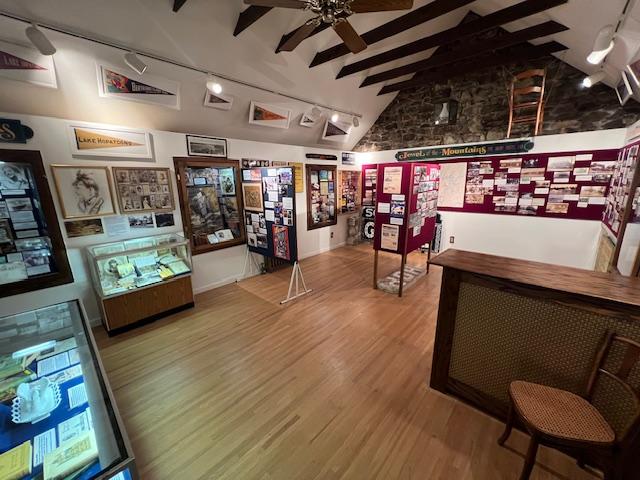
The first floor gallery of famous residents and of the resorts
At first it appeared that the old lock tender’s house would be torn down. The Lake Hopatcong Historical Society swung into action to acquire use of the building for a museum. After a prolonged negotiation, agreement was finally reached on a lease with the State of New Jersey in the spring of 1965. Volunteers from the Lake Hopatcong Historical Society then gave the building the tender loving care it desperately needed and set about collecting memorabilia and artifacts from the community to fill their new building. On September 11, 1965, the dream of a museum at Lake Hopatcong was realized as the public was invited to an Open House celebration. Over the ensuing years, the museum collection has grown through wonderful donations and acquisitions so that it now totals over 11,000 images and several thousand other items of memorabilia.
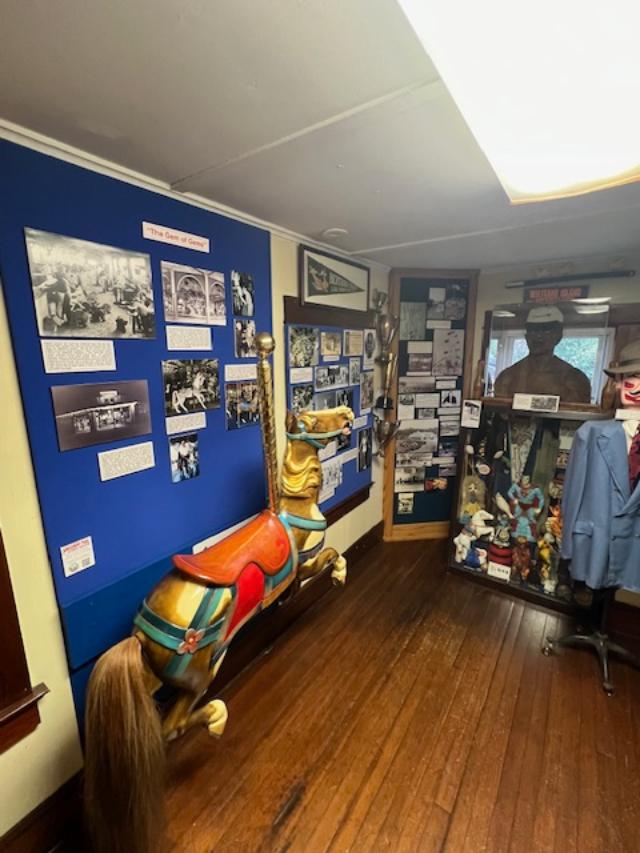
The Bertrand Park display of the amusements on the lake
Before the museum opened, the Lake Hopatcong Historical Society held frequent meetings at local restaurants, hotels, and community rooms. There were also outings and trips for members. Once the museum opened, the organization began hosting many events in their new building. As the organization grew, outside venues were once again needed. In the early 1990’s the museum settled on four major programs per year with featured venues over the years including the Jefferson House, The Arlington, Lake Hopatcong Yacht Club, St. Jude’s Church, and the Palace Theatre. Programs started selling out in the late 1990’s and have continued their popularity since. One thing that has changed is the cost. Dinner programs in the early 1970’s were $6.00 per person!

The lake homes from the park
From the eight individuals who attended the first meeting in August 1955, the society had grown to some 150 members by the time the museum opened. Today, with some 750 members, the organization remains loyal to its mission “to collect, house and preserve artifacts and documents relating to the civil, political, social and general history of Lake Hopatcong and to encourage the education and dissemination of information about Lake Hopatcong’s history.”
Major Archival Topics
(from the museum website)
The Lake Hopatcong Historical Museum maintains collections on the following topics and individuals relating to Lake Hopatcong’s history:
- Ans Decker & Decker Fishing Lures
- Barnes Brothers Boats
- Bertrand Island Park

Bertrand’s Park Amusement area
- Bette Cooper, Miss America 1937
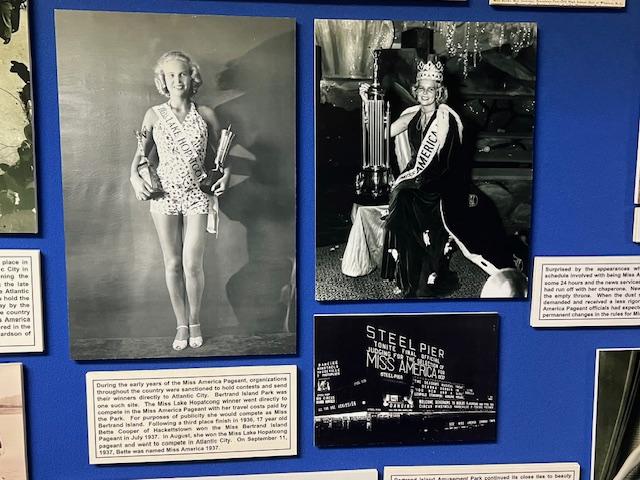
Miss Bette Cooper, Miss Bertrand Island and Miss America 1937
- Breslin Park
- Central Railroad of New Jersey
- Cornelia Gilissen
- Florence Morse Kingsley
- Francis Himpler
- Fred Jacoby & Jacoby Boat Works
- Garret Hobart
- George G. Green
- Hopatcong
- Hudson Maxim
- Ice Houses & Harvesting
- Joe Cook
- Lackawanna Railroad
- Lake Hopatcong Angler & Breeze Newspapers
- Lake Hopatcong Yacht Club

The Lake Hopatcong Yacht Club
- Lakeside Theatre
- Landing
- Lenape

The Lenape Display of life around the lake region
- Loretta Montez
- Lotta Crabtree (Miss Lotta)
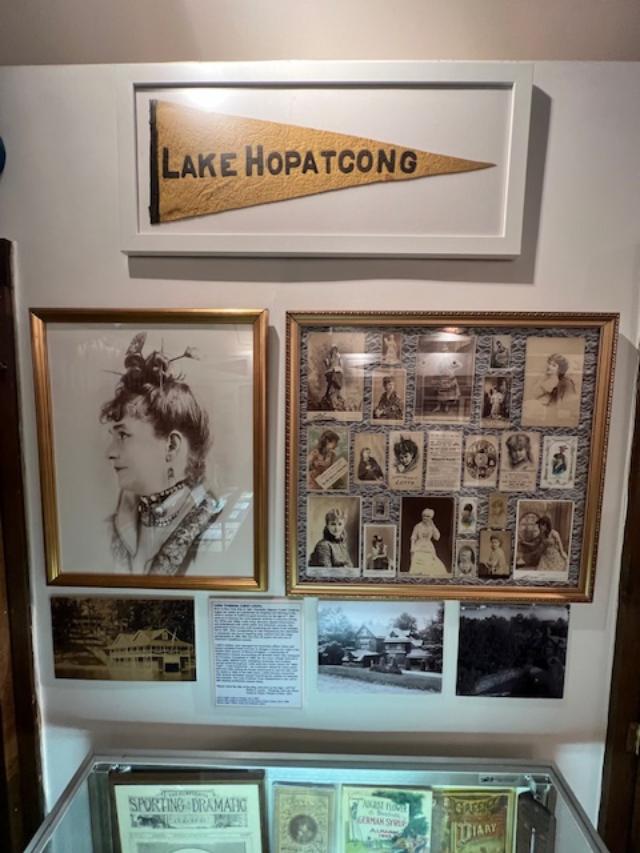
The actress Lola Crabtree display
- Morris Canal
- Morris County Traction Company
- Mount Arlington
- Nolan’s Point
- Nolan’s Point Amusement Park

The Noland’s Point Amusement Park
- Northwood
- Ogden Mine Railroad
- Owen McGiveney
- Palace Theatre, Netcong
- P.J. Monahan, Illustrator
- Rex Beach
- River Styx
- Sam Goodman, Lifeguard
- Shanna Cumming
- Shippenport
- Skate Sailing Association of America Archives
- Thomas Walsh
- William J. Harris, Photographer
- Woodport
The History of the Lake Region:
(from the Museum pamphlet)
Located in a rustic 19th century building which served as a lock tender’s house on the Morris Canal, the Lake Hopatcong Historical Society Museum offers an entertaining and enlightening look at the history of New Jersey’s largest lake.
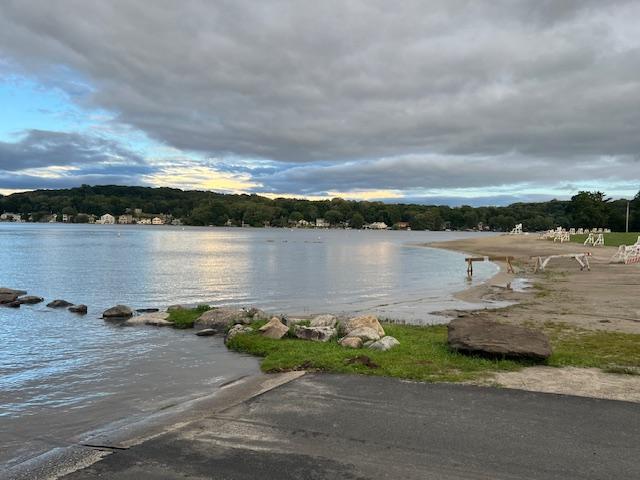
The beach section of this lake park
Step back to a time when the lake was actually two bodies of water and the Lenape lived along the shores. Learn about the building of the famous Morris Canal and the forming of modern day Lake Hopatcong, its main source of water.

Lake Hopatcong
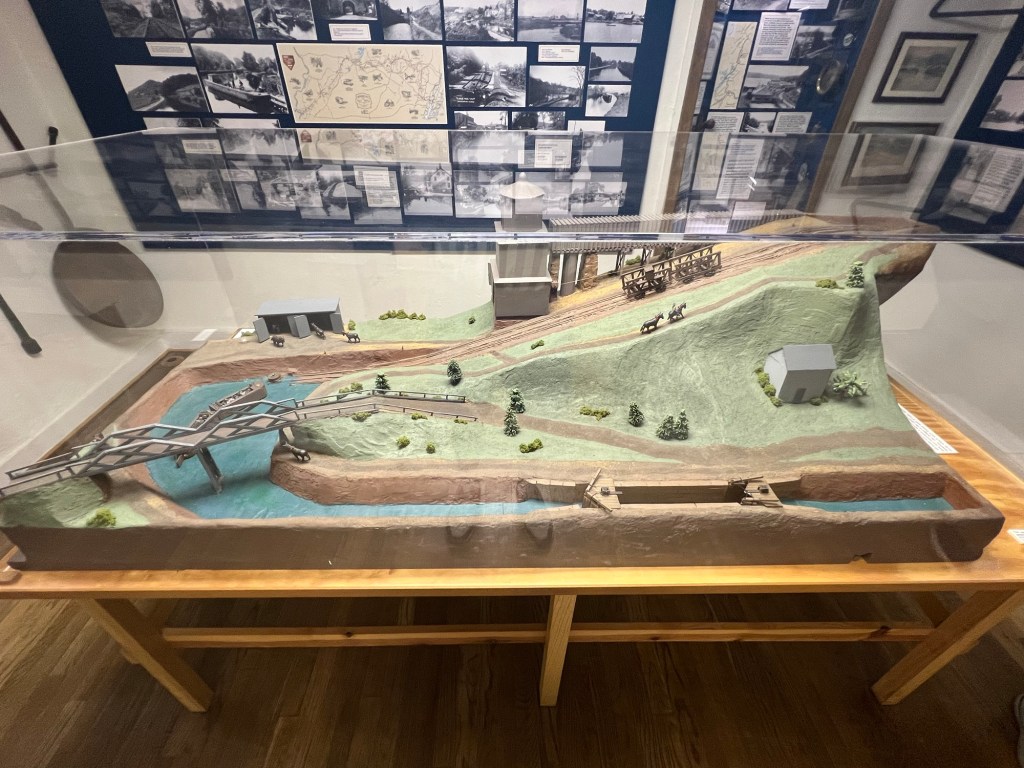
The Morris Canal display at the museum
Travel back to the era when the Lake was a tourist Mecca and some 40 hotels and rooming houses graced its shores.

The hotel display
Relive the days when thousands flocked to Bertrand Island Amusement Park for dancing and ‘nickel nights’.

Bertrand Island Amusement Park
In the age before jets, before air conditioning and before super highways, Lake Hopatcong was a major northeast resort. Within easy reach of large cities to the east, the Lake’s size and setting at over 900 feet above sea level made it the perfect destination. From the 1880’s through the 1930’s, the Lake welcomed thousand each year, including leaders of government, industry and entertainment.
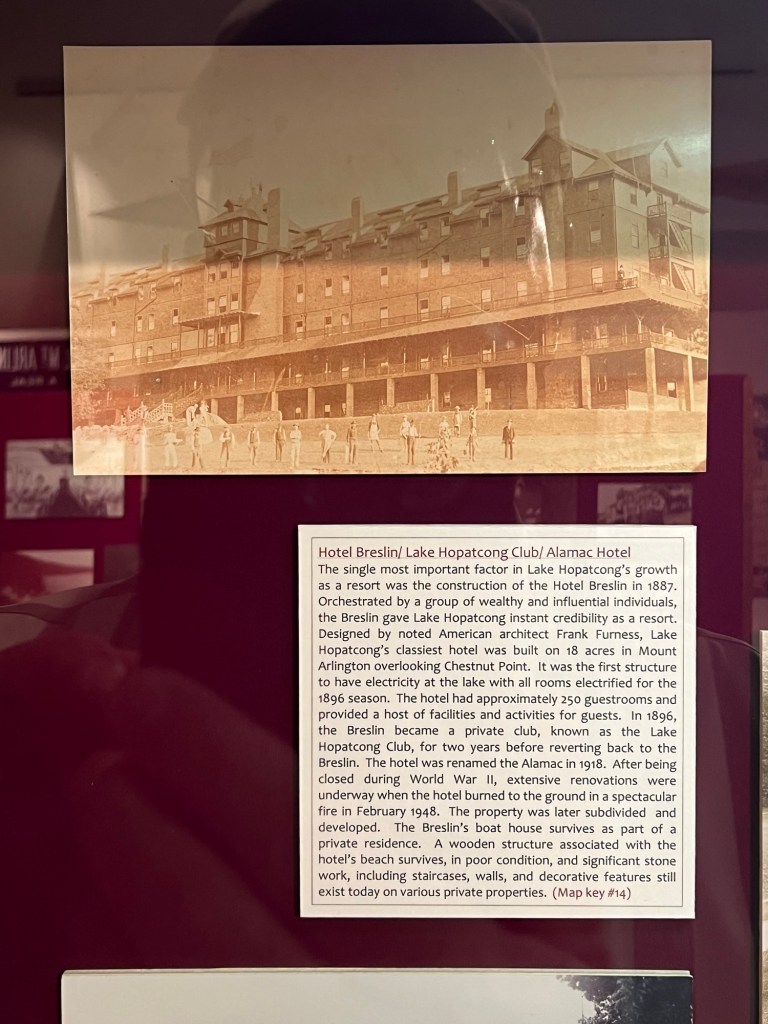
The history of the Hotel Breslin
Low daytime temperatures and cool evenings made Lake Hopatcong a welcome respite from the urban centers to the east. Although other northwestern New Jersey towns were developed as resorts during this time, Lake Hopatcong quickly outdistanced its rivals in popularity.

The popularity of Bertrand Island
While these other resorts shared Lake Hopatcong’s proximity to the urban centers of the East, they could not match the lake’s size or the ease with which to reach it by rail. The museum is located on the grounds of Hopatcong State Park on Landing, New Jersey. The museum’s hours are seasonal so please check the website for hours.

The Morris Canal Lock right by the Museum
 Visiting a Museum: The Unique, Unusual, Obscure and Historical