

Elfreth’s Alley Museum
126 Elfreth’s Alley
Philadelphia, PA 19106
(215) 574-0560
Open: Sunday-Wednesday Closed/Thursday-Saturday 12:00pm-4:00pm
Admission: Adults $3.00/Children 7-12 $2.00/Children under 7 Free
https://www.facebook.com/elfrethsalleymuseum/
My review on TripAdvisor:
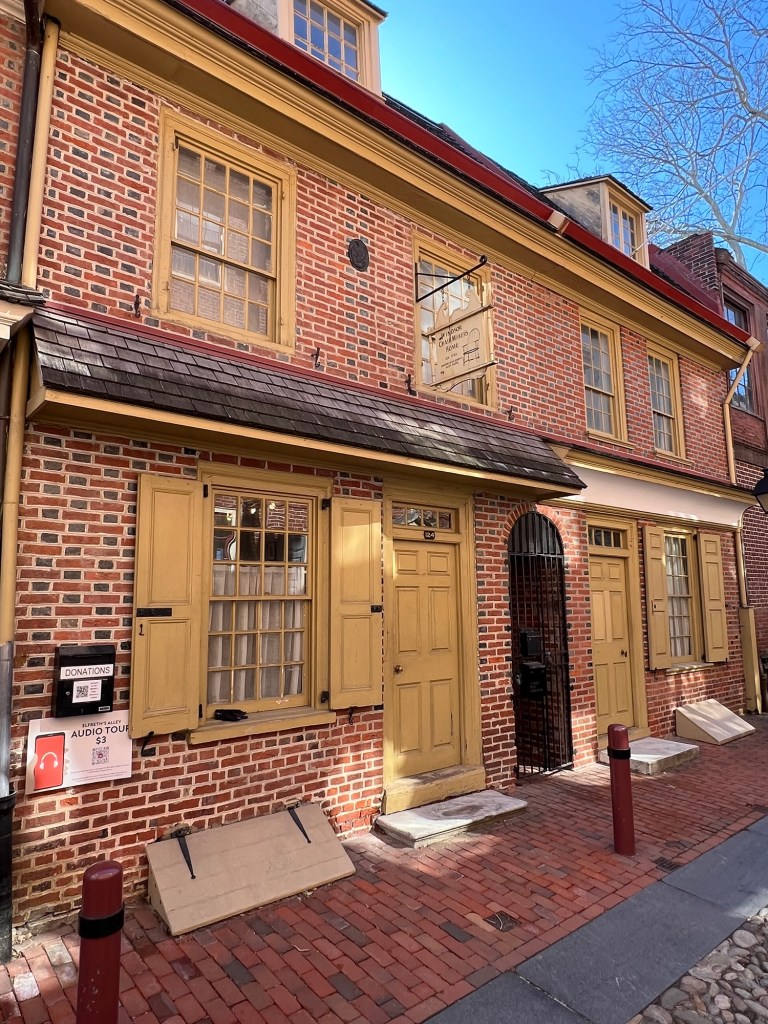
The Elfreth’s Alley Museum at 126 Elfreth’s Alley
I came across this interesting little historical museum when I was touring Elfreth’s Alley in Old Town, Philadelphia. What an interesting look back at the merchant trade class of the 18th century. It really showed how the average worker used both their home as a business and as a home.
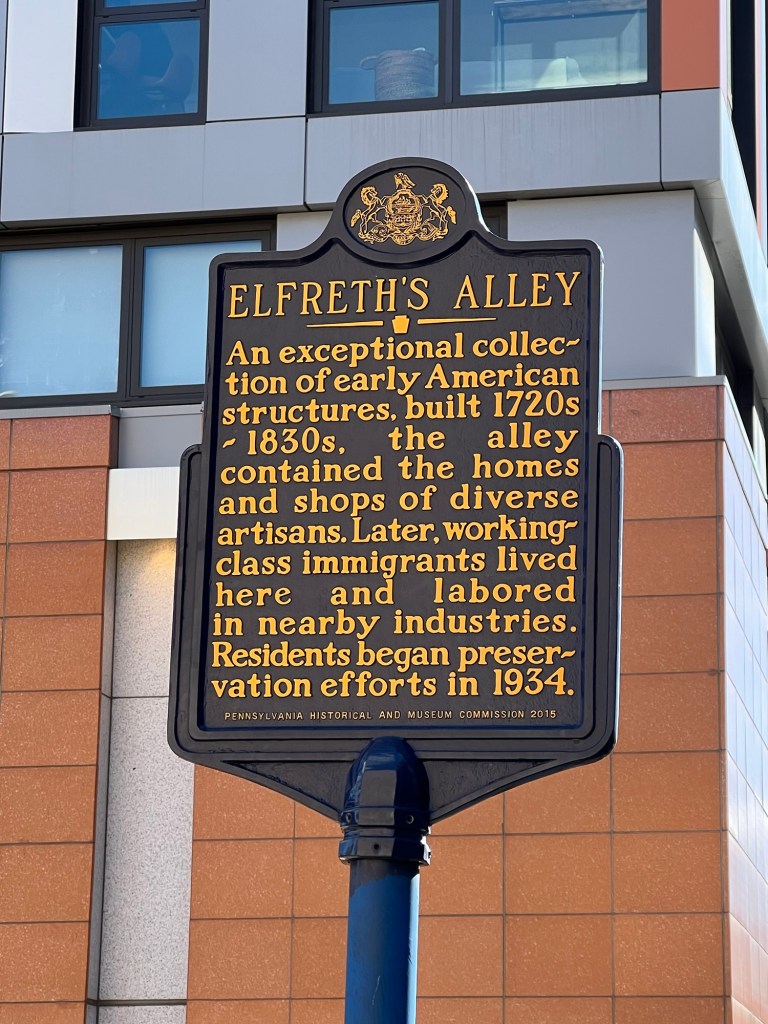
The historic sign for Elfreth’s Alley
The home had been former business of a pair of dressmakers who used the front parlor as their store and showroom, the side room used as the kitchen, the upstairs room was the living quarters for a very large family (I believe that the family had eight children according to the tour guide) and a nice sized garden in the back of the home.

The front work and show room
The inside display of the museum shows the dress making profession of the first two owners of the house and their work with the Philadelphia clients they catered to in the Upper Middle and Upper Classes.

The story of the dress business

The type of commissions the ladies would get from the Upper Middle Class to Wealthy women from the City
The front rooms were used as the workplace showroom where the merchants would greet their customers, decide on the patterns and make and then conduct their business. When they were done for the day, they just closed up shop. What I thought was interesting about the two business owners is that they took most of their meals out at the local pub. Time as dressmakers left them little time to cook so meals had to be eaten out.
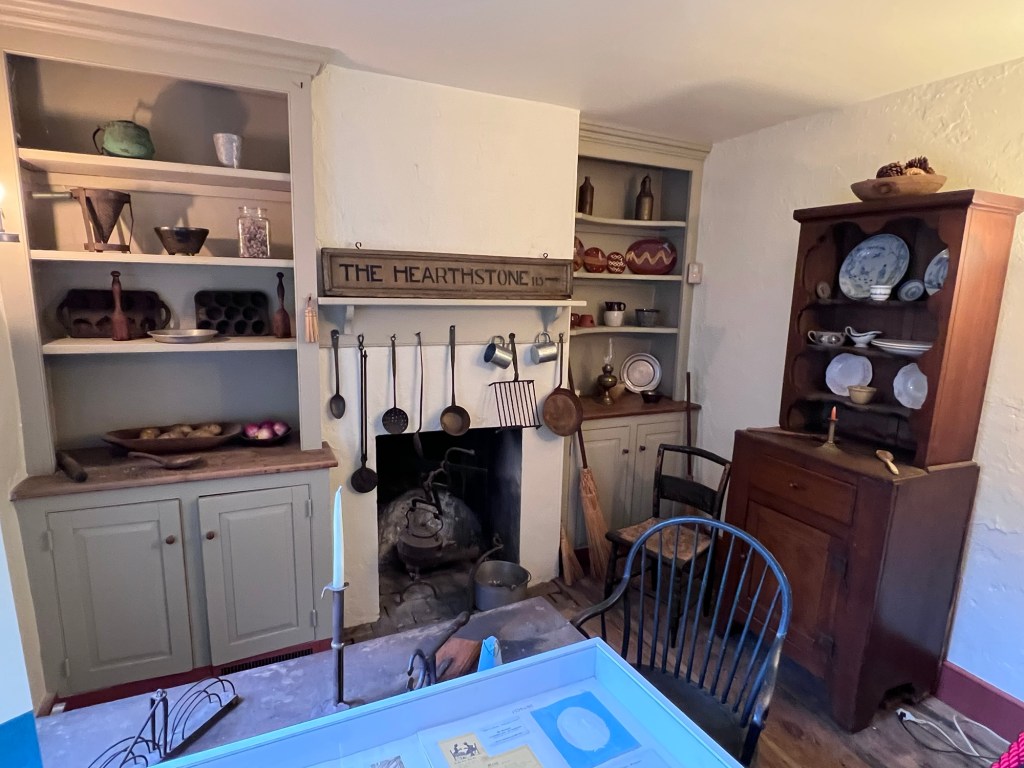
Later on in the home’s history, a kitchen would be added on later by a German businessman who owned the house
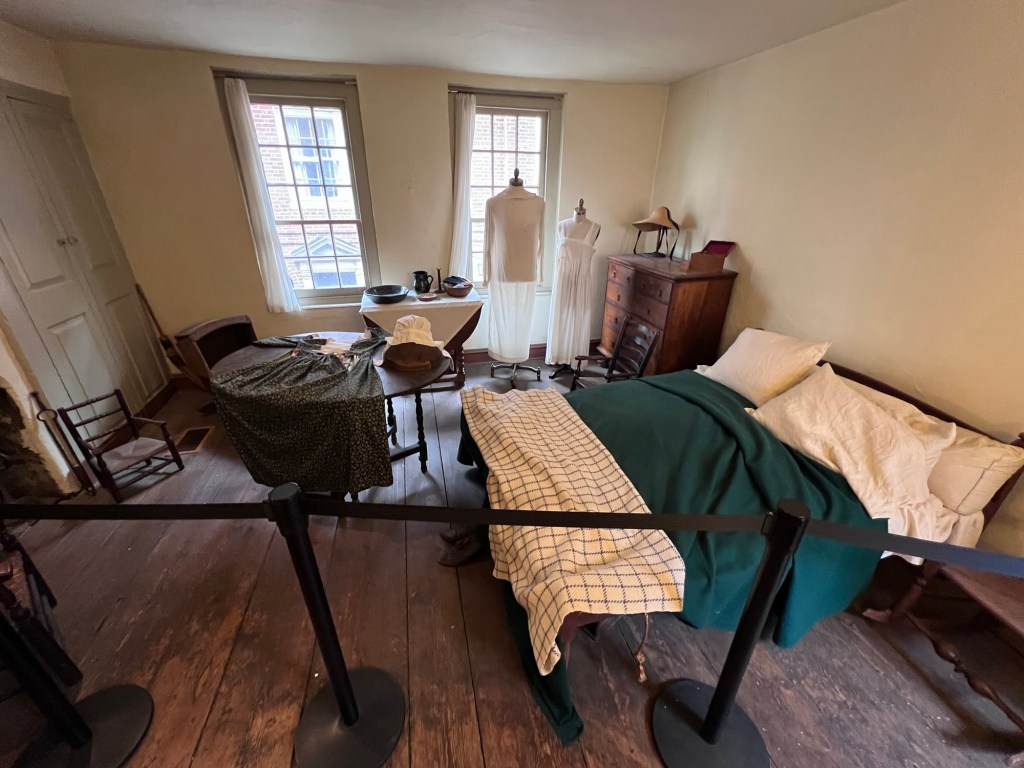
The upstairs bedrooms
When you climb the narrow stairs to the second floor, it leads to the loft living space. When I heard how many people lived at the house, I could not imagine that today. Children today pretty much have their own rooms but these people lived on top of one another.

It was such a small space for a family of ten. Then you had to walk down another narrow staircase to come back to the first floor.
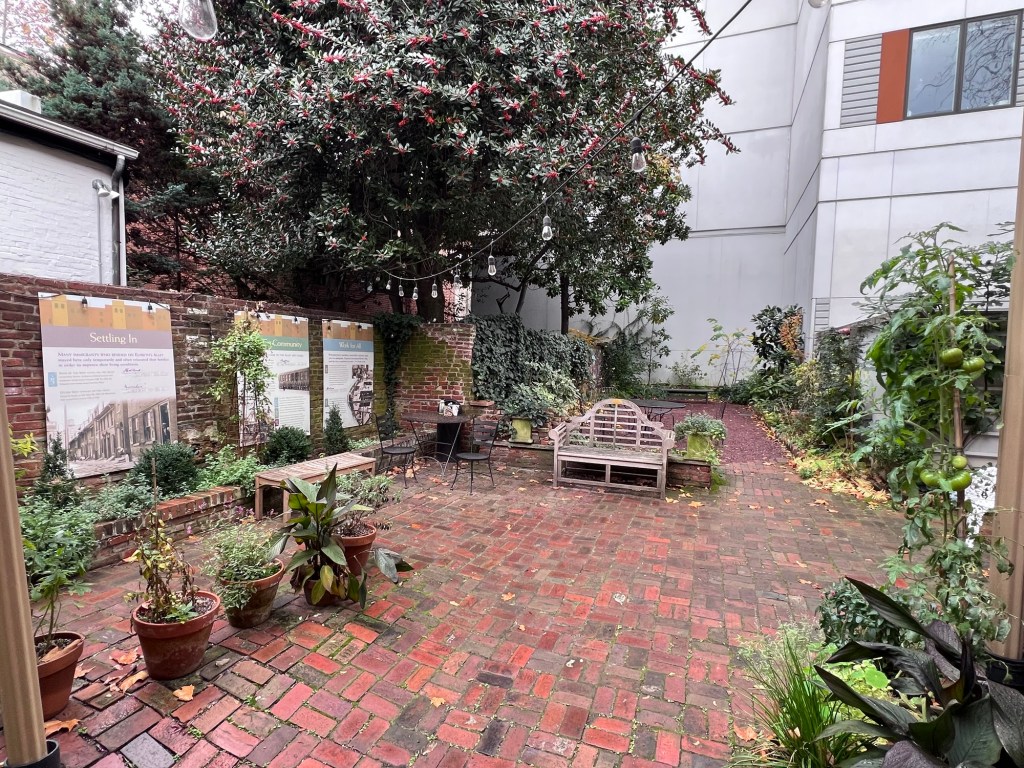
The backyard garden was really nice with interesting plantings, a nice sized garden of flowers and benches to cool under on a hot day. Much of the backyard was still in bloom when I visited in November of 2025.
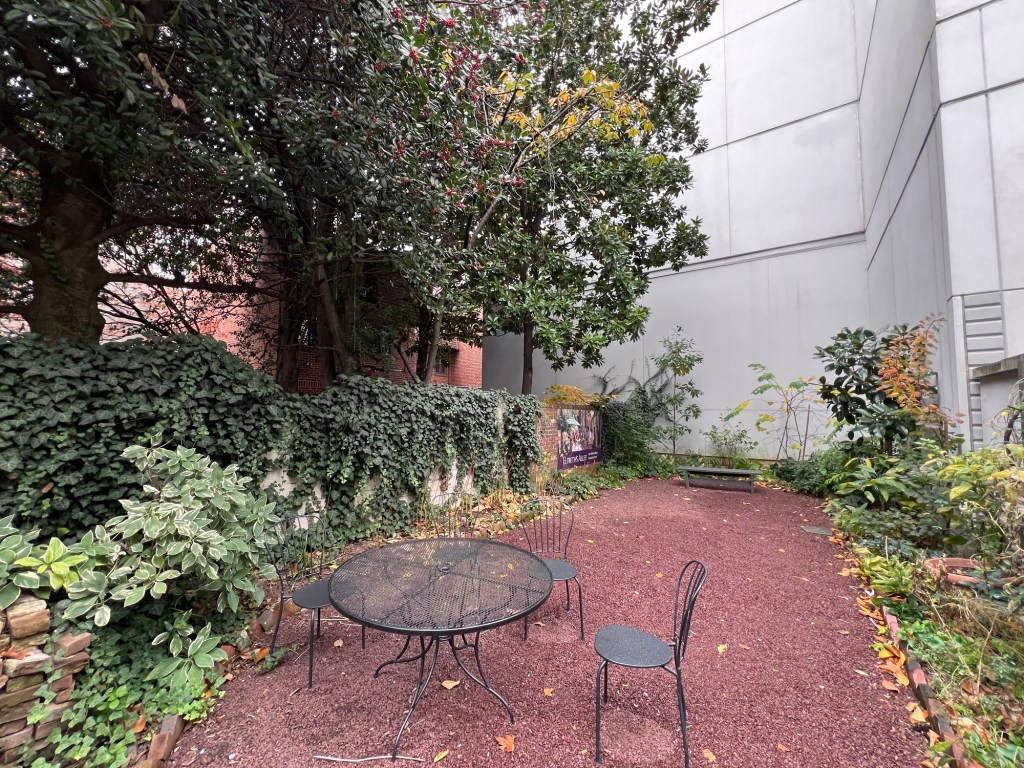
The backyard plantings

The seating area in the courtyard

The gardens behind the home

The plants in bloom in the fall
I am not sure if the gardens were historically accurate but it was a nice place to relax on a hot day. It is worth it to visit this small home to see how another generation worked and lived under very different conditions (Elfreth’s Alley Museum self-guided tour).
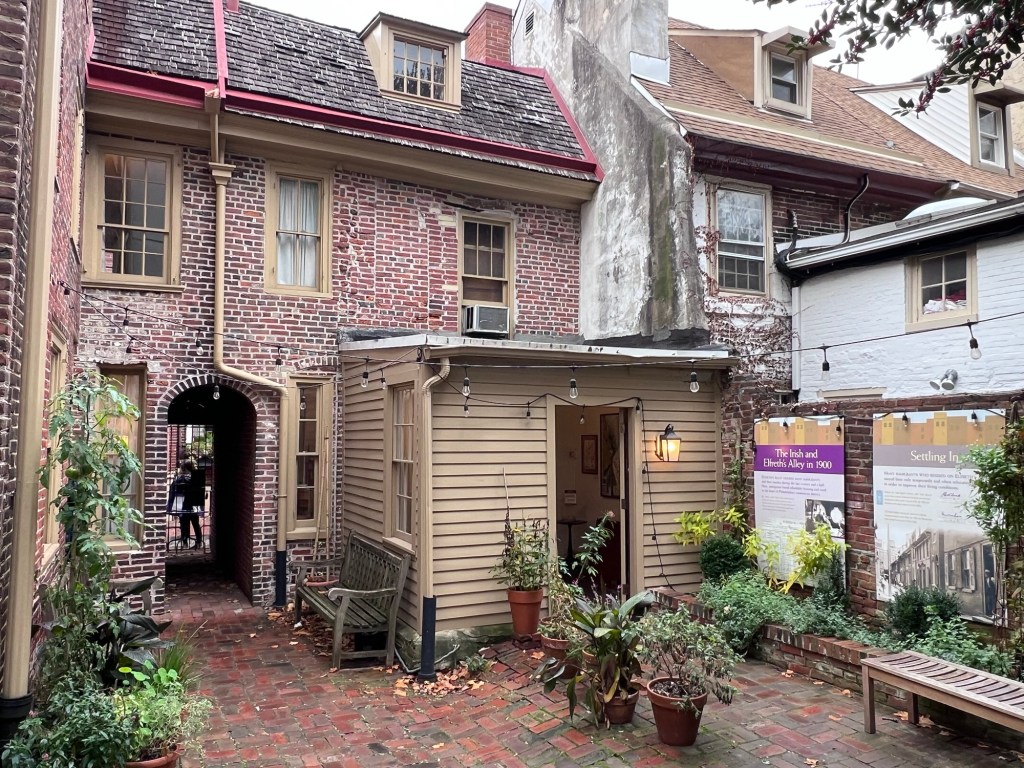
The back gardens

Don’t miss the Gift Shop on the way out
The History of Elfreth’s Alley Museum:
Elfreth’s Alley Museum is located at 124-126 Elfreth’s Alley, preserves the 18th Century home of a pair of dressmakers. Restored to its appearance in the Colonial era, exhibits the house and tour guides interpret the life of the house and alley’s residents in that era. There are 32 houses on the street that were built between 1703 to 1836 (Wiki/Museum site).

The History of Elfreth’s Alley:
Elfreth’s Alley is named after Jeremiah Elfreth, an 18th century blacksmith and property owner. Among the alley’s residents were tradesmen and their families. Their trades included shipwrights, silver and pewter smiths, glassblowers and furniture builders. In the 1770’s, one third of the households were headed by women (Wiki).
The Georgian and Federal style houses and cobblestone pavement of the alley were common in Philadelphia during this time. The houses are typically small and many are uniquely Philadelphian Trinity houses. In the late 19th and early 20th centuries, industry began to change the street with a stove factory being built in 1868. Soon it was followed by more factories that surrounded the area (Wiki).
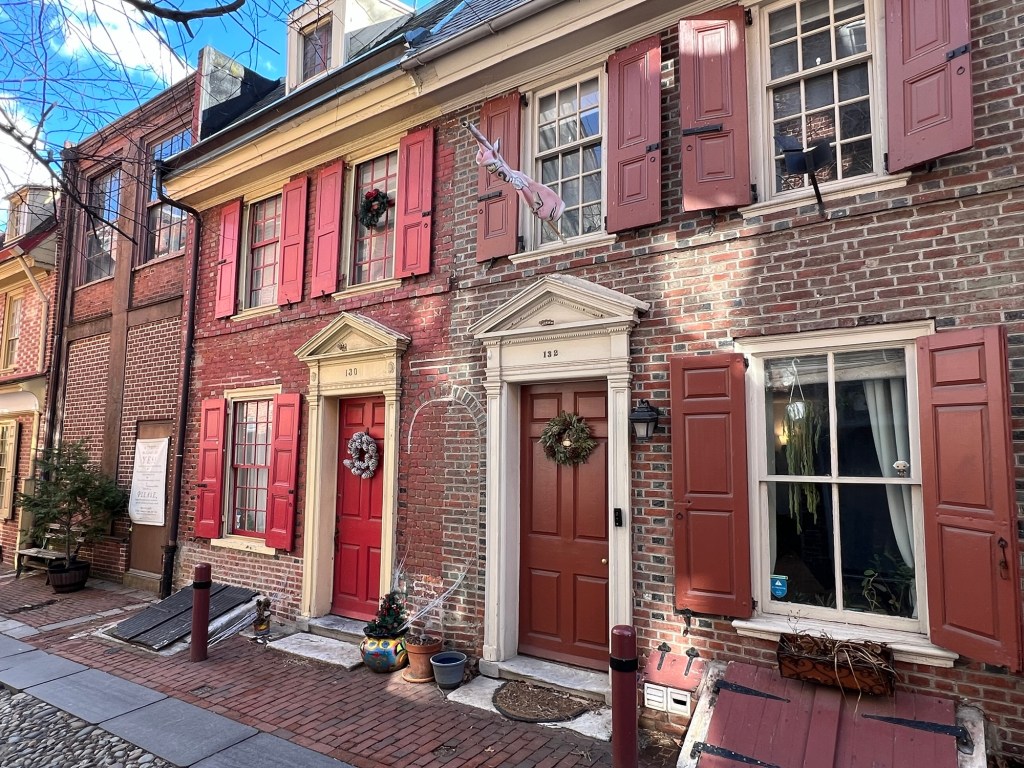
Elfreth’s Alley Museum site and homes
In 1934, the Elfreth’s Ally Association (EAA) was founded to preserve the alley’s historic structures while interpreting the streets history. The EAA helped save the street from demolition and also lobbied the City to restore the alley’s name to Elfreth’s Alley. The area is an example of urban 18th and 19th century architecture and is part of the “Old Town” neighborhood of Philadelphia (Wiki).
The neighborhood hosts many events so please check their website for the dates and events.
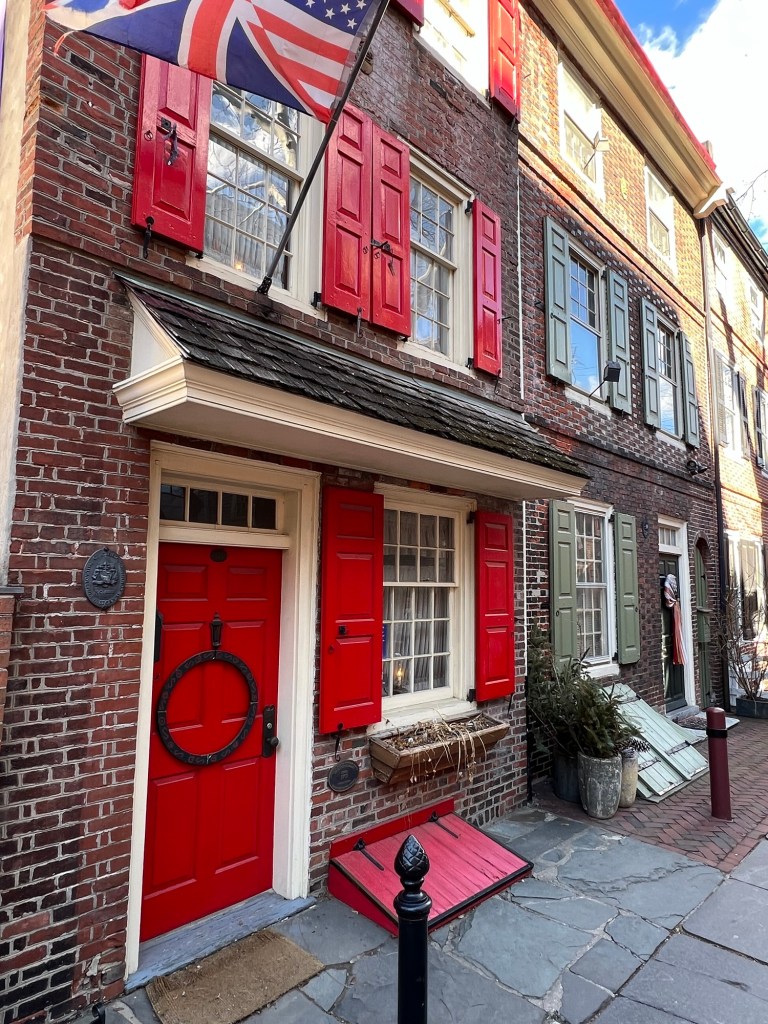
Homes in Elfreth’s Alley

Homes in Elfreth’s Alley
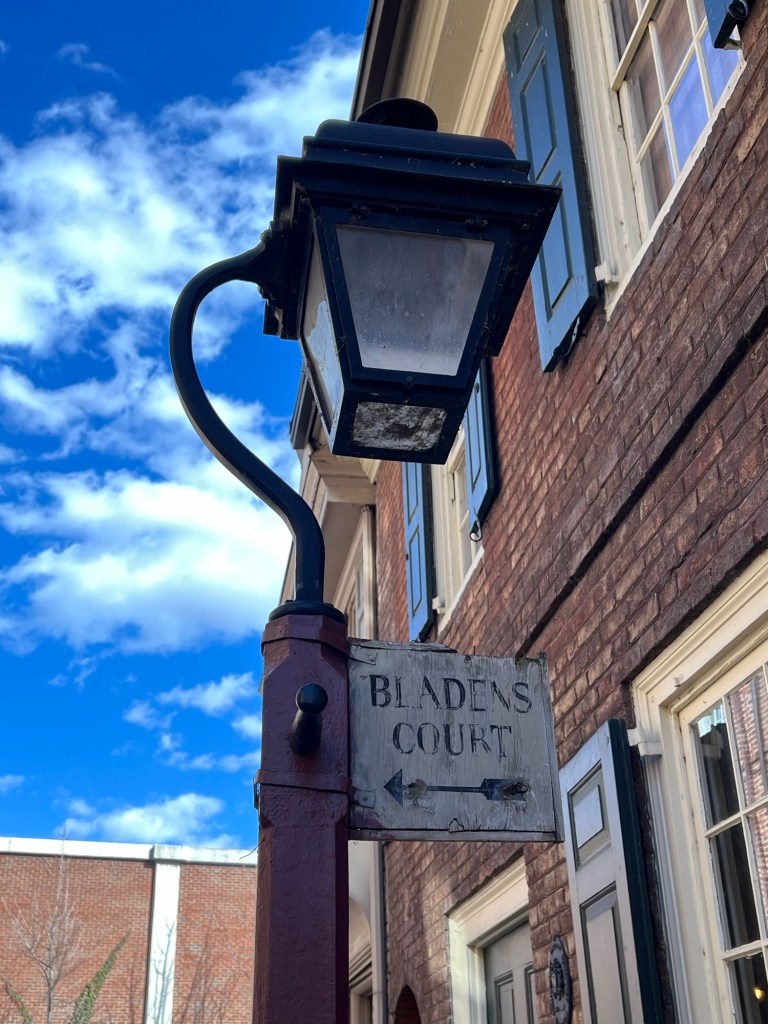
The sign for Bladen’s Court

The entrance to Bladens Court

Bladen’s Court

The historic sign for Bladen’s Court
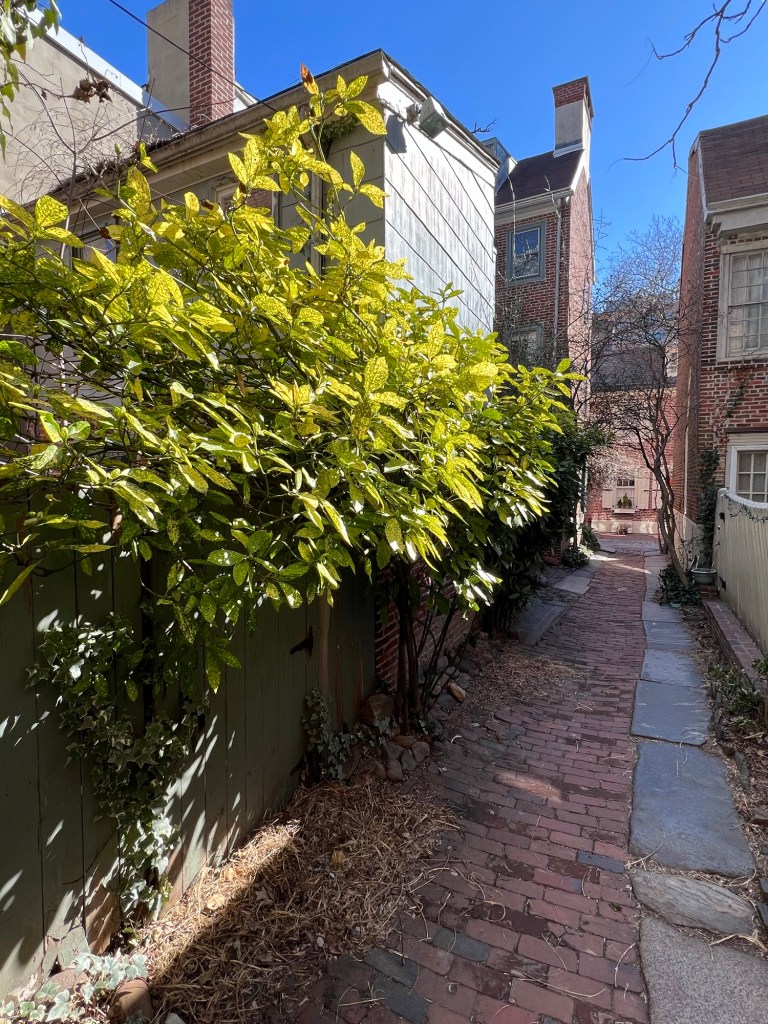
The back part of Bladen’s Court

The back part of Bladen’s Court
 Visiting a Museum: The Unique, Unusual, Obscure and Historical