Tag: Historic Cemeteries of Morris County NJ

Orchard Street Cemetery                                            44 Chestnut Street                                                    Dover, NJ 07801

Orchard Street Cemetery 44 Chestnut Street Dover, NJ 07801

Orchard Street Cemetery

44 Chestnut Street

Dover, NJ 07801

https://www.orchardstreetgatehouse.org/history

https://www.facebook.com/p/Orchard-Street-Cemetery-100057217459315/

Open: Sunday-Saturday Seasonal Check the website for the hours

My review on TripAdvisor:

https://www.tripadvisor.com/ShowUserReviews-g46397-d28113226-r964248261-Orchard_Street_Cemetery-Dover_Morris_County_New_Jersey.html?m=19905

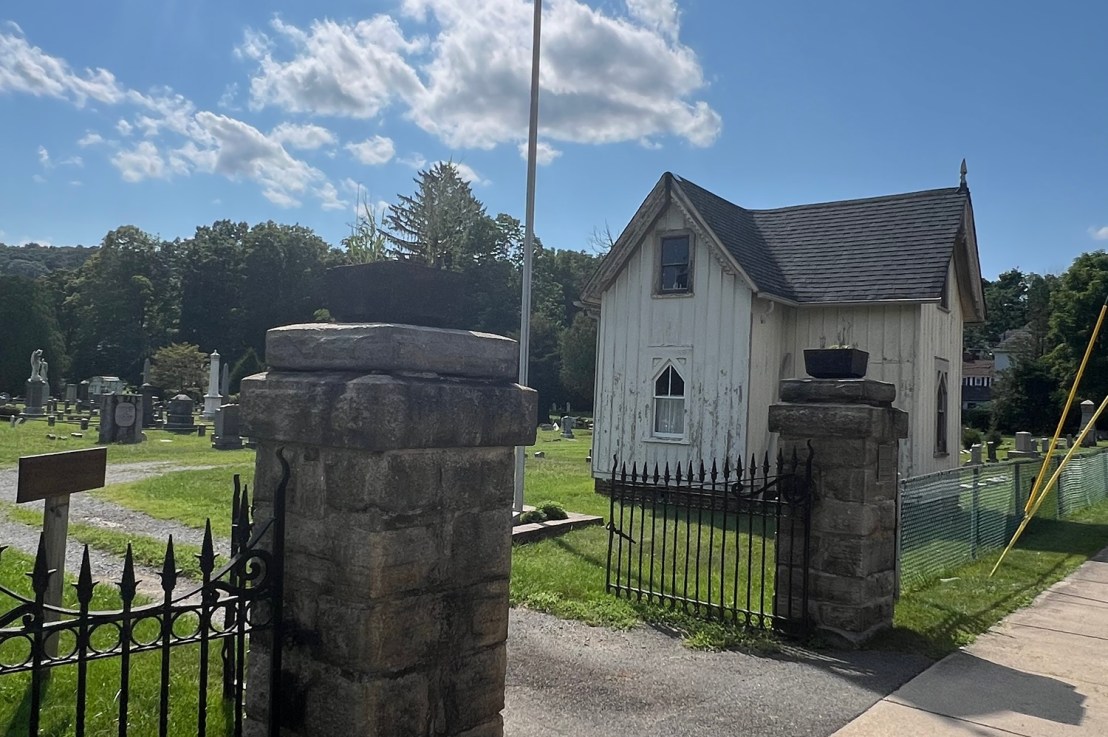
The entrance of the Orchard Street Cemetery and Gatehouse

The Orchard Street Cemetery in Dover, Morris County,  NJ was originally founded in 1851 when a group of men determined that a cemetery was needed in the Village of Dover, then part of Randolph Township.  One member of the group, William Young, the first baker in Dover who had his store on Dickerson Street traded his “garden plot” at the end of Orchard Street to this new endeavor in return for several building lots on Orchard Street.  The plot transferred from William Young to the Association was approximately one acre in size (Orchard Street Gatehouse Historical Society website).

The Gatehouse

The first thing you notice when you enter the cemetery is the Gatehouse. It needs a lot of work. Also it was not manned. Funny, the building looks like it belongs in a cemetery.
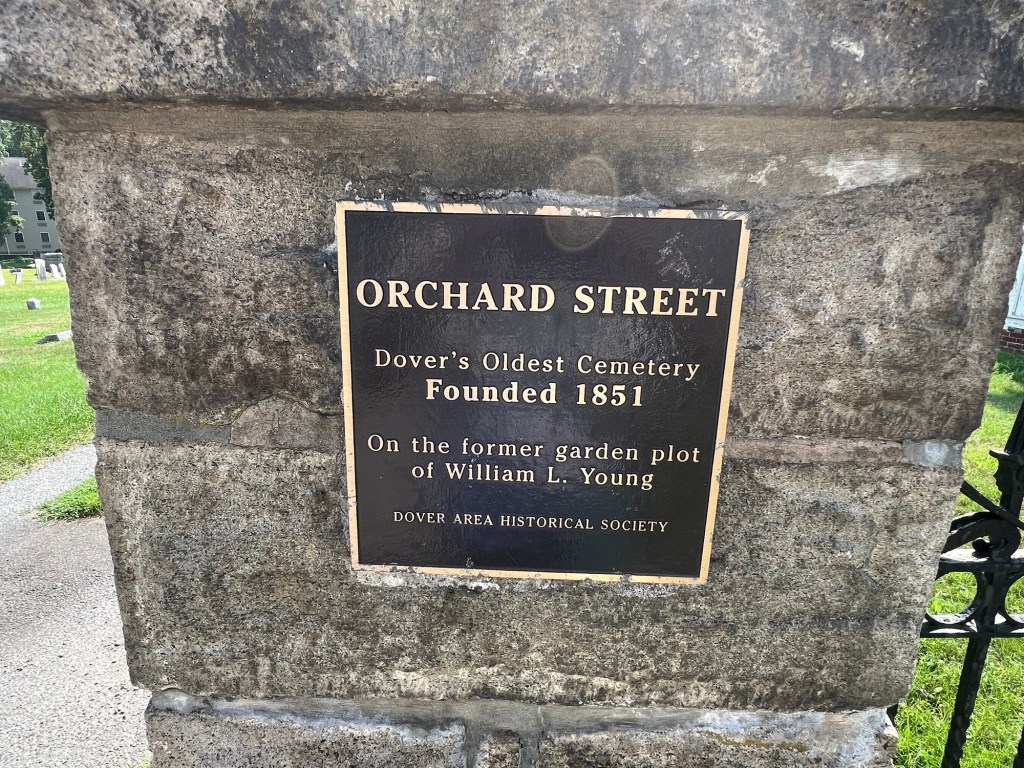
The historic plaque for the cemetery

The historic sign for the cemetery

The Cemetery is the final resting place of more than 3500 men, women, and children from the greater Dover area, primarily Dover, Randolph, Wharton, and Rockaway.  There are over 125 veterans from the War of 1812, the Civil War, The Indian Wars, the Spanish-American War, World War I, World War II, and Vietnam as well as well as peacetime veterans.  There are many of the founders of Dover, Wharton, and Rockaway, civic and industrial leaders, and ordinary citizens of the area.  Unfortunately, many burial records have been lost through the passage of time, fire, etc. so a full accounting of the burials will most likely never be realized as many people were buried without a stone memorial through choice or economic reasons (Orchard Street Gatehouse Historical Society website).

The entrance to the cemetery by the gate

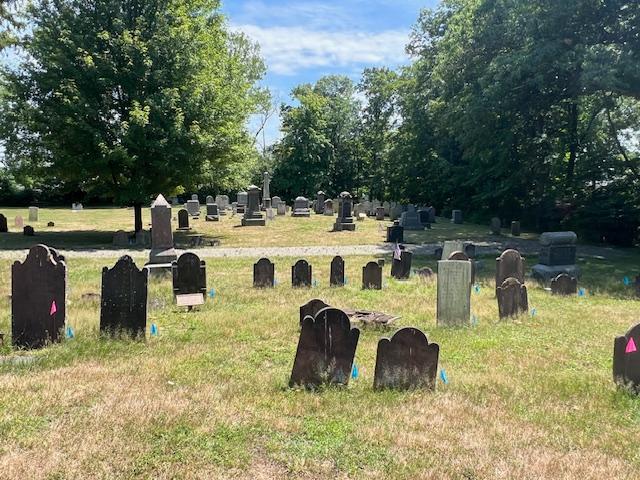
When I visited the Orchard Street Cemetery, I noticed that most of the cemetery was designed into family plots, most gated or sectioned off. In each plot, you can see the generations of family members. There is a distinct change on the tombstones of family member marking the graves. Either is was prosperity of the family or just a sign of the times when people died where you see the changes in the tombstones and what they look like.

At least the families are housed together. Each of the family plots are marked by a gate or just a series of tombstones. Each of these family plots deserve respect and please remember this as you walk around the cemetery to pay your respects. There is a very positive feel to this cemetery.
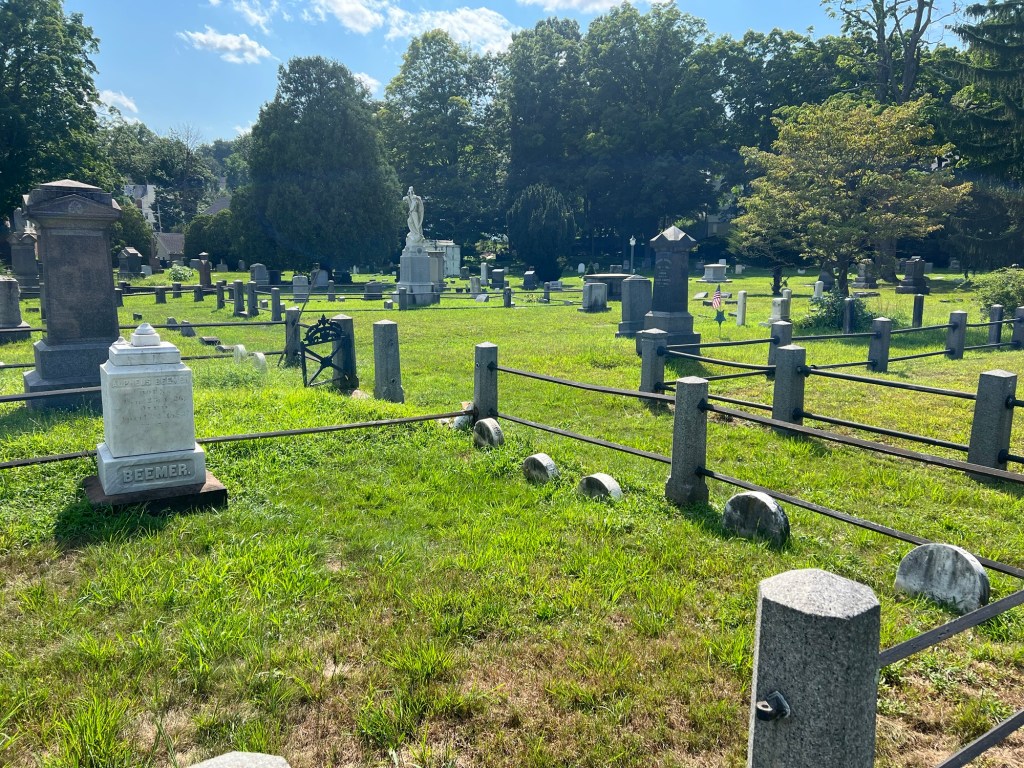
I noticed the cemetery was broken into family plots separated by fencing
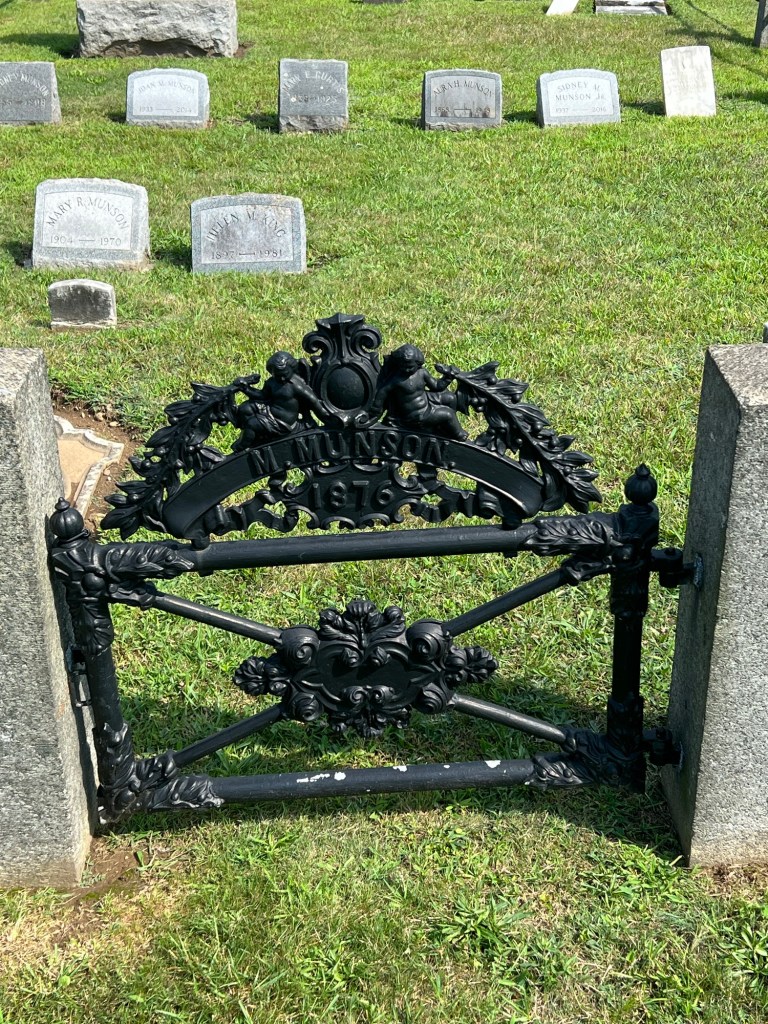
The Munson family plot

The Munson family plot

The Moller family plot
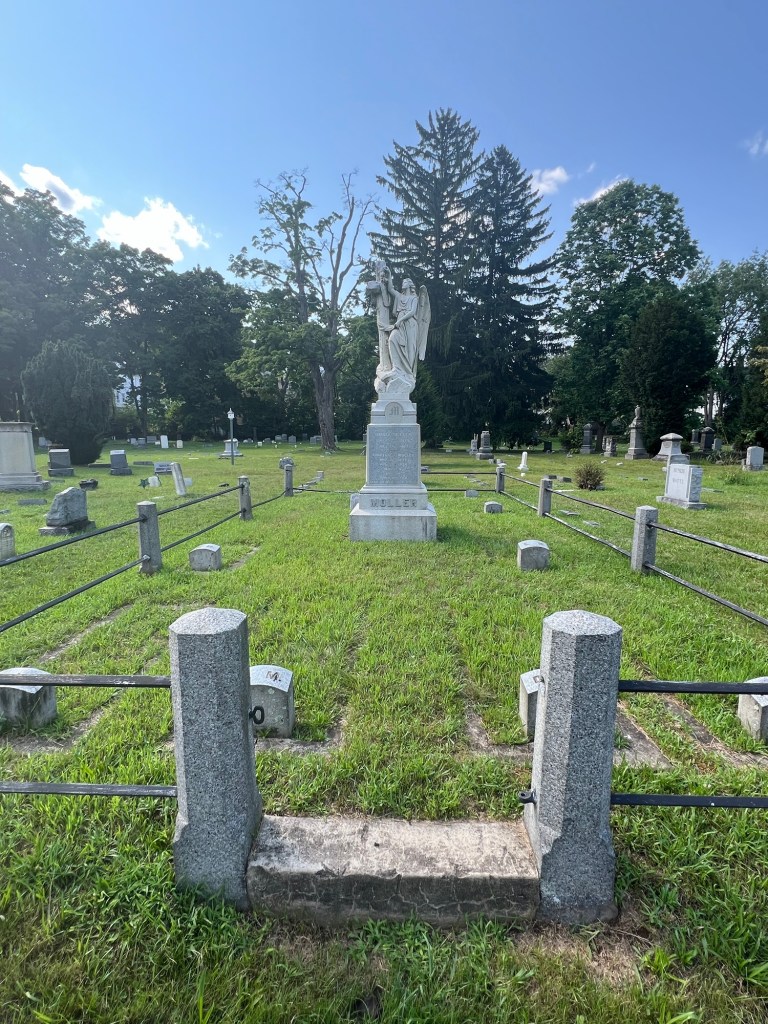
The Moller family plot
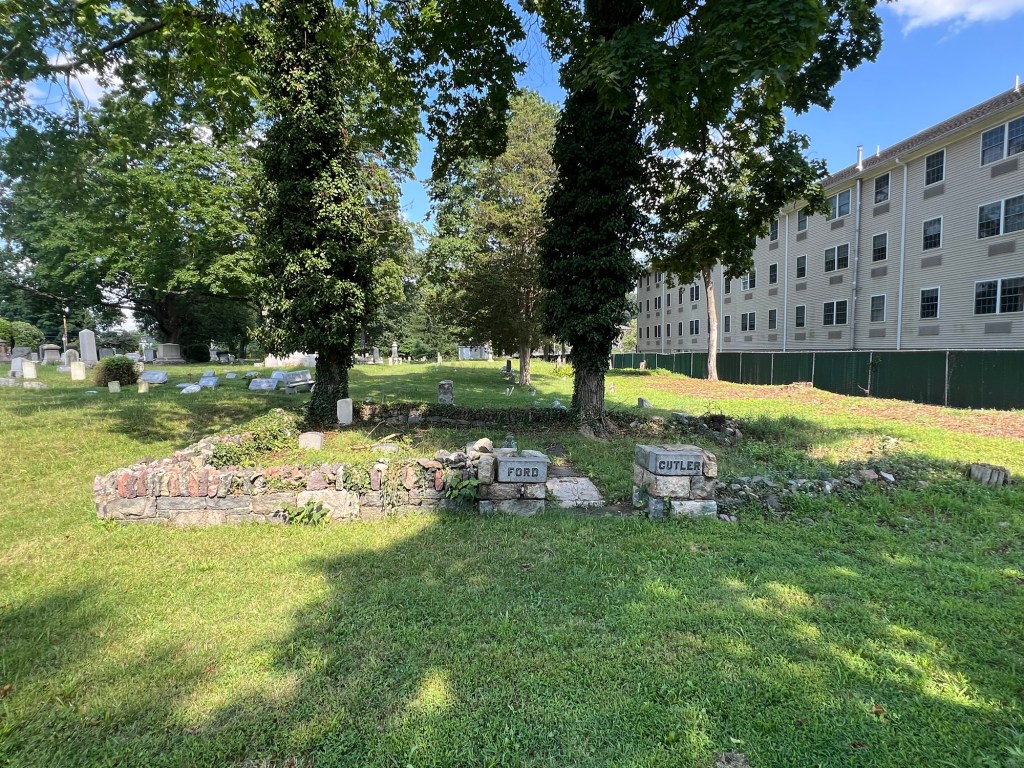
The Ford family plot
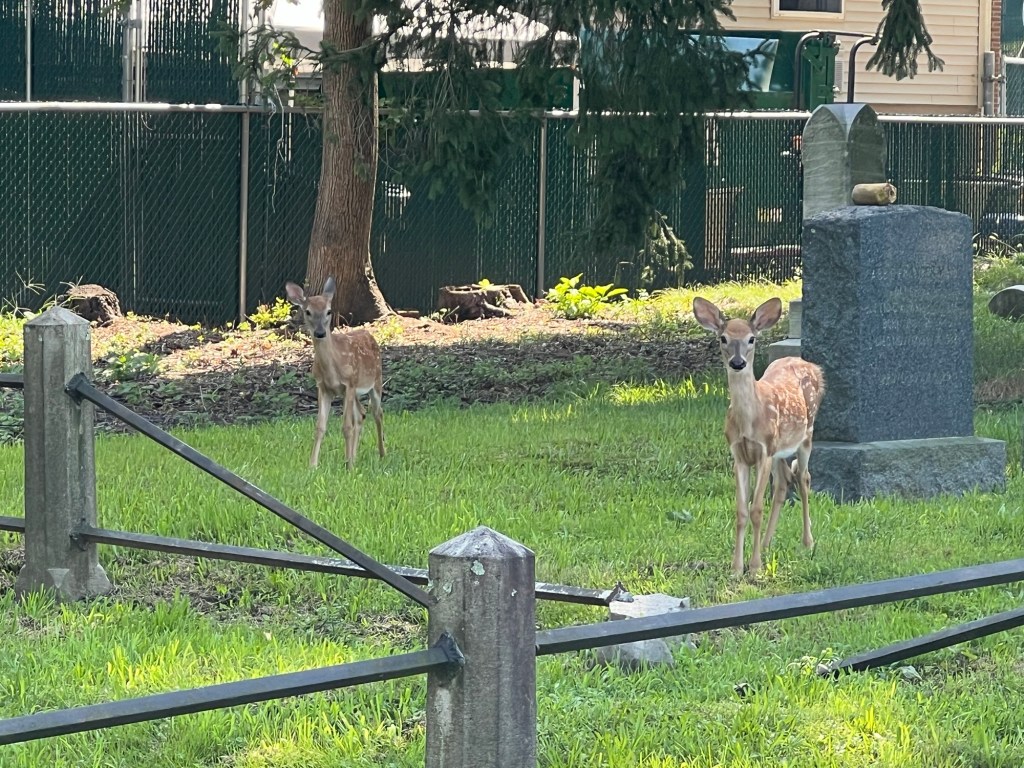
Deer watching me at the cemetery
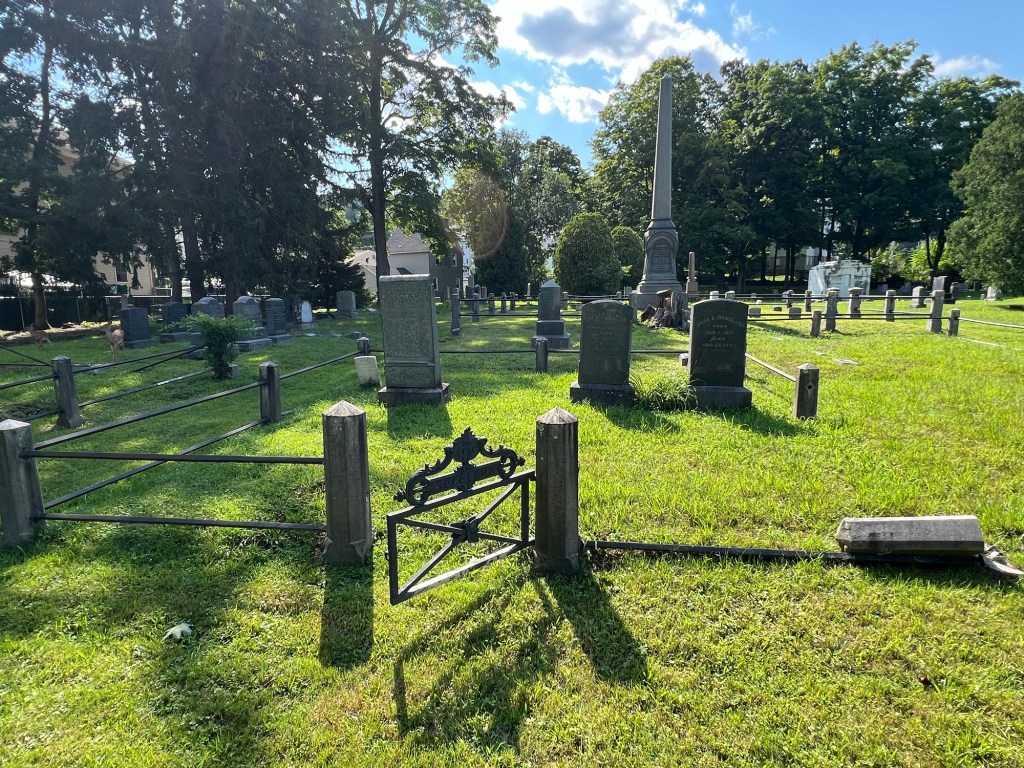
The Hoagman Family plot

The Dickerson family plot

I had just come from the Bridget Smith House in Mine Hill and discovered that the Dickerson’s were once a prominent mining family who owned a large mansion just outside of Mine Hill.

The grave of Mahlon Dickerson

I found out from a member of the Cemetery Society that this is not the grave of the former Governor of New Jersey but a distant relative.

The Orchard Street Cemetery from the back of the cemetery
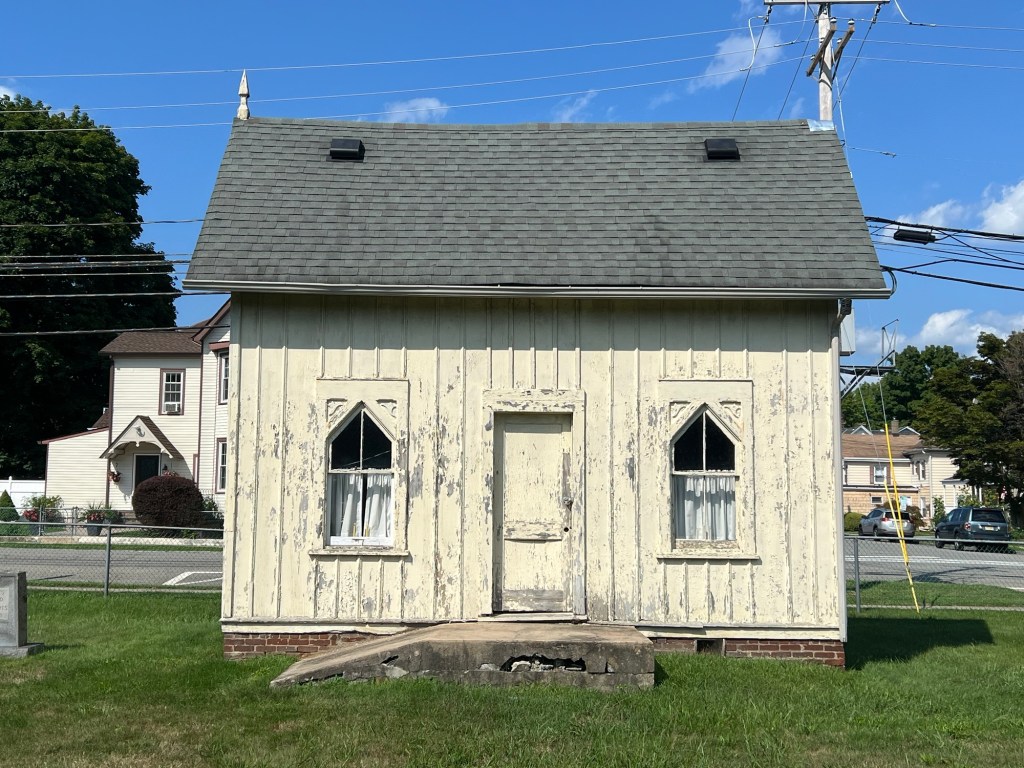
The Gatehouse at the front of the cemetery

The cemetery is an interesting look of how burying our dead has changed over the last 100 years.

The History of the Cemetery:

(this comes from the OrchardStreetCemeteryGatehouse.org website)

The Orchard Street Cemetery

The Orchard Street Cemetery in Dover, Morris County,  NJ was originally founded in 1851 when a group of men determined that a cemetery was needed in the Village of Dover, then part of Randolph Township.  One member of the group, William Young, the first baker in Dover who had his store on Dickerson Street traded his “garden plot” at the end of Orchard Street to this new endeavor in return for several building lots on Orchard Street.  The plot transferred from William Young to the Association was approximately one acre in size.

The inside of the cemetery

On September 11, 1854 following the passage of the “Rural Cemetery Act of 1854 by the New Jersey Legislature, the Dover Cemetery Association was founded during a meeting in the Village of Dover held at School House District No. 1.  The location of this school was to the east of Morris Street and to the south of the railroad tracks.  This puts it on the opposite side of the railroad tracks from the old Stone Academy.  The papers of incorporation were dated September 14, 1859 and duly registered with the County of Morris.
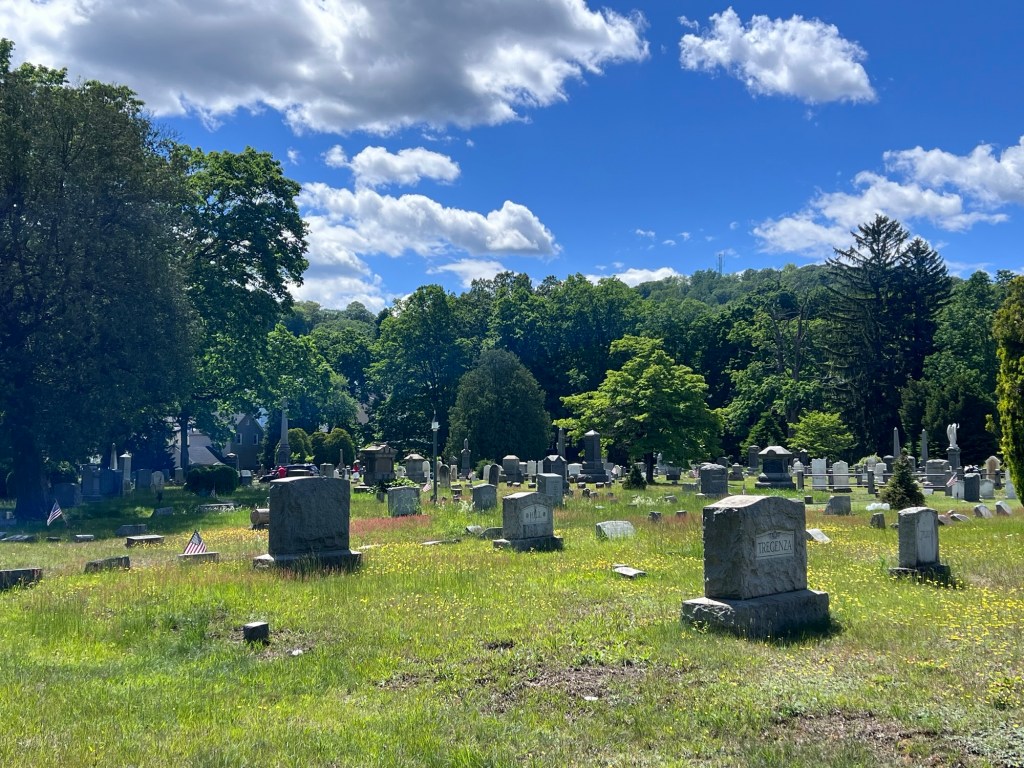
The inside of the cemetery

A deed dated February 22, 1855 was signed by Jabez Mills and his wife Hannah selling approximately 4.5 acres of their property to the Trustees of the Dover Cemetery Association.  This deed was received and recorded on February 27, 1855 by the County of Morris.  The acquisition of this property brought the cemetery to its final boundaries and size of 5.4 acres.  It is believed based on gravestones in the cemetery that the entire property was being used as a cemetery prior to the date of the recording of the deed.  Further, some sections of the cemetery property may have been used prior to 1851 due to gravestones that predate the founding of the cemetery.  It is also known that there was an earlier Dover cemetery, the Morris Street Burying Yard located south of the train tracks along Morris Street. 

The Munson family plot

It is believed that a number of the remains that were interred there were disinterred and moved to the Orchard Street Cemetery.  Many stones in Orchard Street predate the cemetery founding and it can be inferred that either there were burials in the cemetery confines before it was founded or these are reinterments from the Morris Street Burial Yard, or both.  In addition, there was later a small cemetery on Grant Street next to what was the Swedish Methodist Church.  Around the turn of the 1900’s, this cemetery was closed and again, the remains within were disinterred and many were removed to Orchard Street.

The entrance to the historic Orchard Street Cemetery

The old Gate House at the entrance of the cemetery
Hanover Heritage Association/Whippany Burying Yard                                                                        325 Route 10 East                                     Whippany, NJ 07054

Hanover Heritage Association/Whippany Burying Yard 325 Route 10 East Whippany, NJ 07054

Hanover Heritage Association/Whippany Burying Yard

325 Route 10 East

Whippany, NJ 07054

https://www.hanovertownship.com/1396/Whippany-Burying-Yard

https://whippany.net/whippany-burying-yard

(973) 539-5355

Open: Check the website/Cemetery Hours

Admission: Check the website

My review on TripAdvisor:

https://www.tripadvisor.com/Attraction_Review-g46925-d23534409-Reviews-The_Whippany_Burying_Yard-Whippany_Morris_County_New_Jersey.html

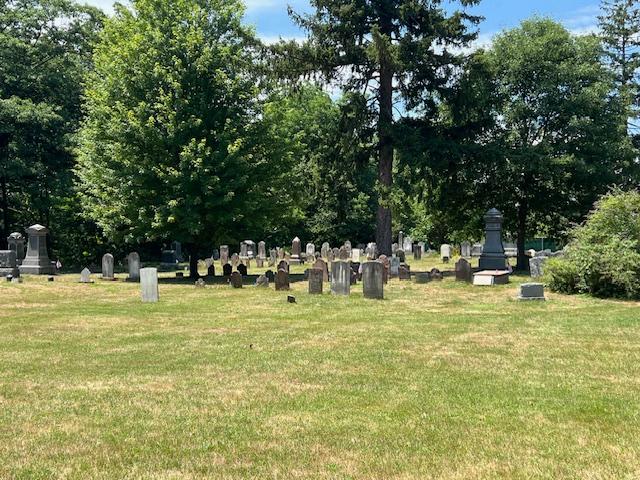
The burial ground from a distance

On my last stop of touring Historic Morris County for the “Pathways for History ” event, I visited the Whippany Burial Yard at 325 Route 10 in Whippany.

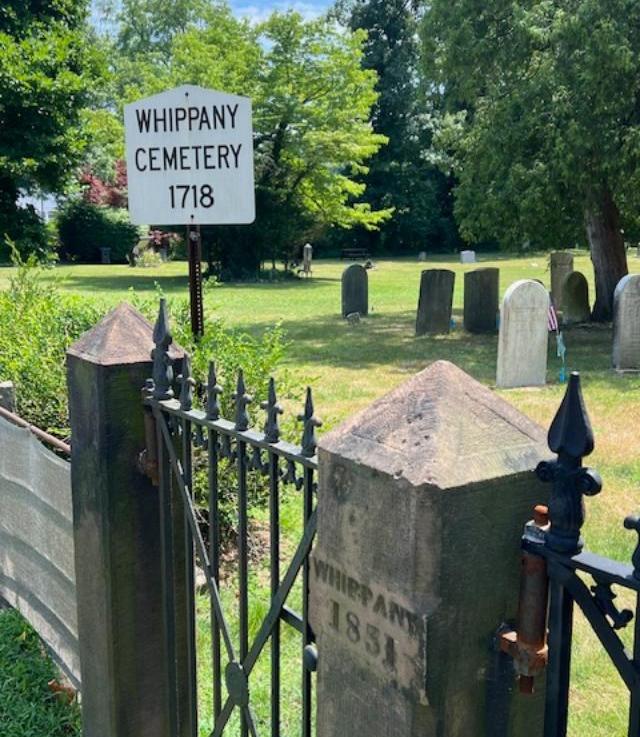
The entrance to the burial grounds

The old cemetery is steeped in history as one of the oldest cemeteries in New Jersey and home to many Revolutionary and Civil War veterans. As we learned on the tour later on, the only people that can be buried there now are former Mayors of the Town of Whippany who have died.

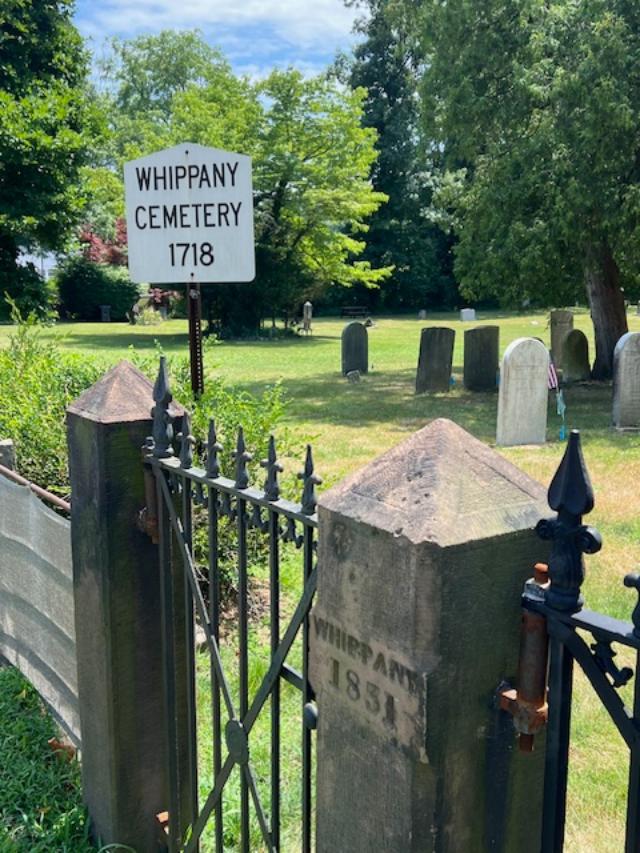
The sign of the historical burials

The historical marker

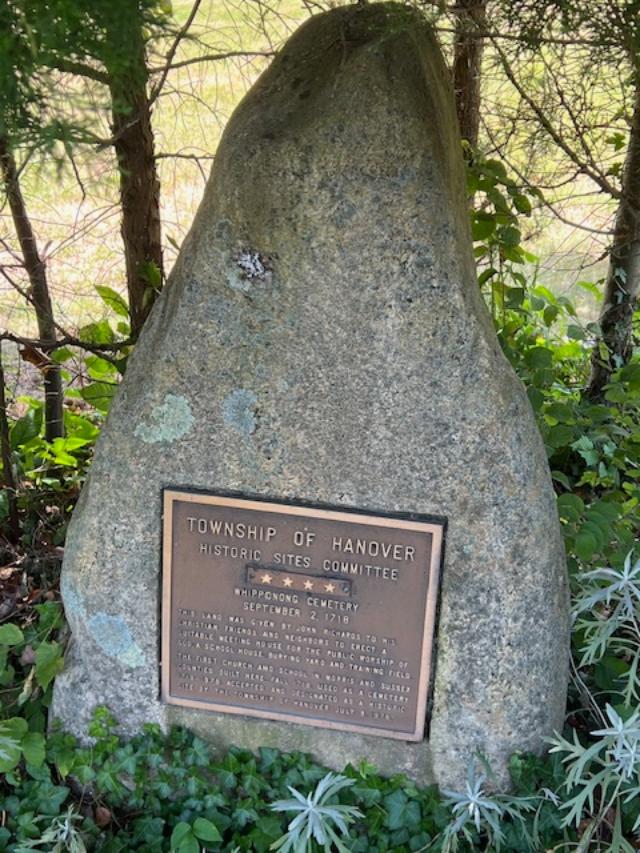
The town historical plaque

Two of the founding families of the town have many family members buried here, the Tuttle’s who still have relatives living in the area and the Kitchel’s. The guide for the afternoon took us on an hour tour of the cemetery, pointing out prominent members of the war years including Timothy Tuttle (died 1754), a founding judge of Morris County, Keturah Tuttle Platt (died 1850), who was a Charter member of the First Presbyterian Church, Captain Timothy Tuttle (II of III-died in 1816), who was a member of George Washington’s First Regiment in the Continental Army, Samuel Tuttle (died in 1762) and Colonel Joseph Tuttle, a blacksmith and Deacon at the Presbyterian Church who served in the French & Indian War.

Joseph Tuttle’s gravesite

Joseph Tuttle’s grave

The historic marker

Joseph Tuttle Jr.’s gravesite

The Tuttle family plot from before and after the Revolutionary War

The Tuttle family plot after the Revolutionary War

The Kitchel family was prominently represented as well with Abraham Kitchel (died in 1741), who was one of the six original judges of Morris County and his wife Sarah, whose family was claimed to date back to Charlemagne, Emperor of France, Abigal Kitchel (died in 1768), Uzal Kitchel (died in 1813), a Militiaman in the American Revolution and his wife, Anna (died in 1815). Many of these people as well as their ancestors made major contributions to the growth of the surrounding community.

The graves by the old entrance

We were also given a lesson in the construction and care of the old tombstones, some of which were beyond repair. Some of the original grave sites were made from sandstone, marble and granite with granite becoming the popular choice later on. Here and there some of the tombstones were decorated with winged skulls or cherubs. These show morality images of the dead (Whippany Burial Yard pamphlet).

The Post family plot

We were also walking by the river that the graveyard sits on and were told that current erosion is affecting some of the grave sites. These might have to be moved in the future and the tour guide was not sure if any have been lost over the years. The old Presbyterian Church that sat on the site (built in 1718 and removed in 1755) has since disappeared and there is no trace of it now.

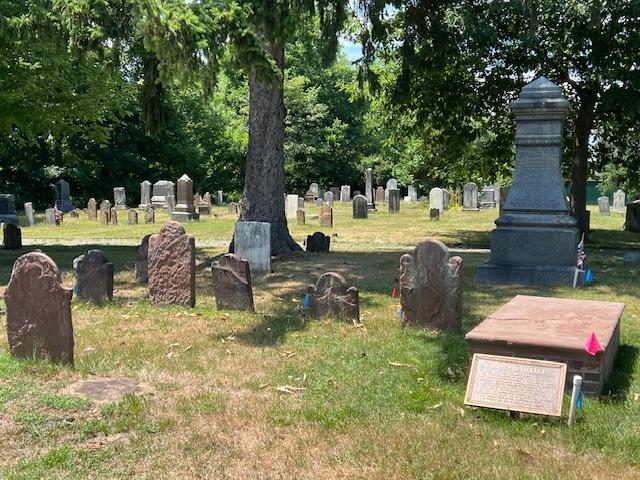
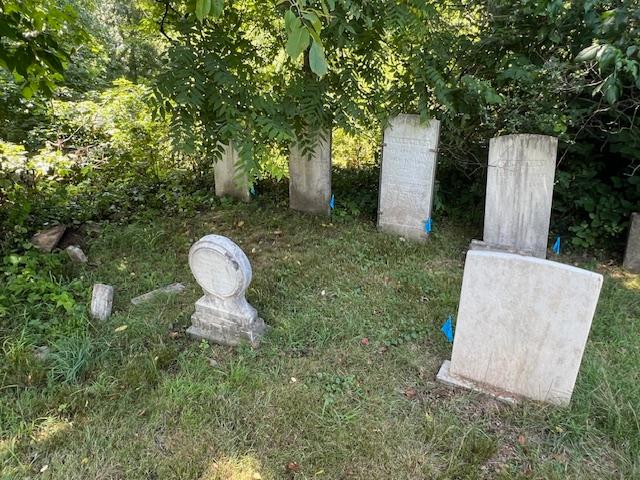
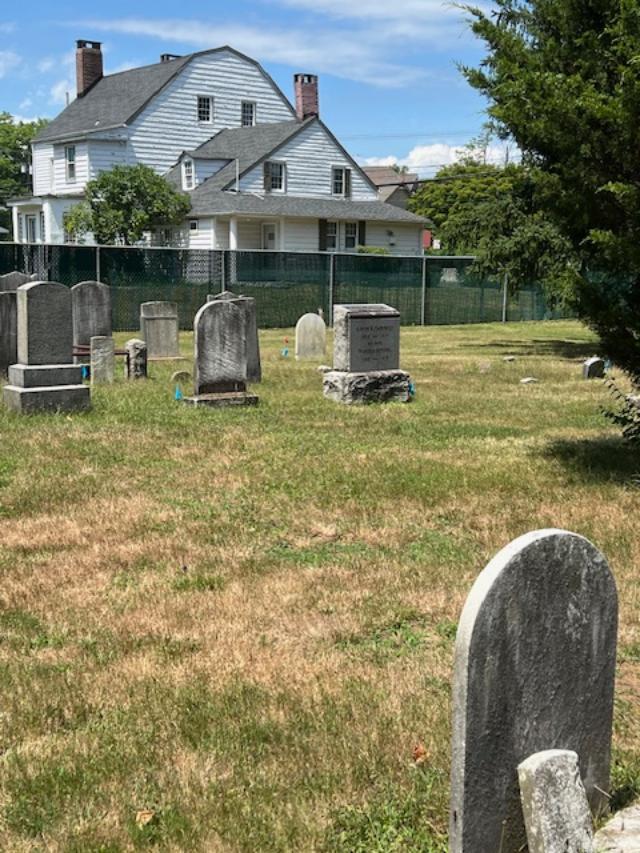
The Whippany Burial Yard has many different types of tombstones. This part of the cemetery faces the old Tuttle homestead

At the end of the tour, the guide explained to us that the old Tuttle House, dating back from the late 18th Century was just left to the town by its last owner to be preserved as a museum for the community. The Tuttle house will need a lot of work in the future.

The back of the cemetery facing the Tuttle Homestead

I ended my tour of the cemetery here as the graveyard was closing for the evening but planned on coming back in the future. There are more interesting things to see amongst the tombstones.

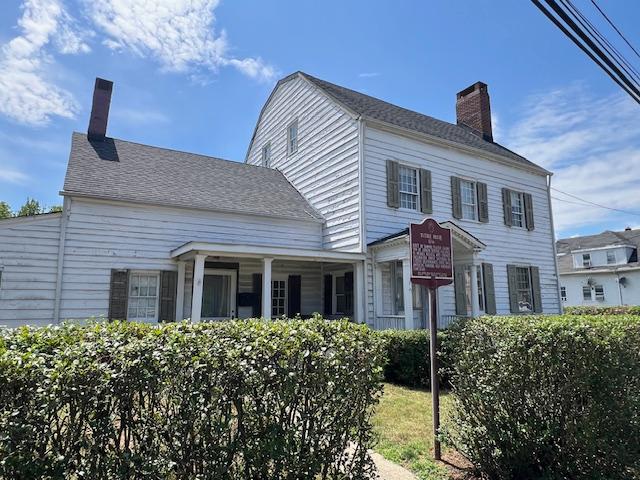
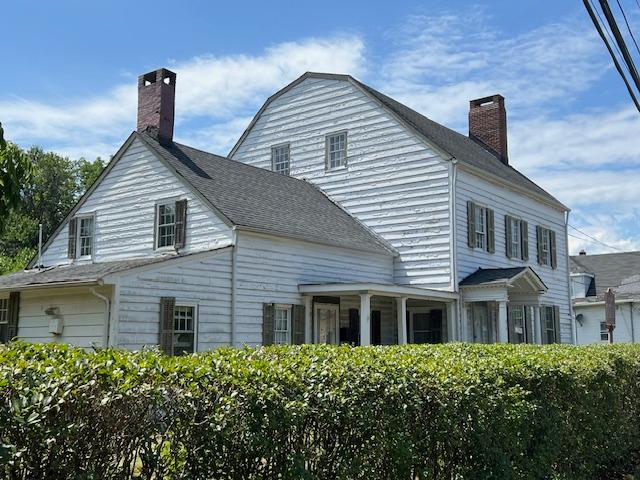
The Tuttle Homestead on Route 10 will be a museum in the future

The Tuttle House historical marker

History of the Whippany Burying Yard:

(From the Township of Whippany website/The Township of Hanover Landmark Commission):

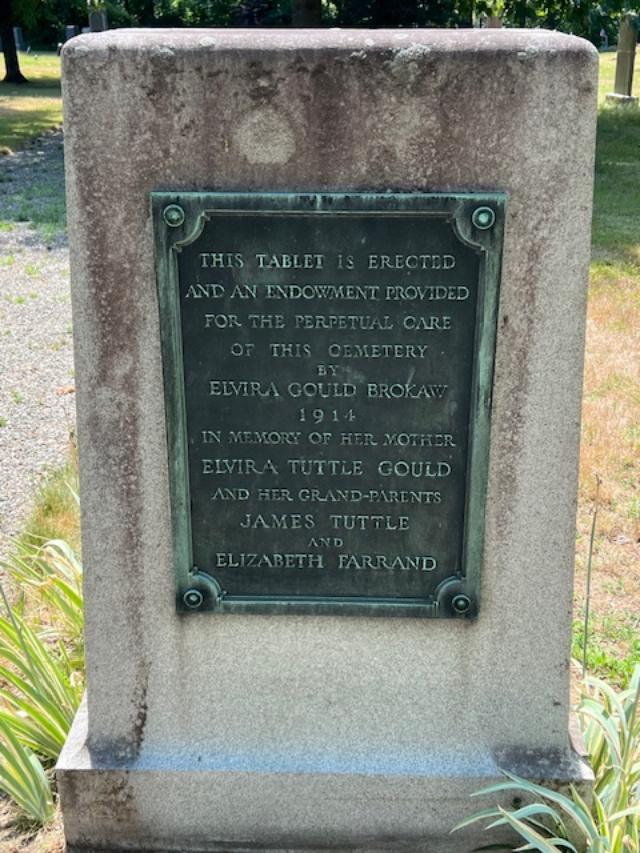
The Brokaw Family tablet for care to this cemetery

The Whippany Burying Yard is the oldest graveyard in North Central New Jersey. It contains the oldest dated colonial artifacts in Morris County. It was established in 1718 before the United States was conceived before New Jersey was a state and before Morris County was founded. Two of Morris County’s first governing judges and many Revolutionary War soldiers are buried here.

The Tuttle family homestead

The three and a half acres of land was donated by John Richards for a “meeting house, schoolhouse, burying ground, training field and for public use. Mr. Richards was the first one buried here when he died in 1718. His grave is the oldest in Morris County, NJ.

The Mary Sheldron historical burial site

For the next 200 years, the burying yard was maintained by the members of the Presbyterian Church with which it was closely associated. In 1914, the Presbyterian Church elected trustees for a group that would be known as The Whippany Cemetery Association. They maintained the yard for the next sixty-one years.

The burial ground marker in the cemetery

The graveyard is legally, publicly owned but no particular entity or institution in named in the deed. The grantee is interpreted to be the “Christian friends and neighbors in Whippanong”. It was formally maintained and administered by the Whippany Cemetery Association until its maintenance and administration was transferred to the Township of Hanover in 1976 as an historical site. The Township gave the responsibility for the Burying Yard to its Landmark Commission, where it remains.

The back part of the Whippany Cemetery

The Burying Yard holds about 450 graves that include 11 veterans of the American Revolution, nine Civil War veterans. In 2011, the Burying Yard was listed on both the State and the National Register of Historic Places. When visiting the Yard, you can see that the gravestones are made out of three different materials: sandstone, marble and granite. Visitors can see a 300-year time span of various commemorative styles. The Burying Yard is also home to two prominent families in the area: The Tuttle’s and the Kitchel’s.

The family plots at the Whippany Cemetery

Some of the prominent members buried here are John Richards who was the schoolmaster who donated this land for public use, Abraham Kitchel who was an early settler from Newark, NJ and one of the six original judges of Morris County. Joseph Tuttle Sr., who was a blacksmith, had served as a Colonel of Morris County militia in the French and Indian War and Timothy Tuttle who was a Sergeant of the First Company under Captain Joseph Morris in Lord Sterling’s First Battalion of New Jersey’s First Regiment in Washington’s Continental Army.

The Tuttle House at 341 Route 10:

https://www.hmdb.org/m.asp?m=91152

The Tuttle House will be the future museum for Whippany, NJ

This 1796 National Register site is the house of Samuel Tuttle, the grandson of Joseph Tuttle, a Colonel in the Morris Militia. The Tuttle’s were among the first to setting in Hanover and they played an important role in its development.

The historic marker for the Tuttle Homestead