
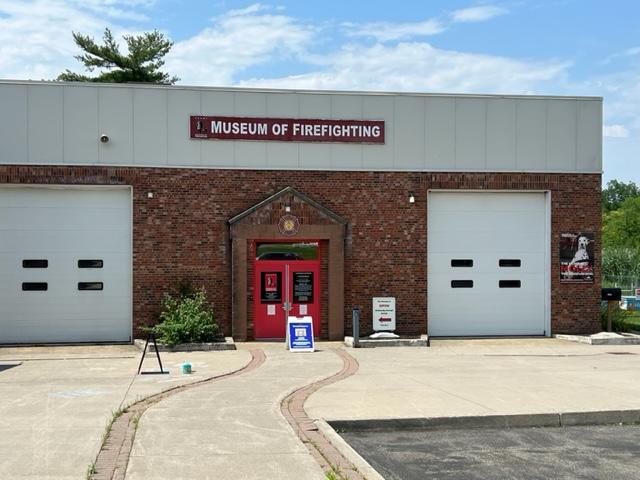
FASNY Museum of Firefighting
117 Harry Howard Avenue
Hudson, NY 12534
(518) 822-1875/1-877-347-3687
Open: Sunday 10:00am-4:30pm/Monday & Tuesday Closed/Wednesday-Saturday 10:00am-4:30pm
My review on TripAdvisor:
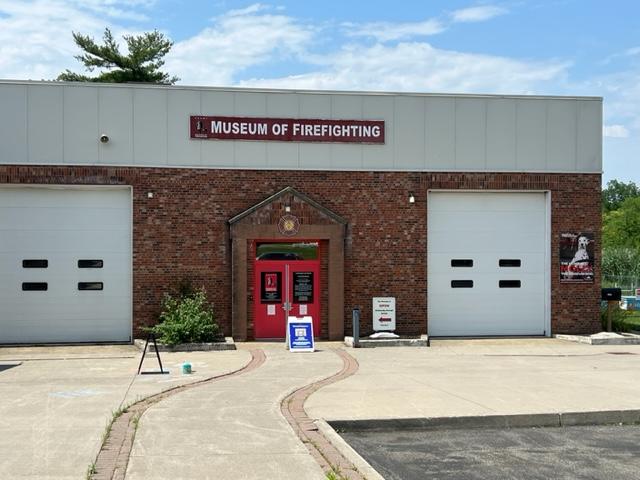
The FASNY Museum of Firefighting at 117 Harry Howard Avenue
The FASNY Museum of Fire Fighting is America’s interactive museum of firefighting. It is also the home of the premiere collection of American firefighting objects in the world.
When I visited the museum recently, I found that the museum is not just a treasure trove of information and artifacts but an extensive study on modern firefighting from its creation in the time of the Romans and Greeks, the beginnings of the fire service in America lead by people like Peter Stuyvesant and Benjamin Franklin. These men brought their ideas and innovations by working alongside people doing the work and the modernization of equipment that makes the modern firefighter both safer and smarter.
The progression of the equipment and the way it is used has not changed much but the way we use it, and its design has changed from the days of the bucket brigades to the horse drawn carriages to the modern automobile. The job has not changed as we put the fire out and try to save lives and property.
There is so much to see and do at the museum and for a firefighter, a very humbling experience in that we continue to learn on the job and learn the changes in the fire service around us. This is one of the most extensive museums of firefighting that I have ever seen. The exhibitions are very detailed and easy to follow with lots of interesting artifacts. It is a perfect place for a family to visit.
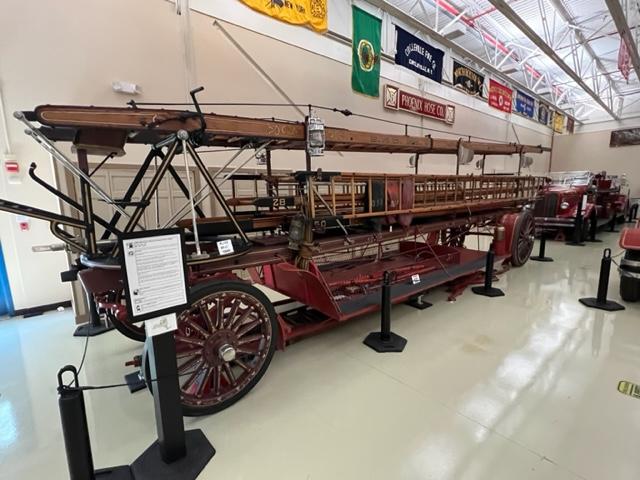
A ladder truck from the early 20th Century
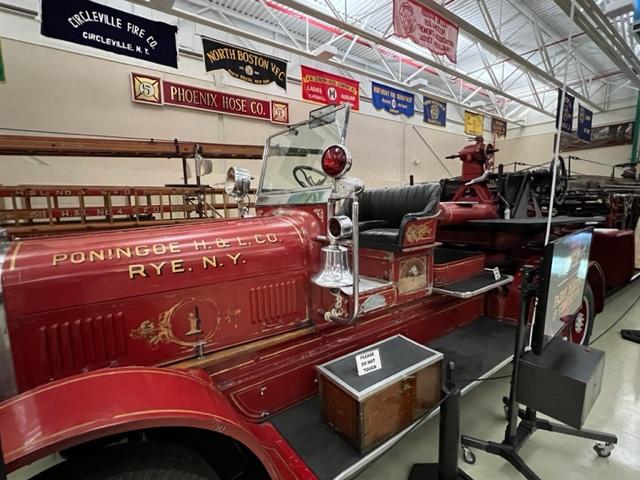
Ladder Truck from Rye, NY that was part of the Bush family history.
The massive museum has over 60 fire engines on exhibit, as well as numerous examples of firefighting gear, equipment and art depicting the heroic history of firefighting in America.
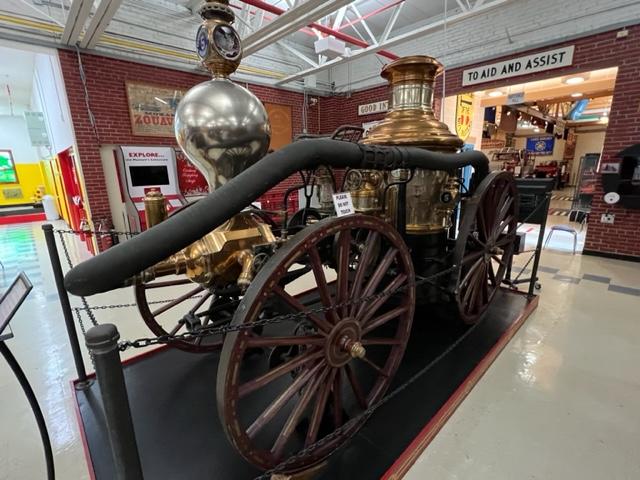
Early 20th Century Steam Engine
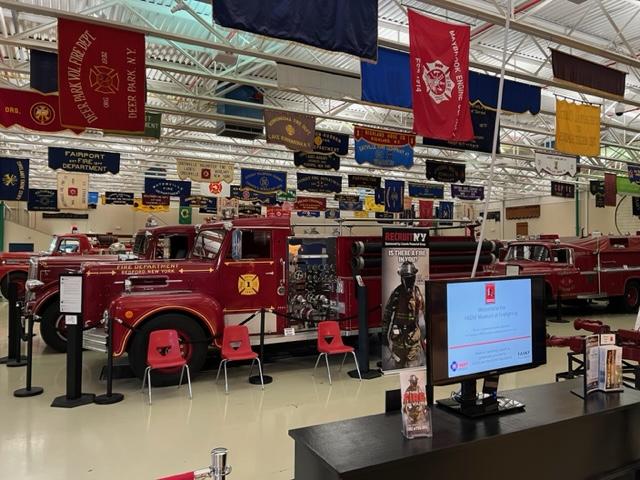
The main equipment room with all sorts of trucks and engines spanning over 100 years
Activities for families include the popular bucket brigade activity, the amazing Jr. Firefighter Challenge course, the incredible first responder virtual ride to the fire experience and the Cabot/McCadam Fire Safety Discovery Room (FASNY Website).
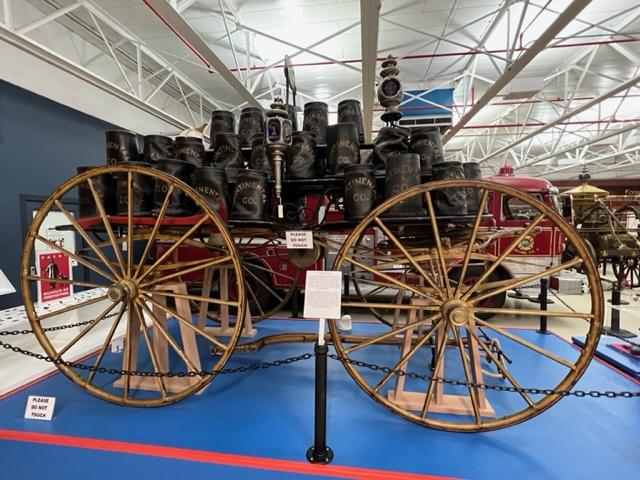
Turn of the Century Bucket Truck
Whether you are a family, a firefighter, an apparatus buff or a student of history, you will be amazed at the depth and variety of the Museum’s vast collection.
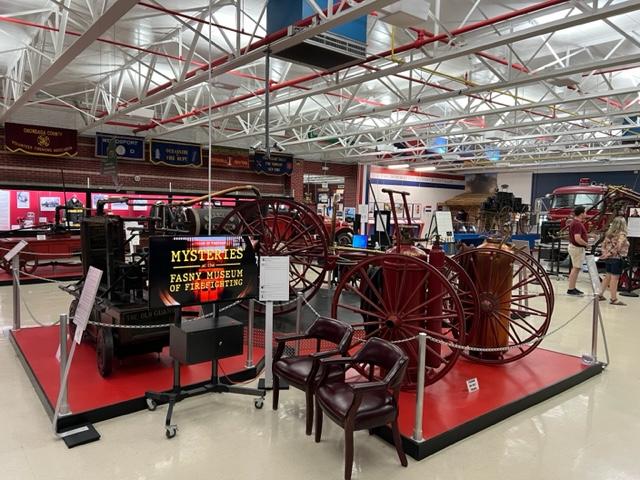
Turn of the Century hose beds.
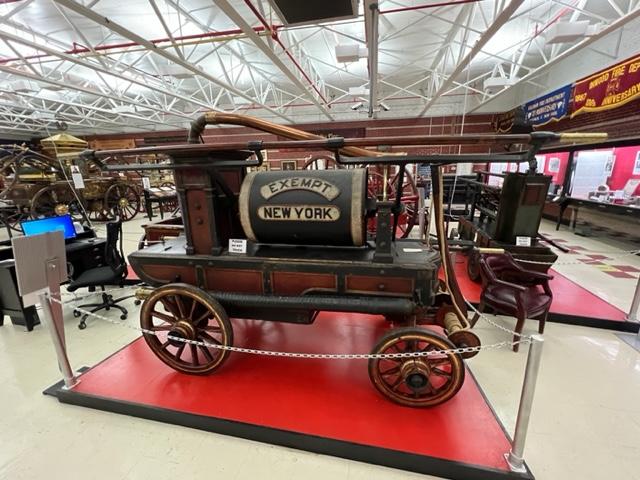
An early steam engine
The 9/11 Exhibit: Remembering the 20th Anniversary:
In partnership with the New York State Museum in Albany, the FASNY Museum of Firefighting is honored to present the exhibit: Touchstone: Remembering the 20th Anniversary of 9-11. The majority of the objects in this exhibit are on loan from the NY State Museum. They were found during the recovery efforts that took place at Fresh Kills Landfill on Staten Island, when hundreds of NYPD and FBI forensic experts sifted through the debris from the World Trade Center tragedy site, between September 2001 and July 2002 (FASNY website).

The 20th Anniversary of 9/11 on September 11th, 2021
We encourage visitors to compare how they feel today, 20 years after this touchstone moment in our nation’s history, to how they felt on September 11, 2001. We also invite the visitor to remember that not every action taken after 9-11 was heroic.
After 9-11, there were many cases of violence against those who were, or who were perceived to be, Muslims, Sikhs or persons of Arab or South-Asian descent. Through an interactive, we ask visitors to consider this racism and why it occurred (FASNY Museum Website).
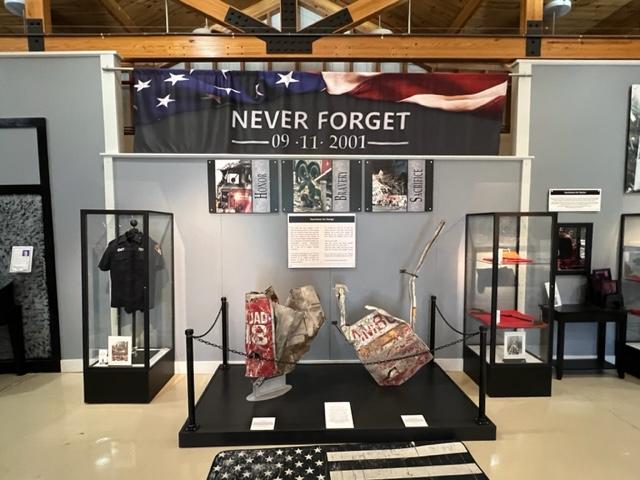
The 20th Anniversary of 9/11 on September 11th, 2021
The 9/11 Exhibit will be very emotional for any firefighter and their family whether they experienced it or not. It could be the twist equipment, the pictures depicting that morning and the rescue plans and the artifacts that were used during that time, take your time to really study and appreciate the heroism of that morning.
Then, Now & Always: Firefighting from the Cradle of Rome Through the 1900s
Trace the evolution and development of firefighting from its ancient origins to the modern era of mechanization.
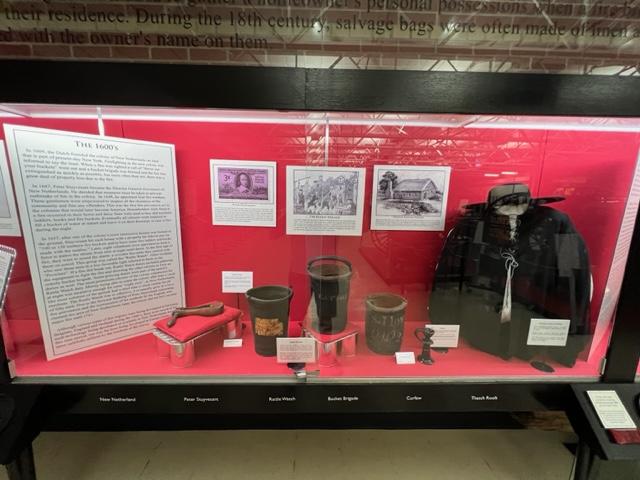
The Dutch Bucket Brigade system of early America
This informative and fascinating exhibit uses objects in the Museum’s collection as historical touchstones. Complemented by interpretive graphic panels and object cards, the exhibit chronicles the progression of organized firefighting and its social and technological implications. Here, you will discover some of the oldest and rarest objects in the Museum’s collection. Adjacent to the exhibit cases are the Museum’s earliest examples of fire apparatus dating as far back as 1731 (FASNY website).
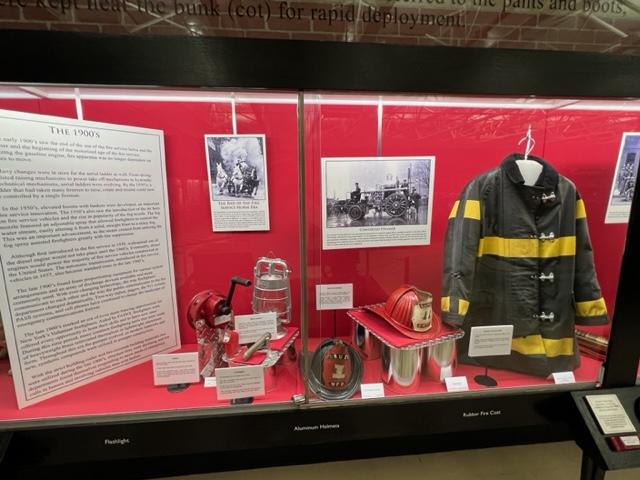
The change of equipment in the early 1900’s to the modern era
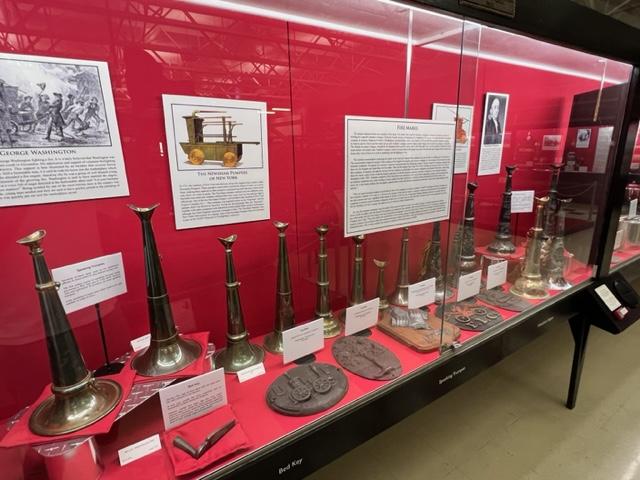
Before radio communication became available, we sounded the trumpets.
The museum showed the progression of firefighting and how many aspects of it have changed over the years and how it modernized old ideas. The concept of ‘putting water on the fire’ has progressed in knowing why we should do it, when we should do it and what the effects of it will be when we do it. The equipment being used was the latest technology of the that time.
Forged by Fire: The Life and Legacy of Harry Howard
Who was Harry Howard and why do we consider him the GOAT? This exhibit explores Chief Howard’s life and many accomplishments and explains why we are still talking about him today, 200 years after his birth! (FASNY website).
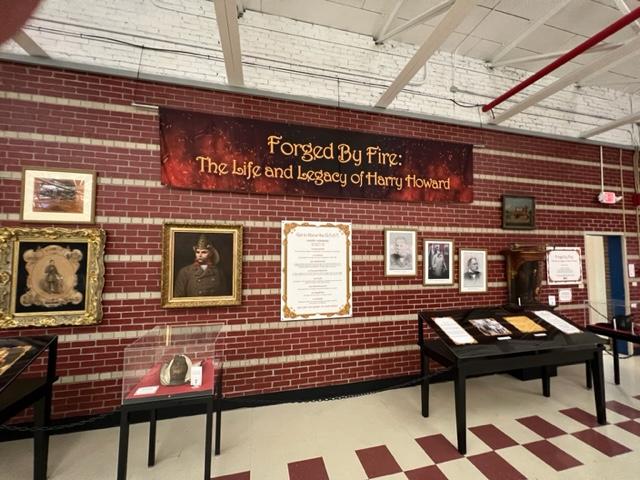
The “Forged by Fire” exhibition on Harry Howard
Harry Howard was one of the most celebrated firemen of the 19th century. He rose from very humble beginnings to Chief Engineer of the Volunteer Fire Department. His association with the fire department began while a young teen, as a runner for the Peterson Engine Company No.15, located on Christie Street. In 1841 he became a full-fledged member of the company. Later, in 1850, Howard joined Atlantic Hose 14. The following year he was elected Assistant Engineer. He reached the top in 1857 serving as Chief Engineer for three years, with a salary of five thousand dollars a year. Chief Engineer was the highest rank in the NYC’s Volunteer Department in 1857 with many of the same duties as today’s Fire Commissioner. The Chief and his 18 assistants were elected by ballet by the members of the department (NYFD.com website).
At the time of Howard’s leadership this comprised of about 4000 men. One of his major acts as Chief was to establish bunk rooms in all the firehouses in the city. Chief engineer Harry Howard suffered an attack of paralysis on a way to a fire in July 1857. The attack left him permanently disabled and somewhat embittered. It was officially deemed the consequence of severe fire duty. After his retirement from the Volunteer Fire Department, he held an office in the Department of Public Works (NYFD.com website).
I cannot begin to explain how innovative Chief Engineer Howard was in the fire service. Bringing about many safety measures, analyzing the fire service the way he did and work to better the lives of firefighters not just in New York but set a standard in the industry. He brought his experience that he learned on the job and worked to better it so that other firefighters could learn to be better at their jobs.
Ready, Willing & Able: FASNY’s First 150 Years
Did you know that over 90% of all firefighters in New York State are VOLUNTEERS! Did you know that FASNY (the Firefighters Association of New York State) has been the leading voice for volunteer firefighters for over 150 years? Discover more facts about FASNY and the brave firefighters who protect our communities in this fascinating exhibit (FASNY website).
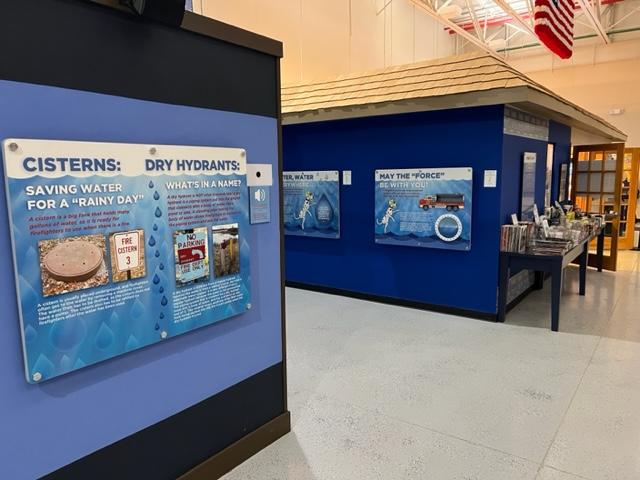
Firefighting in the modern age
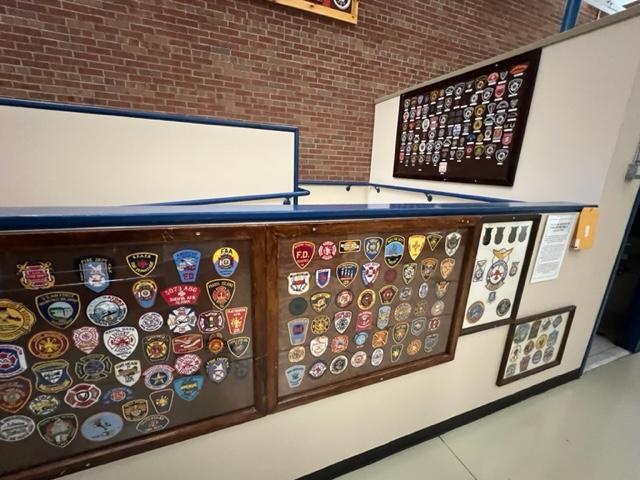
The Firefighting Patch Wall display
The experience of exploring this museum is a must for any firefighter or firefighting family.












 Visiting a Museum: The Unique, Unusual, Obscure and Historical