Category: Walking Downtown Bridgeton, NJ

Cohanzick Zoo                                                            Mayor Aitken Drive                                                  Bridgeton, NJ 08302

Cohanzick Zoo Mayor Aitken Drive Bridgeton, NJ 08302

Cohanzick Zoo

Mayor Aitken Drive

Bridgeton, NJ 08302

(856) 453-1658

Open: Sunday-Saturday 9:00am-5:00pm

Admission: Free but donations are accepted

My review on TripAdvisor:

https://www.tripadvisor.com/Attraction_Review-g46324-d1425883-Reviews-Cohanzick_Zoo-Bridgeton_New_Jersey.html

The Cohanzick Zoo is part of the Bridgeton Park system and can be found inside the parks grounds.
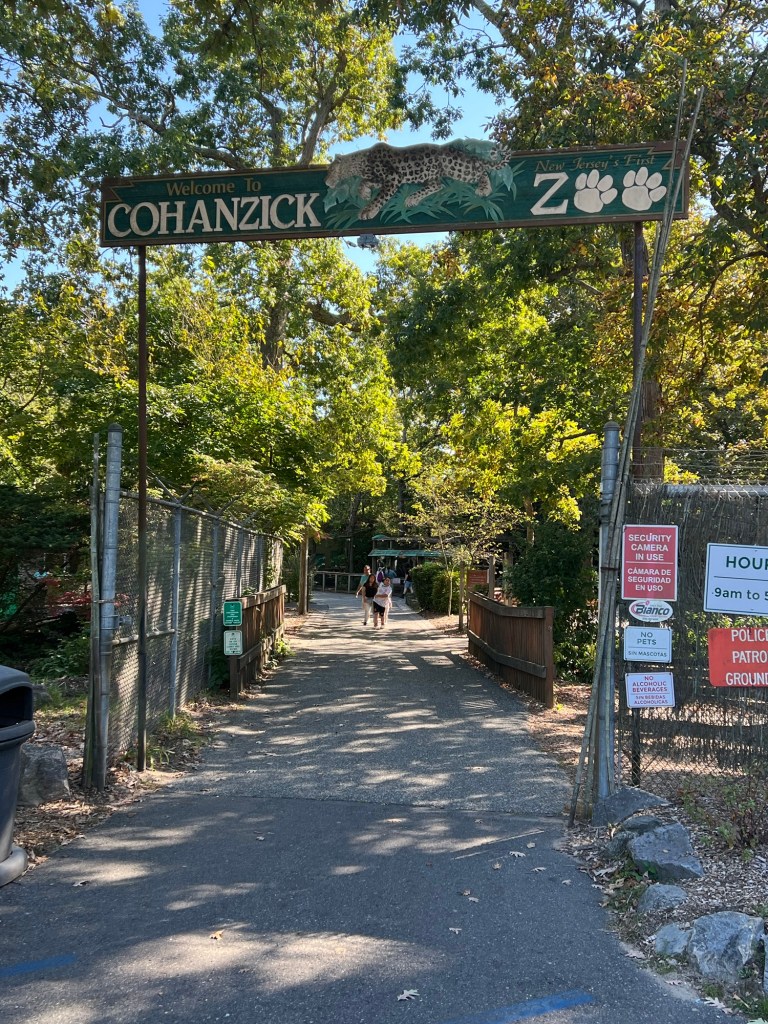
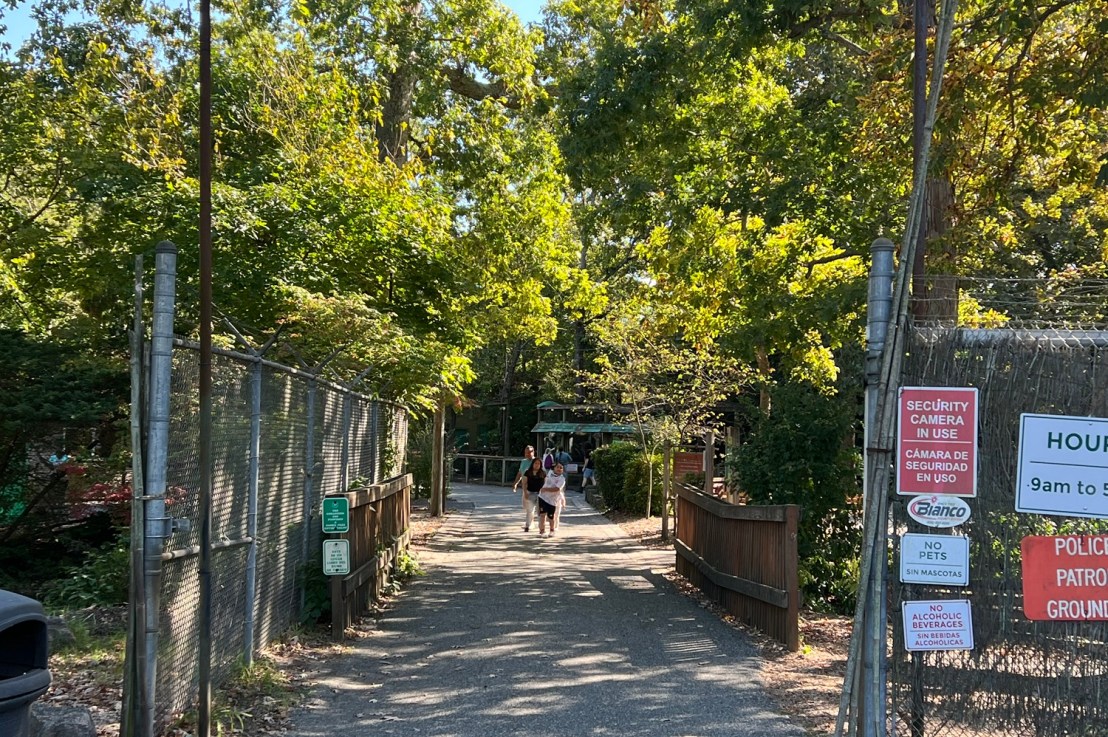
The main entrance to the zoo.

The zoo has an old fashioned feel with smaller rescue animals and equally not too large cages. The zoo is mostly comprised of smaller animals who were rescued from either being poached, illegally transported or had been used as pets, many of them being neglected and abused.
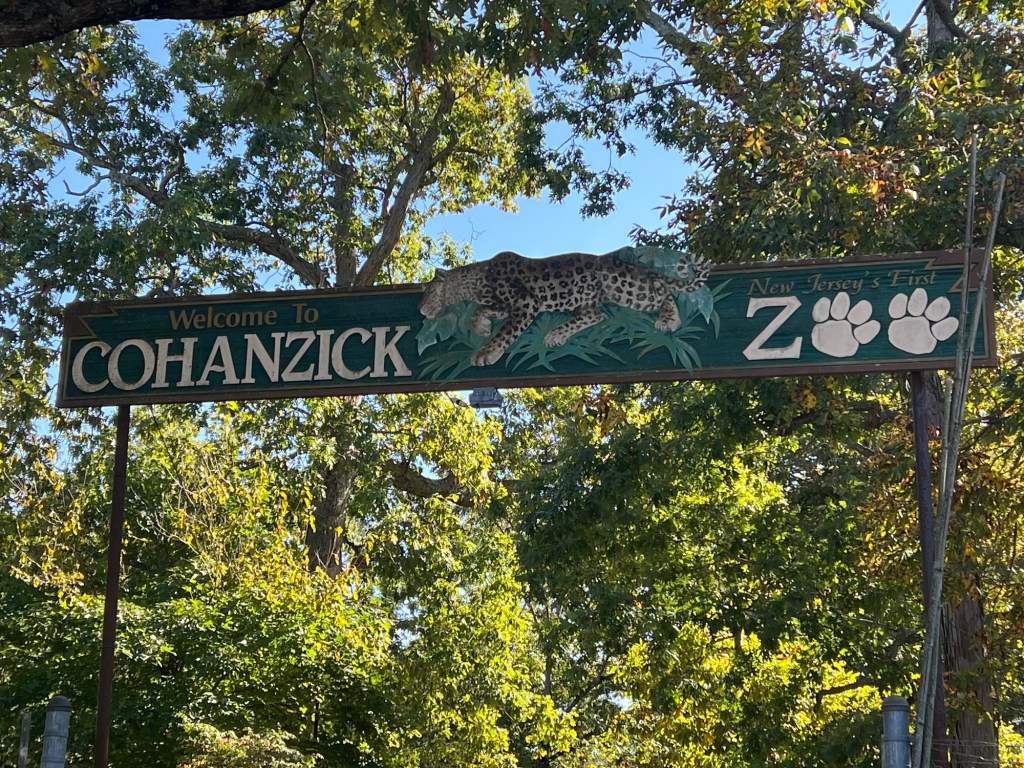
The sign that welcomes you to the park

Throughout the park amongst the cages of wildlife are strolling gardens and animal related statuary.
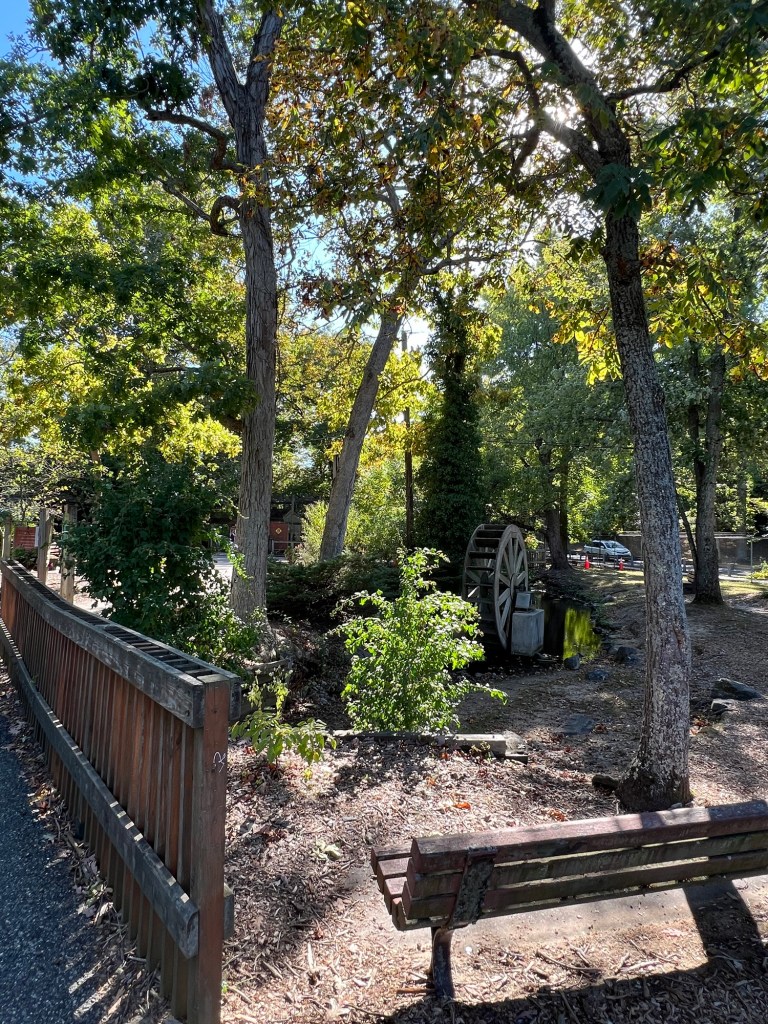
The pathways and gardens were still in bloom the afternoon that I was there and it is a nice way to spend do the afternoon.
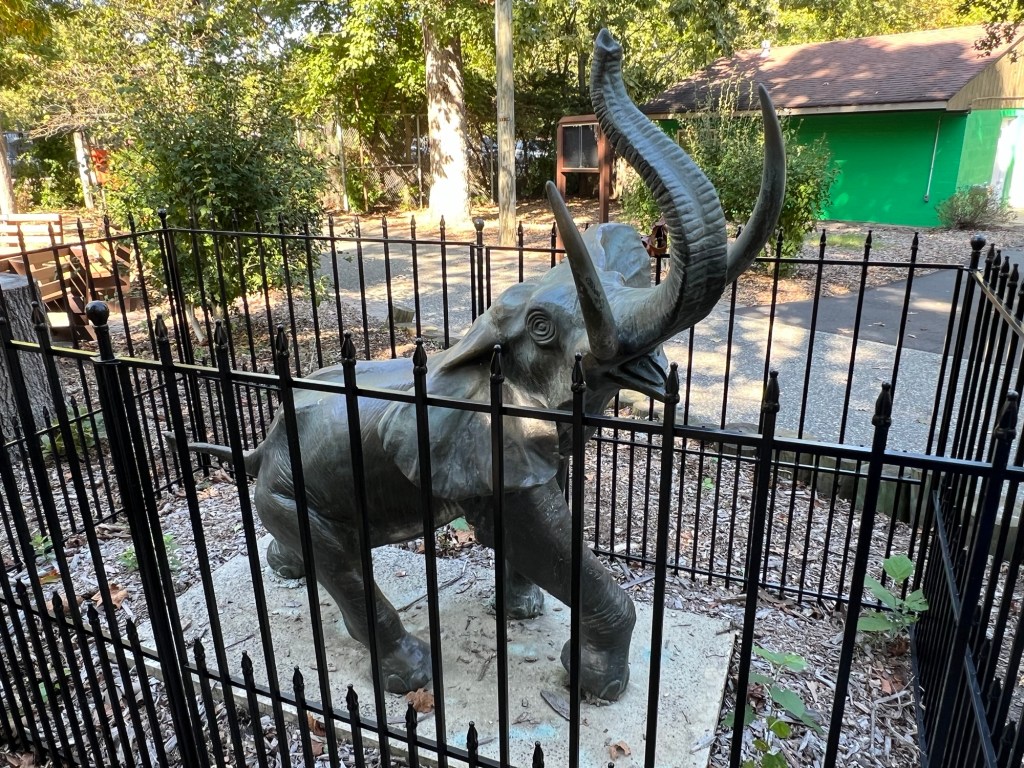
The Elephant statuary at the entrance of the zoo
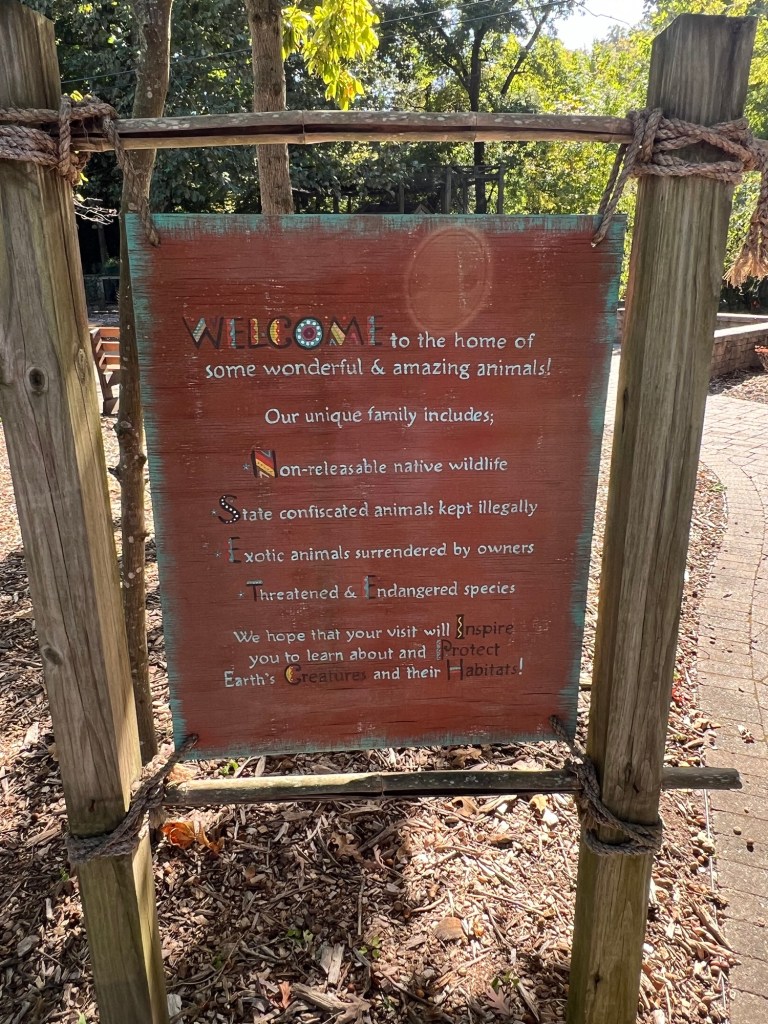
The status of how some animals found their home here

The first resident I finished was the Raccoon House, where it looked like the raccoon was taking a snooze. He really looked out of it when J passed the cage.

The Raccoon House
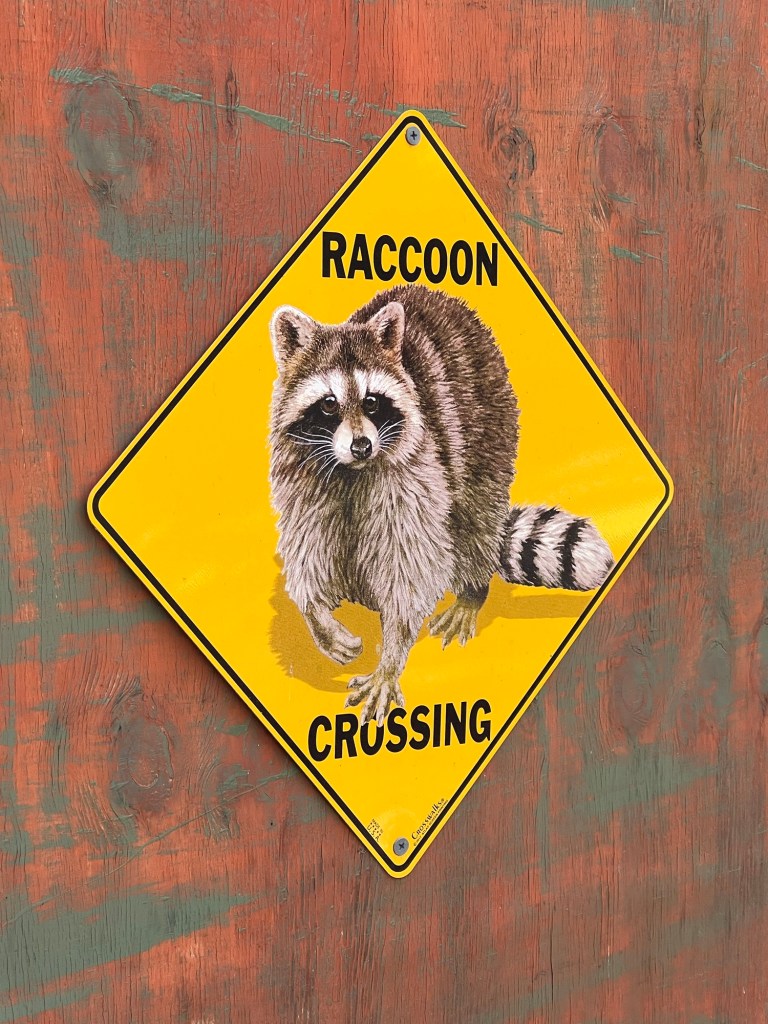
The Raccoon Crossing sign
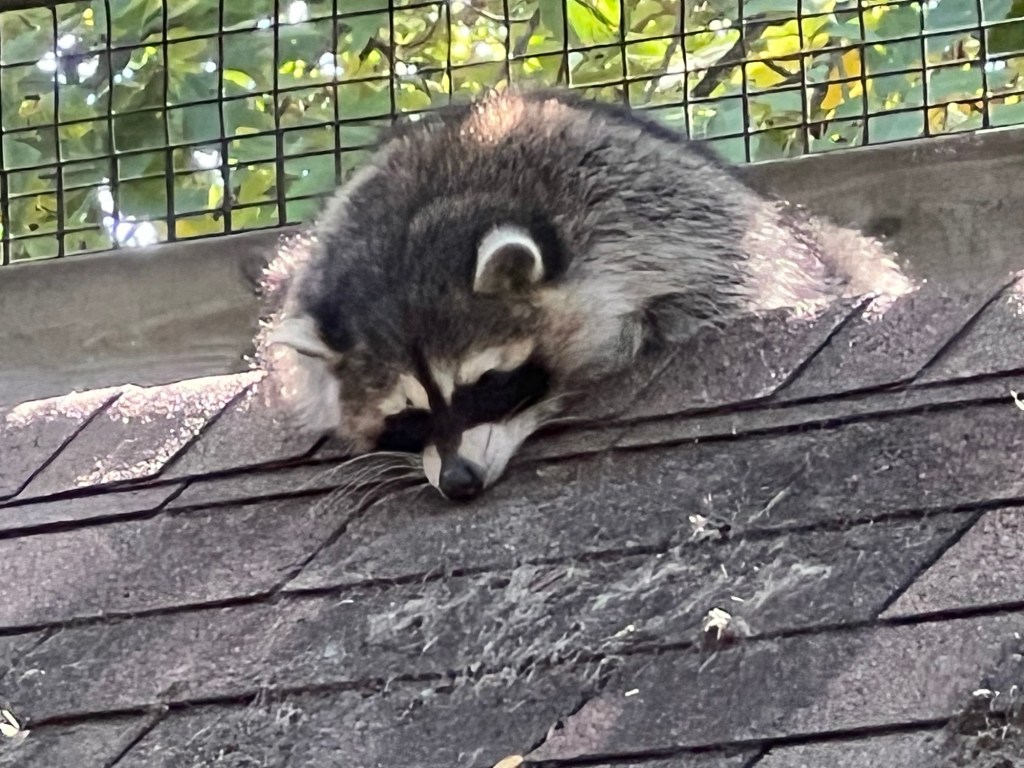
This poor little guy was out like a light

The zoo is one of the smaller more localized ones that I have visited so you can see the whole zoo in about an hour. Then you can walk leisurely around the paths and revisit the exhibitions again. Some of the animals like the peacock family, just wonder around the park and do their thing.
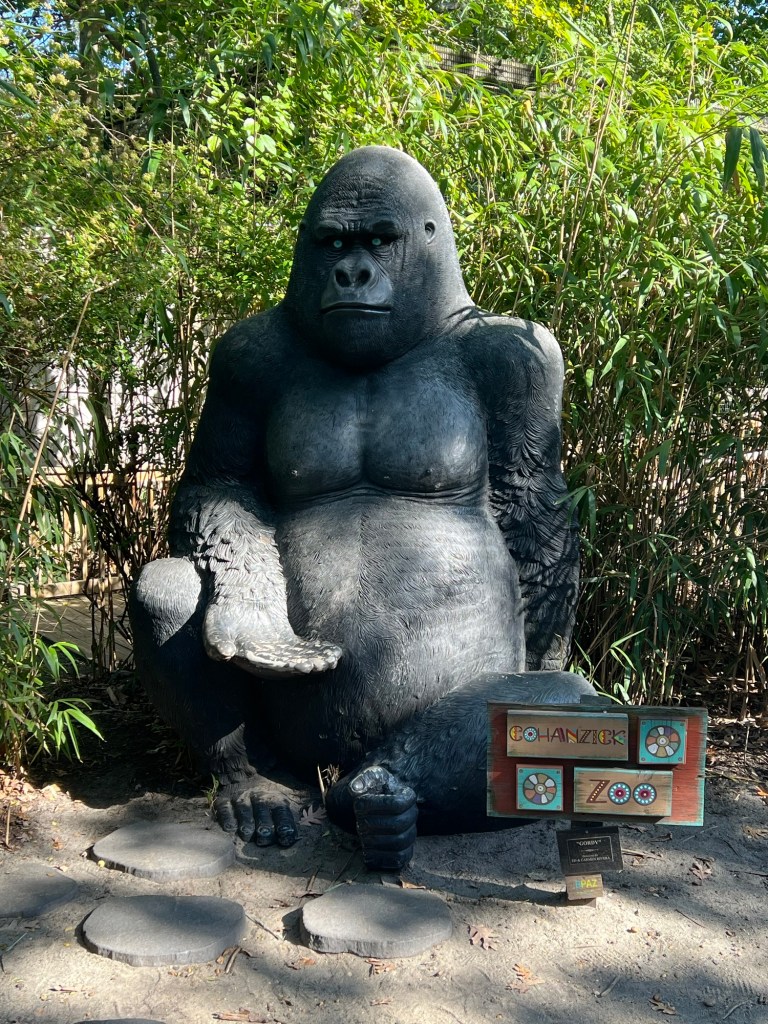
This gorilla sculpture that greets you in the back part of the zoo
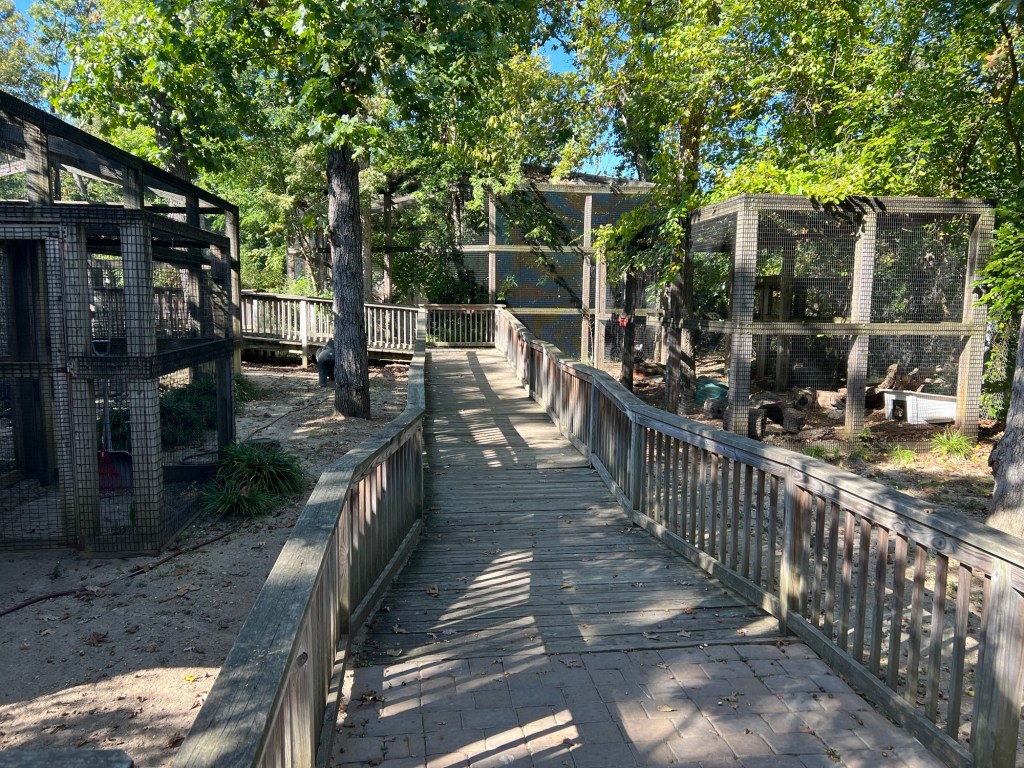
Following the walkway to the back pens where a lot of the small animal and bird displays were located

The next exhibition that I visited was the Sand Hill Crane and I read that the poor little guy had been injured. He seemed a bit more optimistic when I passed the cage. I think that the animals just want some attention.
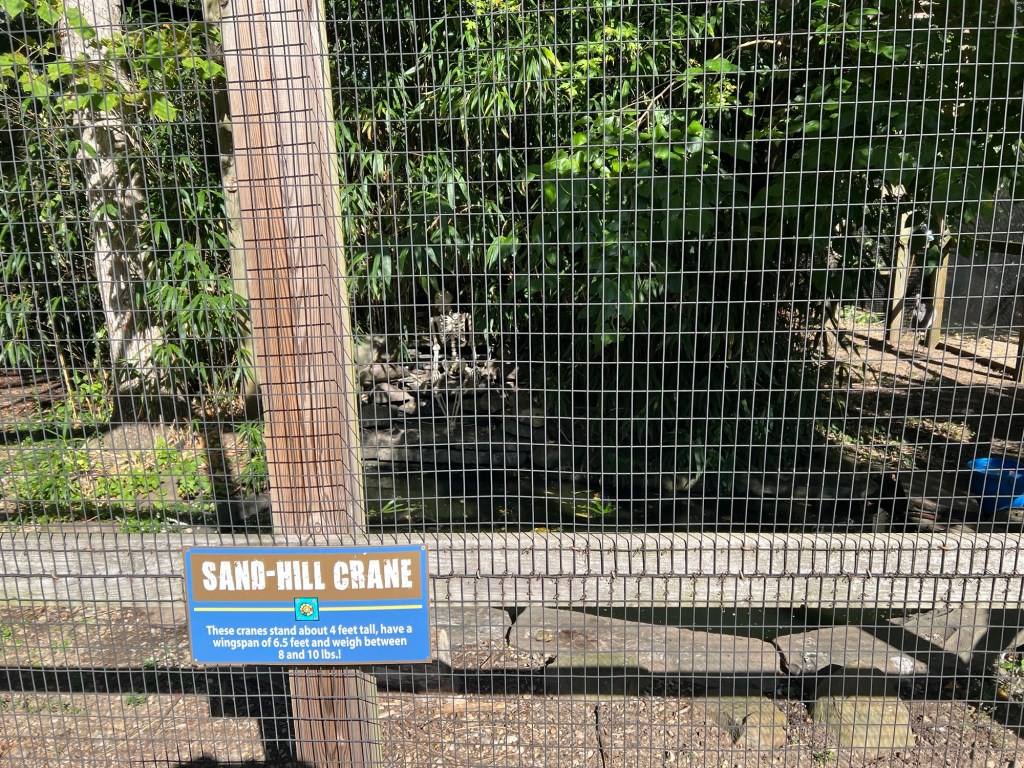
The Sand Hill Crane display
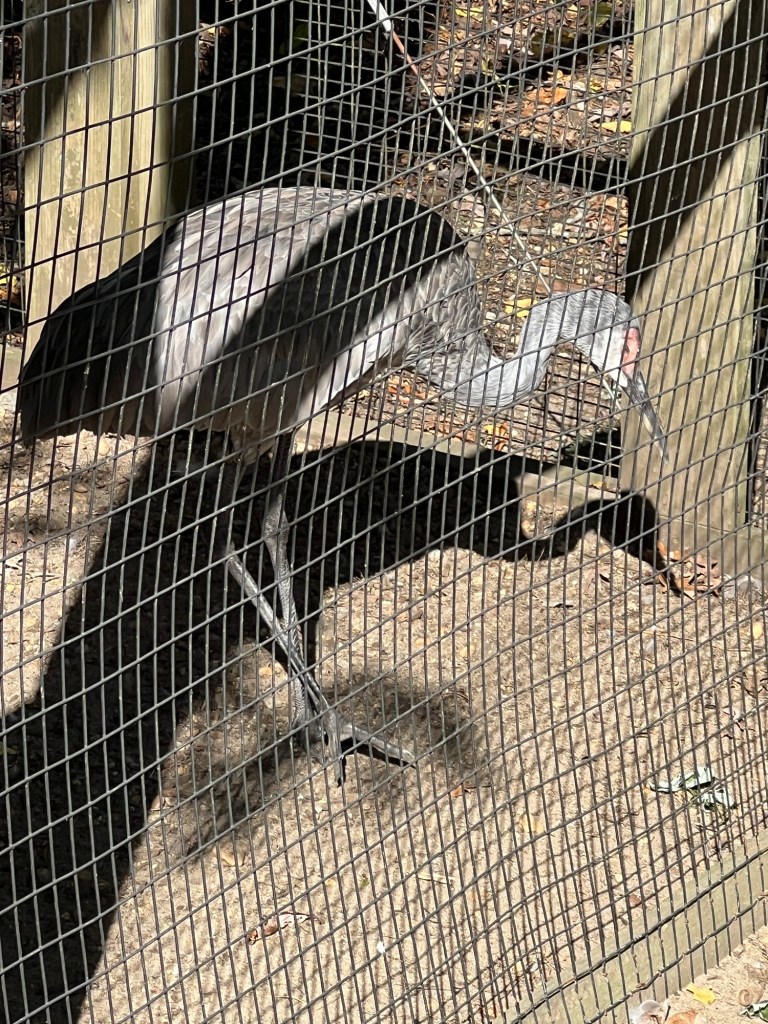
The Crane was watching all of us as we passed his cage

The next small animal that I visited was the Fennec fox and the two that I saw were fast asleep on this warm afternoon. They must have had a busy morning.
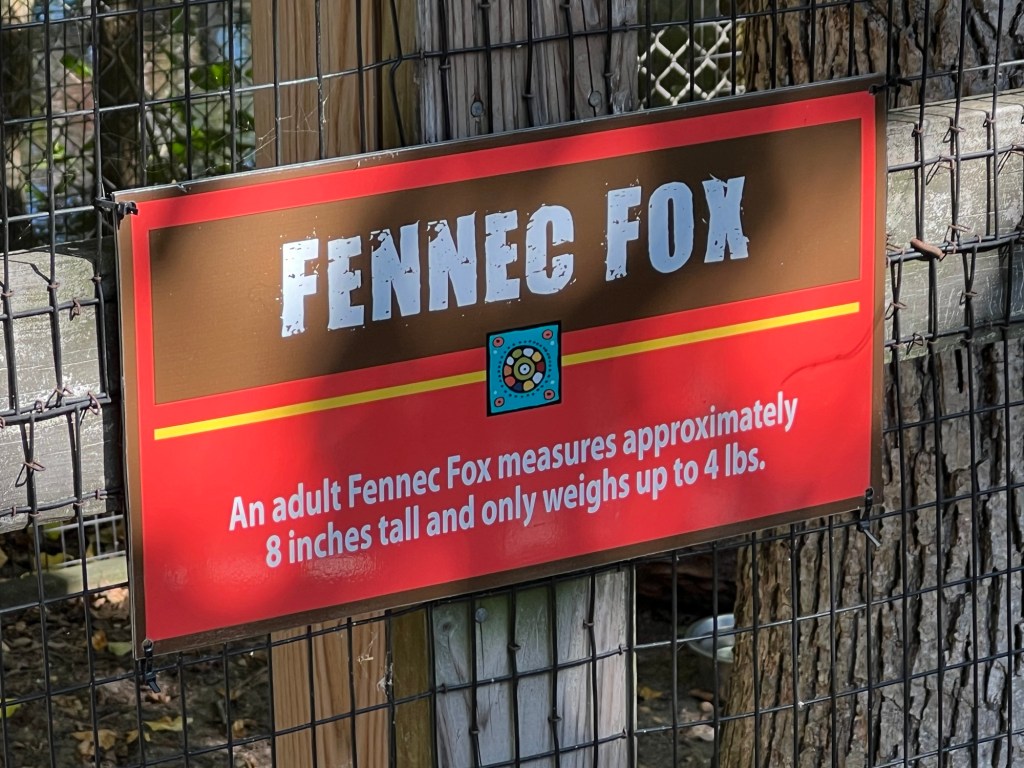
The Fennec fox cage
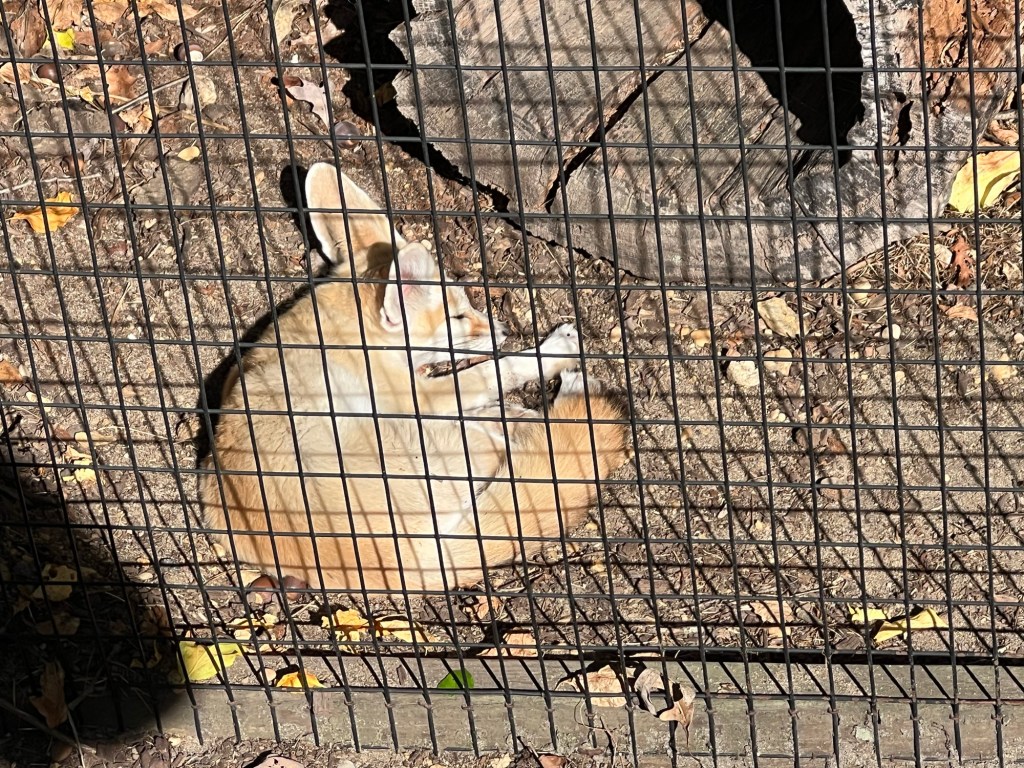
The foxes that I saw that day were fast asleep

While I was walking around the back part of the zoo, there was a peacock family walking around the cages. The father peacock had two small birds with him and they just meandered amongst the cages.
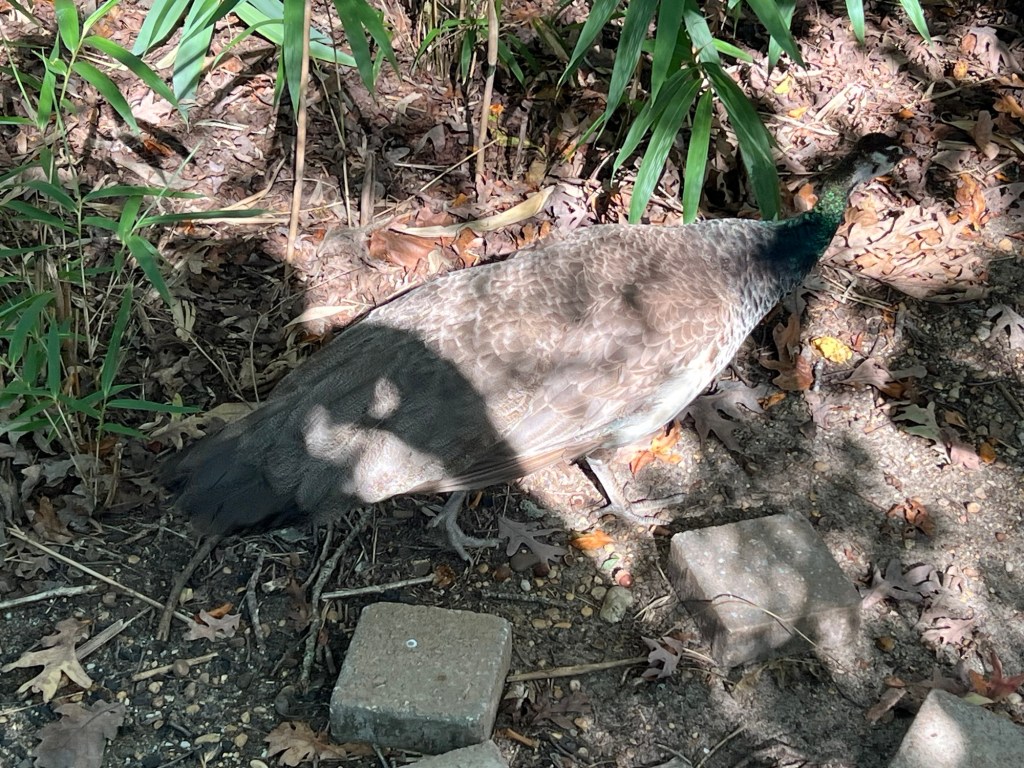
The male Peacock walking around the zoo with his children. They were allowed to walk around on their own without being locked up. They looked like they were having an adventure as a family.
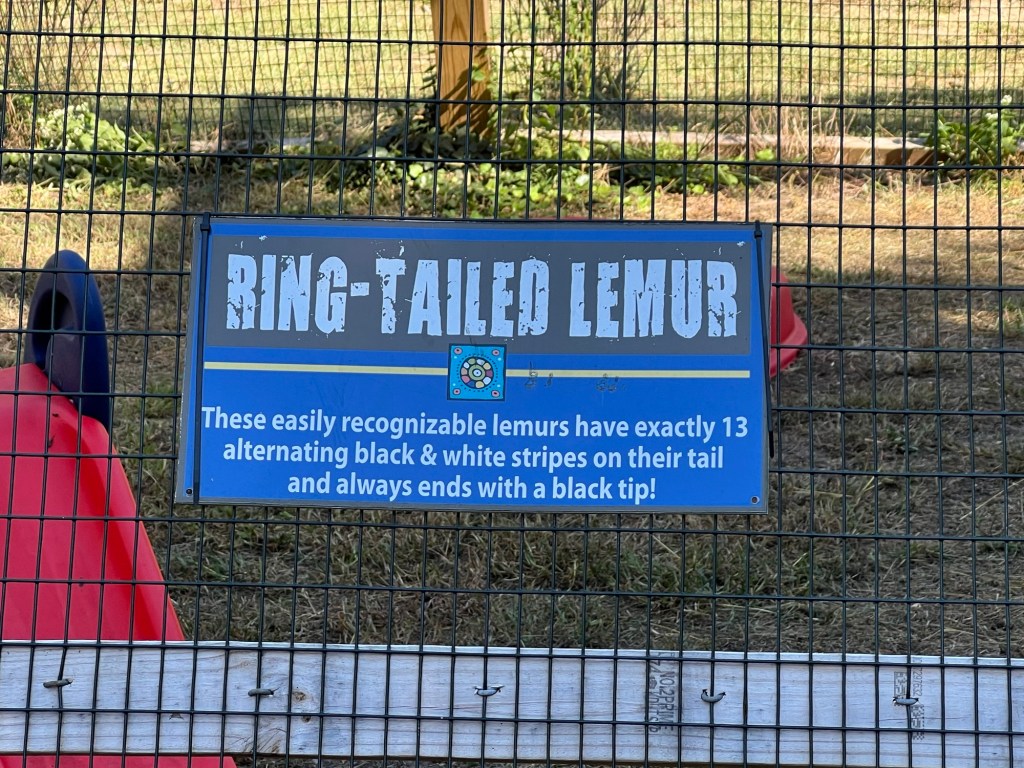
The Ring Tailed Lemur display

I visited the Ring- Tailed Lemur pens and these little monkeys looked like they were plotting an escape. They stayed in a bunch the whole time I watched them and they just stared.
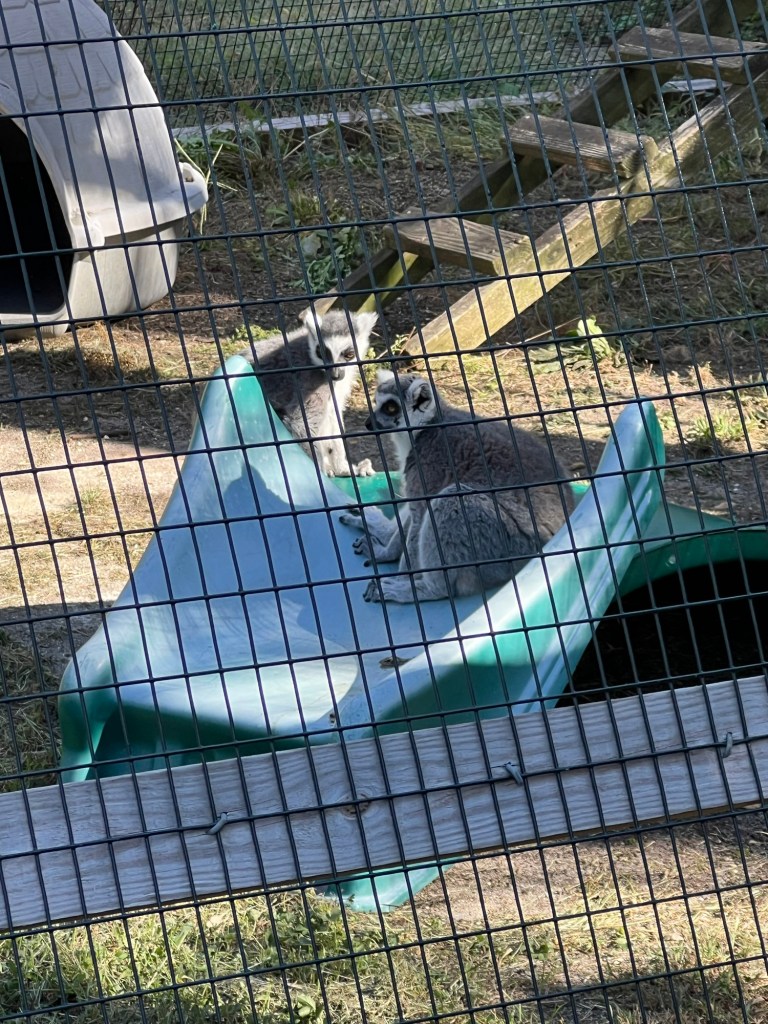
The lemurs just stared back at me as I watched them
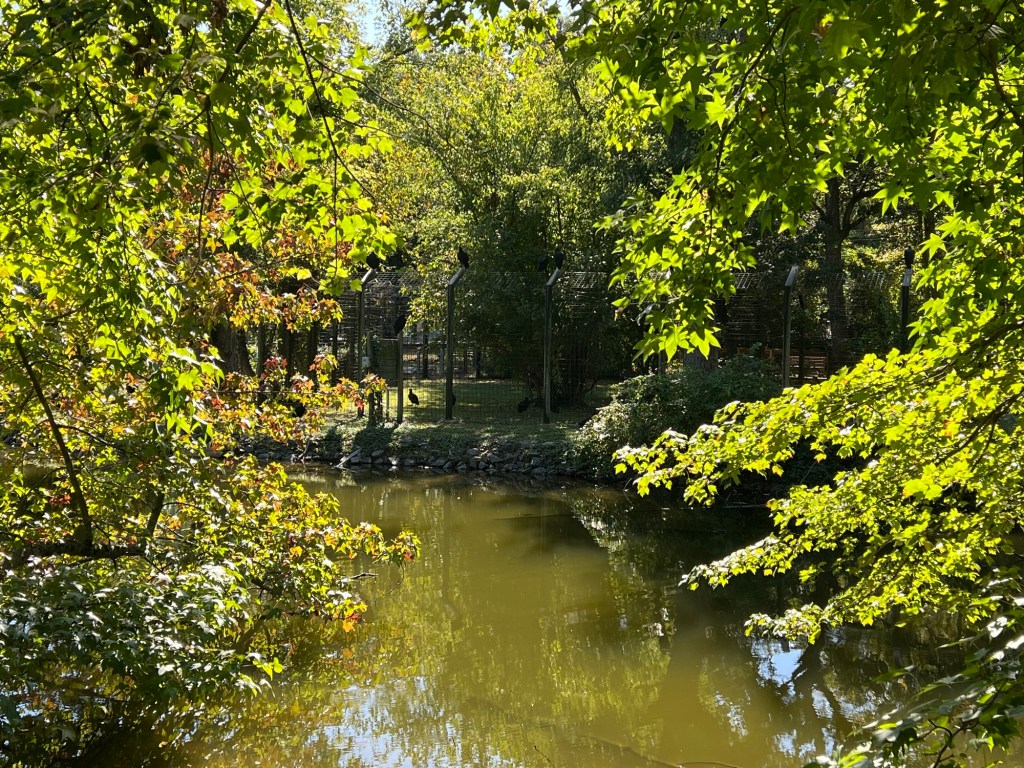
The back part of the museum was beautiful in the early fall
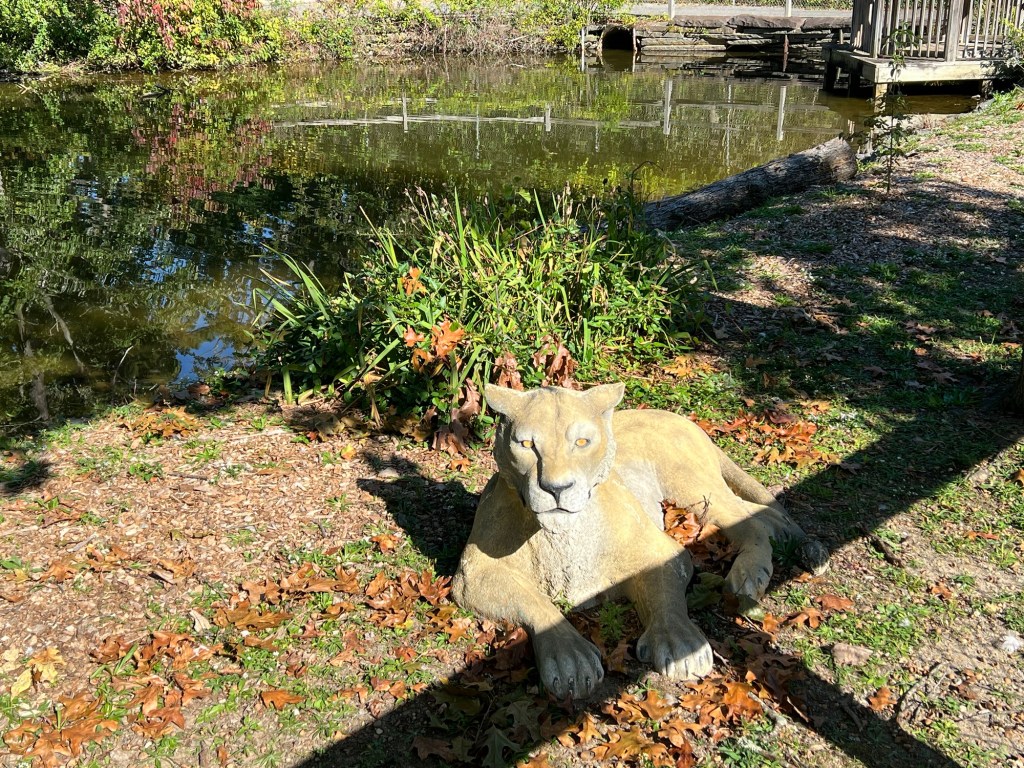
The tiger sculpture along the path at first freaked me out that he had gotten out and just looked at us. He looked real.
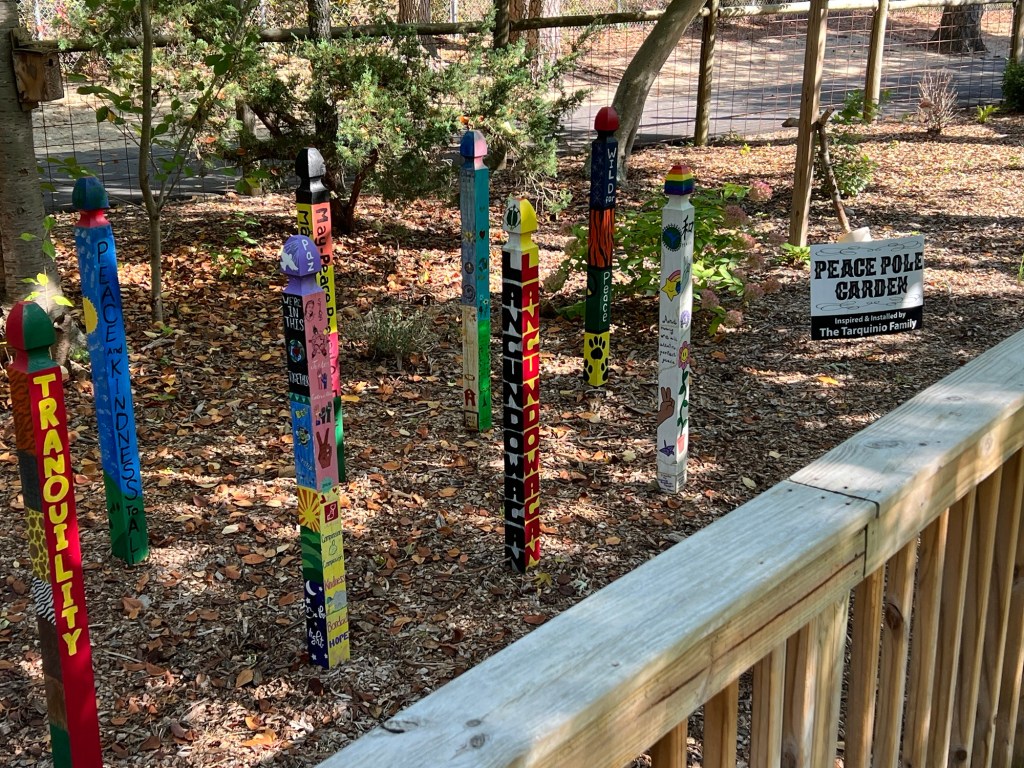
The Totem Pole Garden
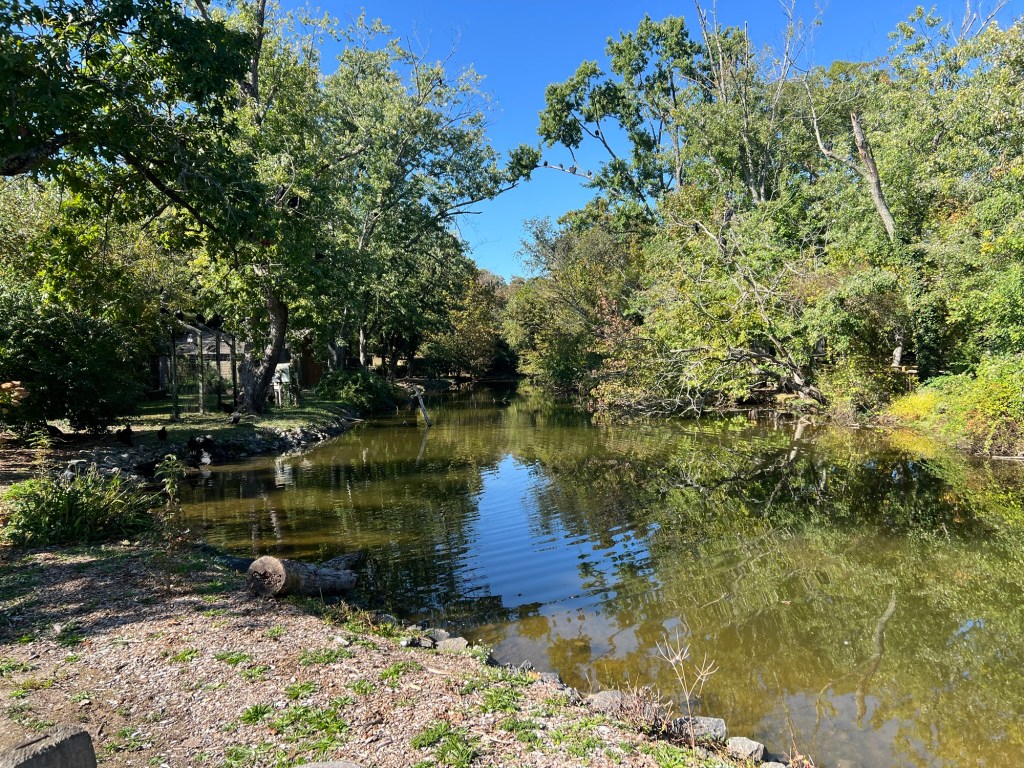
The river running through the gardens in the Fall 2024
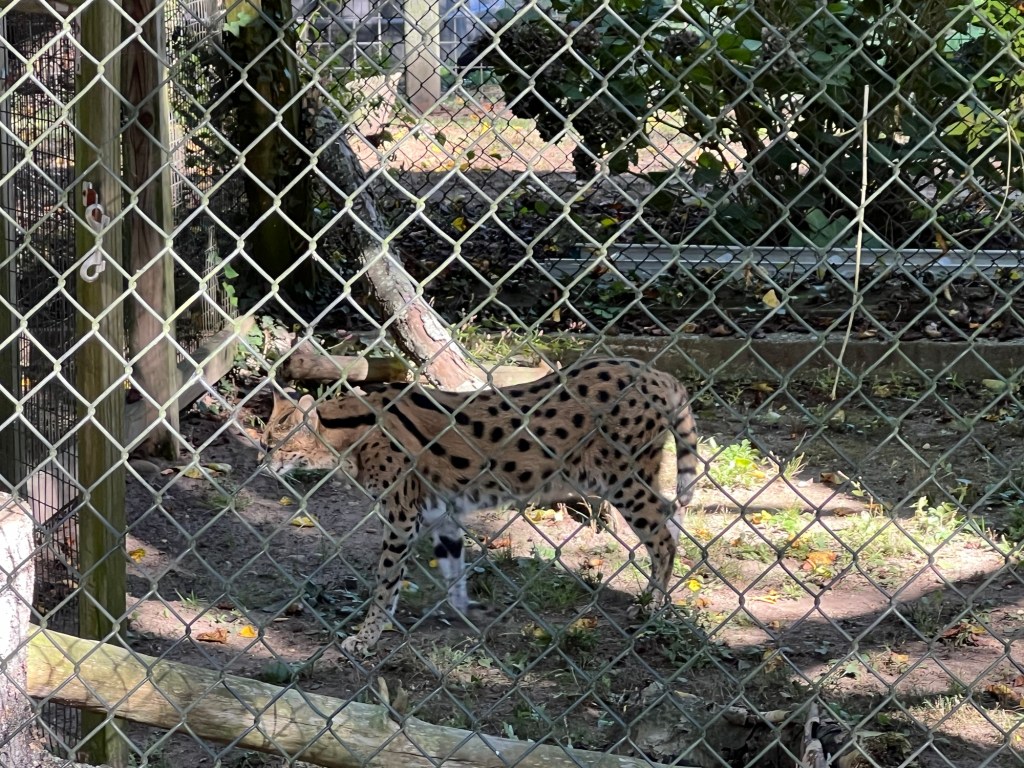
The leopard looked bored in his cage. He justly walked aimless around their cages. They are not being given enough space to move around.
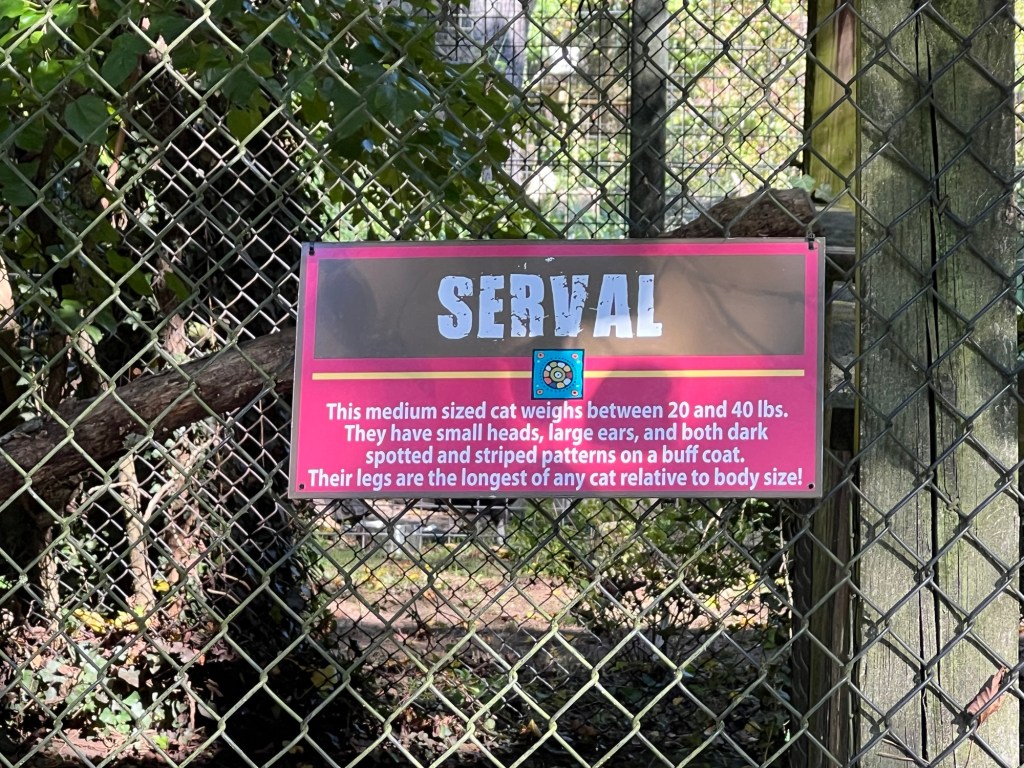
The serval cage
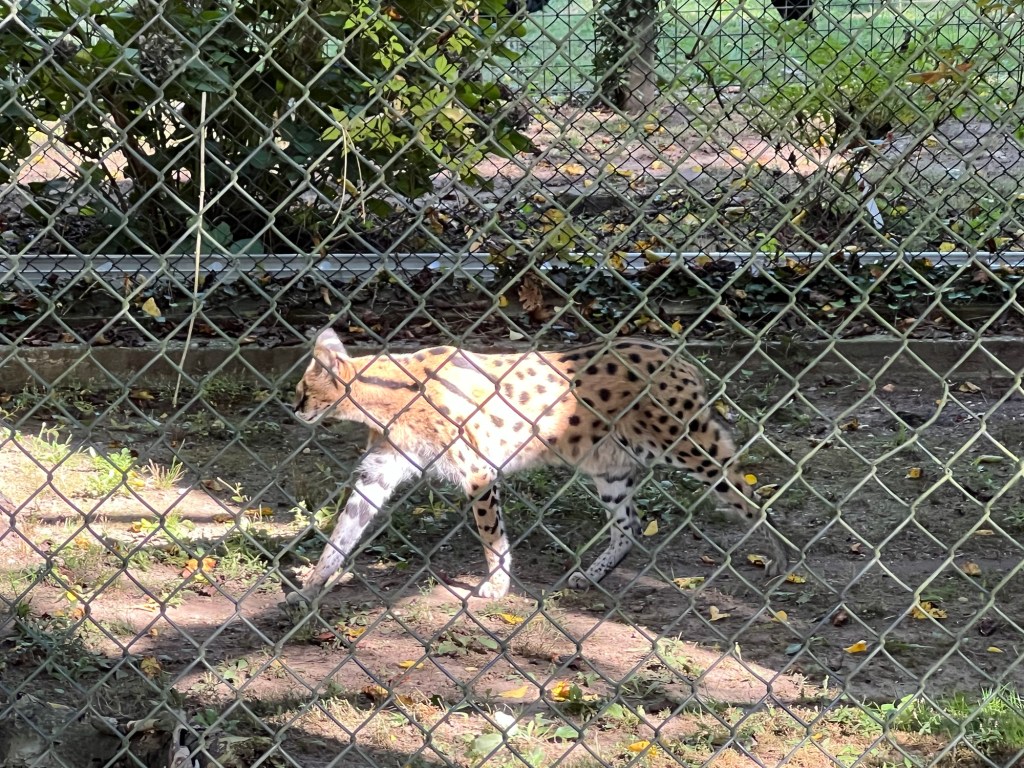
The Serval also looked bored. It just walked in circles around the cage. I was not sure if he was bored or just confused.

The zoo is such a nice way to relax and enjoy a warm afternoon. The animals here are not shy but need to have more space to move around. I think we as humans visiting them amuse them more.

The History of the Cohanzick Zoo:

(from the zoo website)

The Cohanzick Zoo is privileged to hold the title of New Jersey’s first zoo, and to this day remains one of the only municipal-ran zoos in the state. It all began back in 1934 when the City of Bridgeton found itself in possession of a small herd of deer which the citizens thought should be exhibited. And thus… a zoo was created!

The Zoo is part of the Department of Recreation and Public Affairs. Located in Bridgeton’s city park, which spans over 1,100 acres, the zoo is home to over 100 different mammals, birds, and reptiles. Over 45 different species from all around the world are represented here.

The Zoo, originally named the “Bridgeton Zoo”, was later named the Cohanzick Zoo in 1972. “Cohanzick” coming from the band of Lenape Indians who resided in the area alongside the Cohansey River, which resulted in the band of the tribe being named the Cohanzick Indians. This river flows through and around the park, adding a unique water feature.

Up until about 1970 the Zoo was a fairly small operation, running more like a petting zoo than a modern zoological care facility. This change was facilitated by Jerry Alden, who became Director of Parks and Recreation for Bridgeton. Knowing a local with a love and talent for taming wildlife, Henry R. Ricci was offered the position of curator, which he happily accepted. His defining point for change was, “Close it up, or make it a zoological garden and educational center,”.

Between 1970 and 1973 big changes came to the small zoo. Part of this is thanks to a visit to the Governor’s office in Trenton by zoo resident, Maggie, a jaguar. Her visit was rewarded with a $25,000 gift to the Zoo from the state government, per Gov. Cahill. A sanitation program was put in place, proper care and diet programs were developed for the animals, and more natural habitats were built. Dr. Ernest Zirkle, a local veterinarian who up until then had cared for the animals as a public service, was made a formal member of the zoo staff. Another big change, was the formation of the Cohanzick Zoological Society. The Society, which still exists today, comprised of local volunteer citizens, has the mission of supporting the Zoo through driving public awareness and fundraising efforts.

Since then, the Zoo has been on an ever-evolving mission to better its experience for both its animals, and its visitors. Thanks to funding from both local government and public donations, the Zoo is able to provide free admission to visitors, maintain necessary renovations, and keep up appropriate care for the animals.

Potter’s Tavern                                                      49-51 West Broad Street                                  Bridgetown, NJ 08302

Potter’s Tavern 49-51 West Broad Street Bridgetown, NJ 08302

Potter’s Tavern

49-51 West Broad Street

Bridgeton, NJ 08302

(856) 453-2175

https://en.wikipedia.org/wiki/Potter%27s_Tavern

https://explorecumberlandnj.com/cumberland-historic-sites/potters-tavern/

Open: Sunday 1:00pm-4:00pm/Monday-Saturday Closed-Seasonal please check the website

Admission: Free but donations are accepted

My review on TripAdvisor:

The Potter’s Tavern in Downtown Bridgeton, NJ

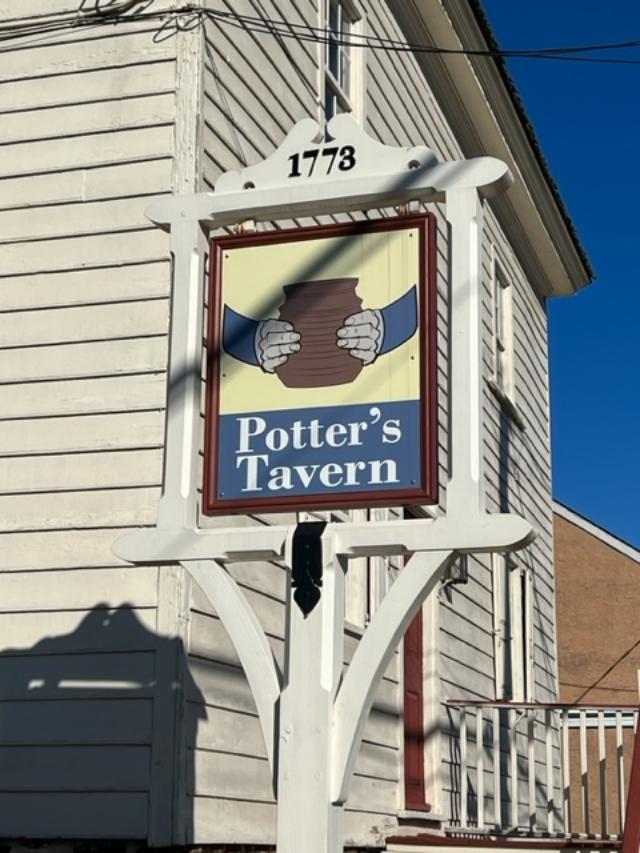
The historic sign that welcomes you

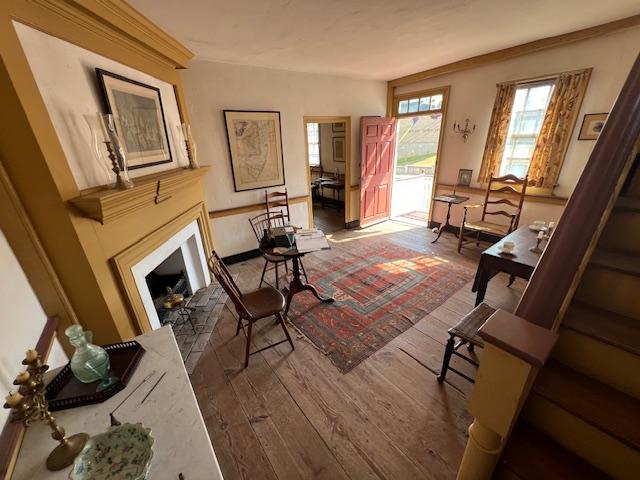
The Greeting Room at the entrance of the tavern

I finally got into the Potter’s Tavern Historical site one weekend that I was in South Jersey and it is a fascinating look at how a building and its location and purpose changed the outlook of the Revolutionary War and how we almost loss it to neglect.

The Tavern tour leads into several rooms. When you enter the building, you enter the Greeting Room or the main foyer where guests would arrive at the Tavern for the evening. To the right of the room is the main tavern where the bar was located, where issues of the day would have been debated.

The Tavern area by the main entrance

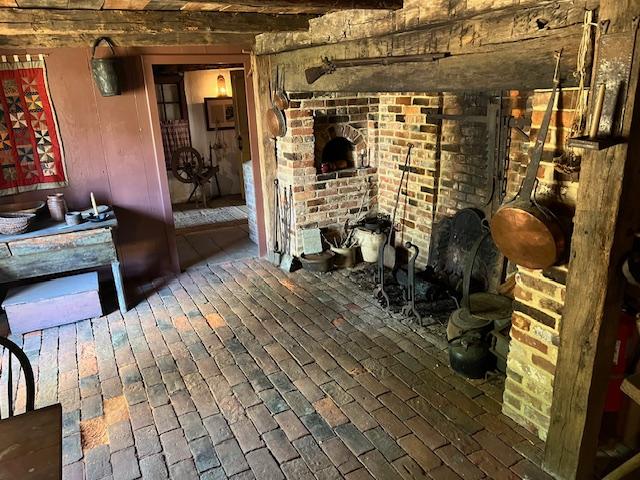
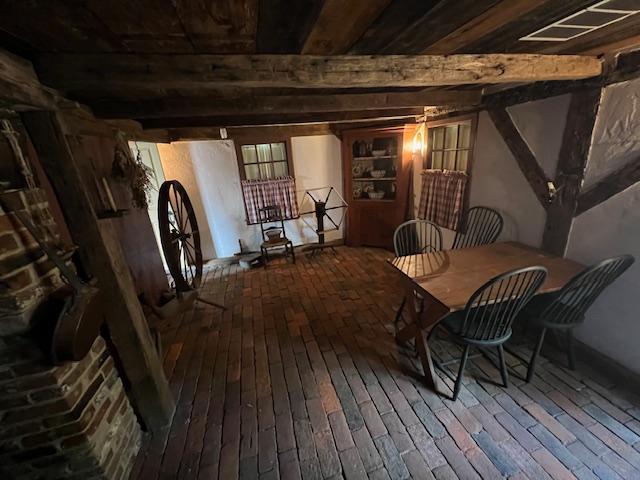
Down the stairs leads to the kitchen and to where the hearth for cooking would have been done. This was the interesting part of the tour as this had been covered up when this became a home. The hearth really shows the efforts that were made in cooking during the period.

The upstairs rooms had been decorated for overnight stays. I am not sure if they would have been this nicely decorated but Bridgeton was in an isolated area at the time and coming here by carriage must have taken several days by carriage or stage coach, so spending the night was a good idea.

The tour did not take that long as the building is small but its ties to the American Revolution is what makes it so fascinating. Its role in the war and as a meeting place that may have turned the tides of the war is what makes such a interesting place to visit.

Artifacts on the second floor

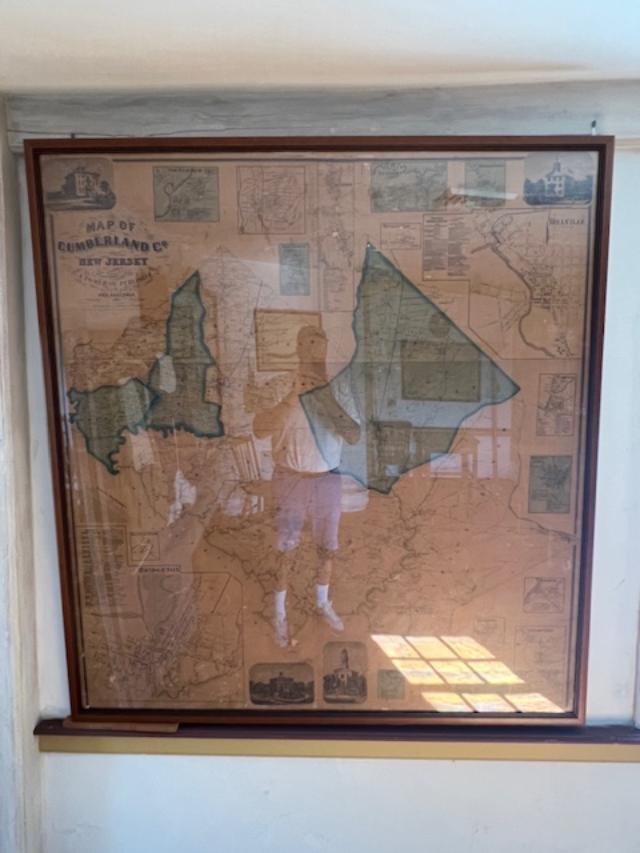
A Map of Old Bridgeton, NJ

A map of the City of Bridgeton, NJ

The History of Potter’s Tavern:

(From the Cumberland County Website)

Cohansey Bridge, the village which would become Bridgetown in 1765 and eventually Bridgeton, was a small community of less than 150 residents in the early 1700s. Cohansey Bridge was home to several taverns, which back then were places for more than food and drink. They were the social hotspots of town, the place where residents could learn about the latest local news and where travelers would pass on news from other communities. Matthew Potter, born in 1734 in Ireland, moved to Connecticut in 1740 with his mother, father and two brothers. The family soon moved to Philadelphia and not long thereafter, Matthew and his brother David moved to Cohansey Bridge where Matthew set up a blacksmith shop and tavern.

The Potter family tree in the museum

Matthew Potter’s tavern, which also served as his home, was built around 1767 and located on the north side of Broad Street. Constructed in a “salt box” design, with two stories in the front and only one in the rear with a long sloping rear roof, the tavern catered to mostly young gentlemen doing business at the courthouse, which was directly across the street.

The ‘Salt Box’ designed Potter’s Tavern

In December 1775 a weekly hand-written newspaper started appearing in Potter’s Tavern which included articles critical of British rule and supportive of independence. The Revolutionary War had begun earlier in the year, and this hand-written newspaper, known as the “Plain Dealer,” called for open revolution months before the Declaration of Independence was drafted in Philadelphia.

The inside of the Greeting Room as you walk inside the tavern

Despite efforts by local British Loyalists to identify and prosecute the contributors to the “Plain Dealer,” none of the writers, who were anonymous, were ever discovered or arrested. Writings such as those found in the “Plain Dealer” were considered treasonous and those who wrote them could be punished with public execution.

The Potter family sword collection

At least thirteen editions of the “Plain Dealer” were produced, and today scholars attribute a portion of the success of the American Revolution to the creation of powerful communication among colonists through newspapers and leaflets like the “Plain Dealer.” By reaching out to one another, colonists built bonds of sympathy and unified and by reading about local acts of resistance and stories of suffering under British rule the colonists came to realize they were fighting for each other.

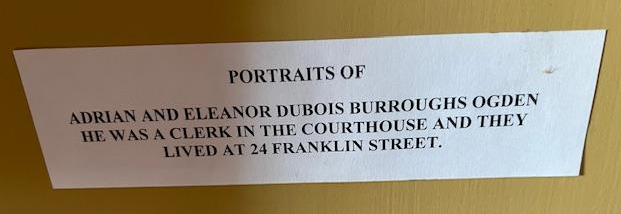
The Dubois Family Portraits of Adrian and Eleanor Dubois Burroughs Ogden

After the Revolutionary War concluded several of the writers of the “Plain Dealer” came forward and became leaders in the new nation of the United States of America. These included Joseph Bloomfield and Richard Howell, who served as governors of New Jersey.

The Tavern’s Kitchen and Hearth

Potter’s Tavern remained a tavern until around 1788 when it was converted into a two-family dwelling. It then is abandoned and nearly collapsed before being purchased by the City of Bridgeton in 1958. In the 1970’s it was placed on the State and National Registers of Historic Places and is now owned by the County of Cumberland and leased to the Cumberland County Historical Society. It is open on July 4th and other special occasions and by reservation. The only known surviving copies of the “Plain Dealer” are held in the Rare Book Collection of Rutgers University Library.

The Beehive oven in the kitchen

Old Broad Street Presbyterian Church & Cemetery                                                                 54 West Avenue                                                South Bridgeton, NJ 08302

Old Broad Street Presbyterian Church & Cemetery 54 West Avenue South Bridgeton, NJ 08302

Old Broad Street Presbyterian Church & Cemetery

54 West Avenue

South Bridgeton, NJ 08302

Check website

https://en.wikipedia.org/wiki/Old_Broad_Street_Presbyterian_Church_and_Cemetery

http://cumberlandnjart.org/cumberland-historic-sites/broad-st-presbyterian-church/

Open: From Dawn to Dusk every day

Admission: Free

My review on TripAdvisor:

https://www.tripadvisor.com/ShowUserReviews-g46324-d24140698-r844174571-Old_Broad_Street_Presbyterian_Church_Cemetery-Bridgeton_New_Jersey.html?m=19905

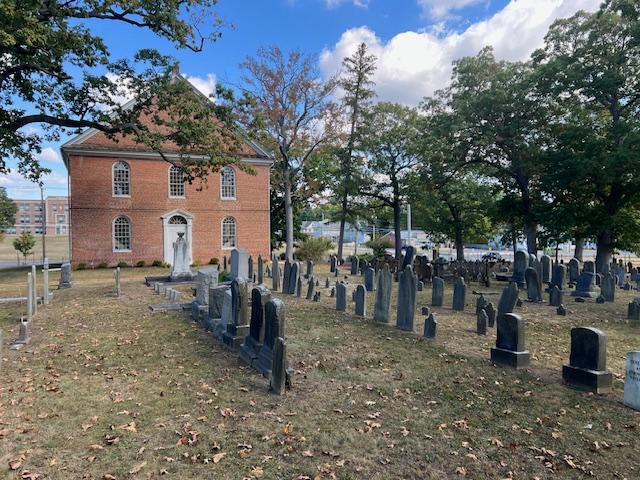
The Old Broad Street Presbyterian Church in its glory in the entrance to the historic cemetery

The Church and its historic cemetery.

When I was traveling to Salem and Cumberland Counties to visit historical sites, this was the last one on my list the first day of exploring. The Old Broad Street Presbyterian Church sits in the middle of a declining downtown in Bridgeton, NJ like a ghost of its former self. This graceful and elegant church is not used much anymore and sits like a majestic building overlooking a city that has passed it by.

The Church and its historic cemetery.

The church was built in 1792 for the growing Presbyterian congregation who was living in Bridgetown as it was called at the time. The brick walls and roof were completed but it would take another three years for the interior to be finished (Cumberland History.org).

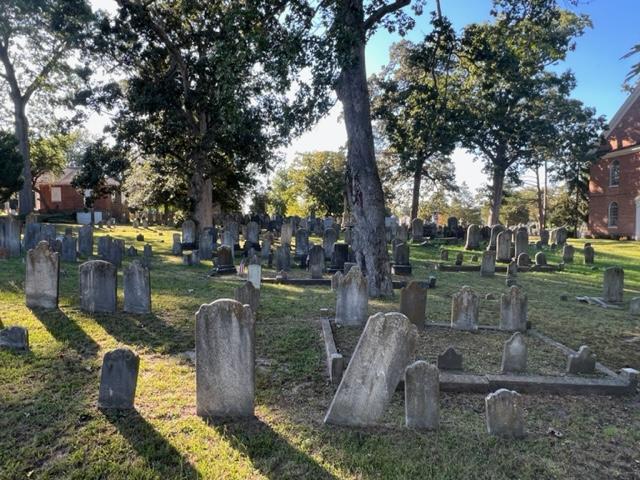
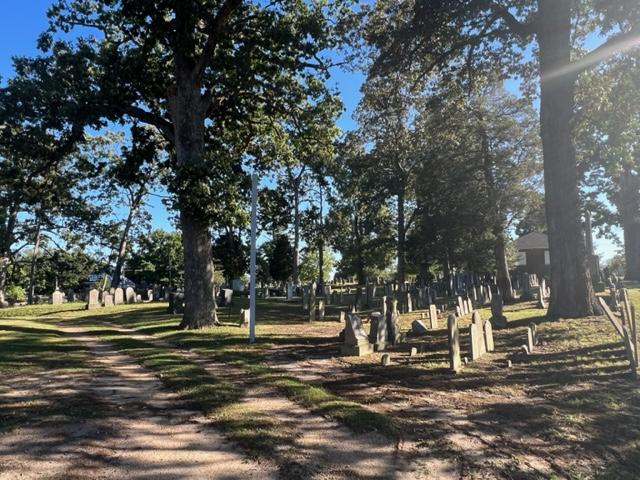
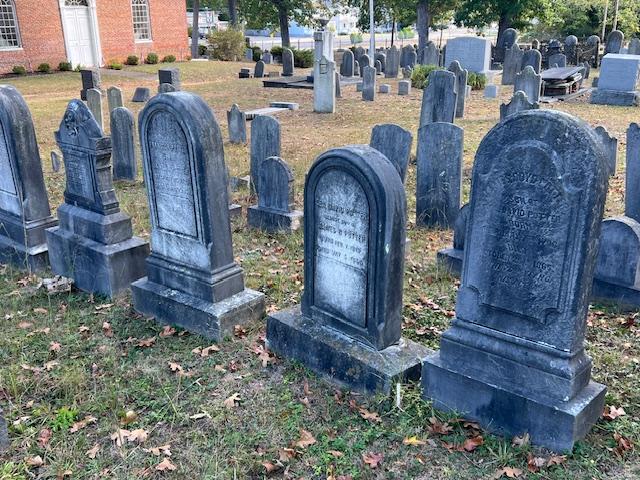
The historic family cemetery

The cemetery is extremely interesting as you visit the historic tombstones and the family plots and try to figure out the connections. The biggest problem with the cemetery is that is has gotten very overgrown in parts of it. It needs a good mowing and the gravestones need to be cleaned as they are wearing away with the elements. It was hard to follow the historical listing but many famous residents and leaders of the community are buried here as well as members of the armed forces from the Revolutionary and Civil Wars and earlier.

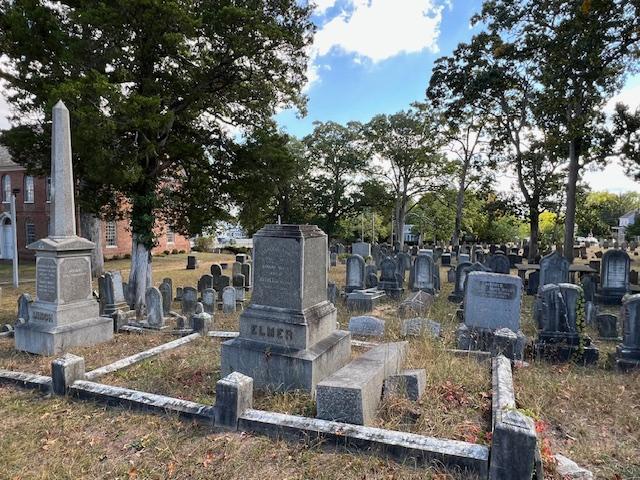
The family plots at the cemetery

In some cases, when the families were buried together, it almost told the story of what happened within the family. I saw grave sites where the son or daughter either died in child birth or a disease or in battle and then the devastated parents followed a few years later which was a sad narrative. I saw this many times in the family plots. How many children died of diseases that today are solved by a pill.

The family plots

Some of the notable people buried in the cemetery are Ebenezer Elmer, who represented New Jersey in the United States House of Representatives from 1801-1807 and Jonathan Elmer, who represented New Jersey in the United States Senate from 1789-1791. Lucius Elmer, who represented New Jersey’s First congressional district from 1843-1845. Eilas Seeley, who was the Eleventh Governor of New Jersey serving in 1833. William G. Whiteley, who represented Delaware in the United States House of Representative from 1857 to 1861. Joseph Archibald Clark and Clement Waters Shoemaker, who were two of the founders of Cumberland Glass Manufacturing Company (Wiki).

The David Potter tomb

The history of the Broad Street Presbyterian Church and its cemetery:

(From Cumberland NJ Art.org)

For much of the 18th century in Bridgetown, which will eventually change its name to Bridgeton, there existed no church for Presbyterians, who were a large and growing segment of the local population. For church services, they were forced to conduct services in the Courthouse or travel to churches in Greenwich, Fairfield or Deerfield several miles away.

Family plots and crips

In 1792, about two acres of land were donated along King’s Highway, which was the main road from Bridgeton to Greenwich and ran along the south end of the church construction site. In 1800, this main route was relocated to the north and is today Broad Street (Route 49).

The cemetery grounds on a late summer afternoon.

The basic design of the Broad Street Presbyterian Church was set by it congregation and organizers who requested a masonry building with dimensions of at least forty by fifty feet. By December 1792, the brick walls and roof has been completed but it would take another three years for the interior to be finished.

The church in the early Fall of 2024

The design of the Broad Street Presbyterian Church is that of a meeting house, almost square in proportion. In the 17th and early 18th centuries, many American houses of worship were built in the meeting house form. This design was in contrast to the more formal churches of the period, which were more rectangular than square with an alter and/or communion table and pulpit approached by a long nave and often divided from the congregation by a railing. Broad Street Presbyterian Church has a tall pulpit, accessed by a winding stair and surrounded on three sides by pews so as many congregations as possible could attend and sit as close as possible to the preacher.

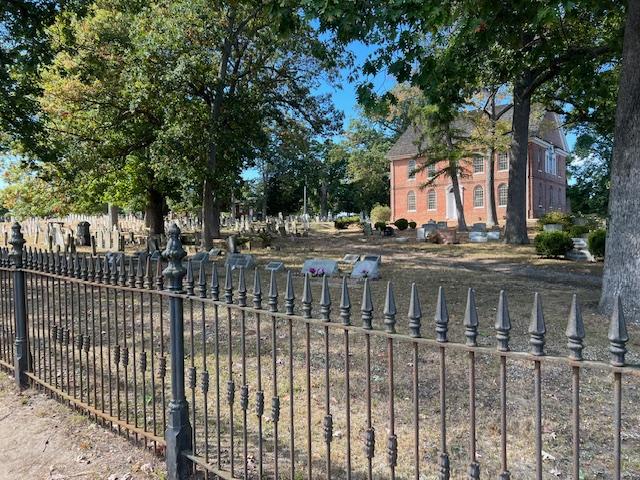
The beautifully designed church behind the fence

Above the pulpit is one of the most significant architectural features of the church, the Palladian window with its central window and semicircular arch flanked on each side by smaller windows and all unified by an entablature supported by columns. The name “Palladian” comes from the Venetian architect who originated the design, Andrea Palladio, who worked in 16th century.

The Elmer Family plot

Architects in the 17th and 18th centuries would travel from other parts of Europe to Italy to study architecture and they brought the Palladian style back to England and the American Colonies. Thomas Jefferson acquired an intense appreciation of Palladian architecture and used it extensively in his design for Monticello.

By 1835, the congregation had erected a new church but because the Broad Street church was surrounded by the cemetery, the congregation did not abandon or sell it but rather maintained it exactly as they left it, which is why today it is identified as one of the most pristine and unaltered examples of 18th century church architecture in the United States.

Today the Broad Street Presbyterian Church is used for special services and opened to the pubic by appointment. It is carefully maintained by the Presbyterian congregation of First Presbyterian Church located on Commerce Street in Bridgeton, NJ.