Category: Historic Churches and Cemeteries

Klyne Esopus Museum                                         764 Route 9 West                                             Ulster Park, NY 12487

Klyne Esopus Museum 764 Route 9 West Ulster Park, NY 12487

Klyne Esopus Museum

764 Route 9 West

Ulster Park, NY 12487

(845) 338-8109

https://www.esopushistorymuseum.org/

https://www.facebook.com/EsopusHistoryMuseum/

Open: Sunday-Monday 11:00am-4:00pm/Tuesday-Thursday Closed/Friday-Saturday 11:00am-4:00pm

Admission: Free but donations are taken to offset costs

My review on TripAdvisor:

https://www.tripadvisor.com/ShowUserReviews-g48749-d26495761-r908410891-Klyne_Esopus_Museum-Ulster_Park_Catskill_Region_New_York.html?m=19905

The Klyne Esopus Museum is the home of the Town of Esopus Historical Society and is a treasure trove of information of early life in the Hudson River Valley and the role this small town played in the shaping of American society in this region. There are all sorts of displays on early American life, cottage industries that made the community grow and its role in the modern age.
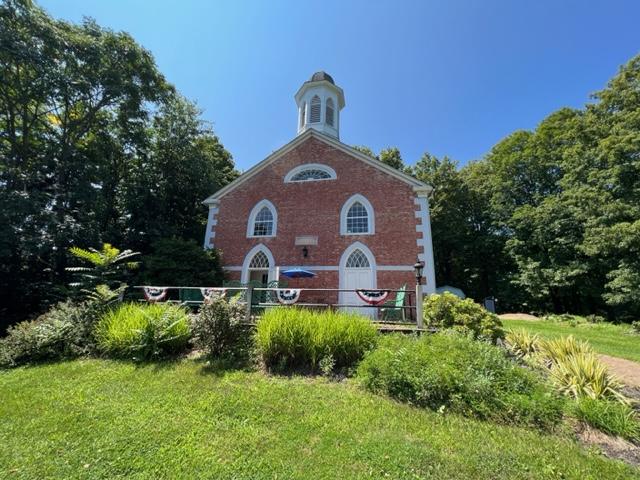
The Klyne Esopus Museum at 764 Route 9 West

The sign welcoming visitors to the museum.
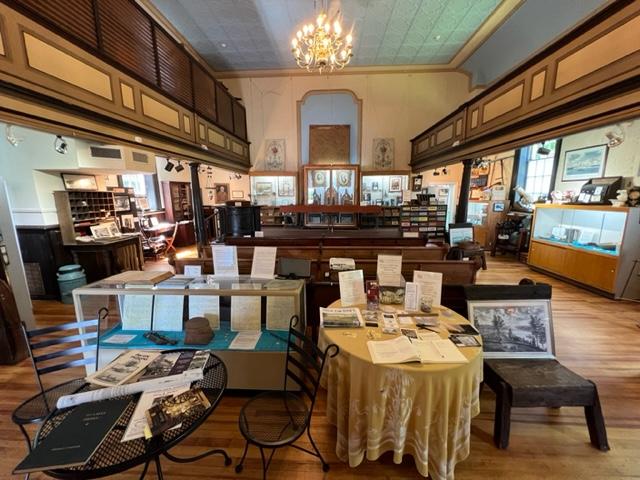
The Main Gallery at the Museum

The museum’s main gallery is surrounded by cases displaying the story of the area depicting the various aspects of industry, commerce, agriculture and domestic activities of the town’s residents. Former residents of note that are featured are Sojourner Truth, John Burroughs and Alton Parker to name a few. year a curated exhibition focusing on a special theme is centrally featured. These are some of the exhibits that are showcased at the museum:

The Native American exhibit:

The exhibit has an interesting collection of arrowheads, fishing and household items that were used by the local tribes who once lived in the area.

The display of arrowheads and fishing items
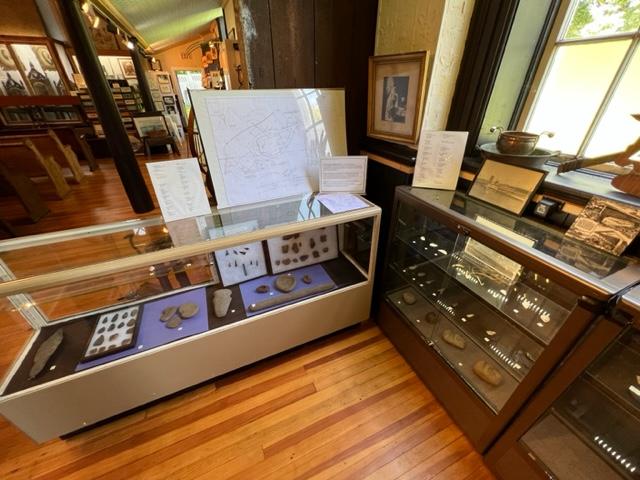
The extensive display of Native American fishing and household items.

The Apple industry:
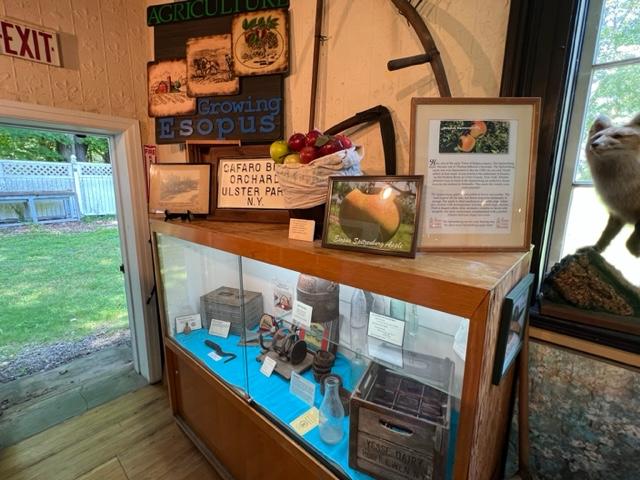
The local Apple industry was a major part of the economy in the late 1800’s and early 1900’s. The apple, the “Esopus Spitzenburg” was developed in Esopus. The Dutch had developed the agricultural industry of the area that supplied New York City with seasonal fruits and vegetables.
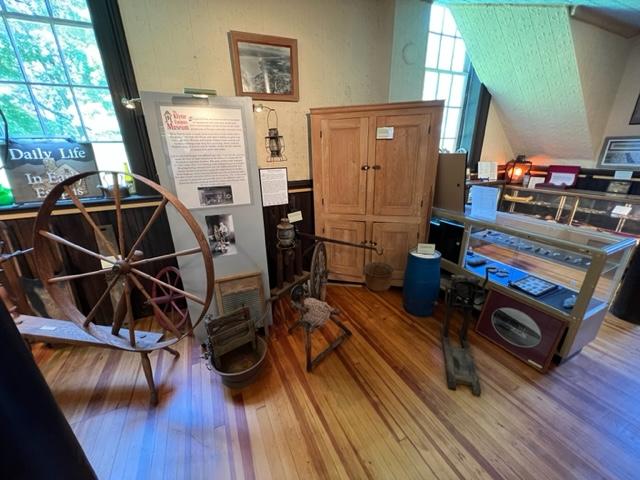
The Dutch Farming Industry and the development of local harvests

With the community based by the Hudson River and transportation being such a big part of the local economy, the displays on shipping and the local lighthouses were prominent at the museum. The display has all sorts of pictures and artifacts from the era of steamboat transportation down the Hudson River.
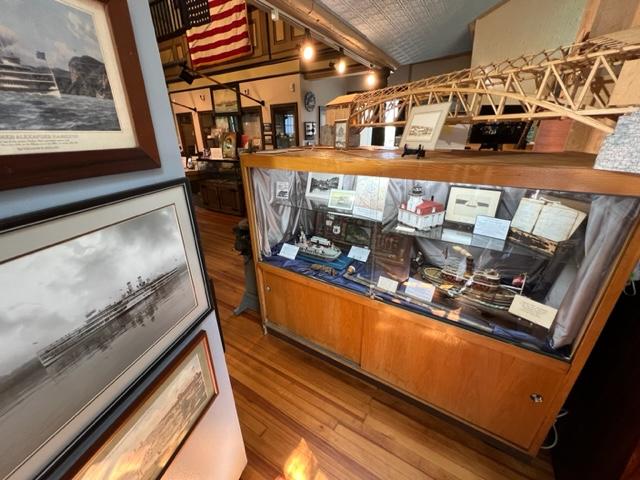
The Lighthouse and Shipping Industry

There were displays on famous residents such as Sojourner Truth and John Burroughs and their role in the community.

The artifacts and display on Sojourner Truth

https://en.wikipedia.org/wiki/Sojourner_Truth
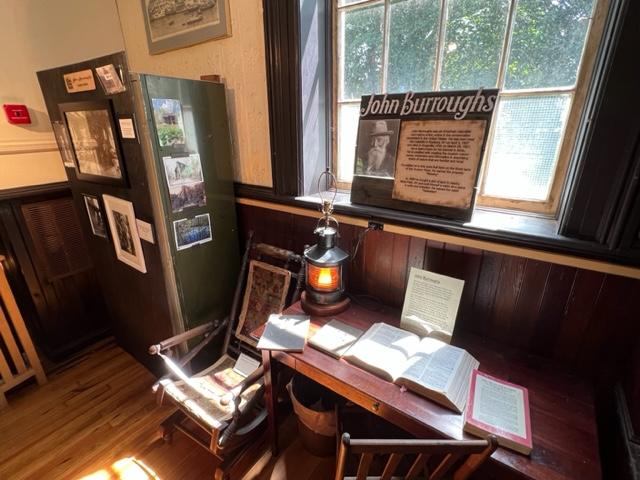
The artifacts and display on John Burroughs

https://en.wikipedia.org/wiki/John_Burroughs

The church is also featured pictures of clergy and their families, the history of the church and the decor of items that used to adorn the church when it was a place of worship. There is a large display on church history in the back of the museum.
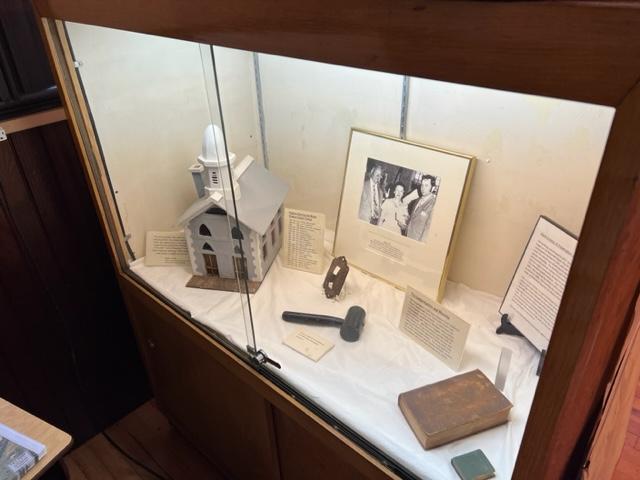
The Church display of its history

The local veterans are prominently displayed at the museum as was showing the spirit and support of the wars and battle. It also shows the townspeople participation and dedication in the war effort.
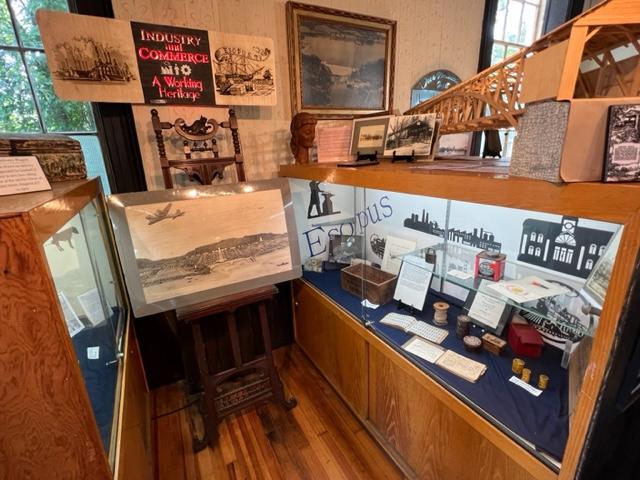
The World War II exhibition

Recreation and leisure are a big part of the Hudson River Valley society and items such as ice skates, swimming and boating show how people enjoyed their free time. This still plays out today. Household items were also displayed as well showing life at that time.
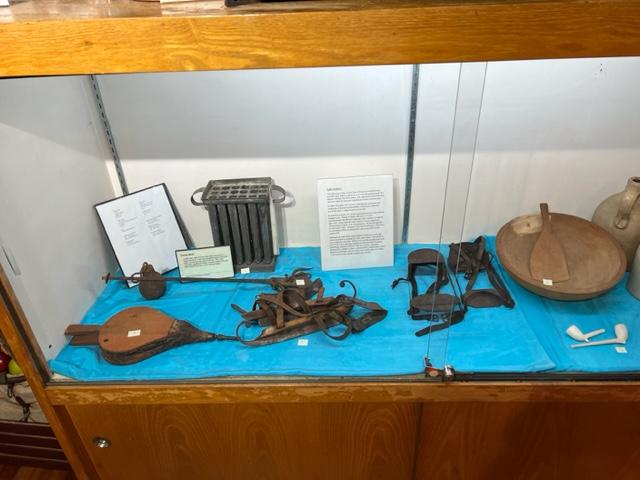
Household and Recreation items on display

The History of the museum:

(From the website and pamphlet)

The Klyne Esopus Museum that is located in Ulster Park, NY is housed in the former Dutch Reformed Church, which is a charming country church built in 1827. It served the community for over 175 years and replaced a smaller building built in 1792 originally located 1000 ft. to the north.  The church closed in 1965. The governing body of the church scheduled the building for demolition.

Faced with this reality, the former members of the congregation and the larger community rallied to preserve the building.  In 1969, a group known as the Klyne Esopus Historic Preservation Committee formed. Formal incorporation of the group took place in 1970.  After 17 years of fundraisers, repairs to the building, preserving and collecting, the museum finally opened to the public. In 2002, the building became designated a State and National Historic Landmark. 

The historical society museum opened to the public in 1984, offering a variety of exhibits about the culture, commerce and history of the Town of Esopus. The town is typical of rural America but it unique in many ways. Its geographic location and topography have spawned a variety of industries, resulting in a rich history and a diverse population.

The Klyn Esopus Museum is the Historical Society of the Town of Esopus. Its goal is to preserve, interpret and disseminate the history of the town. By fostering an awareness of the past and providing a repository for the artifacts and memorabilia of its former residents, it enables present and future generations to identify and appreciate times gone by. Today, a small, committed group of volunteers is working to make history meaningful and relevant to visitors of all ages. 
Lewes Presbyterian Church                                                            133 Kings Highway                                                                     Lewes, DE 19958

Lewes Presbyterian Church 133 Kings Highway Lewes, DE 19958

Lewes Presbyterian Church

133 Kings Highway

Lewes, DE 19958

(302) 645-5345

https://lewespresbyterianchurch.org/

https://www.facebook.com/people/Lewes-Presbyterian-Church/100068713518418/

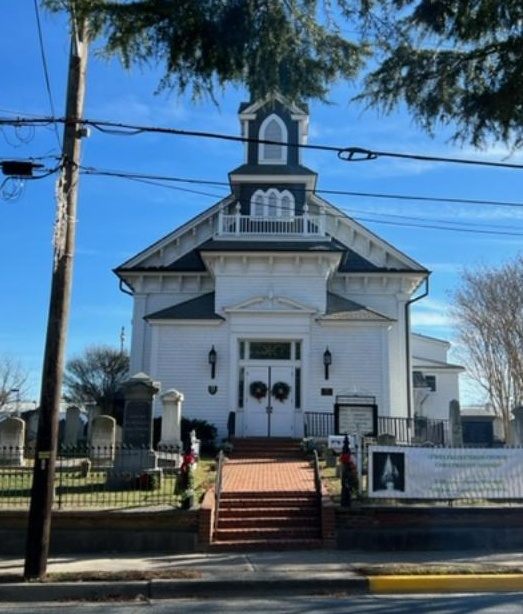
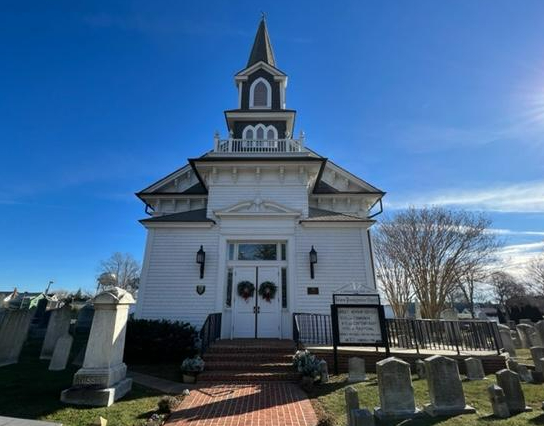
Lewes Presbyterian Church at 133 Kings Highway

This beautiful church is located just off downtown Lewes, DE. The church’s cemetery is what attracted me to the site with all the historical names of founding families of Delaware and of Lewes and its ties to the Revolutionary War. It is interesting to walk around and look at the names on the tombstones and wonder what their lives must have been like back then. The church is only open on Sunday mornings so I have not had the chance to see inside. It’s stained glass windows are supposed to be amazing.

I am going to try to attend services there the next time I am in town.

The historic marker

Our History

(Written by Judith Atkins Roberts, 2003-Lewes Presbyterian Church website)

Presbyterianism came early to the Eastern Shore and Sussex County as Scots and Scotch-Irishmen sought refuge from the oppression of Charles II of England. In 1683, the Presbytery of Laggan, Scotland sent Rev. Francis Makemie to America. He is considered the Father of Presbyterianism in America and through his leadership the church grew rapidly. In 1683, he organized a church in Rehobeth, Maryland.

The congregation at Lewes was established under Rev. Samuel Davis, one of Makemie’s “young men,” in 1692. In 1707, the congregation built a small wooden church on one hundred feet square of land which was part of an original land grant. This frame building is believed to have been the second Presbyterian Church in Delaware.

OLD BRICK CHURCH – 1727

In 1727 a brick church was built for the Rev. John Thomson who served the Lewes congregation from 1717-1729. A small picture of this church is displayed in the Conference Room of the present church. This second church served as a school and church until 1832 when the present church was consecrated during the ministry of the Rev. John Mitchelmore. A centograph is displayed in the vestibule in memory of Rev. Mitchelmore who drowned in the Delaware River. In 1871 the brick church was demolished.

The original brick church

COL. DAVID HALL

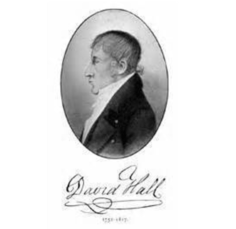
During the War for Independence, George III once referred to the conflict as a Presbyterian rebellion and so it was as Presbyterians were invariably staunch patriots. The first democratic governor of Delaware, Col. David Hall, who had been commander of the Delaware line during the hostilities, was a member of the Lewes congregation.

The church cemetery

REV. MATTHEW WILSON

The most colorful of Lewes’ patriots was her Presbyterian minister, the Rev. Matthew Wilson, who was a scholar, teacher, author and preacher. He held degrees in medicine and divinity and had a great knowledge of law. He was so fervent a patriot that he wore the word “Liberty” on his hat. His first son, James Patriot Wilson, was a lawyer, then a minister who served the First Presbyterian Church in Philadelphia for forty years. James Patriot’s son, James Patriot, was President of Delaware College and the Union Theological Seminary. Thus the Wilsons continued the high standard of education which had been initiated by Rev. Matthew Wilson. It was he who suggested that an institution of higher learning be established at Newark fifty years before Delaware College was founded (Church website).

The church cemetery

The Church cemetery in the Spring 2024

The Sleeping tombstones at Lewes Presbyterian Church cemetery.

STAINED GLASS

Alterations have been made over the years to the present church which formerly had a balcony around three sides of the interior. The original windows were three sections of leaded glass panes which were replaced in 1926 by the six exquisite stained glass windows which now beautify our sanctuary. The Biblical events depicted in the windows are:

  • Come Unto Me
  • Blessing the Children
  • The Resurrection
  • The Nativity
  • The Good Shepherd
  • Walk to Emmaus

Two more windows were placed in the vestibule in 1965. The one on the left is in memory of Mrs. Lena Tammany. The circular one on the landing is in memory of our most beloved pastor, the Rev. William Leishman who served our church for 34 years (Church website).

The Church at Christmas time

RENOVATIONS

The organ and the choir were established in the balcony until 1877 when both were moved to the newly constructed choir loft. The Mustard property on the west side of the church was purchased and laid out in cemetery plots. The trustees also bought the Wesley property on the other side of the church where they built a manse. The present manse was built in 1959.

By 1886, extensive renovations were made to the interior and exterior of the church. The side galleries were removed, an open steeple was built to house a one thousand pound bell. A new organ was installed in the choir loft.  

In 1900, a pipe organ was purchased and the church interior was redecorated. This organ was completely renovated in 1981 and in 2009. The Sunday School building (now the middle section of the new Activities Building constructed in 2000-01 was built in 1914. In 1950, the basement was finished and decorated as a social and recreational hall for the congregation.

Additions and changes have been made to the entrance over the years, the last one in 1931 when the original doorstep was placed on the right of the vestibule. In the late 1940’s the old steeple was replaced with a closed tower. In 2008-09, the sanctuary was reconstructed and rededicated to the glory of God on September 27, 2009.

GIFTS TO THE CHURCH

One of the most valued possessions of the Lewes Presbyterian Church is her Session Book which was begun in 1756 by Rev. Matthew Wilson. In this book are the records of baptisms, marriages and funerals, as well as comments made by various ministers on the social behavior of some members of the church who did not always exemplify the strict doctrines against liquor and gambling. It was placed at the Presbyterian Historical Society in Philadelphia in 1982 for safekeeping.

Many gifts have been donated to the church over the years. The finest of these is the silver communion service which is believed to have been a gift of Col. Samuel Boyer Davis who commanded the militia during the bombardment of Lewes by the British in 1813. Col. Davis was the great-grandson of Rev. Samuel Davis.

Today our church continues the traditions established over nearly three hundred years. Perhaps our most beautiful tradition is that of the annual Candlelight Service at Christmas which was first held on December 16, 1924. Each year, the Nativity window is lit from the exterior of the church. Then at the close of the service, as each worshiper holds a lit candle, the church is darkened and voices are raised in a Christmas hymn which reminds us all of God’s precious gifts to us – 

His Only Begotten and Beloved Son, Jesus Christ.

(Church Website)

The Parker family plot at the church cemetery.

Day Two Hundred and Forty-Five Exploring the Historical sites of Fishkill, NY- A Local Journey                                             August 7th and 14th, and December 10th, 2022

Day Two Hundred and Forty-Five Exploring the Historical sites of Fishkill, NY- A Local Journey August 7th and 14th, and December 10th, 2022

Don’t miss touring the historical sites of the Fishkill, NY area and then touring the local downtowns for something to eat.

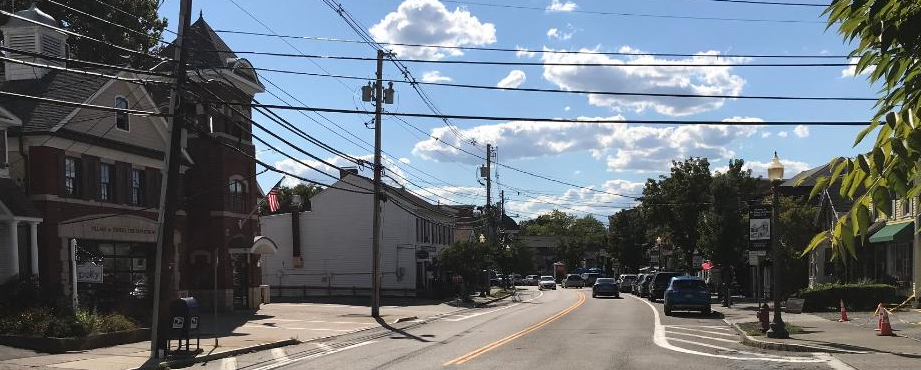
There is lots to do and see in Fishkill, NY

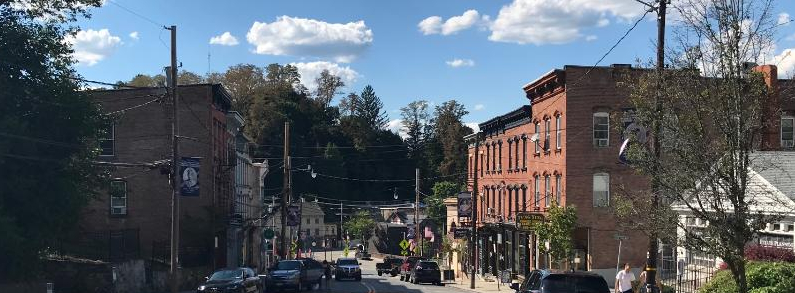
There’s lots to do and see in Wappinger Falls, NY as well

Don’t miss these two wonderful downtowns and all the historical sites, parks, farms and wonderful eating establishments in the surrounding area. It makes a wonderful afternoon.

Christmas at the Brinkerhoff House

The Brinckerhoff House decorated for Christmas tea fundraiser

The First Reformed Church of Fishkill decorated for the Christmas holidays

jwatrel's avatarmywalkinmanhattan

I love visiting the Hudson River Valley so any event or tour that I can go on is an excuse to come up here. I had visited all the sites that I wanted to see on a trip two weeks earlier but wanted to see them in more detail plus I wanted to take some pictures. The weather finally broke, and it was a much more pleasant 83 degrees as opposed to the 96 degrees the trip before. That makes the trip much nicer.

I asked my aunt along so that we could share in the experience, and I could use her phone to take pictures of the all the sites. It is a much nicer trip when you have someone along who enjoys these things. The one nice thing about traveling to the Fishkill, New York area is that it is only an hour away and a straight run…

View original post 3,354 more words

First Reformed Dutch Church of Fishkill                             1153 Main Street                                                                Fishkill, NY 12524

First Reformed Dutch Church of Fishkill 1153 Main Street Fishkill, NY 12524

First Reformed Dutch Church of Fishkill

1153 Main Street

Fishkill, NY 12524

(845) 896-4546

Open: Church Services are on Sundays at 10:00am

https://www.facebook.com/FirstReformedChurchofFishkill/

Home Page

My review on TripAdvisor:

https://www.tripadvisor.com/Attraction_Review-g47724-d263921-Reviews-First_Reformed_Church_of_Fishkill-Fishkill_New_York.html

After visiting three historical homes in the Fishkill area covering the towns of Hopewell Junction and Wappingers Falls, my last stop of the day was the First Dutch Reformed Church of Fishkill, NY. The church was closed at this point with services being on Sunday’s only starting at 10:00am. I was able to tour around the church admiring its architecture, looking over the DuBois House which is also owned by the church and exploring the cemetery.

The cemetery was the most interesting being the final resting place of many of the ‘first families’ of the area, including family plots of the Van Wyck and Brinckerhoff families, who also intermarried with each other. There were sections dedicated just to the families and then to the blended ones.

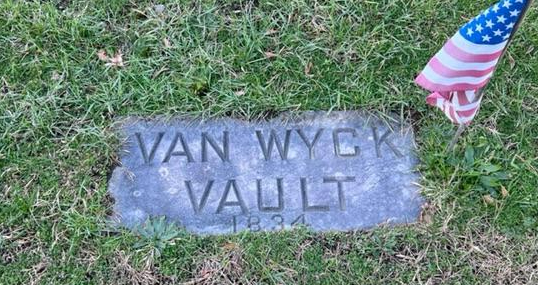
There were also members of the DuBois Family among others. What was interesting was toward the back of the cemetery near the new playground was the Van Wyck Family Vault. This large mound is noted with the stone maker in the front of the vault.

The Van Wyck family vault at the Fishkill Reformed Church Cemetery

The Church played an important role in worshipping in the community as it does today.

The Founding of the Church:

(From the Church records)

On October 10th, 1715, the Revered Petrus Vas of Kingston, NY under the direction of the Classis of Amsterdam, started two Dutch Reformed Churches, one in Poughkeepsie and the other in Fishkill. This occurred when the population of the are increased and they did not want to keep travelling to New Paltz for worship.

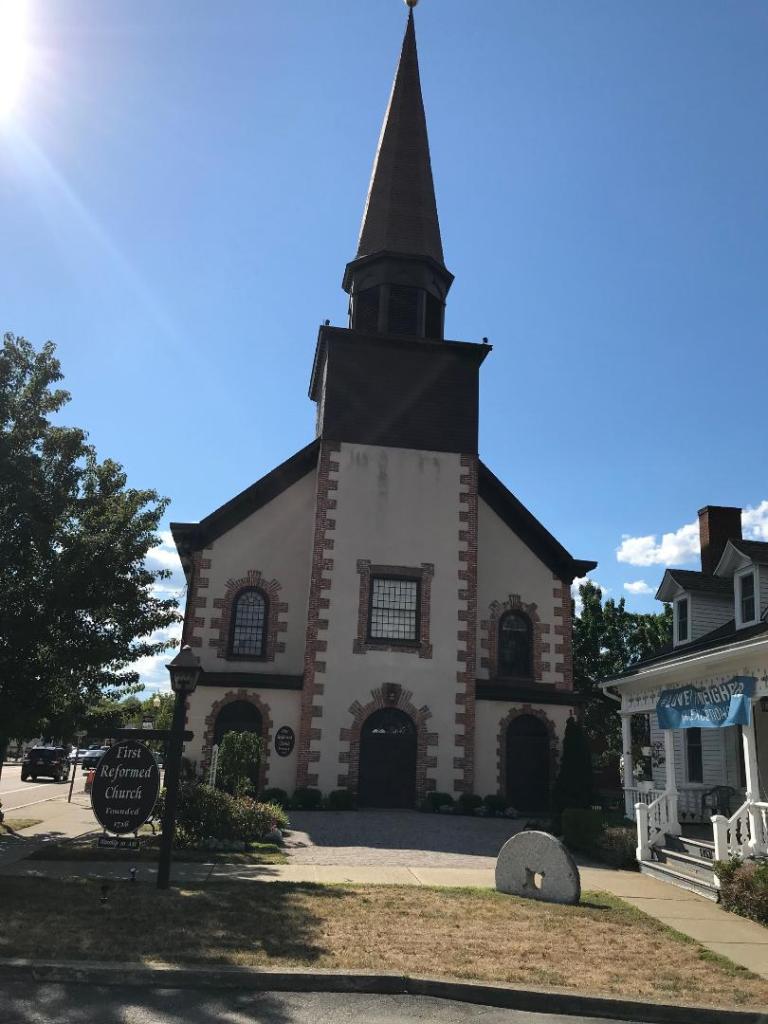
The First Reformed Dutch Church of Fishkill, NY at 1153 Main Street

The Church today:

(From the Church website)

The 20th Century brought additional changed to the property. Some gravestones were moved to make space for the Christian Education Building, which was constructed in 1964. The old chapel, a 19th century addition to the property was torn down. The playground is now located where the chapel was once. A Memorial Garden was added to the cemetery in 1980 and includes a columbarium for cremains. The sanctuary’s exterior was refurbished in 1975, the steeple reshingled and the rooster regilded in 1984.

In 1992, a condition survey was done (the church is the centerpiece of the Fishkill Village National Historic District). This report concluded that the sanctuary is one of the most significant nonresidential 18th Century buildings in New York, if not the country. The framing is a perfect example of an upside-down boat. While it was urged to pursue National Landmark Status for the church itself, it has not yet been done.

The Cemetery:

In 1995, a report on the preservation of cemetery gravestones was done. A Boy Scout Eagle Project, in 2002, recorded pictures and inscriptions of each stone in the cemetery and created a finder’s map of the cemetery.

The Enoch Crosby marker for a spy for the American forces during the Revolutionary War

The trial was performed here, and Enoch Crosby was allowed to escape. This marker is dedicated to that event.

The cemetery behind the church with the DuBois House and Church to the right:

The DuBois House:

(From the Church website)

The property was expanded in 1991 with the purchase of the DuBois House (named for the founding elder of the church). There is no record of when it was built but with structural similarities to the Van Wyck House made it believed to be built in the mid 1700’s. Abraham Brinckerhoff Rapalje purchased the house with fifty-four acres of land from his uncle, Abraham Brinckerhoff in 1790. Rapalje was the man hired by the consistory to do finish work after the church was enlarged following the Revolution. The house served as the hearing room for the court proceedings of the Committee of Safety over which John Jay, who would later become our nation’s first Supreme Court Justice presided.

The Committee of Safety played an important role in the story of Enoch Crosby, the Revolutionary Spy. The house was originally located east of its present location and was moved in 1929 to make way for the expansion of the Albany Post Road, now Route 9. The building is used for service to the community and church. It contains the church parlor and offices for the Minister and Secretary on the first floor and the office of the Music Director.

The Brinckerhoff/Van Wyck family plots

The Van Wyck family plot

The full Dutch Reformed Church of Fishkill cemetery and church

The Van Wyck Family Vault:

The History of the Dutch Reformed Church of Fishkill, NY:

By 1716, the population of the area had grown enough (though the whole county had only 440 people) that the settlers wanted their own church instead of having to cross the river to New Paltz or Kingston where the two closest Reformed Churches were located. Therefore, on October 10th, 1716, the Reverend Petrus Vas from Kingston under the direction of the Classis of Amsterdam started two Dutch Reformed Churches, one in Poughkeepsie and one in Fishkill.

While Poughkeepsie began building immediately, Fishkill did not begin building until 1725. Tradition and most published sources have it that Madame Brett by now a widow and the wealthiest landowner in the area gave the land for a churchyard while the land the church occupied was given by Johannes Ter Boss.

However, two deeds registered at the County Courthouse tell a different story. The first parcel of land, “it being that certain piece of land on which the Dutch Church so called now stands” was given by Madame Brett, through Jacob DuBois, it being the intent of him that the Reformed Nether Dutch Congregation of Rumbouth precinct “always be kept and preserved as a church or public edifice for the particular sole and only use and benefit of the aforementioned church to worship the Almighty God, in and to and for no other ends purposes use or uses whatsoever.” The second deed states that Obidiah Cooper and Esther, his wife, gave another small parcel of land to the church. These records were written thirty years after the fact and were not filed in Poughkeepsie until 1915.

There is also a deed from 1747 in which Johannes Ter Boss sells a parcel of land north of the Fishkill’s, reserving one acre for a meeting house. Every published history has this acre for the Rombout Presbyterian Church, which was built in 1747 about three miles from First Reformed. So, it would appear that there was confused between DuBois and Ter Boss, probably due to the old handwriting and a Frenchman, born in Leyden, Holland and a Dutchman. Another supporting piece of information is that there is no Ter Boss listed in the church records of The First Reformed Church, while the DuBois family is prominent, starting with Peter DuBois, the first elder.

It took seven years to build the original sanctuary. Field stone was brought by ox teams and the local inhabitants, and their slaves did the building. Work proceeded slowly because the men had fields to attend and families to support. The sanctuary was a small, square building with a hip roof and a cupola in the center, which supported a bell. The central door opened onto the street as the side door does today.

In 1785 the congregation decided to enlarge the original building. The east and west walls were taken down and the building was lengthened. A second story was added, and balconies suspended by iron rods were put into seat slaves. The tower and the steeple made with beams 18″ square and 80″ long rose 120 feet above the ground. The west end had four small windows.

In the midst of the reconstruction, John Stickland, an English traveler wrote “Here is a large Dutch Church, rapidly going to decay, probably never to be repaired.” However, construction continued, and the consistory hired Abraham Brinckerhoff Rapalje, who lived next door to build the new pulpit, new pews and to enclose the square lower section of the tower.

Five years later, in 1795, they hired him again to shingle the spire. With construction finished, the spire was topped with a gilded cock, symbolic of Peter’s denial of Jesus. It is actually about three feet high. It is one of the few left in the country.

The expanded sanctuary was remodeled in 1806. Columns were added to support the balconies and the pulpit and side pews were lowered to the level of the rest of the sanctuary. More alterations were made in 1854, when the balconies were narrowed and lowered. An alcove was made in the west end for the pulpit and the four small windows were replaced by the stained glass and painted windows. The alcoves and doors on each side of the tower were added.

The church decorated for Christmas in 2022

The chandeliers were imported from Holland and can be lowered by chains to the level of the pews for service. Gas replaced candles in the chandeliers in 1858. In 1908, they were electrified. In the late 1800’s, most of the ‘extra’ original property was sold for building lots at $100.00 each no one foreseeing the need for parking lots of the future.

(Disclaimer: I changed a few things around from the church history to make it flow better. More details are on the above link to the church’s history).

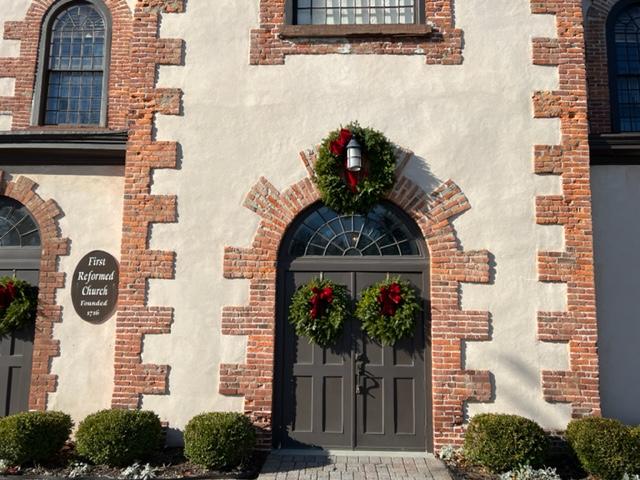
The entrance to the First Reformed Church of Fishkill in December 2022 decorated for the holidays.