Category: VisitingaMuseum.com

Montclair Art Museum                                            3 South Mountain Avenue                       Montclair, NJ 07042

Montclair Art Museum 3 South Mountain Avenue Montclair, NJ 07042

Montclair Art Museum

3 South Mountain Avenue

Montclair, NJ   07042

Phone: (973) 746-5555/Membership: (973) 259-5147

http://www.montclairartmuseum.org

https://www.montclairartmuseum.org/

Open Wednesday-Sunday 12:00pm-5:00pm/Monday & Tuesday Closed

Fee:  Non-Member Adults $12.00/Seniors (65+) and Students with ID $10.00/Members and Children under 12 Free


I have made many trips to the Montclair Art Museum over the years and have always found it to be a very interesting and engaging museum. The curators mount fascinating exhibitions sometimes from the permanent collection and sometimes from traveling shows.

The galleries are smaller and more compact so the exhibitions are not over-whelming like in the bigger museums. You can see each exhibition in about forty-five minutes to an hour and you will still see a lot. There are also smaller exhibition spaces which specialize in one artist and you might see about a dozen pieces.

There are two exhibitions going on currently in the museum. One is “Constructing Identity in American”, which is a permanent collection show of more than 80 paintings, sculptures and works on paper that will address a variety of characteristics that contribute to one’s sense of self, including civic, cultural, artistic, religious, professional and sociopolitical identities, sense of place and personal space and non-conformity. This exhibition goes far beyond portraits to explore other aspects of sense of self (Museum pamphlet).

Montclair Art Museum II

“Constructing Identity in America” exhibit

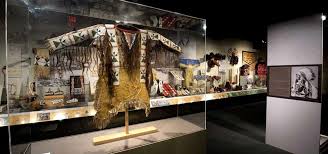
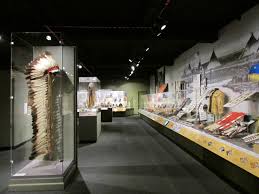
The other exhibition is called “Undaunted Spirit: Art of Native North America” which focuses on the Native American culture from Prehistoric times to the modern era. It , seems that by the end of the Civil War the Victorians were collecting art and objects of the Native Americans fearing that their cultural was disappearing. There is a lot of focus on pottery, both modern and pre-colonial, clothing construction, jewelry making with turquoise and silver and basket-making which was all the rage at the turn of last century. I like the modern aspects of the art as they are ushering a new era of artists of the southwest and giving them a voice. Take time to look at the detail work of the show.
Montclair Art Museum III.jpg

“Undaunted Spirit: Art of Native North America” exhibit


History of the Montclair Art Museum:

(This information was provided by the Montclair Art Museum)

Mission Statement: The Montclair Art Museum, together with its Vance Wall Art Education Center, engages our diverse community through distinctive exhibitions, educational programs and collection of American and Native American Art. Our mission is to inspire and engage people of all ages in their experience with art, including the rich inter-cultural and global connections throughout American history and the  continuing relevance of art to contemporary life.
Montclair Art Museum.jpg

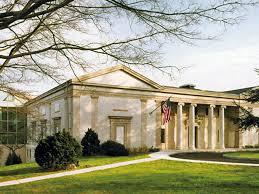
The Montclair Art Museum

Vision, Values and Diversity Statement:

After 100 years of service, MAM is recognized as the leading American art museum and community art school in Northern New Jersey. As a organization, we value: artistic inspiration, diversity of voices, individual and group creativity and the importance of all arts to a civil, inclusive and forward-thinking society.

We respect and welcome individual differences and strive to maintain an environment that fosters productivity, creativity and individual satisfaction by celebrating the diversity of race, gender, nationality, age, religion, sexual orientation and physical abilities.
Montclair Art Museum VI

Native American Galleries

During our second century, we will invigorate our collections and curatorial presentations; expand our educational services audience; support artists, their work and connections; pursue productive institutional partnerships and embrace new media and technology. We will also secure MAM’s financial stability and preserve its facilities and other assets in a prudent and sustainable way.

A notable community institution with an international reputation, the Montclair Art Museum (MAM) is still located in the same-though now thrice expanded-building in which it opened in 1914. Situated amid a beautiful tree-lined residential area of Montclair New Jersey, just 12 miles west of New York City, the Museum is esteemed for its holdings of American and Native American Art, its exhibitions, its family and public programs and its art school. It welcomes more than 65,000 visitors annually.

Montclair Museum II

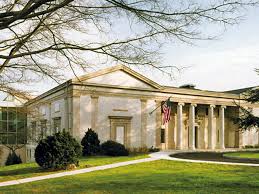
The entrance of the Montclair Museum

The Museum was a pioneer: one of the country’s first museums primarily engaged in collecting American Art (including the work of contemporary non academic artists) and among the first dedicated to the study and creation of a significant Native American art collection. This pioneering spirit still reverberates in the  Museum’s pursuit and presentation of high-quality art that characterize and celebrates American’s diversity, including the recent launch of its Contemporary Art Program, in 2010, providing MAM an opportunity to showcase dynamic contemporary work and expand the Museum’s contemporary art holdings. A main showcase dynamic contemporary work and expand the Museum’s Contemporary holdings.

A main feature of the MAM program is to explore the interplay between historical and contemporary art to our understanding of the larger historical context in which art is created, presenting work that is being challenging and accessible. A key component of the Contemporary Art Program is it New Direction exhibition series of solo artists, established in 2011. Artists featured in the series include Marina Zurch, Saya Woolfalk, Spencer Finch and Sanford Biggers. Most recently in Spring 2015, MAM presented its largest and most ambitious exhibition of contemporary art to date, “Come as You Are: Art of the 1990’s”.

From its founding, the Montclair Art Museum has maintained a vital presence in its surrounding community. The Museum’s collection began with gifts from prominent Montclair residents that included both American and Native American art, laying the foundation for the Museum’s holdings. MAM’s Inness Gallery is one of the only galleries in the world dedicated to the work of America’s greatest landscape painter, who spent the last nine years of his life in Montclair, from 1885 onward and who drew inspiration from the local landscape. Other well-known artists followed in his footsteps, cementing Montclair’s reputation as an intellectual center and artist’s colony, a reputation its retains to this day.

Mam’s collection has grown to over 12,000 works. The American collection, which started with a gift of 36 paintings from William T. Evan’s, comprises paintings, prints, drawings, photographs and sculpture dating from the 18th century to the present and features excellent works by Benjamin West, Asher B. Durand, John Singer Sargent, Edward Hooper, Georgia O’Keeffe, Andy Warhol and Roy Lichtenstein as well as younger and emerging artists such as Louise Lawler, Chakaia Booker, Whitfield Lovell and Willie Cole.

The museum’s superb holdings of traditional and contemporary American Indian art and artifacts, New Jersey’s largest, represent the cultural achievements in weaving, pottery, wood carving, jewelry and textiles of indigenous Americans. The collection was begun by Annie Valentine Rand and carried on by her philanthropic daughter Florence Rand Lang, one of the Museum’s founders and continues to grow with philanthropic daughter Florence Rand Lang, one of the Museum’s founders and continues to grow with commissioned works, gifts and purchases that celebrate the vitality and modernity of traditional forms and beliefs. Among the contemporary American Indian artists represented are Tony Abeyta, Dan Namingha, Jaune Quick-to-see Smith, Allan Houser , Bently Spang and Marie Watt.

Equally important for its community presence and its reputation are the Museum’s public and family programs and art school, serving everyone from toddlers to senior citizens. Collaborations with numerous cultural and community partners bring artists, performers and scholars to the Museum on a regular basis.Guests have included Holland Cotter, John Elderfield, Bill T. Jones, Jeff Koons, Faith Ringgold, Winfred Rembert, Kiki Smith, Philip Pearlstein, Shirin Neshat and Lorna Simpson. More than 10,000 K-12 students from 190 school districts visit the Museum every year. Free Family Days, a Family Lab, MAM Park Bench, Home School Days and Birthday Art Parties allow families to experience art in variety of different ways. As the New Jersey affiliate of the Scholastic Art & Writing Awards, MAM opens opportunities to creative teenagers to gain national recognition for their work. The Museum also provides programs for seniors and special needs individuals-such as the hearing impaired and people with Alzheimer’s as well as training for teachers in the arts.

MAM’s art school, now the Yard School of Art, has been an integral part of the Museum’s life nearly from the beginning. It was founded in 1924 just 10 years after the Museum itself and has operated continuously since then offering courses year-round to kids, teens, adults and seniors. Courses cross a broad range of the artistic spectrum, including drawing, painting, collage, pastel, printing making and illustration. In 2011, the school launched two new areas: a Ceramics Studio and a Digital Media Lab.

In 2014, MAM celebrated its Centennial with a yearlong program of activities, which included a Birthday Party on January 15, exactly 100 years from the day of its founding that attracted thousands of visitors. In honor of the Centennial the Museum also commissioned internationally renowned artist Spencer Finch to create a site-specific installation that has transformed the Museum’s facade, making it a more inviting point of entry.

The first institution in New Jersey designed as a museum and one of the first in the nation to be accredited by the American Association of Museums, the Montclair Art Museum as it marks its Centennial, continues to seek novel ways, through its exhibitions, educational programs and outreach efforts to inspire and inform its growing and ever more diverse audiences.

(This information on the history of the Montclair Art Museum was taken from their website and I give the Museum full credit for the history of the Montclair Art Museum).


Firefighting Museum of Dutchess County                             P.O. Box 2435                                                                      Poughkeepsie, NY 12601

Firefighting Museum of Dutchess County P.O. Box 2435 Poughkeepsie, NY 12601

Firefighting Museum of Dutchess County

(Antique Firehouse & Firefighting Museum)

P.O. Box 2435

Poughkeepsie, NY  12601

https://dchsny.org/firemuseum/

https://www.facebook.com/DutchessCountyFirefightingMuseum/

My review on TripAdvisor:

The new home of the Dutchess Firefighting Museum at the Dutchess County Fairgrounds

I recently visited the Dutchess County Fair in August of 2024 and discovered that they finally built the new Firefighting Museum of Dutchess County in the Century Village complex of the fairgrounds. This will only be open when the fairgrounds are open. It replaced the tent display that had been part of the fair since 2022.

The old tent museum that was a temporary display

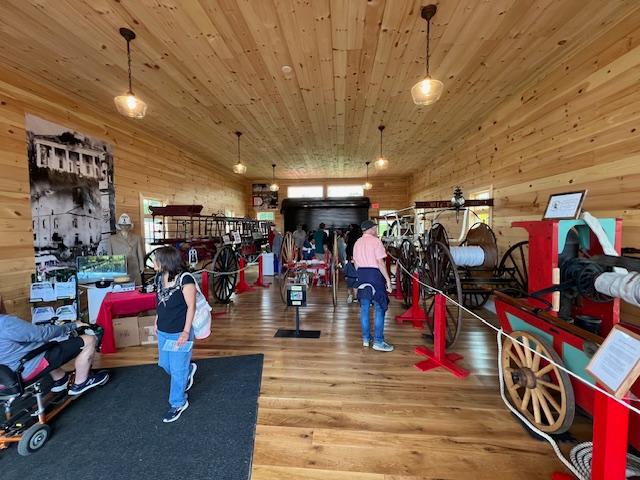
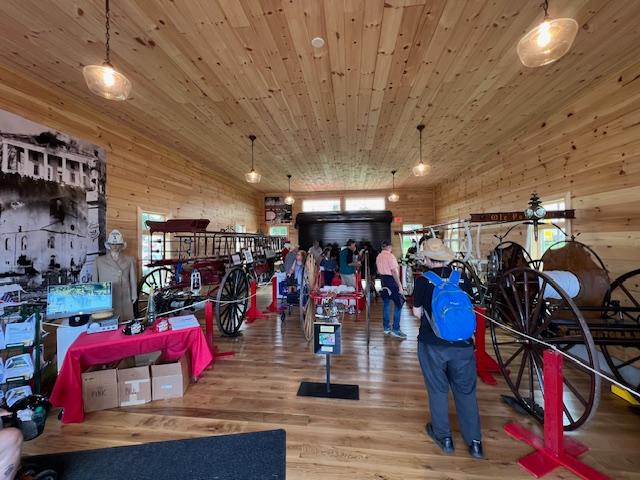
The Firefighting Museum of Dutchess County (Dutchess County Firefighting Museum) is finally open and houses all the memorabilia and artifacts for fire companies all over Dutchess County. I met fire fighters from companies all over Dutchess County who are dedicated in showing the history of their departments and of fire fighting over the years. The museum had just opened in August 2024 so all the displays have not been mounted yet. They should be ready for future events at the fairgrounds.

The firefighting equipment of the museum visited by many firefighters from the area and their families

The Dutchess County Fairgrounds Management had proposed to build them a new building on the Fair Grounds with the stipulation that it remain open when the fair grounds are being used and closed when they are not being used. It will be part of the Century Museum Village & Collectors Association to include a reproduction of a late 19th Century firehouse and museum of firefighting memorabilia.

Firefighting artifacts at the front of the museum

The Parade Celebration cart with uniform for parades.

Firefighting artifacts at the new museum

The antique firehouse will join the Pleasant Valley Railroad Station, the Mount Ross Schoolhouse, the Washington Hollow Fair Judging Gazebo and the Century Museum.

Dutchess County Firefighter Museum II

Dutchess County Firefighters Museum logo

The new museum has an interesting combination of equipment, medals, horns and firefighting objects from the 1800 and 1900’s. It really is an interesting way to see how firefighting from the past relates to today and how much really has not changed. There were three different pieces of equipment on display: an old Ladder Truck from the 1890’s, a pumper from 1902 and an old hose bed that must have been around 1896.

The Pine Plains FD Ladder Truck

The old pumper on display

The handheld hose bed

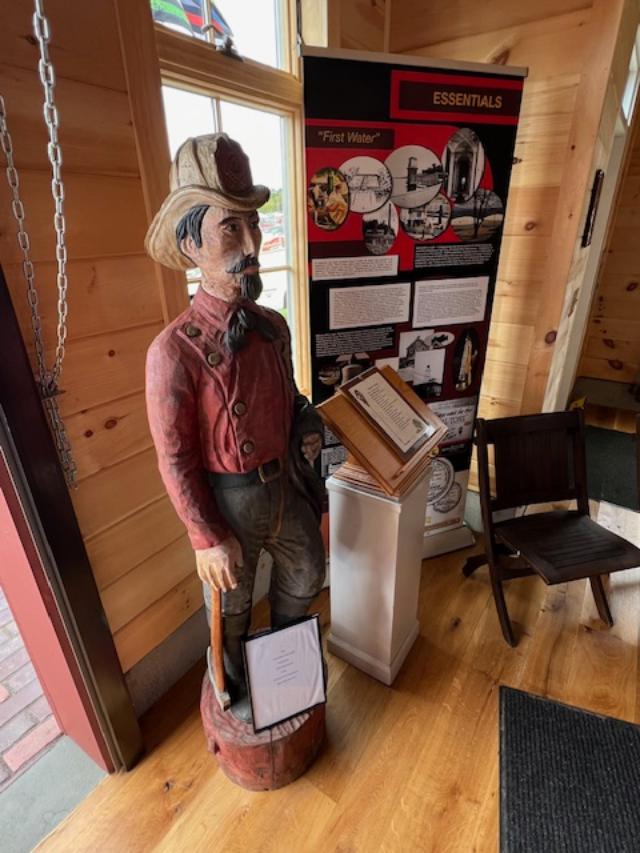
There were old fire horns used long before traditional fire whistles and modern pagers, firefighting ribbons and awards, old buckets and hoses for moving water and lots of pictures of old fires. The members were explaining to me that they take the objects out at all sorts of town and county functions to promote the museum.

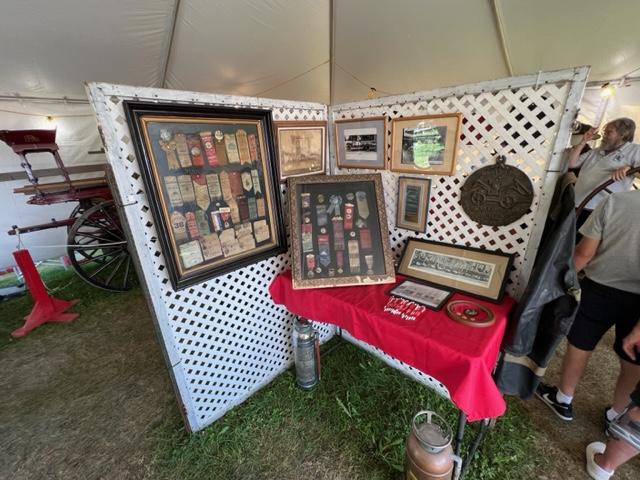
Old Fire Medallions from the old fire insurance days when these were placed on the houses

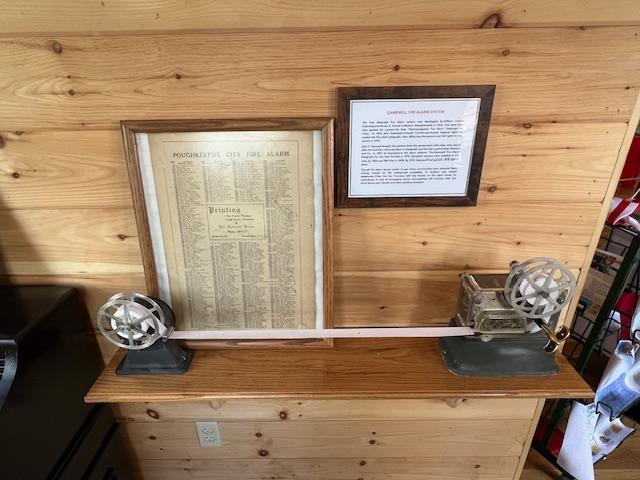
The roll call of fire fighting in Poughkeepsie, NY

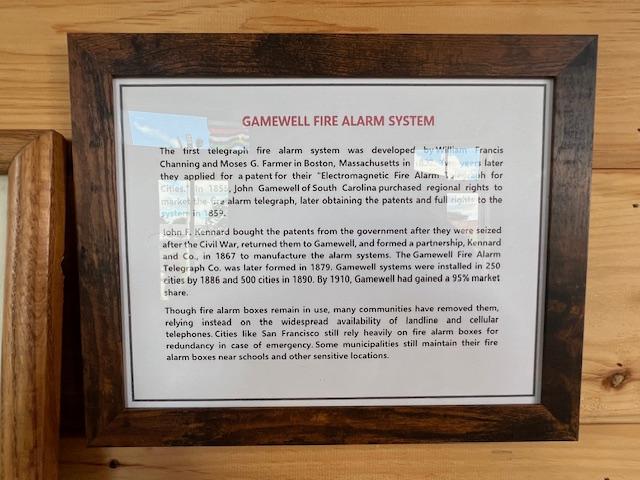
The Gamewell Fire Alarm System

History of the Dutchess County Firefighting Museum:

(from the museum pamphlet)

The Dutchess County Agricultural Society Inc. (DCAS) and the Century Museum Village & Collectors Association will be growing The Antique Village, located on the Dutchess County Fairgrounds which will include a reproduction of a late 19th Century Firehouse and museum of Firefighting memorabilia.

Firehouse artifacts in the museum

The Antique Firehouse will join the Pleasant Valley Railroad Station, the Mt. Ross Schoolhouse, Washington Hollow Fair Judging Gazebo and the Century Museum.

This grouping of special buildings on the Fairgrounds has been dedicated to preserving life in the late 1800’s in Dutchess County and sharing it with the over 500,000 visitors to the Dutchess County Fairgrounds over the course of the year.

The awards of the fire service from the old museum that will be displayed at the new museum soon

The Firehouse Project Research and artifact collection is underway, and the Fairgrounds is committed to adding to Dutchess County’s Fire Service history.

The project cost is $300,000 and was raised from funds all over Dutchess County, NY. This year’s fair the association was proud to open this museum as part of the Century Village on the fairgrounds.

The history of the Dutchess County Fire Service on video.

Special Firefighting “Coins” have been minted commemorating different fire stations, historic Dutchess County firefighting events and the dream of the Antique Fire Station and Museum. You can be a part of this exciting project by purchasing coins or making a tax-deductible donation.

The fire truck in front of the museum at the Dutchess County Fairgrounds

Disclaimer: This information is taken directly from the Antique Firehouse & Firefighting Museum of the Dutchess County Fair Grounds, and I give them full credit for it. The above picture is of the original proposed design for the museum and will be changed once the new building is built.

The new museum will house many more exhibitions in the future

Japan Society 333 East 47th New York, NY 10017

Japan Society

333 East 47th Street

New York, NY  10017

(212)  832-1155

https://www.japansociety.org

Open: Monday-Friday 10:00am-6:00pm/Saturday & Sunday Closed

Fee: Depends on the event; See the website

The front of the Japan Society on 333 West 47th Street.

I recently visited the Japan Society for the ‘Japan Cuts’ film festival 2019 to see four films as part of the festival. I had visited the Society years ago for a ‘Monsters’ exhibition which coincided with the dropping of the Atom Bomb. It was told to me during the tour of the exhibition that the Godzilla movies were the Japanese reaction to the dropping of the bombs and the effects of nuclear was on nature.

Japan Society III.jpg

The inside lobby  of the Japan Society

This time around it was a little more upbeat. I went to see new films by Japanese directors who are looking at contemporary culture a little more differently that film makers of the past. I was most impressed with “Dance with Me”, a light weight musical that reminded me of 1960’s musicals that came out in the United States and “Whole” about Japanese who come from mixed backgrounds and their role in society. It was nice to sit back and watch the films and participate in the Q & A’s.

Japan Society Film Festival

My favorite scene from “Dance with Me” “Happy Valley”

It was also nice to walk around the building to see the indoor gardens and pools that are located in the lobby area of the building. The building does have a feeling of Ying and Yang. There will be more exhibitions in the Fall.

Japan Society IV.jpg

The inside of the lobby of the Japan Society

The opening film “Dance with Me”

The Q & A at Japan Cuts for “Dance with Me”:

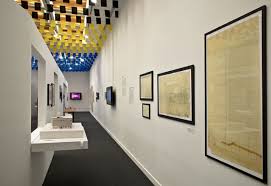
I recently visited the Japan Society for the “Made in Tokyo” exhibition on the development of architecture in the City of Tokyo between the 1962 and the 2020 Olympic Games. The exhibition showed the development and progress of the City since the bombings in WWII and how the City has rethought  the building and rebuilding of the City since.

Japan Society V

“Made in Tokyo”

Just like in the United States old department stores and office buildings are finding new use and older buildings in fringe and outside rural areas are becoming tech hubs. It was interesting so see how they were reworking old turn of the last century buildings and homes as incubators for the ‘computer age’.

Japan Society VII

The “Made in Japan” exhibition is closing at the Japan Society on January 26th, 2020. If you like the history of architecture this is an exhibition not to be missed.

Japan Society VI

The “Made in Tokyo” exhibition at the Japan Society

I recently went to the Japan Society for the screening of the famous movie, “Ringu” which is the original version of the American film, “The Ring”. It is rarely shown, and you can’t find it on YouTube or in the local libraries, so it was a treat to see this film. It was also the first time I had been in the museum since COVID closed everything down and it was nice to visit again.

Guess what I found on YouTube the next morning: “Ringu” the comparison:

Still, it was nice to go to the museum again and just relax for the evening.

The Trailer of “Ringu”

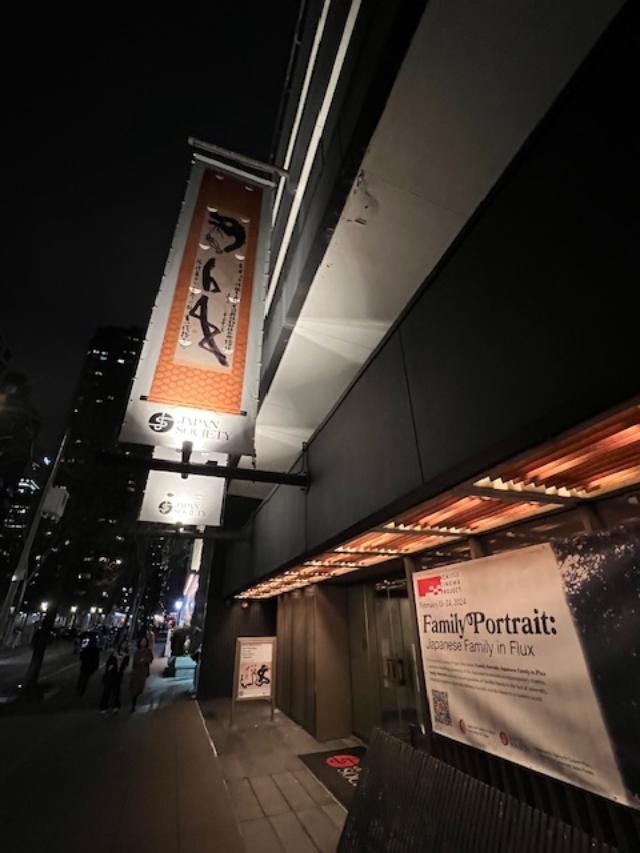
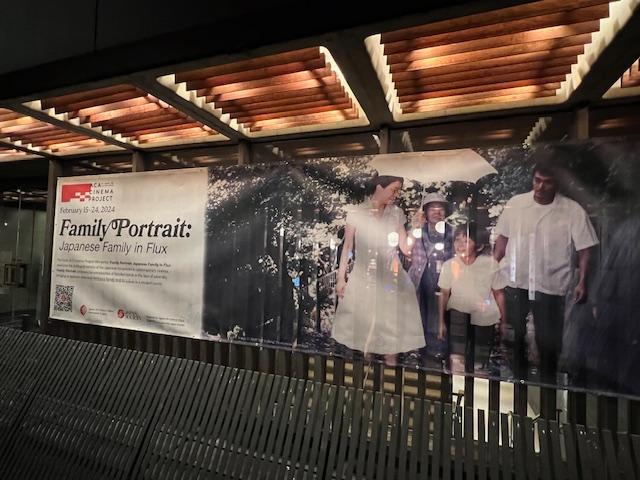
I recently went to see the “Family Portrait: Japanese family in Flux Series” in 2024 on some of the more contemporary films of Japan from the 1980’s and 90’s that are outside the studio system. These films dealt with real issues that most studio films don’t want to touch. I saw a film about a woman with terminal cancer and all the secrets of her past came out and the problems she had to face when the end was coming. Many twists and turns. The films dealt with these issues in a mature way and the series was very successful.

The sign for this amazing series of films.

The Japan Society mission:

The Japan Society is a non-profit organization formed in 1907 to promote friendly relations between the United States and Japan. Its headquarters, the youngest landmark building in New York was designed by Junzo Yoshimura and opened in 1971 at 333 East 47th Street near the United Nations. With a focus on promoting “arts and culture, public policy, business, language and education,” the organization has regularly held events in its many facilities including a library, art gallery and theater since its opening. After suspending all activities during World War II, Japan Society expanded under the leadership of John D. Rockefeller III (Wiki).
History:

In 1907, Tamemoto Kuroki and Goro Ijuin were chosen to represent Japan at the Jamestown Exposition. They attended a welcome dinner in New York with Japanese ambassador to the United States, Shuzo Aoki, where there was talk of forming an organization to promote US-Japan relations in the city. Two days later at a luncheon held by Kuroki, Japan Society was born. The organization would be run by Aoki, then Honorary President of the Japan Society of the UK and John Huston Findley.

Japan Society spent the next forty years hosting events in honor of Japanese royalty, giving annual lectures on a wide range of topics and presenting art exhibits that drew in thousands of New Yorkers. In 1911, Lindsay Russell, another founding member of the society and later president, met with Emperor Meiji and spent his visit to Japan encouraging more societies to form there and throughout the United States.

Japan Society was soon incorporated under New York law and finally found a home near one of Russell’s work offices, though it continued to relocate throughout its history before its current headquarters was opened in 1971. At this time, Japan Society and its members began to express interest in improving teaching about Japan in the United States. The organization began sponsoring trips to the country, publishing books and sent a report to the Department of Education about the portrayal of Japan in American textbooks.

It remained active during World War I, operating as it had for the last seven years but the organization became more political when it began associating with the Anti-Alien Legislative Committee, an advocacy group that spoke out against yellow peril. Russell and Hamilton Holt, another founding member used the organization’s publication to defend all of Japan’s actions at the time. Unbeknownst to anyone at the time, even one of Japan Society’s writers secretly worked for the Japanese government with the task of improving Japan’s imagine in the United States. The organization eventually realized the dangers of taking sides and by 1924 stopped publishing any political commentary.

By the 1930’s, membership had dropped significantly due to financial difficulties and the Second Sino-Japanese War. Following the attack on Pearl Harbor in 1941, Henry Waters Taft immediately resigned as president after serving  from 1922 to 1929 and again from 1934. Russell also stepped down as one of Japan Society’s directors. All activities were suspended and would not resume until the Treaty of San Francisco was signed in 1951.

John D. Rockefeller III served as president from 1952 to 1969 and then as Chairman of the Board until his death in 1978.  He accompanied John Foster Dulles on his trip to Japan that eventually led to the signing of the 1951 treaty. Rockefeller, a supporter of the Institute of Pacific Relations, who visited Japan in 1929 during one of its conferences, wanted to contribute to bettering US-Japan relations after the war and believed there needed to be non-governmental organizations like Japan Society in each country in order for such friendly relations to exist.

Under Rockefeller’s leadership, Japan Society expanded and talk began to find a permanent headquarters for it. It shared offices with another Rockefeller-led organization, Asia Society but as the two organizations continued to grow during the 1960’s,  it became increasingly clear that Japan Society needed its own building. After receiving donations from Rockefeller and other members, construction began on “Japan House” in 1967. Designed by Junzo Yoshimura, whose work also includes Asia Society’s headquarter, it became the first building in New York of contemporary Japanese architecture. On September 13, 1971, it was finally opened to the public after a ceremony attended by Prince Hitachi. He echoed Russell’s first words about Japan Society, calling for “closer people-to-people” contact between countries.

Japan Society II

Japan Society building

(This information was taken from Wiki and I give them full credit for the information. I also included information of Japan Society).

Yogi Berra Museum & Learning Center                      8 Yogi Berra Drive                                              Little Falls, NJ 07424

Yogi Berra Museum & Learning Center 8 Yogi Berra Drive Little Falls, NJ 07424

lol Yogi Berra Museum & Learning Center

8 Yogi Berra Drive

Little Falls, NJ  07424

(973) 655-2378

https://yogiberramuseum.org/

Open: Sunday 12:00pm-5:00pm/Monday & Tuesday Closed/Wednesday-Saturday 12:00pm-5:00pm

Fee: Adults $10.00/Children under 18 $5.00/Veterans and Montclair State College students free

My review on TripAdvisor:

https://www.tripadvisor.com/Attraction_Review-g46574-d3267390-Reviews-Yogi_Berra_Museum_Learning_Center-Little_Falls_New_Jersey.html?m=19905

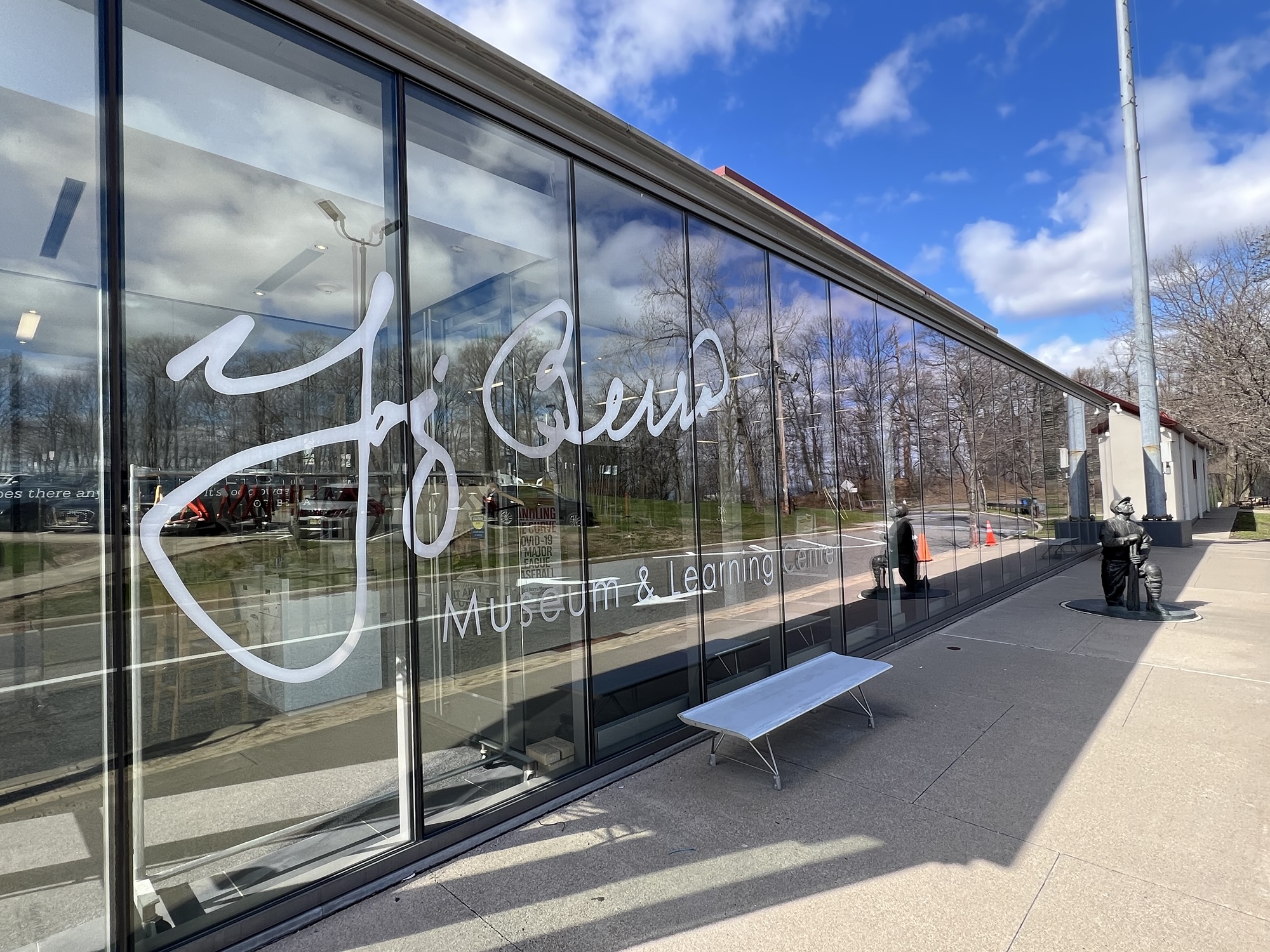
 The front of the museum

I went to the Yogi Berra Museum for the first time and I really enjoyed myself not just as a Yankee fan but learning the life behind the man. I did not know very much about Yogi Berra and his life but it is an interesting look at someone’s life and how his sport molded him to be the player and the family man he was in life.

The entrance to the museum for a life well lived

I never realized he was born in St. Louis and how his life in baseball came about. The museum takes Yogi Berra’s life from the time he was born and his family life growing up to how he became a ball player to his life in the minors and then to his life as a Yankee.

The career of Yogi Berra

The movie theater

He really was the ultimate leader and Yankee at the golden years of the team when they won five consecutive championships.

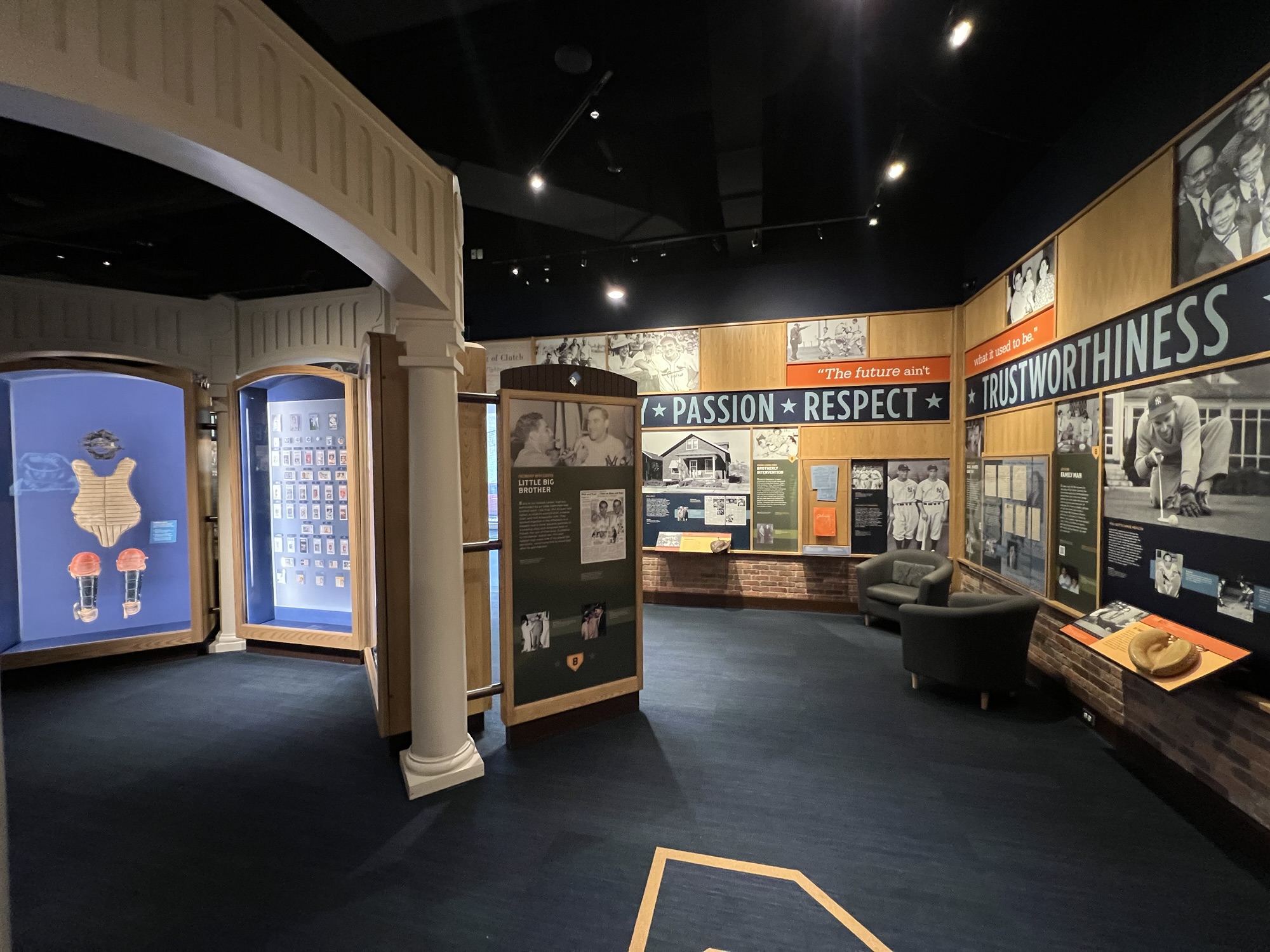
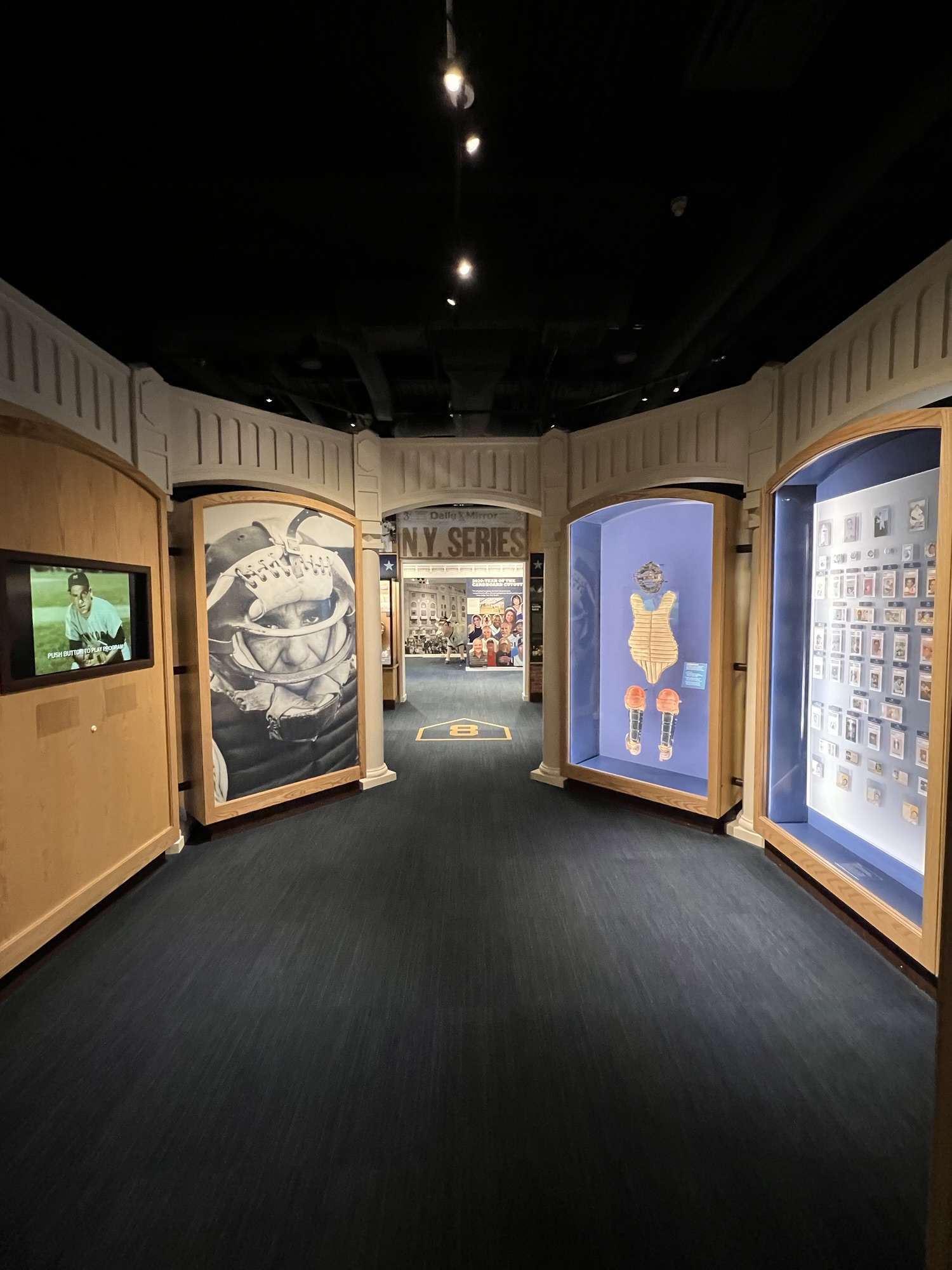
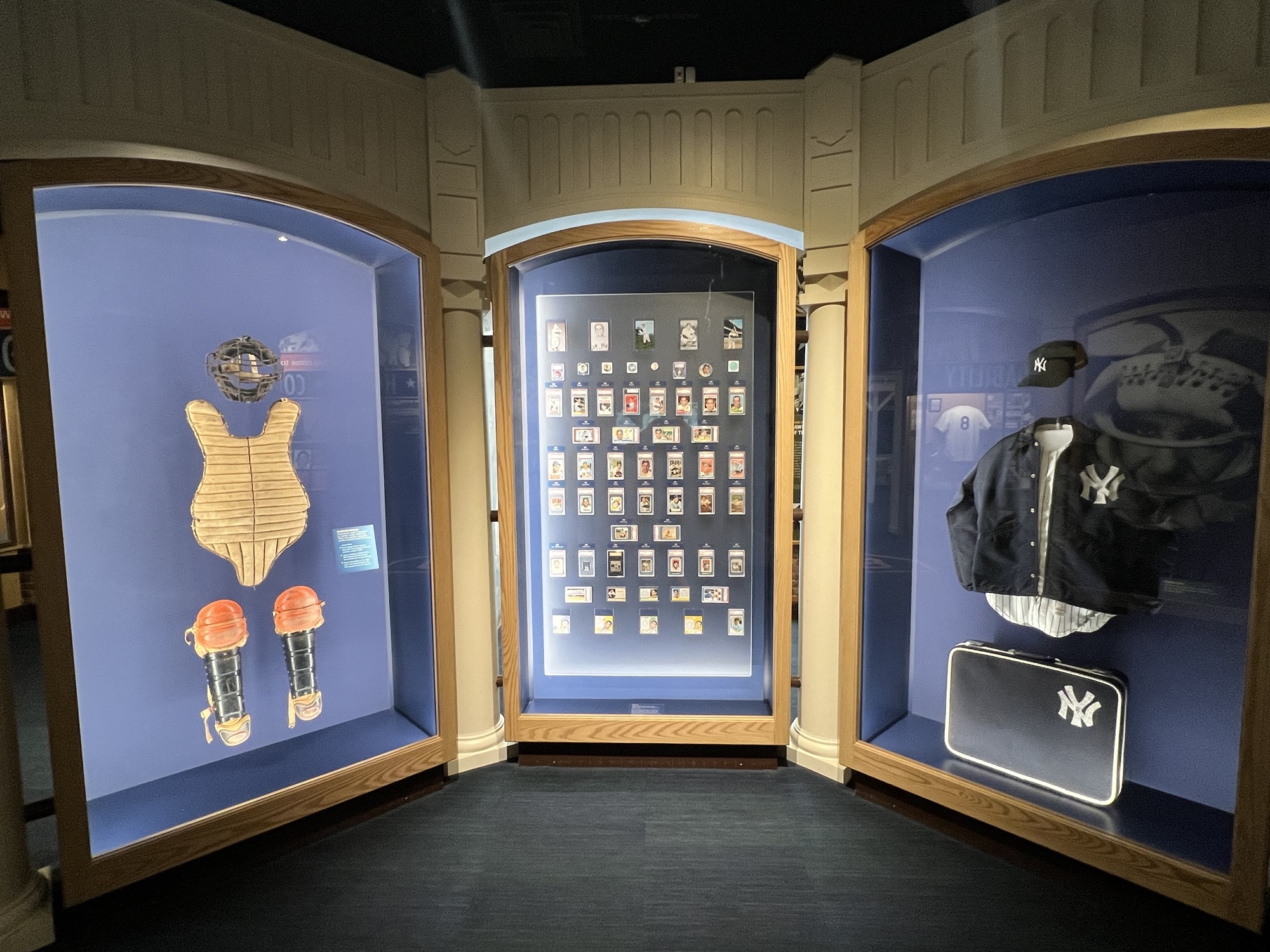
The case lines at the Museum

The museum also covered his post player life and his time coaching the Mets and winning other championships. It was also interesting to see how his family life shape him. He had been married over 60 years to his wife and had three boys and eleven grandchildren and how close he was with his family. I also liked his interaction with the new players and mentoring young players.

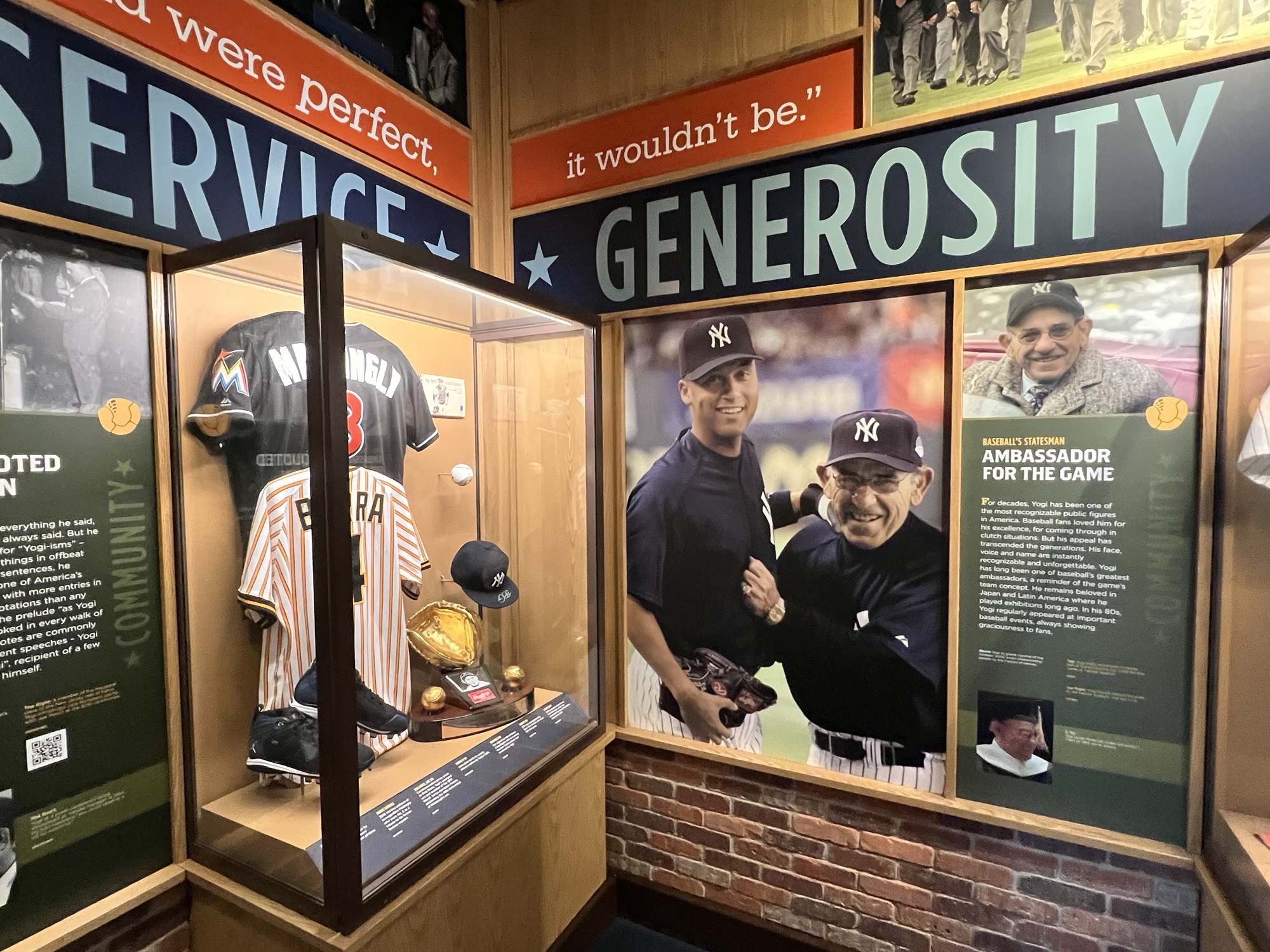
Taking a picture with ‘The Captain’ Derek Jeter

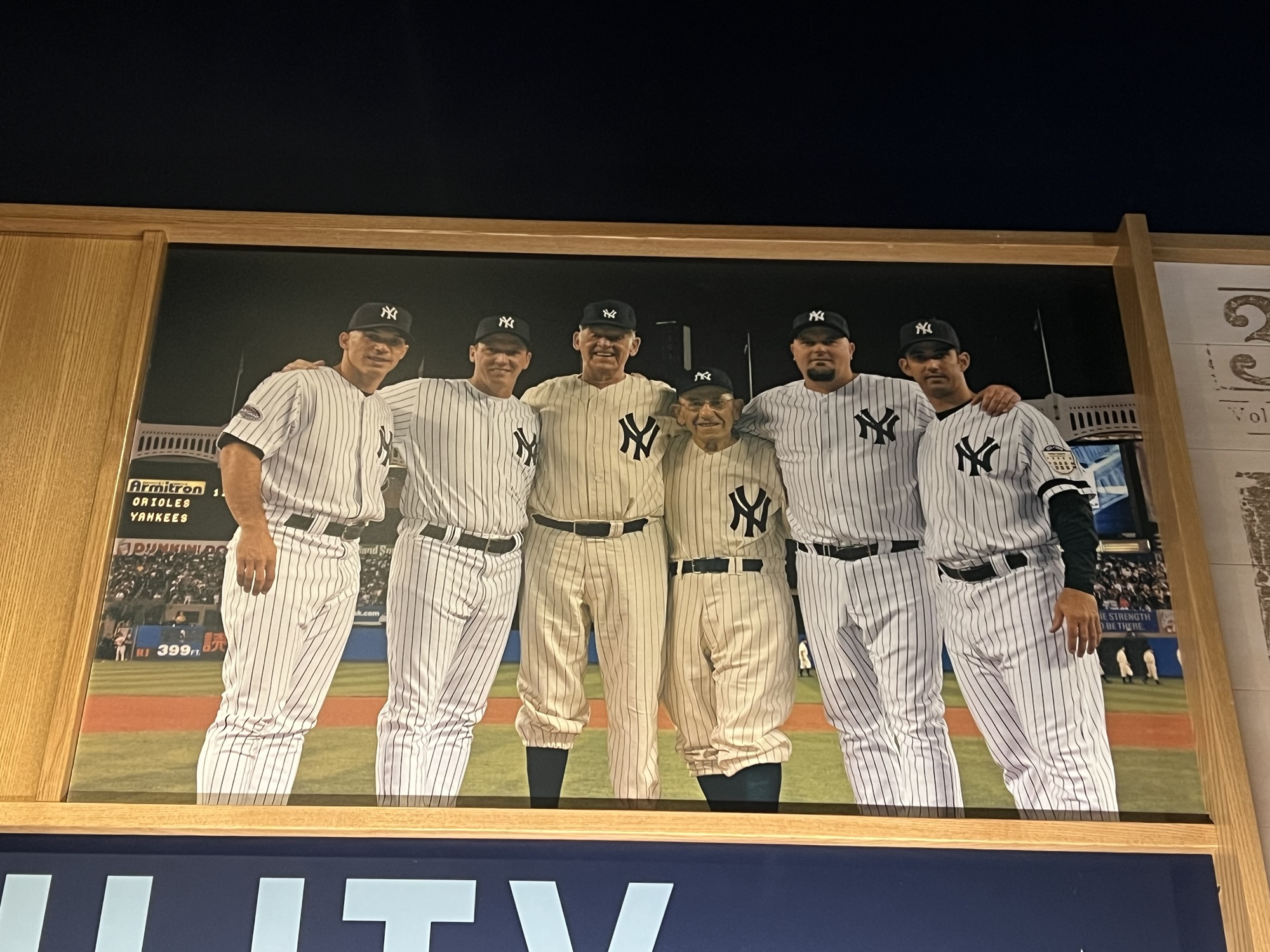
The best pictures that stood out was his photo with Derek Jeter and the second was the group photo of the three perfect game pitchers and catchers with Yogi Berra and Don Larsen in the middle of the photo.

The pitchers and catchers with the ‘perfect game’

That captured the true spirit of the Yankees. They knew how to win.

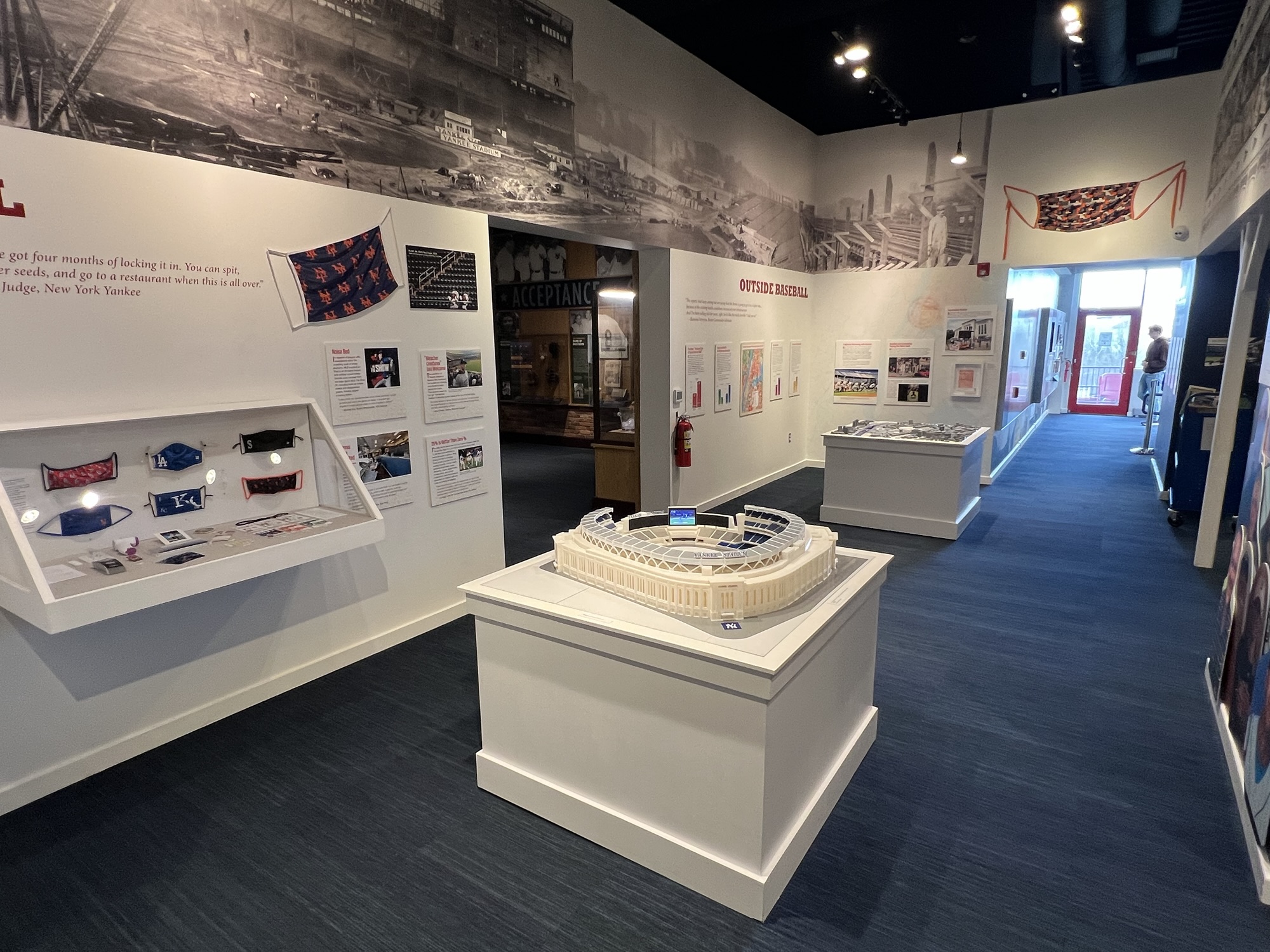
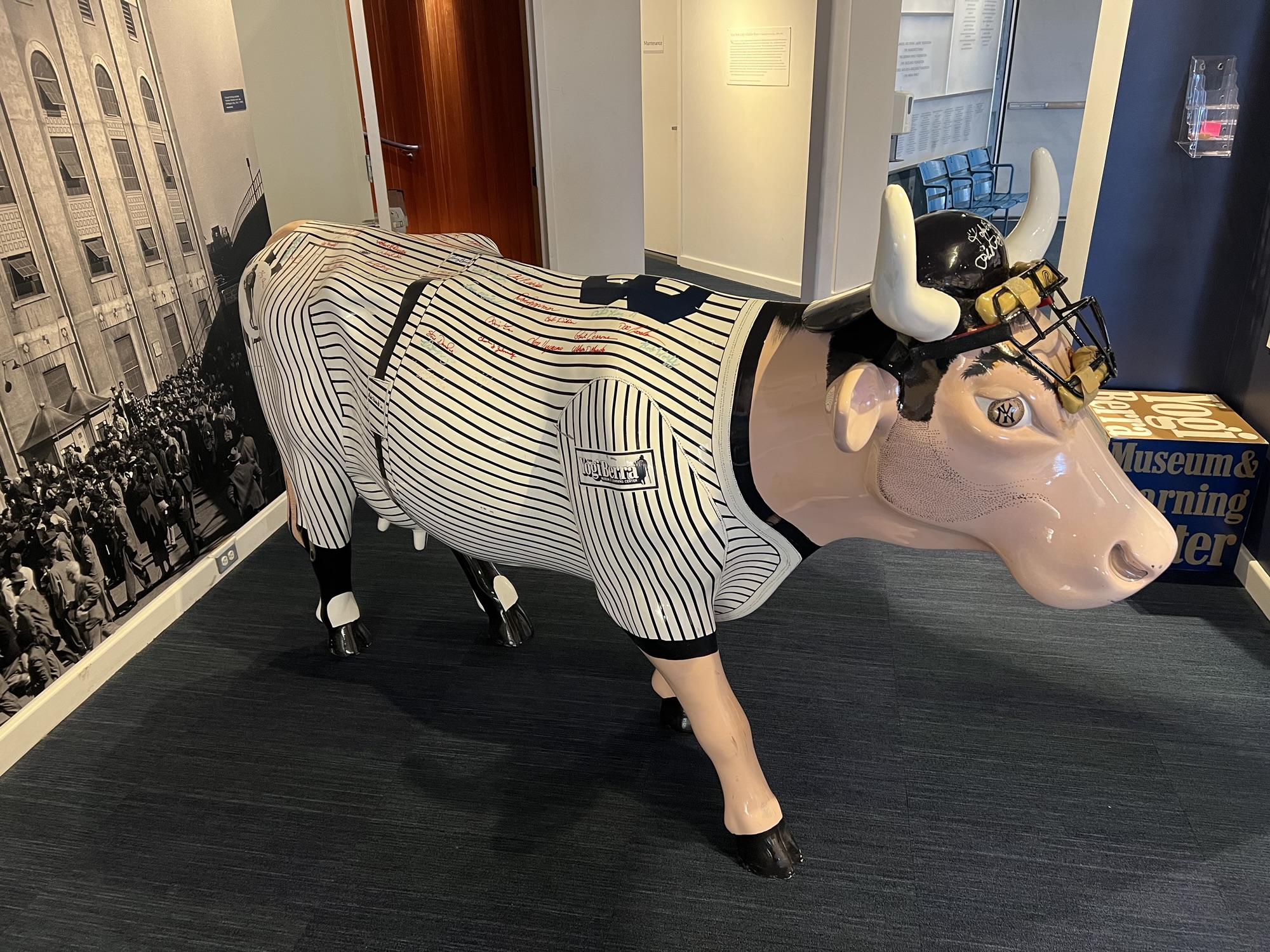
Memorabilia at the Museum

What was fun to see is all the World Series Rings that he won on display. It was a tribute to such a storied career and life. The Yogism’s that he was quoted as saying as “It ain’t over till it’s over” told of his character and his spirit in life.

The growing accomplishments in his life

The one thing that stood out in the museum was that it was the story of a man who had a life well lived and had the balance of family, career and friends along the way that showed how even from humble beginnings you can achieve great things. He even got the Medal of Freedom after his death in 2015 which showed the effect he had on people.

All the World Series rings he won

For any true Yankee fan, I highly recommend a visit to the museum, not just for the pictures and stores and baseball memorabilia but to see a person who was his own man in life.

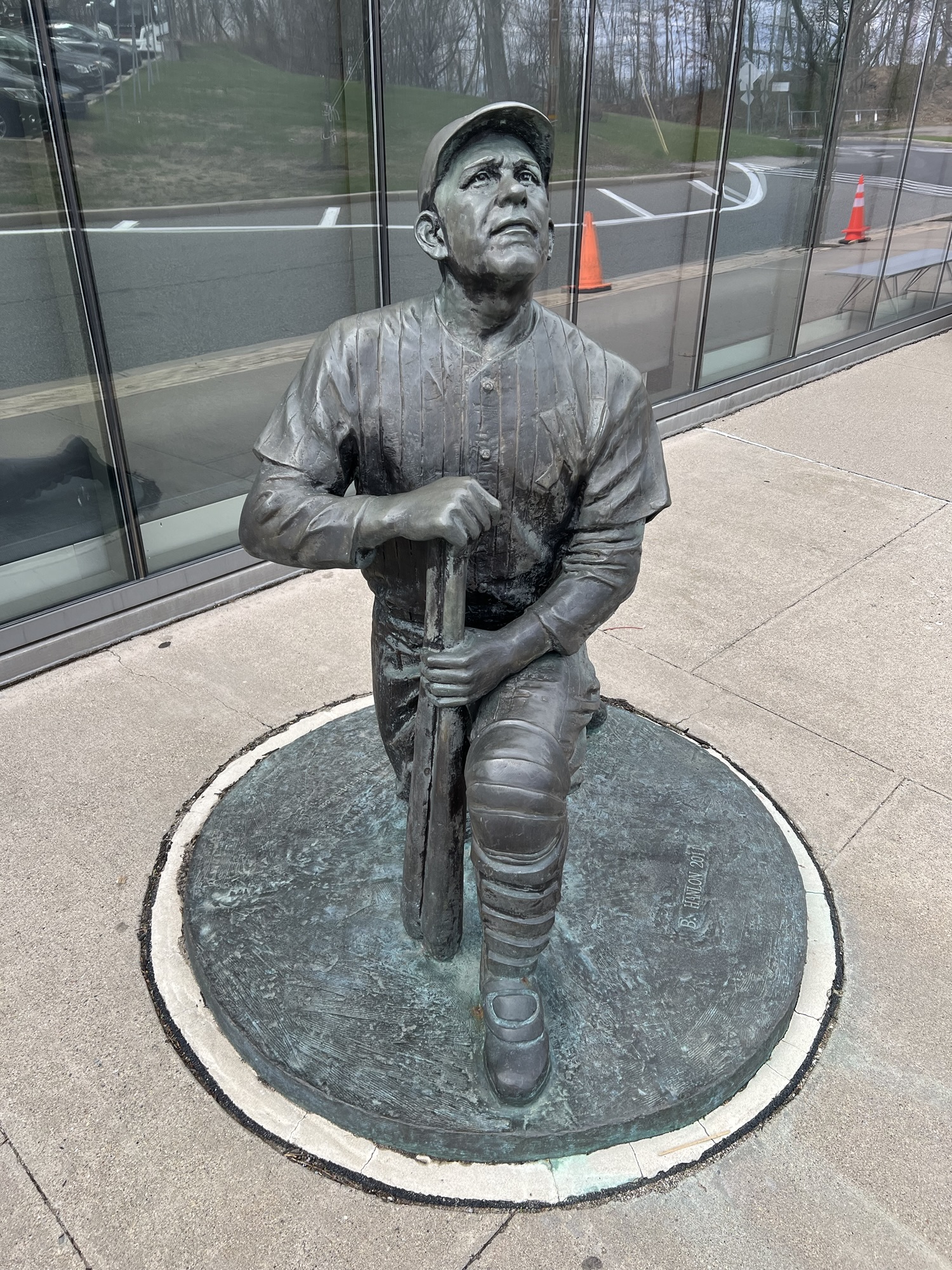
The statue of Yogi Berra outside the museum

Hats off to Yogi Berra that the town of Montclair would honor one of its citizens in such a way. It is really was a great museum.

The Yogi Berra Museum on the Montclair University Campus

The handprints of the family

History of the Museum: (Wiki)

The Yogi Berra Museum and Learning Center is a museum on the main campus of Montclair State University in Little Falls, NJ. It serves to honor the career of Yogi Berra, who played for the New York Yankees of Major League Baseball and was inducted into the National Baseball Hall of Fame. The museum which contains artifacts from Berra’s career, opened on December 4th, 1998. It is adjacent to Yogi Berra Stadium.

“The Friends of Yogi Inc”, a nonprofit organization, raised two million through donations to build the museum to honor Yogi Berra, who played his entire Major League Baseball career for the New York Yankees. John McMullen, the owner of the New Jersey Devils of the National Hockey League was among the museum’s benefactors. The museum was built adjacent to Yogi Berra Stadium, which hosts the New Jersey Jackals, a Minor League Baseball team in the American Association of Independent Professional Baseball and the Montclair State Red Hawks baseball team.

The museum was dedicated in October 1998, with fellow Baseball Hall of Famers Ted Williams and Larry Doby in attendance. It opened to the public on December 4th. In 2010, IKON 5 Architects redesigned the museum and Brian Hanlon sculpted a statue of Berra to go in front of the museum.

The entrance to the museum

Berra had feuded with Yankees owner, George Steinbrenner since Steinbrenner fired him 16 games into the 1985 season. Berra refused to be involved in Yankees events, including Yankee games. In January 1999, Berra and Steinbrenner resolved their feud with a public event at the Yogi Berra Museum.

Berra frequented visited the museum for signings, discussions and other events. It was his intention to teach children important values such as sportsmanship and dedication, both on and off the baseball diamond.

On October 8th, 2014, a burglary occurred at the museum, in which a team of “professional” thieves stole specific pieces of Berra’s memorabilia.

Exhibits: (Wiki)

The museum contains items from Berra’s career, including baseball cards, a jacket worn by Berra while throwing out the first pitch of Game 1 of the 2009 World Series, two of his MLB MVP awards and all ten World Series rings he received as a player. Following the resolution of Berra’s feud with Steinbrenner, the Yankee loaned the Commissioner’s Trophy from the 1998 World Series to the museum.

The statue signed by visiting ball players

In 2013, the museum teamed up with Athlete Ally to develop an exhibit called “Championing Respect”. which aims to support the inclusion of LGBT athletes in sports. An exhibit in 2014 celebrated the 75th Anniversary of Lou Gehrig’s farewell speech.

The museum offers a wide range of school and public programs on all aspects of sports and society. It conducts guided school tours and education programs, provides off-site assemblies on anti-bullying and sportsmanship and also collaborates with Montclair State University on programs examining topical issues in media and sports.

Yogi Berra with Babe Ruth

In promoting the values of respect and sportsmanship, the Museum in partnership with Investors Bank and the Super Essex Conference, developed a Best Teammate Award program in 2013, recognizing outstanding leadership by student-athletes. The museum also offers an array of summer camps, including youth baseball and softball camps.

(This information comes from Wiki)

After a visit to the museum, I stopped in the stadium behind the museum and watched Montclair University’s Baseball team play Stockton University.

The Yogi Berra Stadium at Montclair State University

I relaxed with a $1.00 hot dog and Coke and watched the game at Yogi Berra Stadium. It was a great way to spend the afternoon. It was fun to just relax in the afternoon and watch people having a good time.

I think watching the game with a good hot dog and Coke is the best.